
Table of Contents >> Show >> Hide
- What Exactly Is Bandersnatch?
- How Many Bandersnatch Endings Are There, Really?
- Ranking the Main Bandersnatch Endings
- Is Bandersnatch Genius or Gimmick?
- The Real-World Ripple Effects
- How Bandersnatch Fits Into the Black Mirror Universe
- Who Will Love Bandersnatch (and Who Probably Won’t)
- 500 Extra Words: Experiences with Black Mirror: Bandersnatch
- Conclusion: So, Is Bandersnatch Worth Your Time?
When Black Mirror: Bandersnatch dropped on Netflix back in 2018, a lot of us hit play thinking,
“Cool, a new extra-long episode.” Sixty choices, five endings, three identity crises, and one very confused
snack selection later, it was clear this wasn’t just another installment in the anthology. It was a full-on
interactive experiment that turned your remote into a moral compass and your couch into a test lab.
Years later, people are still arguing about which endings are “best,” whether the whole thing was genius or
gimmick, and if poor Stefan ever gets a break in any universe. In this deep dive, we’ll break down what
Bandersnatch actually is, rank its main endings, unpack the biggest opinions from critics and fans,
and talk about why this strange little choose-your-nightmare story still sticks in our brains.
What Exactly Is Bandersnatch?
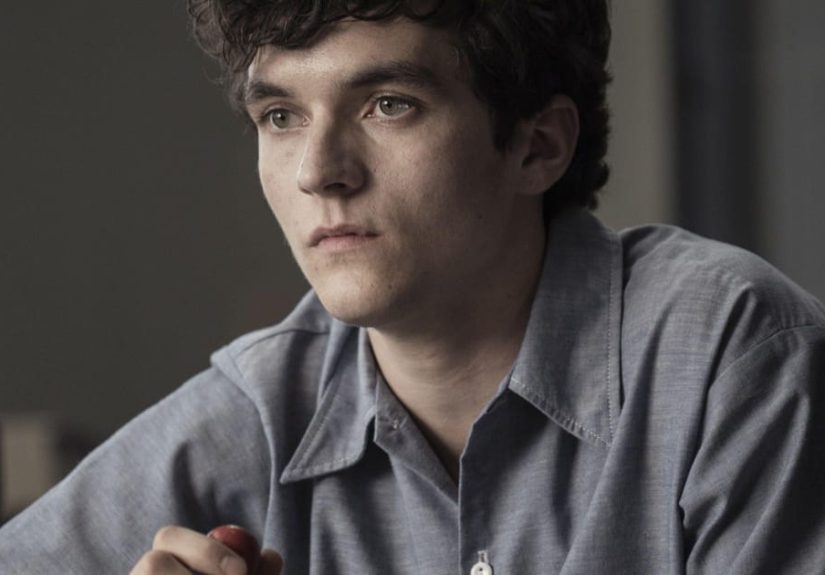
Technically, Black Mirror: Bandersnatch is an interactive film set in 1984, where young programmer
Stefan Butler tries to adapt a twisted fantasy novel called Bandersnatch into a video game.
Viewers make decisions for him at key moments: which cereal he eats, which cassette to play, whether he takes
his meds, and eventually, whether he commits some truly disturbing acts.
Instead of a normal linear plot, the story is chopped into hundreds of segments. You’re constantly nudged back
to earlier points to “try again,” creating loops that are both playful and unnerving. This structure mirrors
Stefan’s own mental spiral: he becomes convinced that some unknown force is controlling him—which, awkwardly,
is you, sitting there trying to decide if you should throw tea over his computer.
The result feels like a hybrid of:
- A classic Black Mirror episode about free will, technology, and paranoia
- A retro gaming nostalgia trip, complete with chunky computers and cassette tapes
- A “choose your own adventure” book brought to life, but with more existential dread and fewer friendly dragons
How Many Bandersnatch Endings Are There, Really?
Depending on who you ask, Bandersnatch has:
- 5 main endings (Netflix’s official line)
- Several variants within those endings
- A handful of secret or “golden egg” endings that require very specific choices
- And a whole bunch of minor “you messed up, go back” dead-ends that feel like the universe giving you a slap on the wrist
Different critics and fans have estimated anywhere from around 10–12 endings (if you only count substantial
outcomes) to well over a dozen when you factor in tiny variations and epilogue-style scenes. The important part
isn’t the exact number; it’s that Bandersnatch is less about finding “the one true ending” and more
about exploring a tree full of possible timelines.
Even the creators have emphasized that there’s no single canon path. The whole point is that every choice
branches reality, so multiple outcomes can all “exist” at once. This philosophy has carried over into later
Black Mirror stories that nod back to Bandersnatch and treat it as one node in a larger
multiverse of weirdness.
Ranking the Main Bandersnatch Endings
Let’s get to the fun part: ranking the big endings. This isn’t an official scoreboard from Netflix. It’s a
mashup of critical reception, fan discussion, and a bit of personal judgment about what feels the most
satisfying, disturbing, or thematically on-brand for Black Mirror.
1. The Pearl Ritman “Documentary” Ending
In this meta-heavy ending, we jump into the future, where game historian Pearl Ritman is rebooting
Bandersnatch for the streaming era. The story folds in on itself as she faces similar
choices to Stefan, making it clear that the cycle of obsession and control never really ends—it just
updates its software.
Why it ranks so high:
- It leans hard into Black Mirror’s favorite themes: recursion, media, and surveillance.
- It reframes the whole film as something that can be rebooted forever by new creators and new viewers.
- It feels like the closest thing to a “final reflection” on what we’ve been doing to Stefan the whole time.
This ending also became the most commonly discussed outcome, in part because it’s positioned to be one of the more
reachable narrative endpoints. It feels less like a game over and more like a thesis statement on interactive storytelling.
2. The Perfect Review, Terrible Morals Ending
In another major path, Stefan’s game launches to critical acclaim—often scoring a perfect review from an in-universe
TV critic. Congratulations, you did it! The game is a masterpiece! The minor catch: you probably had to kill someone
(or several someones), cover it up, and slide fully into madness.
This ending hits that quintessential Black Mirror sweet spot: you “win” in one sense, but at the cost of
your humanity. It’s a brutal commentary on:
- The pressure to create something “innovative” at all costs
- The way the tech and gaming worlds fetishize tortured genius
- How audiences can celebrate a work of art while ignoring the shattered person behind it
It’s grim, but it’s coherent, and it ties the story’s themes together in a way that feels deliberately mean but
philosophically satisfying.
3. The Prison and True-Crime Obsession Endings
In several branches, Stefan ends up arrested and imprisoned. The game either flops or becomes a morbid cult classic,
with documentaries and talk shows obsessively rehashing the case decades later. Stefan becomes less a person and more
a myth, remembered not as a developer but as a killer.
These endings may feel less spectacular than the more surreal ones, but they resonate because they’re painfully plausible.
They echo real-world stories where tragic crimes get repackaged as entertainment in podcasts, docuseries, and dramatizations.
The ranking lands in the middle: the outcome is appropriately bleak and thematically rich, but it can feel mechanically
repetitive to reach—one of many similar “you’re in jail now” variations.
4. The “It Was All a TV Show” Fight Scene Ending
One of the wildest branches leans fully into self-aware absurdity. Stefan’s confrontation with his therapist suddenly
pivots into an over-the-top action sequence, complete with stunt fighting and slapstick chaos. At one point you can
even reveal to Stefan that he’s in a Netflix production, which is as delightfully un-subtle as it sounds.
This ending is divisive:
- Some viewers love the sheer audacity and comic release after so much tension.
- Others feel it breaks the tone and turns a complex psychological thriller into a joke.
It earns a lower spot in the rankings not because it’s bad, but because it works better as a bonus gag than as a core
conclusion. It’s like the “secret joke ending” you stumble into at 2 a.m. after making all the weird choices.
5. Stefan Dies Early (Train, Balcony, or Other “Short Routes”)
Some paths end abruptly with Stefan’s death: a leap from a balcony, a tragic replay of a childhood trauma on a train,
or other early exits where the story simply stops. These endings tend to feel like the narrative equivalent of hitting
a wall in a maze: impactful in the moment, but unsatisfying if you land there on your first run.
These branches do add emotional weight, especially when they tie back to Stefan’s family history. But they tend to
function more as cautionary branches than as true finales. You’re clearly meant to rewind, make a different choice,
and push deeper into the story tree.
Is Bandersnatch Genius or Gimmick?
From day one, reactions to Bandersnatch were split right down the middle.
On the positive side:
- Many critics praised it as a bold experiment in interactive storytelling.
- Reviewers highlighted how the format and themes are tightly intertwined: you feel the illusion of choice while
the story quietly shows you how little control you actually have. - Fans loved the retro gaming aesthetics, the Easter eggs, and the thrill of hunting for every ending.
On the negative side:
- Some viewers found the loops frustrating and repetitive, especially when they were kicked back to earlier scenes
with only slightly altered options. - Others argued that once you strip away the interactivity, the core plot is relatively thin compared with
Black Mirror heavy-hitters like “San Junipero” or “White Bear.” - There’s also a camp that simply doesn’t enjoy being “forced” to make choices when they just wanted to watch a movie.
The fairest verdict is probably this: Bandersnatch isn’t a perfect movie, but it is an important one. It’s
less about delivering a single flawless story and more about stress-testing what long-form interactive TV can be on
a major platform. As an experiment, it succeeded well enough to become a cultural touchpoint and an Emmy winner,
even if not everyone wanted to replay all the branches.
The Real-World Ripple Effects
Bandersnatch didn’t just mess with your head; it also shook up the real world a bit.
The obvious influence is on how people think about streaming: suddenly, Netflix wasn’t just a library of shows but a
place where you could “play” television. The film helped popularize the idea of interactive specials for a mainstream
audience, paving the way for other titles and giving viewers a taste of branching narrative on their TVs rather than
in niche video games.
It also sparked legal and cultural debates. The story’s resemblance to old “choose your own adventure” books led to
a high-profile trademark lawsuit, underlining how interactive fiction isn’t just a storytelling toy; it’s an
industry with history, rights, and owners. That dispute highlighted how quickly old media formats collide with
new platforms when experimentation hits the mainstream.
Fast-forward to today, and Bandersnatch is now seen as both a milestone and a cul-de-sac. It proved what could
be done, but it also showed how resource-intensive, complex, and polarizing interactive films can be. It’s no surprise
that streaming platforms have since shifted more toward full-fledged gaming efforts and traditional scripted content,
using Bandersnatch as a fascinating, if slightly chaotic, prototype.
How Bandersnatch Fits Into the Black Mirror Universe
Within the broader Black Mirror universe, Bandersnatch acts like a glitch in the matrix:
it’s part story, part meta-commentary, and part lore engine. Its characters, companies, and fictional media show up
elsewhere in the anthology, and later episodes nod back to the events and themes of the interactive special.
The idea of parallel realities, multiple timelines, and branching fates has since become a subtle backbone of
Black Mirror canon. Rather than insisting on one “official” outcome, the show embraces the idea that
many outcomes can exist side by side. That design philosophy makes Bandersnatch feel less like a one-off gimmick
and more like a thematic cornerstone.
The return of familiar characters in later entries only reinforces this: Bandersnatch wasn’t just a one-night
experiment; it’s a piece of a larger digital mythology that keeps evolving.
Who Will Love Bandersnatch (and Who Probably Won’t)
You’ll probably enjoy Bandersnatch if you:
- Love digging into branching narratives, gamebooks, and visual novels
- Enjoy replaying things to see “what happens if I choose the other option?”
- Are okay with a story that’s more about mood, structure, and concept than about neat closure
You might bounce off it if you:
- Prefer straightforward, linear plots you can watch in one go without rewinding
- Hate repetition and backtracking, even if it comes with new scenes
- Go into it expecting a traditional movie with a single clean ending
Think of Bandersnatch less like a film you “watch once” and more like a story toy you explore. If you approach it
expecting a single polished arc, you’re likely to notice the seams. If you treat it like an interactive puzzle box, the seams
are part of the charm.
500 Extra Words: Experiences with Black Mirror: Bandersnatch
One of the most interesting things about Bandersnatch isn’t any single ending; it’s how differently people
remember the experience of watching it. Ask ten viewers what stood out, and you’ll get ten completely different
stories, all technically “true” within the film’s sprawling decision tree.
Some people vividly recall the first time they were asked to choose Stefan’s breakfast cereal. It’s such a mundane,
low-stakes choice that it almost feels like a prank. That moment is when a lot of viewers realized, “Oh, I’m not
just watching. I’m responsible now.” The gravity of the choices ramps up quickly, but that tiny decision about
cornflakes sets the tone: in this world, even trivial inputs might echo later in strange ways.
For others, the core memory is the balcony scene with Colin. Once the LSD kicks in and he starts monologuing about
multiple realities, it’s like the show is handing you a thesis for the entire experience. When the time comes to pick
who jumps, viewers report a weird mix of curiosity, dread, and meta-gaming. Do you sacrifice Colin because he seems to
believe he’ll live on in another timeline? Do you sacrifice Stefan and accept a premature “game over”? Those are the
moments where Bandersnatch feels less like TV and more like a morality simulator with a dark sense of humor.
Then there’s the Netflix reveal path. A lot of viewers describe literally laughing out loud when they first selected
the option to tell Stefan that his life is being controlled on a streaming platform. It’s fourth-wall demolition,
not just breaking. You go from feeling complicit in tormenting this poor guy to realizing the film is laughing at
you too. That shared joke between creators and audience is part of what made early watch parties so memorable:
people shouted at screens, debated every choice, and gleefully tried to find the most unhinged combinations.
Rewatching Bandersnatch (or re-playing it, really) brings a different flavor of experience. The first run
is driven by curiosity: “What happens if…?” On later runs, the tone shifts. You’re no longer naïve; you’re a returning
god of the timeline, poking at Stefan’s life like a lab experiment. Many fans have commented on how guilty that can feel.
The novelty wears off, and what’s left is the uncomfortable realization that the system is built to keep you looping,
always searching for a more satisfying outcome that may not actually exist.
There’s also a communal dimension. Online, viewers have shared flowcharts, optimal paths, and “completionist” guides,
comparing notes on the strangest scenes they’ve triggered. Some treat it like an ARG, others like a puzzle to 100%.
The rankings of “best” and “worst” endings grow out of this collective tinkering. One person’s emotional sucker punch
is another person’s throwaway branch they only saw once at three in the morning.
Finally, there’s the way Bandersnatch ages in your memory. For many, it’s less about recalling the exact
sequence of scenes and more about remembering a mood: the grainy ’80s aesthetic, the synth-heavy soundtrack, the sense
that your choices mattered and didn’t matter at the same time. Whether you landed on the Pearl ending, the perfect
review, or a quick trip to prison, what lingers is the feeling of wrestling with a system designed to keep pulling you
back in. In that sense, Bandersnatch did something more interesting than simply telling a story: it made you
feel what it’s like to be trapped inside one.
Conclusion: So, Is Bandersnatch Worth Your Time?
Black Mirror: Bandersnatch is not the smoothest story in the anthology, but it is one of the boldest. Its
endings range from haunting to hilarious to abruptly tragic, and ranking them is half the fun. If you’re willing
to embrace repetition, lean into experimentation, and accept that you’ll never see every possible path,
it’s an experience worth having at least once—and maybe a few times more.
As a piece of interactive television, it helped define what streaming platforms could attempt. As a Black Mirror
story, it distilled some of the show’s biggest obsessions into a single night of branching chaos. And as a cultural
artifact, it remains a fascinating reminder that sometimes the most interesting question isn’t “What’s the right
ending?” but “What does it say about me that I chose this one?”


 Close
Close