Table of Contents >> Show >> Hide
- How the Brittany Snow Plastic Surgery Rumors Began
- What Brittany Snow Says She Has Actually Had Done
- Why Some Netizens Still Insisted That “Noses Don’t Lie”
- Before-and-After Photos Are Not Medical Proof
- Snow Has Previously Spoken About Rejecting Facial Surgery
- The Body-Image History Behind the Headlines
- Why Celebrity Plastic Surgery Speculation Is So Addictive
- Surgery Is Not Shameful, and Denial Is Not an Admission
- Experiences and Lessons From Being Judged Through Photographs
- Conclusion: Brittany Snow’s Answer Is the Only Confirmed Record
Brittany Snow has spent most of her life in front of cameras, which apparently means the internet believes it has also earned a medical degree in facial analysis. After social media users began debating whether the actress had undergone plastic surgery, Snow entered the conversation herself with a direct answer: no surgery, no nose job, no eyelid procedure, and no facelift.
She did acknowledge using minimal Botox and laser treatments, while attributing other visible changes to losing youthful fullness in her face. That explanation satisfied many fans. Others remained convinced that a comparison of old and recent photographs revealed more than Snow admitted, with skeptics repeating the catchy claim that “noses don’t lie.”
The problem is that photographs sometimes do. Camera distance, focal length, lighting, facial expression, makeup, aging, and weight changes can all influence how a person’s features appear. The controversy is therefore about more than one celebrity’s nose. It exposes how quickly online beauty commentary turns visual guesswork into a confident verdict.
How the Brittany Snow Plastic Surgery Rumors Began
The latest round of speculation followed an Instagram video posted by aesthetics professional and content creator Molly Bailey. The video grouped Snow with several well-known actresses while comparing photographs taken at different points in their careers.
The post was generally supportive of cosmetic maintenance and presented Botox as a normal part of modern beauty routines. However, the comment section soon moved beyond Botox. Users began suggesting that Snow may have received fillers, rhinoplasty, eyelid surgery, a facelift, or other procedures.
That is a familiar social media pattern. A post begins with a broad discussion about skincare or injectables, and within minutes, commenters are drawing imaginary surgical diagrams over a stranger’s face. Instagram suddenly becomes an operating room, except nobody has medical records, standardized photographs, or permission from the patient.
Snow saw the discussion and decided to correct it personally. Her comment was polite, but there was little room for creative interpretation.
Snow said she had never undergone surgery and specifically denied having a nose job, eyelid surgery, or a facelift. She explained that she had lost youthful facial fullness and had used minimal Botox and laser treatments.
Her response was not an attack on cosmetic work. She did not suggest that surgery, injectables, or professional skin treatments were shameful. She simply stated that the procedures being attributed to her were not part of her history.
What Brittany Snow Says She Has Actually Had Done
No Nose Job, Facelift, or Eyelid Surgery
Snow’s statement addressed the biggest rumors individually. According to the actress, she has not had rhinoplasty, a facelift, eyelid surgery, or any other facial operation.
That distinction matters because “plastic surgery” is often used online as an umbrella term for everything from major surgery to a lunchtime skin treatment. Medically and practically, those are very different categories.
Rhinoplasty alters the structure of the nose through surgery. A facelift repositions facial tissues and removes or redistributes excess skin. Blepharoplasty surgically changes the eyelid area. These procedures involve incisions, recovery periods, and risks that do not apply in the same way to nonsurgical treatments.
Minimal Botox and Laser Treatments
Snow did confirm limited use of Botox and lasers. Botox is an injectable neuromodulator that temporarily reduces the activity of selected muscles. It is frequently used to soften expression lines around areas such as the forehead, eyebrows, and eyes.
Laser treatments are a broad category. Depending on the device and purpose, they may address pigmentation, redness, scars, texture, sun damage, or fine lines. Neither Botox nor a laser session automatically means someone has surgically reshaped her face.
They are still cosmetic procedures, however, and Snow did not pretend otherwise. Her response was refreshingly specific: she separated the treatments she had chosen from the surgeries strangers had assigned to her.
Losing Youthful Fullness Can Change a Face
Snow also referred to losing “baby weight” in her face. She was not discussing pregnancy; she meant the natural softness and fullness associated with youth.
Faces commonly become leaner with age. Fat distribution changes, cheeks may look more sculpted, and the jawline can appear sharper. A person photographed as a teenager may look noticeably different in her late 30s without undergoing structural surgery.
Snow entered the entertainment industry as a child and has been photographed professionally for decades. Comparing a youthful promotional image with a modern high-resolution red-carpet portrait is not an apples-to-apples comparison. It is more like comparing an apple photographed in a school cafeteria with one shot years later under studio lights by a luxury fruit campaign.
Why Some Netizens Still Insisted That “Noses Don’t Lie”
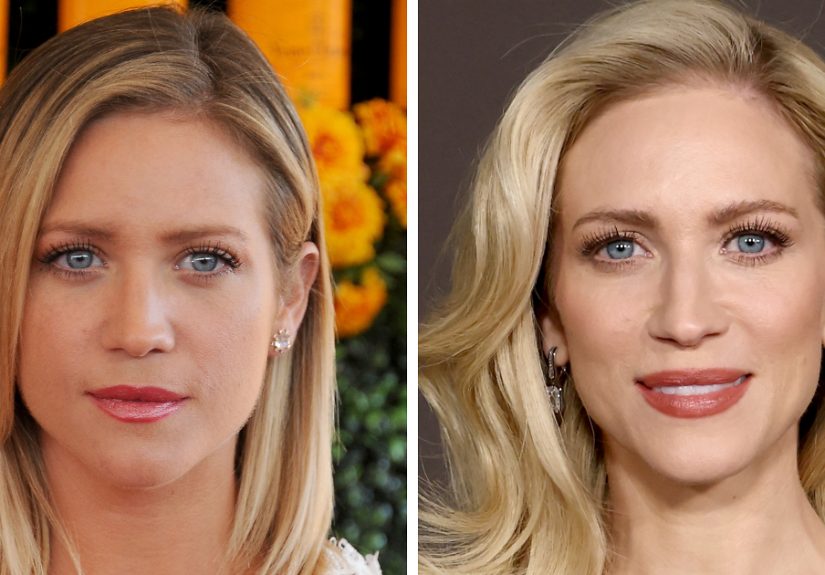
Despite Snow’s denial, some commenters remained skeptical. They focused particularly on her nose, arguing that its bridge, tip, or overall proportions appeared different in newer photographs.
The phrase “noses don’t lie” sounds decisive, which makes it perfect for social media and less perfect for serious analysis. A nose cannot give testimony, submit medical records, or explain why two photographers used different lenses. It simply occupies the center of the face and takes the blame whenever perspective changes.
Some users argued that Snow’s nose looked narrower or more refined. Others believed her brow position, eyelids, cheeks, or jawline suggested additional work. Meanwhile, supporters pointed out that her recognizable features remain consistent and that aging, styling, and professional makeup offer simpler explanations.
No commenter examining public images can independently confirm a private procedure. Unless Snow or a qualified medical professional with authorized access provides evidence, theories about a Brittany Snow nose job remain speculation.
Before-and-After Photos Are Not Medical Proof
Camera Distance Can Dramatically Alter the Nose
Research on facial photography has demonstrated that close-range images distort proportions. In one mathematical model developed by researchers associated with Rutgers and Stanford, a photograph taken from approximately 12 inches away made the base of the nose appear about 30 percent wider than it did at a standard portrait distance of five feet. The perceived width of the nasal tip also increased.
That does not mean every questionable celebrity comparison is caused by a selfie lens. It does mean that photo distance can produce visible changes without the subject changing at all.
A close camera exaggerates whatever is nearest to the lens. In a face, that is usually the nose. A longer-distance portrait tends to flatten the relative differences between the nose, cheeks, ears, and jaw. Two images can therefore make the same nose look broader, narrower, longer, or more projected.
Lighting and Makeup Reshape What Viewers Perceive
Lighting can emphasize or erase shadows along the bridge and sides of the nose. Contouring makeup can visually narrow the center of the face, while highlighting can make the bridge appear straighter. Brow styling changes the balance of the upper face, and lip color affects how viewers perceive the distance between the nose and mouth.
Even facial expression matters. Smiling can widen the nostrils, lift the cheeks, narrow the eyes, and alter the visible angle of the nasal tip. A neutral red-carpet pose will not match an expressive screenshot from a movie filmed 20 years earlier.
Different Images Need Standardized Conditions
Legitimate surgical before-and-after photography is normally standardized as much as possible. The subject should be photographed from matching angles, at comparable distances, under similar lighting, and with consistent expressions.
Celebrity collages rarely meet those conditions. One photo may be a low-resolution television still. Another may be professionally retouched. One could be captured during a smile, while the other shows a relaxed expression. Cropping can also disguise the fact that the images were taken with different lenses and from different distances.
Calling such a collage “proof” is like using two vacation photos to prove that someone secretly remodeled the Eiffel Tower.
Snow Has Previously Spoken About Rejecting Facial Surgery
Snow’s latest denial is consistent with an older story she has shared about a visible forehead scar. She received the scar following a childhood accident and was once told that it might hurt her chances of succeeding as an actress.
Her mother took her to discuss having it surgically removed, but Snow became frightened and refused to enter the office. She later said she was glad she kept the scar because it added character and represented part of her personal history.
That earlier decision does not independently prove that she has never had another procedure. It does, however, provide meaningful context. Snow has publicly discussed choosing not to surgically erase a feature that entertainment-industry voices told her to fix.
Her message at the time was that there is no single rule for how a person must look. That philosophy closely matches her response to the recent rumors: other people may make their own choices, but outsiders should not invent choices on her behalf.
The Body-Image History Behind the Headlines
The discussion becomes more serious when viewed alongside Snow’s past comments about body image and mental health. She has spoken openly about struggling with anorexia, compulsive exercise, depression, self-harm, and intense dissatisfaction with her appearance when she was young.
In a 2025 profile, Snow described once searching magazines for instructions that might tell her how to obtain someone else’s body. As a teenager, she felt deeply uncomfortable with herself and focused primarily on what she believed was wrong.
After treatment and years of recovery, she described learning to trust herself and becoming less consumed by her appearance. That context does not place her beyond public discussion, but it should encourage a little humanity.
For a person with a documented history of body-image distress, discovering that thousands of strangers are zooming in on her eyelids and measuring her nose is unlikely to be a charming afternoon activity.
Why Celebrity Plastic Surgery Speculation Is So Addictive
Celebrity transformation content thrives because it combines mystery, beauty, status, and detective work. Audiences enjoy believing they have uncovered the “secret” behind a famous person’s appearance. The format also offers reassurance: if beauty is purchased, edited, or surgically created, ordinary viewers may feel less pressure to achieve it naturally.
There is a legitimate conversation to have about celebrities disclosing paid treatments while promoting unattainable beauty standards. Problems arise when that conversation abandons evidence and begins treating every denial as deception.
A celebrity should not have to provide surgical records to satisfy a comment section. Nor should she be required to disclose every skincare appointment simply because people recognize her from Pitch Perfect.
Transparency can be valuable, but forced transparency is not really transparency. It is surveillance dressed in lip gloss.
Surgery Is Not Shameful, and Denial Is Not an Admission
The internet often approaches cosmetic work from two contradictory directions. First, it criticizes public figures for altering their appearances. Then it criticizes them for supposedly hiding those alterations. The celebrity is expected to age naturally, remain unchanged, look flawless, disclose everything, and never appear defensive. That is quite a performance review.
There is nothing inherently shameful about choosing rhinoplasty, Botox, fillers, laser resurfacing, or another properly administered treatment. Adults may make informed decisions about their own bodies.
There is also nothing suspicious about saying that a rumored procedure never occurred. Snow’s acknowledgment of Botox and lasers does not validate every additional theory. Disclosing one treatment is not a blank check allowing strangers to fill in the rest.
Experiences and Lessons From Being Judged Through Photographs
Most people will never have millions of strangers studying their faces, but the experience behind the Brittany Snow plastic surgery controversy is surprisingly relatable. Many adults have scrolled through an old photo and wondered why their nose, cheeks, eyes, or jaw appeared completely different. The first reaction is often alarm: “Did my entire face relocate without telling me?”
Then the surrounding details become obvious. The old picture may have been taken with a compact camera from across a room, while the new one came from a phone held close to the face. One image has overhead fluorescent lighting; the other has afternoon sunlight. In one, the subject is smiling. In the other, the subject has discovered the serious expression that mysteriously appears whenever someone wears formal clothing.
These comparisons can create unnecessary anxiety. A person may begin examining tiny asymmetries that have always existed or interpreting ordinary aging as a dramatic defect. Filters make the experience even stranger. After repeatedly seeing a digitally narrowed nose, enlarged eyes, and smoothed skin, an unfiltered face can feel unfamiliar even though it is the real one.
A healthier approach is to treat photographs as interpretations rather than objective measurements. A picture records light passing through a particular lens at a particular distance for a fraction of a second. It does not capture the complete truth of a face.
The Experience of Responding to a Rumor
Snow also faced a common dilemma for anyone targeted by online speculation: ignore the claim or answer it. Ignoring a rumor may protect one’s energy, but silence is often interpreted as confirmation. Responding can correct the record, yet it may also extend the life of the controversy.
Her strategy was simple and effective. She identified the specific false claims, stated what she had actually done, and stopped. She did not post a 47-slide presentation comparing her nostrils across the decades. She did not condemn other women’s choices. She supplied her account and left the internet to perform its usual gymnastics.
That response offers a useful model beyond celebrity news. When correcting misinformation, specificity usually works better than anger. “That did not happen; this is what happened” is clearer than arguing with every individual interpretation.
The Experience of Watching Someone Else Be Analyzed
Readers also have a role. Encountering a celebrity before-and-after post can feel harmless, especially when the discussion is presented as beauty education. A useful pause is to ask what evidence is actually available.
Are the photos standardized? Has the person confirmed anything? Is the analysis distinguishing between surgery, injectables, makeup, skincare, weight changes, and camera effects? Or is it simply converting visual impressions into medical claims?
Another helpful question is whether the same commentary would feel acceptable if directed at a friend. Most people would not examine a coworker’s vacation photos and announce that her eyelids had been secretly reconstructed. Celebrity status makes public curiosity understandable, but it does not make every accusation responsible.
The Experience of Aging in Publicand in Private
Snow’s situation highlights an impossible demand placed on women in entertainment. They are criticized when they age, criticized when they appear not to age, and criticized when they discuss the methods they use to care for their appearance.
Ordinary people face a quieter version of the same pressure. Social platforms preserve teenage photographs next to present-day selfies, encouraging the illusion that a face should remain fixed forever. In reality, faces are living structures. They change with age, stress, hormones, health, sleep, weight, dental work, hairstyles, and thousands of repeated expressions.
The most useful lesson is not that every celebrity denial must be accepted without thought, nor that every cosmetic procedure must remain private. It is that confidence should match evidence. A photograph can invite a question, but it cannot provide a surgical history.
Conclusion: Brittany Snow’s Answer Is the Only Confirmed Record
Brittany Snow’s response to plastic surgery rumors was blunt because the claims were specific. She said she had never undergone facial surgery, denied having a nose job, eyelid surgery, or a facelift, and acknowledged minimal Botox and laser treatments.
Some netizens continued to insist that “noses don’t lie,” but that slogan overlooks the many ways photography can alter facial proportions. It also turns an unverified impression into an accusation against someone who has directly denied it.
Snow’s comments do not settle every internet debate, because internet debates are rarely interested in retirement. They do establish the responsible factual boundary: surgery claims remain unconfirmed speculation, while Botox and laser treatments are the cosmetic procedures she has publicly disclosed.
The larger story is about how audiences discuss beauty. Curiosity is normal. Analysis can be interesting. But a person’s face is not public medical documentation, and a comment section is not a surgical consultation.