
Table of Contents >> Show >> Hide
- What Is Browned Butter Sauce?
- Why This Browned Butter Sauce Recipe Works
- Browned Butter Sauce Recipe
- How to Tell When Brown Butter Is Done
- Best Tips for Perfect Browned Butter Sauce
- Flavor Variations
- What to Serve With Browned Butter Sauce
- Common Mistakes to Avoid
- How to Store and Reheat Browned Butter Sauce
- Frequently Asked Questions About Browned Butter Sauce
- Nutrition Notes
- Kitchen Experience: What I Learned Making Browned Butter Sauce Again and Again
- Conclusion
Browned butter sauce is what happens when ordinary butter puts on a tiny tuxedo and becomes the most charming guest at dinner. It is rich, nutty, aromatic, golden, and almost suspiciously simple. With one pan, a few minutes, and a little attention, butter transforms into a glossy sauce that can make pasta taste restaurant-worthy, vegetables feel special, fish seem fancy, and weeknight chicken behave like it has reservations at a bistro.
The magic of a great browned butter sauce recipe is not in a long ingredient list. It is in timing. Butter contains fat, water, and milk solids. As it cooks, the water steams away, the milk solids toast, and the flavor deepens into notes of hazelnut, caramel, and warm biscuits. That toasted aroma is the signal that you are no longer making melted butter. You are making liquid gold.
This guide walks you through how to make browned butter sauce, how to keep it from burning, what to serve it with, and how to customize it with sage, lemon, garlic, Parmesan, capers, or herbs. The result is a flexible sauce you can use for pasta, ravioli, gnocchi, roasted vegetables, seafood, chicken, steak, and even sweet dishes like pancakes or pound cake.
What Is Browned Butter Sauce?
Browned butter sauce, also called beurre noisette, is butter cooked until its milk solids turn golden brown and develop a toasted, nutty flavor. The French name means “hazelnut butter,” which makes sense the moment the aroma hits your kitchen. It smells like roasted nuts, warm pastry, and good life choices.
At its simplest, browned butter sauce can be made with just butter and salt. But many cooks build on that base by adding fresh sage, garlic, lemon juice, black pepper, Parmesan cheese, or pasta water. These additions help balance the richness and make the sauce cling beautifully to food.
Why This Browned Butter Sauce Recipe Works
This recipe focuses on controlled heat, visual cues, and balanced flavor. Butter can go from golden to burnt quickly, so the method matters more than the ingredient count.
It Uses Unsalted Butter for Better Control
Unsalted butter gives you full control over the final seasoning. Since browned butter concentrates in flavor as water evaporates, salted butter can become overly salty if reduced too aggressively. You can always add salt later; sadly, you cannot ask salt to politely leave the pan.
It Adds Lemon for Brightness
Browned butter is rich and nutty, but richness needs balance. A splash of lemon juice cuts through the fat and makes the sauce taste lively instead of heavy. Lemon also pairs beautifully with pasta, fish, chicken, green beans, asparagus, and squash.
It Includes Optional Herbs and Savory Add-Ins
Fresh sage is the classic partner for brown butter, especially with ravioli, gnocchi, and butternut squash. Garlic, thyme, parsley, capers, and Parmesan are also excellent additions. Think of the basic recipe as a little black dress: simple, elegant, and ready for accessories.
Browned Butter Sauce Recipe
Recipe Overview
- Prep time: 5 minutes
- Cook time: 5 to 8 minutes
- Total time: 10 to 13 minutes
- Yield: About 1/3 to 1/2 cup sauce
- Servings: 4 servings for pasta or vegetables
- Best for: Pasta, ravioli, gnocchi, fish, chicken, vegetables, and roasted squash
Ingredients
- 1/2 cup unsalted butter, cut into tablespoon-size pieces
- 1/4 teaspoon kosher salt, plus more to taste
- 1 tablespoon fresh lemon juice
- 1 teaspoon lemon zest, optional
- 8 to 10 fresh sage leaves, optional
- 1 small garlic clove, finely minced, optional
- 1/4 teaspoon freshly ground black pepper
- 2 tablespoons grated Parmesan cheese, optional for pasta
- 1 to 3 tablespoons reserved pasta water, optional for a silkier pasta sauce
Instructions
- Choose the right pan. Use a light-colored stainless steel skillet or saucepan if possible. A pale pan helps you see the butter changing from yellow to golden to amber.
- Melt the butter. Add the butter pieces to the pan and set it over medium heat. Stir or swirl occasionally so the butter melts evenly.
- Let it foam. The butter will bubble and foam as its water cooks off. Keep stirring gently and watch the bottom of the pan.
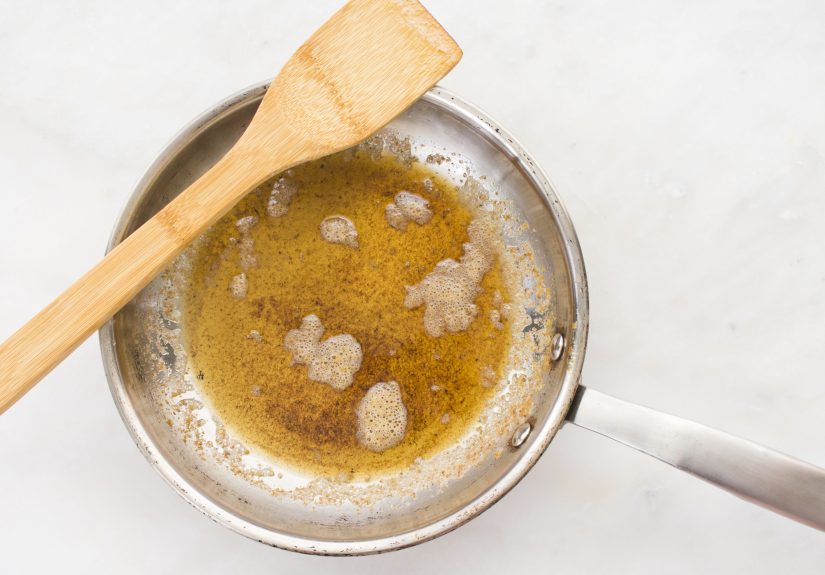
- Look for golden specks. After several minutes, the milk solids will sink and begin to brown. The butter will smell nutty and toasted.
- Add sage or garlic carefully. If using sage, add it when the butter is almost browned and cook for 20 to 40 seconds until crisp. If using garlic, add it near the end so it does not burn.
- Stop the cooking. Once the butter is deep golden brown with amber flecks, remove the pan from the heat immediately. Pour it into a heatproof bowl if you are not using it right away.
- Finish the sauce. Stir in salt, black pepper, lemon juice, and lemon zest. Add Parmesan and a splash of pasta water if serving with noodles, ravioli, or gnocchi.
- Serve warm. Spoon the sauce over your dish immediately, making sure to include the toasted brown bits at the bottom. Those little specks are flavor confetti.
How to Tell When Brown Butter Is Done
The easiest way to master browned butter sauce is to use your senses. First, listen. The butter will sizzle loudly as water evaporates. As the sizzling calms down, the browning stage begins. Next, look. The butter changes from pale yellow to golden, then to amber. Finally, smell. When it has a warm, nutty aroma, it is ready.
The sauce should not smell smoky, acrid, or harsh. If the milk solids turn black, the butter has burned. Burnt butter tastes bitter and cannot really be rescued, no matter how optimistically you stare at it. Start over with fresh butter and lower the heat slightly.
Best Tips for Perfect Browned Butter Sauce
Use Medium Heat, Not High Heat
High heat may seem faster, but it gives you less control. Medium heat allows the water to evaporate and the milk solids to toast gradually. You want browning, not a butter emergency.
Cut the Butter Into Even Pieces
Even pieces melt at the same speed. This prevents one part of the butter from browning before the rest has melted.
Keep the Butter Moving
Swirl the pan or stir with a heatproof spatula. This helps the milk solids brown evenly instead of sticking to one hot spot.
Remove It From the Pan Quickly
Brown butter continues cooking in a hot pan even after the heat is off. If you are not immediately adding pasta, vegetables, or another ingredient, pour it into a bowl to stop the browning.
Add Acid at the End
Lemon juice, a splash of vinegar, or even a few capers can wake up the sauce. Add acidic ingredients after the butter browns so the flavor stays fresh and bright.
Flavor Variations
Sage Browned Butter Sauce
Add fresh sage leaves during the final minute of cooking. They will crisp in the hot butter and release an earthy aroma. This version is excellent with pumpkin ravioli, butternut squash, gnocchi, tortellini, and roasted sweet potatoes.
Lemon Brown Butter Sauce
Stir in lemon juice and zest after browning. This version is ideal for fish, shrimp, scallops, asparagus, broccoli, green beans, and roasted cauliflower.
Garlic Brown Butter Sauce
Add minced garlic during the last 30 seconds of browning. Garlic burns easily, so do not add it too early. This version is wonderful with pasta, chicken, mushrooms, and crusty bread.
Capers and Brown Butter Sauce
Stir in drained capers after the butter browns. Their salty, briny flavor cuts through the richness and pairs beautifully with fish, chicken piccata-style dishes, and roasted vegetables.
Parmesan Brown Butter Pasta Sauce
For pasta, whisk a little reserved pasta water into the browned butter, then add finely grated Parmesan. The starchy water helps the sauce emulsify and coat the noodles instead of sliding off like it has somewhere else to be.
What to Serve With Browned Butter Sauce
Browned butter sauce is famous for pasta, but it is far more versatile than that. Try it over cheese ravioli, mushroom tortellini, potato gnocchi, spaghetti, fettuccine, or short pasta shapes like rigatoni and orecchiette. The sauce settles into ridges and pockets, making every bite taste luxurious.
It is also excellent over vegetables. Spoon it over roasted carrots, Brussels sprouts, asparagus, green beans, cauliflower, delicata squash, or sweet potatoes. Add toasted walnuts, hazelnuts, or breadcrumbs for crunch.
For proteins, browned butter sauce pairs beautifully with pan-seared fish, scallops, shrimp, chicken cutlets, pork chops, and steak. A little lemon or caper keeps it balanced. For a cozy vegetarian meal, drizzle it over roasted squash with goat cheese and herbs.
Common Mistakes to Avoid
Walking Away From the Stove
Brown butter is quick. That is good news, unless you decide this is the perfect moment to check your phone. Stay near the pan and keep watching once the foaming begins to subside.
Using a Dark Pan
A black or dark nonstick pan makes it difficult to judge color. If that is all you have, rely more on aroma and use moderate heat.
Throwing Away the Brown Bits
The toasted specks at the bottom are browned milk solids, and they carry much of the nutty flavor. Do not strain them out unless a specific dessert or sauce requires a smoother finish.
Adding Garlic Too Soon
Garlic cooks faster than butter browns. Add it near the end, and remove the sauce from heat as soon as it smells fragrant.
How to Store and Reheat Browned Butter Sauce
Browned butter sauce is best served fresh, but leftovers can be stored in an airtight container in the refrigerator for up to one week. The butter will solidify when chilled. Reheat it gently in a small pan over low heat or microwave it in short bursts, stirring between each one.
If the sauce includes fresh herbs, garlic, lemon juice, or cheese, use it sooner for the best flavor. For meal prep, you can make plain brown butter ahead of time, refrigerate it, and add lemon, herbs, or Parmesan when serving.
Frequently Asked Questions About Browned Butter Sauce
Can I use salted butter?
Yes, but use less added salt. Salted butter varies by brand, so taste before seasoning the final sauce.
Can I make browned butter sauce dairy-free?
Traditional browned butter depends on dairy milk solids, which create the toasted flavor. Some plant-based butters can brown slightly, but many do not behave the same way because their formulas differ. For a dairy-free option, use a vegan butter that specifically performs well for browning, then enhance it with toasted nuts, herbs, and lemon.
Why did my brown butter burn?
The heat was likely too high, or the butter stayed in the hot pan too long. Next time, use medium heat, stir often, and remove the pan as soon as the butter smells nutty and turns amber.
Can I double the recipe?
Yes. Use a larger pan so the butter cooks evenly. A bigger batch may take slightly longer to brown.
Is browned butter sauce the same as clarified butter?
No. Clarified butter is butter with the water and milk solids removed. Brown butter keeps the toasted milk solids, which give the sauce its nutty flavor and golden-brown flecks.
Nutrition Notes
Browned butter sauce is rich because butter is the main ingredient. A little goes a long way. For a balanced plate, pair it with vegetables, lean protein, or pasta portions that are not swimming in sauce. You want a glossy coating, not a butter pool deep enough to require a lifeguard.
Kitchen Experience: What I Learned Making Browned Butter Sauce Again and Again
The first time I made browned butter sauce, I treated it like melted butter with a college degree. I put butter in a pan, turned up the heat, and assumed confidence would handle the rest. Confidence did not handle the rest. Within minutes, the kitchen smelled less like toasted hazelnuts and more like a tiny campfire inside a dairy farm. That first batch went straight into the trash, and I learned the most important rule of brown butter: it rewards attention.
After making it many times, the process becomes almost meditative. The butter melts, foams, hisses, and then slowly quiets down. That quiet moment is the turning point. It is when the milk solids begin to toast and the sauce develops its signature flavor. I like using a stainless steel skillet because the color change is easy to see. The bottom of the pan starts showing tiny golden flecks, and then the aroma changes from creamy to nutty. That smell is the best timer in the kitchen.
One practical lesson is to prepare all add-ins before turning on the stove. If I plan to add lemon juice, sage, garlic, or Parmesan, I measure and chop everything first. Brown butter does not wait politely while you search for a lemon or wrestle with a garlic clove. Once the sauce is ready, things move quickly. Having ingredients nearby keeps the sauce from crossing the line between deeply browned and unfortunately burned.
For pasta, I have found that reserved pasta water is the secret to a better texture. Plain browned butter tastes amazing, but it can feel oily if tossed with noodles by itself. A splash of starchy pasta water helps the sauce cling to the pasta. Add Parmesan, black pepper, and lemon zest, and suddenly a simple bowl of noodles tastes like something served by a chef who says “beautiful” a lot while plating.
Sage is my favorite herb for a cozy version. The leaves crisp in the butter and become delicate, earthy chips. This is especially good with ravioli, gnocchi, roasted pumpkin, or sweet potatoes. For seafood, I skip the sage and use lemon, capers, and parsley. That combination keeps the sauce bright enough for scallops, shrimp, or flaky white fish.
The biggest experience-based tip is to remove the butter from the pan a few seconds before you think it is perfect. Residual heat continues to cook the milk solids. If the sauce looks perfectly dark in the pan, it may taste slightly bitter by the time it reaches the plate. Aim for deep golden amber, pour it out, and let carryover heat do the final whisper of cooking.
Browned butter sauce is one of those small kitchen skills that makes everyday meals feel upgraded. It is fast, affordable, and surprisingly elegant. Once you learn the cues, you can improvise with whatever is in the kitchen: herbs, citrus, nuts, cheese, pasta, vegetables, or seafood. It is proof that a good sauce does not need to be complicated. Sometimes all dinner needs is butter, heat, and someone willing to pay attention for seven glorious minutes.
Conclusion
A great browned butter sauce recipe is simple, but it delivers flavor far beyond its ingredient list. By cooking butter until the milk solids turn golden and nutty, you create a rich sauce that works with pasta, vegetables, seafood, chicken, and more. The key is to use medium heat, watch the color, trust the aroma, and finish with bright ingredients like lemon juice or savory additions like sage, garlic, capers, or Parmesan.
Once you master the technique, browned butter sauce becomes a reliable kitchen shortcut for making ordinary food taste special. It is fast enough for weeknights, elegant enough for guests, and flexible enough to match whatever you already have in the fridge. In other words, it is the culinary equivalent of finding a twenty-dollar bill in your coat pocket.
Note: This article is written in original American English for web publication and is based on widely used, real cooking techniques for making browned butter sauce.







 Close
Close