Table of Contents >> Show >> Hide
- What “helping your mental health” can realistically mean
- Built-in Apple features that can support mental wellbeing
- 1) State of Mind: mood logging that can reveal patterns
- 2) Mental health questionnaires: gentle screening, not diagnosis
- 3) Mindfulness on Apple Watch: Breathe and Reflect sessions
- 4) Sleep tools: schedules, Wind Down, and tracking
- 5) Movement and Activity: the mood-lifting habit that sneaks up on you
- 6) Focus modes: protecting your attention is protecting your nervous system
- 7) Journaling: prompts, gratitude, and memory-making (without buying a notebook you’ll abandon)
- What the science supports (and what your devices are actually “doing”)
- How to use Apple Watch and iPhone for mental health (without turning into a data goblin)
- Risks and limitations: when these tools can make things worse
- Privacy: mental health support is only helpful if you feel safe using it
- Bottom line: yes, they can helpif you use them like tools, not judges
- Experiences: What it can look like in real life
- Experience 1: “My watch taught me to interrupt spirals early.”
- Experience 2: “Mood logging helped me spot my sneaky triggers.”
- Experience 3: “Sleep tracking made me stop negotiating with midnight.”
- Experience 4: “Activity rings turned into a ‘keep promises to myself’ practice.”
- Experience 5: “Journal prompts helped me process instead of ruminate.”
- Sources consulted (names only; no links)
Your Apple Watch can’t do therapy. Your iPhone can’t prescribe inner peace. And neither device can magically delete your group chat.
But together? They can be surprisingly good at helping you build the boring, powerful habits that mental health often depends on:
moving your body, sleeping like a human, noticing your emotions before they drive the bus, and putting your attention back in your hands.
Think of Apple Watch and iPhone as a “support crew,” not a psychiatrist. They can nudge you to pause, track patterns you might miss,
and reduce chaos (like the dopamine confetti of nonstop notifications). They can also backfire if you treat them like a lie detector for your feelings.
Used wisely, though, they can make the healthy choice the easy choiceand that’s not nothing.
What “helping your mental health” can realistically mean
Mental health is big: mood, anxiety, stress, focus, resilience, relationships, and how well you’re coping day-to-day.
A smartwatch and phone can’t replace professional care, but they can support four practical mental-health levers:
- Awareness: noticing emotions, triggers, and patterns (without spiraling into overthinking).
- Regulation: short tools to calm your body (breathing, mindfulness breaks, movement).
- Foundations: sleep, activity, and routinethe unglamorous “mental health infrastructure.”
- Friction control: reducing interruptions and doomscrolling that can amplify stress and anxiety.
The magic is not the device. The magic is the feedback loop: you do a small action, you get a small signal, and your brain goes,
“Oh, that mattered.” Then you do it againpreferably before your next meeting turns into an emotional hostage situation.
Built-in Apple features that can support mental wellbeing
1) State of Mind: mood logging that can reveal patterns
Apple’s Health app includes a Mental Wellbeing area where you can log momentary emotions and daily moods.
Over time, it can show trends and associationslike how your mood lines up with sleep, exercise, time in daylight, and mindful minutes.
The goal isn’t to rate yourself like a movie review. It’s to build emotional awareness with data that’s actually about you.
Practical use: if you notice that “Sunday night = dread” or “late afternoon = cranky goblin mode,” you can plan around it:
schedule a walk, adjust caffeine, block a Focus mode, or book therapy on the day you’re most likely to cancel.
2) Mental health questionnaires: gentle screening, not diagnosis
In the Health app, you can take standardized assessments for depression risk and anxiety risk.
Apple notes these are informational and not a medical diagnosis, and the results can be exported as a PDF to share with a clinician.
The assessments include widely used tools such as PHQ-9 and GAD-7 (availability varies by region/language).
Practical use: if you’ve been “fine” for months but your answers suggest you might not actually be fine,
that’s a solid signal to talk to a professional. Consider it a flashlight, not a verdict.
3) Mindfulness on Apple Watch: Breathe and Reflect sessions
Apple Watch’s Mindfulness app includes short Breathe and Reflect sessions.
These aren’t meant to make you a monk. They’re meant to give your nervous system a reset button you can press in real life:
before a presentation, after an argument, or while waiting for your car’s “check engine” light to spiritually attack you.
Practical use: set a daily reminder at the time you usually start stress-snacking or rage-scrolling. Two minutes is enough to shift your physiology.
And if you hate it? That’s still useful information. Mental health is also about finding what you’ll actually do.
4) Sleep tools: schedules, Wind Down, and tracking
Sleep and mental health are close friendssometimes supportive, sometimes co-dependent. iPhone’s Health app can help you set a sleep goal,
build a schedule, and use Sleep Focus to reduce distractions. If you wear your Apple Watch at night, you can also track sleep metrics.
Practical use: don’t obsess over nightly “scores.” Use sleep data like a weather forecast: it guides your plan.
After a short night, you might choose a lighter workout, an earlier bedtime, or extra boundaries instead of “pushing through”
and then wondering why everyone’s chewing sounds like a personal insult.
5) Movement and Activity: the mood-lifting habit that sneaks up on you
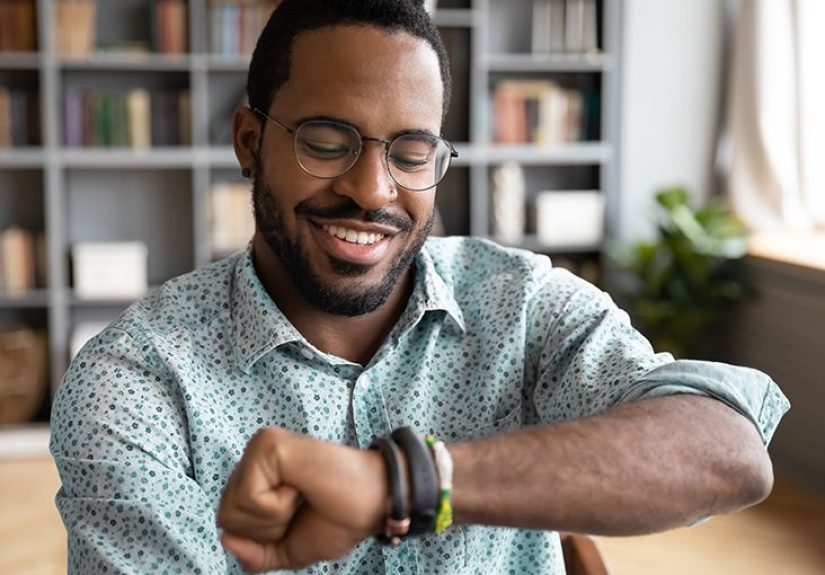
Apple Watch is famously good at getting people to move: rings, streaks, reminders, workouts, step counts.
Physical activity is strongly linked with better mood and lower anxiety for many peopleand the Watch can make activity more consistent.
Practical use: treat movement like medication for your brain (with your clinician’s guidance if needed). “Ten minutes counts” is a powerful rule.
A brisk walk after lunch, a 7-minute dance break, or two flights of stairs can be enough to change how you feelespecially if you repeat it.
6) Focus modes: protecting your attention is protecting your nervous system
Stress isn’t only about what happens to you. It’s also about how often you’re interrupted. Focus modes on iPhone (including Sleep Focus and Do Not Disturb)
let you silence notifications from specific people/apps, set schedules, and reduce random pings that keep your brain in “always on” mode.
Practical use: build a “Calm Focus” that allows only true emergencies and a couple of safe people. Then pair it with a Watch face
that shows time, a breathing shortcut, and your next calendar block. Boring? Yes. Effective? Also yes.
7) Journaling: prompts, gratitude, and memory-making (without buying a notebook you’ll abandon)
Apple’s Journal app offers prompts and suggestions that can help you reflect on your day, capture memories, and practice gratitude or meaning-making.
Journaling isn’t a cure-all, but for many people it supports emotional processing and reduces ruminationespecially when it’s simple and consistent.
Practical use: keep it tiny. Three lines. One win, one challenge, one thing you’re grateful for. Done.
You’re not writing a memoir; you’re training your brain to notice your life with less distortion.
What the science supports (and what your devices are actually “doing”)
It’s important to separate “Apple says this feature exists” from “this feature improves mental health.”
The strongest evidence usually supports the behaviors these tools encouragemovement, mindfulness, sleep, and self-monitoringrather than the gadgets themselves.
Physical activity and mood
Regular physical activity is associated with reduced anxiety and reduced risk of depression, and it can help people sleep better.
Even short bouts can reduce short-term anxiety for many adults. Your Apple Watch helps by making activity visible, measurable, and easier to repeat.
There’s also research linking daily step count and depression outcomes, and studies examining wearable use among adults with depression/anxietysuggesting wearables can
support higher activity levels. The takeaway: the Watch doesn’t “treat depression,” but it can support one of the most evidence-backed lifestyle levers available.
Mindfulness and stress
Mindfulness and meditation practices have research support for reducing stress and improving wellbeing for many people.
Apple Watch’s Breathe/Reflect is essentially a “frictionless delivery system” for a practice you might otherwise forget to do.
Two minutes isn’t dramaticbut repeated small downshifts add up, especially when you pair them with good sleep and movement.
Sleep and mental distress
Sleep problems and mental distress often travel together. Improving sleep habits can support better mood, attention, and emotional regulation.
Tracking is most helpful when it leads to behavior changes: consistent wake times, fewer late-night notifications, and a Wind Down routine that isn’t just “one more episode.”
What wearables can’t reliably do: read your mind
Many devices try to infer “stress” from heart rate or heart rate variability. That can be useful as a signal, but it’s not a mind-reading feature.
Your heart rate rises when you’re anxious… and when you’re excited, laughing, exercising, or sprinting to catch a flight.
Use these metrics as clues, not commandments.
How to use Apple Watch and iPhone for mental health (without turning into a data goblin)
Create a simple “mental health stack” (5 minutes a day)
- Morning: Log a quick State of Mind entry (10 seconds).
- Midday: Do a 2-minute Breathe session or a short walk.
- Evening: Journal 3 lines or answer one reflection prompt.
- Night: Turn on Sleep Focus and charge your phone away from your bed.
The point is not perfection. The point is consistency. If you only do one thing, choose Sleep Focus. A calmer night creates a calmer day.
Use patterns, not single days
One bad mood entry is just a bad mood. A pattern is information. Look for trends over two to four weeks:
Does mood dip after poor sleep? After heavy screen time? During weeks with no workouts? After late caffeine?
Once you spot a pattern, make one change and track again.
Turn off the noise that spikes anxiety
- Set Focus modes for Work, Personal, and Sleepand actually schedule them.
- Allow notifications only from the apps and people that matter.
- Move “doom apps” off your home screen. Make them harder to reach when you’re tired.
Mental health tip disguised as iPhone housekeeping: your brain doesn’t need to rehearse emergencies all day.
Share data strategically (and only with people you trust)
If you have a therapist, coach, or clinician, it can help to bring summaries: sleep consistency, activity trends, and mood patterns.
If you use Health sharing with family, keep it focused and consensualsupportive, not surveillant.
“I’m sharing because I want support,” is healthy. “I’m sharing so you can police me,” is usually not.
Risks and limitations: when these tools can make things worse
1) Overtracking and anxiety spirals
If you’re prone to health anxiety, perfectionism, or compulsive checking, tracking can fuel obsession:
“My sleep was bad, so today is ruined.” That’s not data; that’s doom prophecy.
In that case, limit metrics, hide charts, or track only a few days per week.
2) Mistaking screening for diagnosis
PHQ-9 and GAD-7 style tools can be useful, but they don’t diagnose you.
A high score is a sign to seek care, not a label to self-apply and panic about at 2 a.m.
3) Using “stress signals” as truth
Heart metrics can be helpful, but they’re not mood detectors. If your watch suggests you’re stressed, ask,
“What else could explain this?” Coffee? A workout? A hot shower? A first date?
Use your own context as the primary source of truth.
4) When you should get real help
If you’re experiencing persistent sadness, panic, hopelessness, self-harm thoughts, or you’re not functioning the way you normally do,
reach out to a clinician. In the U.S., you can call or text 988 for the Suicide & Crisis Lifeline.
Devices can support mental health; they should never be the only support you have.
Privacy: mental health support is only helpful if you feel safe using it
Mental health data is sensitive. Apple provides controls that let you decide what gets logged, what gets shared, and which apps can access Health data.
Health sharing between users can be protected with end-to-end encryption, and you can manage permissions for third-party apps that request access.
If you choose iCloud syncing, Apple describes multiple layers of protection, including end-to-end encryption for certain data categories.
Best practice: review Health permissions quarterly. If an app doesn’t need your mood, it doesn’t get your mood.
Your feelings are not a free sample at the mall.
Bottom line: yes, they can helpif you use them like tools, not judges
Apple Watch and iPhone can support mental health by building awareness, encouraging activity, improving sleep habits, offering mindfulness breaks,
reducing digital overwhelm, and making it easier to notice patterns. The biggest wins come from small, repeatable actionsdone consistently.
Use the devices to support your brain, not grade it. If you treat your watch like a coach and your phone like a boundary-setter,
you’ll get the best of both worlds: better habits, fewer interruptions, and a little more calm in the chaos.
Experiences: What it can look like in real life
Below are realistic, composite examples based on common ways people use Apple Watch and iPhone features. They’re not medical advice,
and they’re not meant to imply that everyone will have the same results. The point is to show how the tools can fit into everyday life.
Experience 1: “My watch taught me to interrupt spirals early.”
A project manager notices she tends to spiral right before meetingsheart racing, jaw clenched, brain writing disaster fan fiction.
She starts using a two-minute Breathe session on her Apple Watch whenever she sees the calendar reminder pop up. At first, it feels too small to matter.
But after two weeks, she realizes the routine is doing one key thing: it creates a pause where she can choose a response instead of reacting.
She pairs it with a Focus mode that silences everything except her team and family during work blocks. Meetings don’t magically become fun,
but they stop feeling like a daily threat. She describes it as “less dread, more direction.”
Experience 2: “Mood logging helped me spot my sneaky triggers.”
A college student uses State of Mind for 30 days, logging a quick entry after lunch and at the end of the day.
He expects the chart to tell him something dramatic, like “your problem is existence.” Instead, the pattern is painfully practical:
mood dips on days when he sleeps late, skips breakfast, and scrolls for an hour before class. On better days, he has a short walk outside
and keeps his phone on Sleep Focus overnight. The data doesn’t shame himit gives him a map. He keeps two habits: a consistent wake time
and a 10-minute walk after his first class. He still has hard days, but he feels less confused by them.
Experience 3: “Sleep tracking made me stop negotiating with midnight.”
A new parent feels anxious and foggy, convinced something is “wrong” with them. Their Apple Watch sleep trend shows the obvious truth:
their sleep is fragmented and short, and it’s been that way for weeks. Instead of blaming their personality, they shift to problem-solving.
They use Sleep Focus, charge the phone across the room, and set a tiny Wind Down routine: shower, stretch, and one Journal entry prompt.
They also agree with their partner on a rotating “protected sleep block.” The anxiety doesn’t vanish, but the fog lifts enough to make therapy sessions
more productiveand to stop treating exhaustion like a moral failure.
Experience 4: “Activity rings turned into a ‘keep promises to myself’ practice.”
A remote worker feels low energy and unmotivated. The Watch’s rings feel sillyuntil he reframes them as “minimum viable self-care.”
He sets an intentionally easy Move goal, because perfection is the enemy here. On bad days, he does a five-minute walk.
On better days, he adds a longer workout. Over time, the ring streak becomes less about the ring and more about identity:
“I’m someone who keeps small promises to myself.” The mood benefits are gradual, but real. He also notices sleep improves on days he moves more,
and that his evening screen time drops when he’s physically tired in a healthy way.
Experience 5: “Journal prompts helped me process instead of ruminate.”
Someone dealing with workplace stress finds their brain looping on the same arguments at night. They use the Journal app’s prompts to write
a short entry: what happened, what they felt, what they needed, and what they’ll try tomorrow. The first week is awkward.
The second week, they realize the practice is doing something subtle: it turns mental noise into a plan.
They stop re-living the day in their head and start closing the tab. They keep entries short and don’t aim for eloquencejust clarity.
Combined with Sleep Focus and a brief breathing session, bedtime becomes less like a courtroom and more like… bedtime.
The common thread in these experiences isn’t “Apple saved me.” It’s “I used simple tools to build consistent habits.”
That’s the best-case scenario for Apple Watch and iPhone as mental health supports: not a miracle, but a steady, practical assist.
Sources consulted (names only; no links)
Apple Support (State of Mind; mental health assessments; Mindfulness sessions; Sleep tracking; Focus settings; Health data sharing permissions),
Apple Newsroom (mental health features overview), Apple Security & Privacy documentation (Health data protection; iCloud security),
CDC (physical activity benefits; mental distress and sleep), National Institute of Mental Health (depression; caring for your mental health),
SAMHSA (behavioral health resources/988 guidance), American Psychological Association (mindfulness evidence),
Mayo Clinic (meditation and stress), Harvard Health Publishing (exercise and mood/anxiety),
JAMA Network Open (step count/depression research; smartwatch well-being trial),
NIH/PubMed (wearables and activity in adults with depression/anxiety), JMIR publications (digital interventions research).