
Table of Contents >> Show >> Hide
- The Made-in-America Origin Story (and Why It Still Matters)
- Pick Your Cookie Personality: The Texture Spectrum
- Cookie Chemistry, But Make It Friendly
- The Big Technique Power-Ups (That Don’t Feel Like Homework)
- A Versatile “Base Blueprint” Recipe (Customize It Like a Pro)
- Upgrades and Variations That Actually Change the Cookie
- Troubleshooting: When Cookies Misbehave
- Storage, Freezing, and “Emergency Cookie Planning”
- FAQ: Chocolate Chip Cookie Questions People Whisper to Their Ovens
- Chocolate Chip Cookies Experiences: The Cookie Diary (500-ish Words of Real-Life Cookie Truth)
- Conclusion
Chocolate chip cookies are the rare food that can make a rough day feel negotiable. They’re warm, buttery, and scientifically engineered (by accident or geniushistory is messy) to deliver tiny pockets of chocolate joy in every bite. Also: they’re the unofficial currency of “sorry I forgot,” “welcome to the neighborhood,” and “I need you to like me at this potluck.”
But here’s the twist: the “best” chocolate chip cookie doesn’t exist. The best cookie is the one you want right now. Crispy edges? Thick and gooey? Chewy all the way through like a caramelized hug? You’re not pickyyou’re informed. This guide breaks down the cookie choices, the ingredient “why,” and the techniques bakers use to consistently land the texture and flavor you’re after (without turning your kitchen into a crime scene of flour dust and regret).
The Made-in-America Origin Story (and Why It Still Matters)
The chocolate chip cookie’s roots run through Massachusetts and a restaurant called the Toll House Inn, where Ruth Graves Wakefield developed a cookie that turned into a national obsession. The details get retold a dozen wayssome versions say it was a happy accident, others say Wakefield was intentionally creating something newbut what matters for modern bakers is this: the cookie was designed to be buttery, sweet, and studded with chocolate that holds its shape, giving you both cookie and chocolate in each bite.
That “classic” profilecrisp edge, chewy center, balanced sweetnessbecame the blueprint that most recipes still echo today. Even when we brown the butter, rest the dough, add fancy chocolate, or sprinkle flaky salt on top like we’re auditioning for a food documentary, we’re still orbiting that original idea: a cookie that tastes like comfort with a little swagger.
Pick Your Cookie Personality: The Texture Spectrum
Before you measure a single cup of flour, decide what you’re chasing. Texture isn’t random. It’s a result of choicesfat, sugar, flour protein, mixing, and how long you let dough sit before baking.
1) Thin & Crispy (with a snappy edge)
- More granulated sugar tends to encourage spread and crispness.
- Warmer dough spreads faster, which can mean thinner cookies.
- Longer bake (still not “until fossilized”) helps drive off moisture.
2) Chewy (the classic “bend but don’t break”)
- More brown sugar boosts moisture and chew (thanks to molasses).
- Chilling the dough slows spread and often improves texture.
- Don’t overbake; pull when centers look slightly underdone and let carryover heat finish the job.
3) Thick & Gooey (soft centers, bakery vibes)
- Chilled or portioned-and-chilled dough balls help keep height.
- Higher-protein flour (like a partial bread flour swap) can add chew and structure.
- Aggressive scoops: larger dough portions bake thicker by nature.
Think of this like a “cookie dial.” You’re not locked into one style forever. You can literally choose your mood and bake it.
Cookie Chemistry, But Make It Friendly
A chocolate chip cookie is basically a delicious negotiation between ingredients. Here’s what each one is doing while you’re just trying to eat three “for quality control.”
Butter: Flavor, Spread, and That Bakery Smell
Butter brings richness and helps cookies spread as it melts. Softened butter (creamed with sugar) traps air for a lighter structure. Melted butter tends to make cookies denser and chewier. Browned butter is a whole personality: it adds nutty, toasty depth that can taste like butterscotch without adding a single piece of candy.
If you brown butter, remember you’re reducing water content. Less water means less dissolving and different texture behavior, so many browned-butter approaches balance that with technique (cooling, rest time, sugar choices) rather than pretending browned butter is “just regular butter with a tan.”
Sugar: Sweetness, Spread, and Chew
Granulated sugar encourages spread and crispness. Brown sugar adds moisture and chew, plus deeper flavor. Using a blend gives you balance: edges that caramelize and centers that stay soft.
Eggs: Structure and Moisture
Eggs bind the dough and add moisture. Extra yolk can make cookies richer and chewier. More egg white can add structure, but too much can push cookies toward “puffy” or cakey if other factors align that way.
Flour: Thickness and Bite
Flour provides structure. All-purpose flour is the standard. Bread flour (higher protein) can increase chew and reduce spread. Measuring flour accurately matters more than people want to admitbecause “a little extra” flour is how cookies turn into polite, dry disks that taste like they’re waiting for coffee to help them.
Leaveners: Baking Soda vs. Baking Powder
Baking soda promotes spread and browning, often giving a more classic chocolate chip cookie profile. Baking powder can add a bit more lift and tenderness. Some recipes use both, but baking soda is the usual star for that familiar chewy-and-browned cookie vibe.
Salt and Vanilla: The Flavor Amplifiers
Salt doesn’t just make cookies saltyit makes them taste more like themselves. Vanilla rounds out sweetness and makes chocolate taste “bigger.” If your cookies ever taste one-note, it’s usually not because you didn’t add more sugar. It’s because you didn’t balance what’s already there.
Chocolate: Chips vs. Chunks vs. “I Chopped a Bar Like a Legend”
Chocolate chips are engineered to hold shape, giving you distinct bites. Chopped chocolate melts more, creating pools and streaks. A mix is often the best of both worlds: chips for structure, chopped chocolate for drama.
The Big Technique Power-Ups (That Don’t Feel Like Homework)
1) Chill the Dough (Yes, It’s Worth It)
Chilling solidifies the fat, which slows spread in the oven. That’s why chilled dough often bakes thicker with better edges. It also gives flour time to hydrate and flavors time to mingle, which can make cookies taste more rounded and less “sweet flour blob.”
Practical approach: 30 minutes helps if your dough feels too soft. 2–24 hours is a sweet spot for many bakers. Up to 72 hours can deepen flavor and improve texture if you’re planning ahead.
2) Resting Dough Improves Flavor (Because Time Is an Ingredient)
Resting isn’t just for controlling spread; it’s about hydration and cohesion. As dough sits, flour absorbs moisture, sugars dissolve more evenly, and the whole thing bakes up with better texture and caramelization. If you’ve ever had a cookie that tasted “fine” on day one and “wow” on day two, that’s the phenomenon.
3) Weigh Ingredients When You Can
Baking is a friendly math problem. Cups are convenient, but weight is consistent. If your cookies swing between “perfect” and “why is this pancake wearing chocolate,” weighing flour and sugar is the easiest way to stabilize results.
4) Don’t Overmix After Adding Flour
Once flour goes in, mixing builds gluten. Some gluten is goodstructure mattersbut too much can push cookies toward tough. Mix until just combined, then fold in chocolate like you’re tucking it into bed.
5) Bake Smarter: Pan, Temperature, and Timing
- Use a light-colored metal sheet pan for more even baking and fewer scorched bottoms.
- Parchment paper helps control browning and prevents sticking.
- Rotate halfway through if your oven has hot spots.
- Pull early for chewy centerscarryover heat finishes them on the pan.
A Versatile “Base Blueprint” Recipe (Customize It Like a Pro)
This is a flexible, original blueprint that lands you in the classic zone: crisp edges, chewy centers, lots of chocolate. Use it as your home base and then tweak the “cookie dial” to match your preferences.
Ingredients
- 2 1/4 cups all-purpose flour (or swap up to 1 cup with bread flour for extra chew)
- 1 tsp baking soda
- 3/4 tsp fine salt (plus optional flaky salt for finishing)
- 1 cup unsalted butter, softened (or brown half for deeper flavor, cooled to warm-not-hot)
- 3/4 cup packed brown sugar
- 1/2 cup granulated sugar
- 2 tsp vanilla extract
- 1 large egg + 1 yolk (for richer chew)
- 2 cups chocolate (chips, chopped bar chocolate, or a mix)
- Optional: 1/2 cup toasted nuts or toffee bits
Method
- Whisk flour, baking soda, and salt in a bowl. Set aside.
- Cream butter and sugars until fluffy (or whisk well if using partially melted/browned butter).
- Mix in egg, yolk, and vanilla until smooth.
- Add dry ingredients and mix just until no dry streaks remain.
- Fold in chocolate and optional mix-ins.
- Chill dough 2–24 hours if you can. If you can’t, chill 30 minutes so it’s scoopable and less spread-happy.
- Scoop into 2-tablespoon mounds (or larger for bakery-style). Space well on a lined sheet pan.
- Bake at 350°F until edges are set and golden but centers still look slightly soft, 10–13 minutes (longer for bigger cookies).
- Cool 5–10 minutes on the pan, then move to a rack. Try not to burn your mouth. (You will. We all do.)
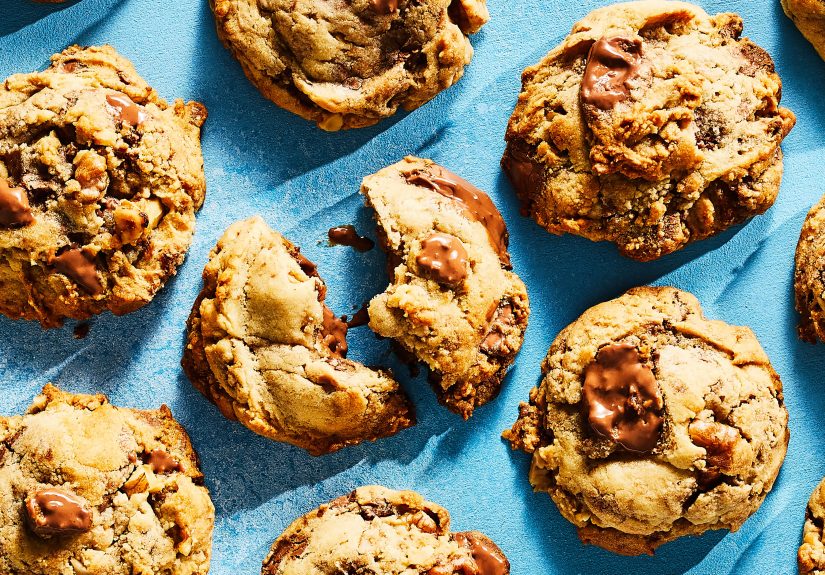
Want a signature look? Press a few extra chocolate pieces onto the tops right after baking. It’s a tiny styling trick that makes cookies look like they belong in a magazinewithout requiring you to become the kind of person who owns tweezers for dessert.
Upgrades and Variations That Actually Change the Cookie
Brown Butter Upgrade
Browning some or all of the butter deepens flavor into toasted, nutty territory. Cool it so it won’t scramble your eggs, then proceed. This works especially well with chopped chocolate and a pinch of flaky salt.
Chewy Upgrade: Bread Flour or a Touch of Cornstarch
For extra chew, swap part of the all-purpose flour for bread flour. For extra softness, a small amount of cornstarch can help keep cookies tender. Use either onenot necessarily bothunless you’re intentionally building a “soft and chewy” cookie.
Chocolate Strategy: Mix the Forms
Combine chips (for defined bites) with chopped chocolate (for pools). This gives the cookie a layered chocolate experience: structured, melty, and a little chaotic in the best way.
Salt Finish
A sprinkle of flaky salt right after baking boosts the chocolate flavor and keeps sweetness from getting cloying. This is the easiest “fancy bakery” move you can make with almost no effort.
The “Pan Bang” Texture Trick
If you like rippled edges and a chewy center, gently tapping (or “banging”) the pan partway through baking can create those crinkles. It’s a technique that turns a normal cookie into something that looks like it has a personality and a podcast.
Troubleshooting: When Cookies Misbehave
Problem: Cookies spread too much
- Chill dough longer.
- Make sure butter isn’t too warm or melty.
- Check flour measurement (too little flour = pancake cookies).
- Use parchment, not a greased pan (grease can encourage spread).
Problem: Cookies are dry or crumbly
- Don’t overbakepull when centers look slightly underdone.
- Measure flour carefully; too much is the #1 dryness culprit.
- Consider more brown sugar or an extra yolk next batch.
Problem: Cookies are puffy/cakey
- Mix less after adding flour.
- Reduce flour slightly (next time) or increase butter a touch.
- Make sure baking powder isn’t replacing baking soda unless that’s your goal.
Problem: Chocolate doesn’t feel “chocolatey”
- Try higher-quality chocolate or a mix of chips and chopped chocolate.
- Add a little more salt or vanilla to amplify flavor.
- Use dark brown sugar for deeper notes.
Storage, Freezing, and “Emergency Cookie Planning”
Fresh-baked cookies are wonderful. Fresh-baked cookies on demand are a lifestyle.
Storing baked cookies
- Keep in an airtight container at room temp for 3–5 days.
- Add a slice of bread to the container if you want to help maintain softness (swap bread as it dries).
Freezing dough
- Scoop dough into balls, freeze on a tray until solid, then store in a bag/container.
- Bake from frozen by adding a minute or two to bake time.
- This is how you become the person who casually says, “Oh, cookies? Give me 12 minutes.”
FAQ: Chocolate Chip Cookie Questions People Whisper to Their Ovens
Do I really need room-temperature ingredients?
It helps. Softened butter creams better with sugar, which affects texture. If your kitchen is cold and butter is stiff, you’ll fight the dough and lose valuable snacking time.
Should I use chocolate chips or chocolate bars?
Chips give definition. Bars give melt and pools. Combining both gives you the best of eachlike a buddy-cop movie, but edible.
Why do my cookies look underbaked in the middle?
That’s usually a good sign if you want chewy cookies. They continue to set as they cool. If you bake until the center looks fully done in the oven, you often end up with a drier cookie later.
Chocolate Chip Cookies Experiences: The Cookie Diary (500-ish Words of Real-Life Cookie Truth)
My first “serious” chocolate chip cookie lesson didn’t come from a recipeit came from a tray of cookies that merged into one giant, chocolate-studded continent. I had done everything “right” (meaning: I followed a recipe… mostly… while improvising like a jazz musician). But I skipped chilling because I was impatient, and I eyeballed the flour because measuring cups felt like a suggestion. The result was delicious in a spoonable way, like cookie pudding that forgot it had a shape. I learned two things immediately: chilling isn’t a myth, and flour has feelings.
Later, I tried the opposite mistake: I got very confident and added “a little extra flour” to make the cookies thicker. Those cookies came out looking perfectgolden, round, respectable. Then I bit in and realized they were basically sweet crackers with chocolate chips embedded like fossils. The flavor was fine, but the texture screamed, “I’m here for the coffee, not joy.” That was the batch that convinced me to stop treating flour like a vibe and start treating it like a measurement.
The biggest breakthrough was discovering how much time changes cookie dough. When I started resting dough overnight, the cookies tasted deeperless like sugar-forward dough and more like caramelized, buttery dessert. It wasn’t dramatic like adding espresso powder or bacon (we’ll talk about that energy in a second), but it was noticeable in the way good bread tastes better than rushed bread. The dough felt more cohesive tooless sticky, more scoopablelike it finally decided what it wanted to be when it grew up.
Then came the “chocolate moment.” I used to think chips were chips. But swapping brandsand mixing chopped chocolate with chipsmade a bigger difference than I expected. Chips gave me those neat, classic bites. Chopped chocolate gave me molten streaks that made the cookie feel bakery-level. Together, they made the cookie taste like it had layers: structured sweetness plus melty richness. That’s also when I started finishing with a pinch of flaky salt. Not enough to make it saltyjust enough to make the chocolate taste louder. It’s the smallest move with the biggest payoff.
And yes, I tried “kitchen sink” cookies once: chocolate chips plus crushed pretzels and a handful of whatever snacks were hanging around. It sounded chaotic. It was chaotic. But it also taught me something useful: chocolate chip cookies are incredibly forgiving if your base dough is solid. When the base has good butter flavor, balanced sugar, and proper bake timing, you can riffadd nuts, toffee, dried fruit, even salty crunchy bitsand the cookie still lands. The cookie doesn’t need perfection; it needs intention.
These days, my favorite “experience” isn’t a fancy trick. It’s the moment the kitchen smells like browned butter and vanilla, and someone wanders in pretending they were just “walking by.” Chocolate chip cookies don’t just taste goodthey create a tiny social event. They make people hover near the oven. They make silence feel cozy instead of awkward. They turn an ordinary afternoon into something that feels like a memory while it’s happening. That’s a lot of power for a dessert that fits in your handand that’s why we keep baking them.
Conclusion
Chocolate chip cookies are part tradition, part science experiment, and part mood ring. Once you understand the leverssugar balance, butter temperature, flour choice, chill time, and bake timingyou can reliably bake the cookie you actually want, not the cookie your oven randomly decided to give you today.
Start with a solid blueprint, pick your texture target, and use chilling/resting as your secret weapon. Then make it yours: better chocolate, browned butter, a pinch of flaky salt, or a freezer stash that turns you into the kind of person who can produce cookies like a party trick. The prints don’t stop… wait, wrong article. The cookies don’t stop. And honestly? Good.







 Close
Close