Table of Contents >> Show >> Hide
- Why This Story Even Exists
- How “South Park” Became a Corporate Headache in a Tiny Cartoon Jacket
- What “South Park” Probably Did to Paramount and Warner
- What Actually Mattered More Than “South Park”
- So, Did “South Park” Torpedo the Plan?
- The Bigger Meaning for Paramount, Warner, and the Streaming Wars
- Experiences From the Cheap Seats: What This Saga Felt Like to Watch
- Conclusion
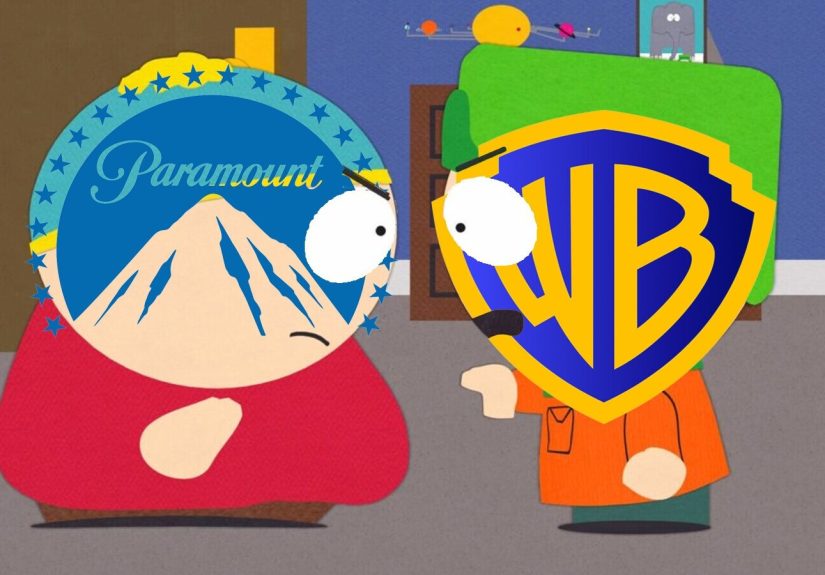
Hollywood loves a dramatic plot twist, and this one had everything: billionaires, bruised egos, streaming rights, legal threats, and four foul-mouthed cartoon kids somehow standing in the middle of a corporate food fight. So, did South Park actually torpedo Paramount’s plan to acquire Warner Bros.? The cleanest answer is: not really, but it definitely splashed gasoline on the runway.
The smarter way to frame the question is this: Did the “South Park” battle expose the exact kinds of problems that made a Paramount-Warner deal harder, uglier, and more personal? Absolutely. It highlighted mistrust between executives, made already-tense negotiations even more awkward, and turned a business relationship into something closer to a passive-aggressive group chat with lawyers.
Still, if you’re looking for a single smoking torpedo, South Park probably is not it. Paramount’s pursuit of Warner Bros. Discovery was shaped by much bigger forces: debt, antitrust risk, rival bidders, shaky linear TV economics, leadership politics, and the general smell of panic hanging over legacy media. In other words, South Park may have been the loudest grenade, but it was tossed into a room already full of fireworks.
Why This Story Even Exists
To understand why people connected South Park to the Warner deal, you have to rewind a bit. Warner Bros. Discovery and Paramount were discussing a possible combination as far back as late 2023. Even then, analysts were skeptical. Both companies were carrying heavy debt loads, both were exposed to a declining traditional TV business, and any mega-merger in media looked likely to face regulatory headaches. That meant any deal would need unusually strong trust, unusually clean financing, and unusually patient nerves. Hollywood, naturally, supplied none of those things.
At the same time, South Park had already become a legal and strategic mess. Warner sued Paramount in 2023 over streaming rights, arguing that it had paid more than $500 million for exclusive domestic streaming rights to hundreds of episodes, only to see Paramount divert valuable new content elsewhere. That lawsuit mattered because South Park was not some side quest. It was premium streaming ammo in the subscription wars, the kind of franchise that makes executives talk about “engagement” like they invented television.
So by the time Paramount, Skydance, Warner, Netflix, and half of Hollywood’s advisors were circling one another in 2025 and early 2026, South Park was no longer just a hit series. It was leverage, symbolism, and a very expensive reminder that content libraries are only fun until the contracts come out.
How “South Park” Became a Corporate Headache in a Tiny Cartoon Jacket
The South Park drama escalated because everyone involved seemed to want something slightly different and extremely expensive. Warner wanted streaming value. Paramount wanted to strengthen Paramount+. Trey Parker and Matt Stone wanted a massive renewal that reflected the show’s enduring power. Skydance-era leadership wanted tighter control over the economics. And the entire process unfolded while Paramount itself was going through a turbulent ownership transition.
That is a terrible recipe for calm decision-making. It is like trying to split a restaurant bill while the building is being sold and someone has already called a litigator.
By mid-2025, the creators of South Park were openly furious. Public reporting said Parker and Stone accused incoming Paramount president Jeff Shell of interfering with negotiations involving Warner Bros. Discovery and Netflix. The creators later blasted the Paramount-Skydance merger publicly, saying it was messing up South Park. That kind of statement does not just generate headlines. It tells the broader market that one of Paramount’s most valuable franchises sees chaos inside the building.
In M&A, perception matters almost as much as math. Investors, counterparties, and rival bidders all read the same signals. When a prized franchise goes from “valuable asset” to “live public complaint,” it weakens the aura of managerial control. No board loves that. No rival overlooks it. And no executive enjoys becoming the punchline in a story that already stars Cartman.
What “South Park” Probably Did to Paramount and Warner
1. It poisoned trust
Some later industry reporting suggested a failed South Park arrangement worsened the relationship between Paramount’s David Ellison and Warner’s David Zaslav. That does not mean South Park single-handedly wrecked Paramount’s Warner strategy. It does mean the show became one of the clearest examples of how quickly talks could sour when money, control, and prestige all collided.
Trust is boring until it disappears. Then it becomes the whole story. In a major acquisition, distrust raises the price of everything: negotiations get longer, legal review gets harsher, messaging becomes defensive, and every previous disagreement suddenly gets promoted to “important context.”
2. It made Paramount look distracted
Paramount was already dealing with its own merger drama, shareholder litigation, regulatory uncertainty, and strategic questions about how to survive in a streaming market dominated by giants. A public fight over one of its best-known franchises suggested the company was juggling too many flaming swords at once. Again, not fatal by itself. But in a bidding environment, rivals do not need you to collapse; they just need you to look slightly less stable than they do.
3. It raised questions about valuation discipline
South Park is beloved, durable, and still commercially potent. But the negotiations around it also underlined how expensive premium IP had become. If the rights conversation around one animated franchise could spiral into billion-dollar territory, what did that imply about the cost structure of a combined Paramount-Warner empire? Investors tend to ask inconvenient questions like that right when executives are trying to sell a glorious future.
4. It gave competitors a narrative advantage
If your rival can whisper, “Look, they can’t even close a clean deal around one of their crown jewels,” that whisper has value. In media deals, story drives sentiment. And sentiment, annoyingly, can influence leverage.
What Actually Mattered More Than “South Park”
Now for the part that ruins a good conspiracy theory: bigger structural issues mattered far more.
First came debt. Analysts were worried from the beginning that a Paramount-Warner combination would pile together large obligations with declining legacy-TV cash flows. That is not the kind of sentence that gets fan edits on TikTok, but it is exactly the kind that keeps boards awake at 2 a.m.
Second came regulation. Large media combinations do not glide through modern review. A merged giant spanning studios, streaming, news, sports-adjacent distribution power, and traditional networks was always going to draw scrutiny. Even when executives sound confident, regulators can turn “strategic transformation” into “please hand over 9,000 documents by Friday.”
Third came rival bidders and deal structure. By early 2026, Paramount was not the only player in the ring. Reuters reported a full-scale battle involving Netflix, with Warner weighing competing proposals, termination fees, bylaw issues, proxy pressure, and financing assurances. That is a much bigger chessboard than one franchise dispute, even if the franchise dispute made a lot more noise.
Fourth came timing and leadership politics. Paramount’s own sale to Skydance had been contested. Warner’s future structure was under debate. Investors were impatient. The market wanted scale, but not reckless scale. It wanted streaming ambition, but not at any price. It wanted Hollywood magic, but preferably in a spreadsheet. Good luck with that.
So, Did “South Park” Torpedo the Plan?
Nonot in the literal sense. If anything, the public record points in the opposite direction. Paramount Skydance ultimately reached a deal to acquire Warner Bros. Discovery in February 2026, then moved on to financing steps and shareholder approvals in April. A torpedo usually sinks the ship. This ship, at least for now, kept moving.
But if you mean something softerdid South Park damage the atmosphere, worsen executive relationships, and help derail an earlier path or phase of the Warner pursuit? That answer is much closer to yes. The franchise dispute seems to have functioned less like a kill shot and more like a stress test that revealed where the cracks already were.
Think of it this way: South Park did not invent Paramount’s Warner problem. It dramatized it. The show exposed how fragile modern media dealmaking had become. One rights dispute pulled together nearly every pressure point in the industry at once: streaming economics, IP inflation, leadership transition, public relations, lawsuit risk, and the awkward truth that even giant entertainment companies now sometimes look like they are searching couch cushions for synergy.
That is why the story resonated. It felt absurd, but it was also weirdly perfect. Of course a franchise built on chaos became a symbol of chaos in Hollywood boardrooms. Of course the show famous for mocking institutions turned into a case study in how unstable those institutions had become. Sometimes the satire writes itself, and sometimes the merger deck writes it for you.
The Bigger Meaning for Paramount, Warner, and the Streaming Wars
The real lesson here is not that one show can single-handedly decide the fate of a megadeal. The lesson is that in modern media, franchise management is corporate strategy. A rights dispute over a top-tier title can signal how a company negotiates, how badly it needs streaming leverage, how confident its future leadership is, and how much pain it is willing to absorb to control a platform narrative.
For Paramount, South Park showed both the value and the volatility of legacy hits in a streaming-first market. For Warner, it showed how licensing agreements can become strategic weapons. For the market, it reinforced a harder truth: the old model of “make content, sell ads, cash checks” is gone. Now every major franchise is part library asset, part customer-acquisition tool, part investor signal, and part courtroom exhibit.
And that is why people kept asking whether South Park torpedoed Paramount’s Warner ambitions. Not because the show alone controlled the outcome, but because it captured the whole ridiculous mood of the moment. Two media giants were trying to reinvent themselves, one future owner wanted to prove he was serious, another executive was guarding his kingdom, and all the while a 1997 animated series about four kids in Colorado kept barging back into the center of the room like it owned the place.
Honestly? In this industry, it kind of does.
Experiences From the Cheap Seats: What This Saga Felt Like to Watch
If you followed this story as a viewer, an investor, a media worker, or just a person with a working Wi-Fi connection and a mild addiction to entertainment news, the whole thing probably felt less like a clean corporate strategy and more like being trapped on a roller coaster designed by a committee. Every week brought a new mood. One day the headlines made it sound as if Paramount and Warner were logical consolidation partners. The next day the debt looked terrifying. Then a rival bidder appeared. Then the South Park creators were furious. Then the people supposedly steering the ship seemed to be arguing over who got the map.
That experience matters because it explains why this story landed so hard in public conversation. People were not reacting only to the facts of the deal. They were reacting to the feeling of instability. Streaming had already trained audiences to expect constant change: titles disappear, services rebrand, catalogs move around, and beloved shows become bargaining chips with logos attached. Watching South Park get dragged into the middle of a Warner-Paramount power struggle felt like a concentrated version of everything people dislike about the streaming era. It was funny, ridiculous, and just a little exhausting.
For longtime fans, the experience was especially strange. South Park has always mocked corporate language, moral panic, politics, and media vanity. Seeing the show itself become a corporate bargaining chip gave the story a kind of mirror-house quality. Fans were no longer just watching satire. They were watching the business machinery behind the satire become part of the punchline.
For industry workers, the experience was different but equally familiar. Every flashy deal headline tends to come with a shadow: worries about layoffs, restructuring, cancelled projects, duplicated departments, and executives using words like “efficiency” with the energy of someone sharpening knives offscreen. That is one reason the South Park element stood out so sharply. It made the fight feel human, or at least as human as a battle involving billion-dollar rights packages can feel. You could see the personalities. You could hear the grudges. You could sense that this was not just about subscriber counts. It was about pride, leverage, and who got to walk into the next era of Hollywood looking like the smartest person in the room.
And for regular readers of media news, the experience was almost darkly comedic. A mega-merger shaped by debt and antitrust theory is one thing. A mega-merger possibly complicated by a cartoon that built its reputation on chaos is something else entirely. It felt absurd, but not implausible. That is probably why the story stuck. It captured the emotional truth of the streaming wars better than any earnings call ever could: everyone wants scale, nobody wants weakness, and even the adults in the room are sometimes one bad negotiation away from looking like they are starring in the episode.
Conclusion
So, did South Park torpedo Paramount’s plan to acquire Warner Bros.? No, not in any final or literal sense. The plan survived, evolved, and reached a formal deal stage. But the franchise absolutely mattered. It exposed mistrust, amplified executive friction, and gave the entire saga a messy, public symbol of how hard it is to build a future-proof media empire while fighting over yesterday’s and tomorrow’s most valuable content.
That makes South Park less a torpedo than a neon warning sign. It did not sink the merger dream. It showed everyone how rough the water already was.