
Table of Contents >> Show >> Hide
- What Are Dijon Pork Chops with Apple Salad?
- Why Pork and Apples Work So Well Together
- Best Pork Chops for This Recipe
- Ingredients for Dijon Pork Chops with Apple Salad
- How to Make Dijon Pork Chops with Apple Salad
- Tips for Juicy Dijon Pork Chops
- Flavor Variations
- What to Serve with Dijon Pork Chops
- Make-Ahead and Storage Tips
- Nutrition and Cooking Notes
- Common Mistakes to Avoid
- Personal Cooking Experiences with Dijon Pork Chops with Apple Salad
- Conclusion
Some dinners walk into the kitchen wearing sweatpants. Others arrive with a tiny French scarf, a crisp apple, and the confidence of a restaurant entrée that secretly took less than an hour. Dijon pork chops with apple salad belongs to the second group. It is juicy, tangy, fresh, savory, lightly sweet, and just fancy enough to make a Tuesday night feel like it got promoted.
This dish works because it understands balance. Pork chops bring richness. Dijon mustard brings sharp, creamy heat. Apples bring crunch and sweetness. A bright salad cuts through everything like the friend who tells you the truth but brings dessert afterward. Together, they create a meal that feels seasonal without being trapped in autumn, elegant without requiring tweezers, and practical enough for a busy home cook.
In this guide, you will learn how to make tender Dijon pork chops, build a crisp apple salad, choose the right pork cut, avoid dry meat, and turn simple ingredients into a dinner that tastes like you planned aheadeven if you absolutely did not.
What Are Dijon Pork Chops with Apple Salad?
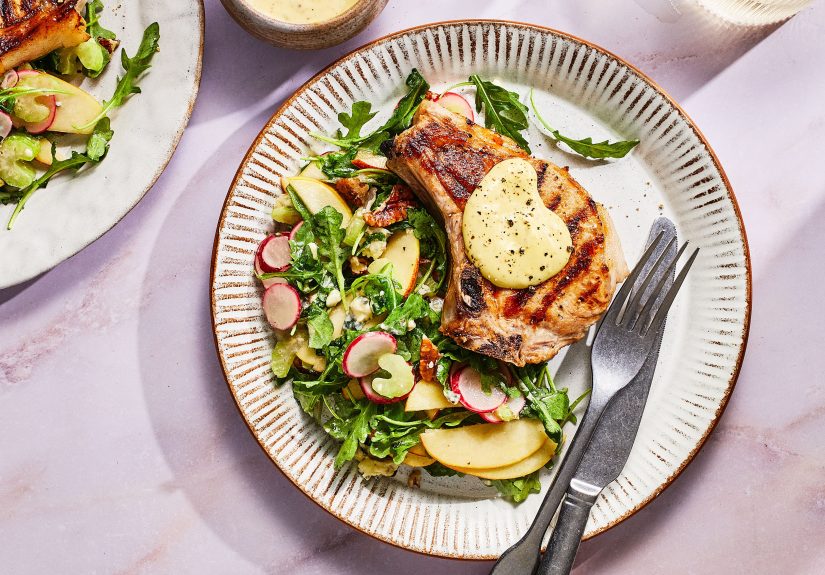
Dijon pork chops with apple salad is a modern American-style dinner inspired by classic pork-and-apple pairings and French mustard flavors. The pork chops are seasoned, seared or grilled, brushed with a tangy Dijon glaze, then served with a fresh salad made from apples, greens, celery, herbs, nuts, and a light vinaigrette.
The key flavor idea is contrast. Dijon mustard is bold, slightly spicy, and acidic. Pork is mild and savory. Apples can be sweet, tart, or both. When you combine them, the apple salad refreshes your palate between bites of rich pork, while the mustard glaze keeps the whole plate lively.
This is not the heavy pork chop dinner of old-school cafeteria memories. No gray mystery meat. No sad puddle of sauce. No chewing workout disguised as dinner. Properly cooked pork chops should be tender, juicy, and lightly pink in the center, with a safe internal temperature of 145°F followed by a short rest.
Why Pork and Apples Work So Well Together
Pork and apples are a classic combination because they solve each other’s problems. Pork chops, especially lean cuts, benefit from acidity and sweetness. Apples bring both. A tart Granny Smith apple can wake up a rich bite of pork, while a sweeter Honeycrisp or Fuji adds crunch and a mellow fruitiness.
Dijon mustard adds another layer. Its tangy bite acts like a flavor bridge between the meat and the salad. The mustard clings to the pork, sharpens the pan juices, and blends beautifully with apple cider vinegar, honey, thyme, and olive oil. The result is a plate that feels complete instead of like “meat plus random salad.”
Best Pork Chops for This Recipe
For the best Dijon pork chops, choose chops that are at least 1 inch thick. Thin pork chops cook quickly, but they also dry out quickly. Thicker chops give you more control and allow time for a good sear before the inside overcooks.
Bone-In vs. Boneless Pork Chops
Bone-in pork chops are ideal if you want maximum flavor and moisture. The bone helps slow cooking slightly and gives the chop a hearty, steak-like presentation. Rib chops or center-cut loin chops are excellent options.
Boneless pork chops are convenient and easy to slice, but they need careful cooking because they are lean. If using boneless chops, watch the temperature closely and remove them from the heat as soon as they reach the safe zone.
Recommended Thickness
Aim for pork chops that are 1 to 1 1/4 inches thick. This thickness allows you to sear the outside until golden while keeping the inside juicy. If the chops are very thick, finish them in a 375°F oven after searing.
Ingredients for Dijon Pork Chops with Apple Salad
This recipe serves four people. It is easy to double for guests or halve for a cozy dinner for two. The ingredients are simple, but each one has a job. No freeloaders allowed.
For the Dijon Pork Chops
- 4 bone-in pork chops, 1 to 1 1/4 inches thick
- 1 1/4 teaspoons kosher salt
- 1/2 teaspoon black pepper
- 1 tablespoon olive oil
- 1 tablespoon unsalted butter
- 2 tablespoons Dijon mustard
- 1 tablespoon whole-grain mustard
- 1 tablespoon honey or maple syrup
- 1 tablespoon apple cider vinegar
- 1 teaspoon fresh thyme leaves, or 1/2 teaspoon dried thyme
- 1 small garlic clove, finely grated
For the Apple Salad
- 2 crisp apples, thinly sliced
- 5 cups mixed greens, arugula, baby spinach, or frisée
- 1 celery stalk, thinly sliced
- 1/4 cup thinly sliced red onion or shallot
- 1/3 cup toasted walnuts, pecans, or almonds
- 1/4 cup crumbled goat cheese, blue cheese, or shaved Parmesan
- 2 tablespoons chopped parsley or chives
For the Apple Dijon Vinaigrette
- 3 tablespoons extra-virgin olive oil
- 1 1/2 tablespoons apple cider vinegar
- 1 teaspoon Dijon mustard
- 1 teaspoon honey
- 1 small shallot, minced
- Salt and black pepper to taste
How to Make Dijon Pork Chops with Apple Salad
The secret to this dish is timing. Cook the pork first, let it rest, and toss the salad right before serving. That way, the pork stays juicy and the greens do not collapse into a dramatic little salad puddle.
Step 1: Pat the Pork Chops Dry
Pat the pork chops dry with paper towels. Moisture on the surface prevents browning, and browning is where flavor gets its diploma. Season both sides with kosher salt and black pepper. Let the chops sit at room temperature for about 15 minutes while you prepare the glaze.
Step 2: Make the Dijon Glaze
In a small bowl, whisk together Dijon mustard, whole-grain mustard, honey, apple cider vinegar, thyme, and grated garlic. The glaze should taste tangy, slightly sweet, and bold. If it makes your eyebrows lift a little, you are on the right track.
Step 3: Sear the Pork Chops
Heat olive oil in a large skillet over medium-high heat. Add the pork chops and sear for 3 to 4 minutes per side, or until golden brown. Add butter during the final minute and spoon it over the chops for extra flavor.
Reduce the heat to medium-low. Brush the Dijon glaze over the chops and continue cooking until the internal temperature reaches 145°F. Use an instant-read thermometer inserted into the thickest part of the chop, avoiding the bone.
Step 4: Rest the Pork
Transfer the pork chops to a plate and let them rest for at least 3 minutes. This is not optional. Resting allows the juices to settle back into the meat. Slice too soon, and the juices run away like they remembered an appointment.
Step 5: Make the Apple Salad
In a large bowl, whisk together olive oil, apple cider vinegar, Dijon mustard, honey, minced shallot, salt, and pepper. Add the mixed greens, sliced apples, celery, onion, toasted nuts, cheese, and herbs. Toss gently until everything is lightly coated.
Step 6: Serve
Place one Dijon pork chop on each plate and pile the apple salad beside it. Spoon any resting juices over the pork. Serve immediately while the pork is warm and the salad is crisp.
Tips for Juicy Dijon Pork Chops
Use a Meat Thermometer
The most reliable way to avoid dry pork chops is to use a meat thermometer. Guessing by color alone is risky because modern pork can remain slightly pink even when properly cooked. Pull the pork at 145°F, then rest it for at least 3 minutes.
Do Not Overcook the Glaze
Dijon mustard can become bitter if cooked aggressively for too long. Brush it on after the chops have already developed a good sear, then let it warm and cling to the meat rather than burn in the pan.
Choose the Right Apple
For the salad, crisp apples are best. Honeycrisp, Pink Lady, Fuji, Gala, and Granny Smith all work beautifully. If you like a sweeter salad, choose Fuji or Gala. If you want more zip, go for Granny Smith or Pink Lady.
Toast the Nuts
Toasted nuts make a major difference. A few minutes in a dry skillet brings out their aroma and crunch. Walnuts add earthiness, pecans add buttery sweetness, and almonds add a clean snap.
Flavor Variations
Once you master the basic recipe, you can change it depending on the season, your pantry, or how loudly your refrigerator is begging you to use that half-bag of greens.
Maple Dijon Pork Chops
Replace the honey with maple syrup for a deeper, warmer sweetness. This variation pairs especially well with toasted pecans and sharp cheddar in the apple salad.
Creamy Dijon Pan Sauce
After removing the pork chops from the skillet, add 1/2 cup low-sodium chicken broth and scrape up the browned bits. Stir in 1 tablespoon Dijon mustard and 2 tablespoons cream. Simmer until slightly thickened, then spoon over the chops.
Grilled Dijon Pork Chops
For a smoky version, grill the pork chops over medium heat for 10 to 12 minutes, turning once, until they reach 145°F. Brush with Dijon glaze during the final few minutes so the mustard does not scorch.
Autumn Apple Salad
Add roasted sweet potatoes, dried cranberries, and pumpkin seeds to make the salad heartier. This version is perfect for fall dinners, meal prep bowls, or holiday meals that need a fresh side dish.
What to Serve with Dijon Pork Chops
The apple salad already gives this dish freshness and crunch, but a simple side can make it a full meal. Roasted potatoes, mashed sweet potatoes, wild rice, couscous, or crusty bread all work well. If you want a lighter plate, serve the pork and salad with roasted green beans or steamed asparagus.
For a cozy dinner, try buttery mashed potatoes. For a brighter, more modern plate, serve with quinoa or farro. For a low-effort weeknight meal, a warm baguette and the apple salad are more than enough. Nobody at the table needs to know the baguette did half the emotional labor.
Make-Ahead and Storage Tips
You can mix the Dijon glaze up to three days ahead and store it in the refrigerator. The vinaigrette can also be made ahead, but wait to slice the apples and toss the salad until right before serving. Apples brown when exposed to air, although a little lemon juice or vinegar can slow that down.
Store leftover pork chops in an airtight container in the refrigerator for up to three days. Reheat gently in a covered skillet over low heat with a splash of broth or water. Avoid microwaving on high, unless your goal is to turn dinner into a pork-flavored pencil eraser.
Store salad components separately if possible. Greens wilt after dressing, but sliced apples, nuts, cheese, and vinaigrette can be kept in separate containers and assembled quickly the next day.
Nutrition and Cooking Notes
Dijon pork chops with apple salad can be a balanced meal because it includes protein, fiber-rich produce, healthy fats from olive oil and nuts, and plenty of flavor without requiring a heavy sauce. Pork chops are naturally rich in protein, while apples and greens add freshness and texture.
To keep the recipe lighter, use lean pork chops, reduce the butter, skip the cheese, or choose a smaller portion of nuts. To make it more filling, serve it with roasted potatoes, whole grains, or a slice of toasted sourdough.
Common Mistakes to Avoid
Cooking Straight from the Fridge
Very cold pork chops cook unevenly. Letting them sit for 15 minutes before cooking helps the outside sear properly while the inside cooks more evenly.
Using Too Much Dressing
Apple salad should be lightly dressed, not soaked. Add half the vinaigrette first, toss, then add more only if needed. The greens should sparkle, not swim.
Skipping the Acid
Apple cider vinegar is essential because it cuts through the richness of the pork and balances the sweetness of the apples and honey. Without acid, the dish tastes flat.
Forgetting Texture
A great apple salad needs crunch. Celery, nuts, apples, and crisp greens create the texture that makes the pork feel lighter and more exciting.
Personal Cooking Experiences with Dijon Pork Chops with Apple Salad
The first time I made Dijon pork chops with apple salad, I treated it like a “company dinner,” which is kitchen code for “I hope nobody notices I am improvising.” I had pork chops, a couple of apples, Dijon mustard, and greens that were still fresh enough to be optimistic. The result surprised me. It tasted bright, polished, and intentional, even though the entire meal came together from ingredients I already had.
What stood out most was how quickly the salad changed the personality of the pork. A seared pork chop by itself can feel hearty and a little serious. Add a crisp apple salad, and suddenly the dish has movement. Every bite changes: salty pork, tangy mustard, sweet apple, bitter greens, crunchy nuts, creamy cheese. It keeps your fork interested, which is not a scientific measurement, but it should be.
I have also learned that the apple choice matters more than people think. A soft apple disappears into the salad and brings sadness. A crisp apple makes the whole dish feel fresh. Honeycrisp is excellent when you want sweetness and crunch. Granny Smith is perfect when the pork glaze is sweeter. Pink Lady might be the best middle ground because it is tart, sweet, and firm enough to hold its shape.
Another useful experience: do not rush the sear. Pork chops need contact with a hot pan to develop that golden crust. If you move them every 20 seconds because you are nervous, they will not brown properly. Put the chop in the skillet, take a breath, and let the pan do its job. Cooking is often less about doing more and more about not bothering the food while it becomes delicious.
The Dijon glaze is forgiving, but it performs best when added near the end. I once brushed mustard on too early, turned the heat too high, and created a flavor best described as “angry campfire.” Now I sear first, lower the heat, then glaze. The mustard warms, the honey caramelizes gently, and the garlic stays pleasant instead of dramatic.
This dish is also excellent for small gatherings because it looks impressive without requiring complicated plating. Serve the pork chops on a large platter with the apple salad tucked around them, scatter herbs over the top, and spoon the resting juices over the meat. It gives “effortless dinner party,” even if there are three pans in the sink having a private crisis.
For weeknights, I like to make the vinaigrette ahead and toast the nuts earlier in the day. Then dinner becomes simple: season pork, sear pork, toss salad, eat. If there are leftovers, sliced Dijon pork chops are great over greens the next day with extra apples and a little more vinaigrette. Cold pork may not sound glamorous, but when sliced thin and paired with crunchy salad, it becomes a very respectable lunch.
The biggest lesson from making Dijon pork chops with apple salad is that good cooking often comes from contrast. Rich needs bright. Soft needs crisp. Savory needs sweet. A reliable recipe does not have to be complicated; it just needs balance. This dish delivers that balance with ingredients that are easy to find, fast to prepare, and flexible enough to make again and again without getting bored.
Conclusion
Dijon pork chops with apple salad is the kind of recipe that proves dinner does not need to be fussy to feel special. Juicy pork chops, tangy mustard glaze, crisp apples, fresh greens, toasted nuts, and a bright vinaigrette come together in a meal that is satisfying but not heavy. It works for weeknights, casual entertaining, fall dinners, spring lunches, and any evening when you want something a little more exciting than plain protein and a side.
The keys are simple: choose thick pork chops, season well, sear confidently, cook to 145°F, rest the meat, and toss the apple salad at the last minute. Follow those steps and you will have a plate that tastes balanced, fresh, and restaurant-worthywithout needing a reservation, a white tablecloth, or someone named Pierre judging your knife skills.
Note: This article was written for web publication and synthesizes widely used American cooking methods for pork chops, Dijon mustard glazes, apple salads, vinaigrettes, and current food-safety guidance for cooking whole pork cuts to 145°F with a rest period.






 Close
Close