
Table of Contents >> Show >> Hide
- Why This Fly Trick Refuses to Die
- So, Do Water-Filled Bags With Pennies Repel Flies?
- Why Flies Are So Hard to Outsmart
- What Actually Works Better Than the Penny-Bag Trick
- Could the Penny Bag Ever Seem to Work?
- Are Water-Filled Bags With Pennies Harmful?
- The Bottom Line
- Real-World Experiences With the Water-Bag-and-Pennies Fly Hack
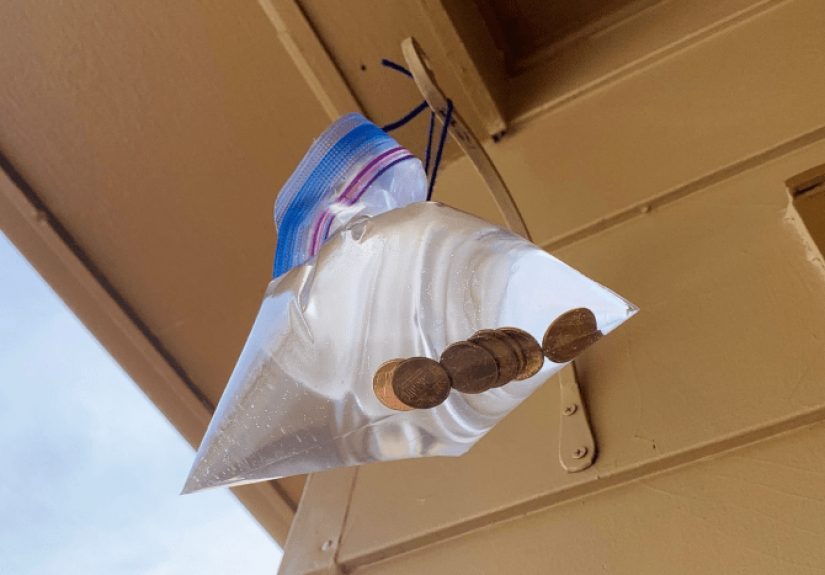
If you’ve spent any time on porches, patios, barns, or backyard cookout duty, you’ve probably seen one of summer’s strangest decorations: a clear plastic bag filled with water and a few pennies, dangling like a tiny, low-budget chandelier. The claim is simple. Hang it up, and flies will supposedly turn around, rethink their life choices, and buzz off somewhere else.
It’s cheap. It’s easy. It looks like something invented during a very creative power outage. And because it costs next to nothing, the trick keeps coming back every warm-weather season.
But do water-filled bags with pennies actually repel flies? The short answer: not in any reliable, science-backed way. Some people swear by the method, but the stronger evidence suggests it’s more folklore than foolproof fly control. If you’re dealing with a few wandering flies, you might think it helped. If you’re dealing with a real fly problem, the penny bag is unlikely to save your burger, your lemonade, or your sanity.
Let’s break down where this fly hack came from, why people believe it works, what experts say, and what you should do instead if you’d like fewer flies and less drama at your next meal outside.
Why This Fly Trick Refuses to Die
Part of the appeal is obvious: the bag-of-water trick feels delightfully old-school. It has the charm of a grandma-approved remedy, the kind of tip you hear from a neighbor who also knows how to grow tomatoes the size of bowling balls.
The setup varies a little depending on who’s telling the story. Some people use sandwich bags. Others use freezer bags. Some add shiny pennies, some add a few drops of dish soap, and some skip the coins entirely. The basic idea stays the same: sunlight hits the water, weird optical magic happens, and flies supposedly hate it.
That optical-magic explanation is the most common theory. Since flies have compound eyes, people often claim that the light refracting through the bag confuses them, disorients them, or makes the area look unsafe. Another version says the pennies resemble giant eyes, so the flies think a predator is watching. Yet another says the bag looks like a body of water, which flies avoid.
That’s a lot of theories for one zip-top bag. Usually, when a home remedy needs three different scientific explanations and a prayer, it’s a sign that the evidence may be wobblier than the bag on the hook.
So, Do Water-Filled Bags With Pennies Repel Flies?
The evidence is weak
If you’re looking for a clear verdict, here it is: there isn’t good evidence that water-filled bags with pennies reliably repel flies.
That doesn’t mean every person who thinks it worked is imagining things. It does mean the method has not held up well when people try to test it in a more controlled way. In one widely cited Texas A&M-related write-up on the subject, the results found no meaningful relationship between hanging water bags and reduced fly numbers. An NC State entomologist also reported that, in a past test at an egg-packing plant, the bags actually attracted houseflies rather than sending them packing.
That’s not exactly a glowing product review.
Why the “it worked for me” stories keep coming
Flies are inconsistent little chaos goblins. Their numbers change with the weather, nearby trash, spilled drinks, pet waste, wind, humidity, and whatever mystery substance your neighbor forgot to clean off the grill. So if someone hangs a penny bag at the same time the breeze picks up or the trash gets taken out, it’s easy to give the bag all the credit.
There’s also the classic home-remedy trap: if a trick is cheap, harmless, and easy, people keep using it because they want it to work. And honestly, who wouldn’t? A five-cent fly solution is way more exciting than “clean the garbage can and repair the screen door.”
Unfortunately, flies do not care about our dreams.
Why Flies Are So Hard to Outsmart
To understand why the bag trick falls short, it helps to know what actually draws flies in. House flies and other nuisance flies are not showing up because your patio lacks decorative hanging water. They’re showing up because something nearby is feeding them, breeding them, or inviting them in.
Flies are attracted to moisture, food residue, garbage, manure, decaying organic material, and other less-than-luxurious substances. In warm conditions, they can breed quickly. That means a small sanitation issue can turn into a much bigger buzzing issue fast.
If there’s a breeding site nearby, a bag of pennies is basically the pest-control equivalent of putting a throw pillow on a broken furnace. It may look like you did something, but the actual problem is still humming along.
What Actually Works Better Than the Penny-Bag Trick
If your goal is real fly control, not backyard performance art, these strategies are much more likely to help.
1. Remove the buffet
The best fly control starts with sanitation. Translation: don’t give flies the funky little all-you-can-eat resort they’re searching for.
- Keep garbage cans tightly covered.
- Empty indoor trash often, especially if it contains food scraps.
- Clean spills, sticky drink rings, and greasy outdoor tables.
- Pick up pet waste promptly.
- Remove rotting fruit, vegetables, or yard debris.
- Keep compost managed and away from doors if possible.
If the attraction goes away, fly pressure usually drops. It’s not glamorous, but neither is swatting a fly out of your potato salad.
2. Block the entrance
Exclusion matters. Good screens, properly closing doors, and sealed gaps around windows can do more for indoor fly control than most folk remedies ever will. In heavier-use spaces, air curtains and strong directional airflow can also help keep flies from drifting inside.
This is especially important near kitchens, dining spaces, and food-prep areas, where the goal is not just comfort but cleanliness.
3. Use airflow to your advantage
Flies are not strong fans of strong fans. Outdoor airflow can make it harder for them to land, hover, and bother everyone at the table like tiny freeloading party crashers.
That’s why a simple box fan or oscillating fan near an outdoor dining setup often seems more effective than the water-bag trick. It doesn’t rely on mystery optics. It just makes flying and landing more difficult.
4. Try traps and baits strategically
Sticky traps, bait stations, and other targeted fly-control products can help, especially outdoors or in garages, barns, and trash areas. The key word is strategically. You don’t want to put attractant-based products right next to the place where you’re eating, because inviting flies closer before killing them is not exactly ideal hospitality.
For indoor food areas, experts generally favor sanitation, exclusion, and appropriately placed traps over random heavy spraying. Also worth noting: bug zappers near food-prep spaces are a bad idea, because they can scatter insect fragments. Nothing says “bon appétit” quite like accidental fly confetti.
5. Cover food and clean up faster than the flies can RSVP
When eating outside, keep food covered when possible. Wipe down serving areas. Don’t leave sugary drinks uncovered. Rinse recyclables. If you’ve got fruit, meat, or pet food sitting out, you’ve basically opened a fly-themed nightclub with no bouncer.
Could the Penny Bag Ever Seem to Work?
Sure. In some situations, people may honestly notice fewer flies after hanging water-filled bags. But that doesn’t necessarily prove the bag caused the change.
Maybe the day got windier. Maybe the flies were never breeding nearby to begin with. Maybe the sunlight shifted. Maybe somebody finally took out the trash. Maybe the flies moved twenty feet over to annoy your cousin instead.
That’s the problem with anecdotal evidence. It feels convincing in the moment, but it doesn’t reliably separate coincidence from cause.
So if you hang a bag and it seems to help a little, fine. You’re not breaking the laws of nature. Just don’t mistake a maybe for a method.
Are Water-Filled Bags With Pennies Harmful?
Usually, they’re more goofy than dangerous. Still, they’re not completely consequence-free.
- They can leak and create extra moisture.
- They look messy or odd in entryways.
- They may give a false sense of control while a real breeding source keeps growing.
- They can become one more thing swinging into your forehead when you walk outside carrying a plate of hot dogs.
So while the trick is low-risk, it’s also low-confidence. It’s not the worst idea in the world. It’s just not a dependable fly-management plan.
The Bottom Line
Water-filled bags with pennies are one of those classic DIY fly hacks that sound just scientific enough to survive summer after summer. But when you move past the porch lore and look at expert guidance, the case gets pretty flimsy. The method may produce occasional anecdotal success, yet it does not have strong evidence behind it as a reliable fly repellent.
If you truly want to keep flies away, focus on what works: remove breeding sites, reduce food and moisture attractants, repair screens, improve airflow, and use traps or baits in smart locations. In other words, skip the shiny bag of wishful thinking and build a fly-control strategy that actually makes life harder for flies.
Your porch deserves better. So does your macaroni salad.
Real-World Experiences With the Water-Bag-and-Pennies Fly Hack
One reason this trick refuses to retire is that people really do have experiences with it, and those experiences can sound convincing. If you read enough comments, talk to enough neighbors, or spend enough time around outdoor markets and barns, you’ll hear all kinds of stories. Some people insist the bags work like magic. Others say they hung three of them and the flies practically sent thank-you notes.
A common experience goes like this: a family hangs a couple of water-filled bags near the patio before a barbecue, and by dinner time there seem to be fewer flies hovering over the buns and watermelon. Everyone notices. Someone declares the trick a genius move. A photo gets taken. The bags become part of the summer setup from then on.
But when you dig a little deeper, the details usually get fuzzy. Was it windier that evening? Had the trash just been emptied? Was the food covered more carefully than usual? Did someone finally rinse out the recycling bin that had been fermenting in the sun like a science fair project? Those things matter, and they often change at the same time the bags go up.
Barn owners and people with animals often report mixed results too. One person may say the bags seemed to help around a stall entrance, while another says they made no noticeable difference at all. That makes sense. Fly pressure in those environments depends heavily on manure management, moisture, feed spills, temperature, and nearby breeding spots. When those conditions are favorable for flies, a plastic bag of water is unlikely to outperform cleanup, drainage, airflow, and targeted control tools.
Homeowners also describe a funny psychological pattern: once the bags are hanging, everyone starts watching the flies more closely. And when you watch something closely, it’s easy to interpret random changes as proof. If a few flies circle and leave, the bag gets credit. If a fly lands anyway, people shrug and say, “Well, maybe it would have been worse without it.” That’s how a lot of folk remedies stay alive. They’re hard to disprove in everyday life because people naturally grade them on a curve.
There’s also the harmless-ritual effect. Some people keep using the trick because it feels proactive. It costs almost nothing, doesn’t involve much effort, and gives you the satisfying sense that you’ve done something. Even if the results are iffy, the routine itself sticks. It becomes part of setting up for summer, like string lights, citronella candles, and hoping this is the year mosquitoes forget your address.
So the real-world experience story is this: yes, many people genuinely believe the water-bag-and-pennies hack helps. But those experiences are inconsistent, highly anecdotal, and easy to confuse with changes in weather, sanitation, or airflow. That doesn’t make people silly. It just means experience alone isn’t the same thing as reliable proof.
If you want to try the trick out of curiosity, go ahead. Just pair it with real fly-control steps, so your entire pest strategy isn’t hanging by a zip-top bag and a few cents.







 Close
Close