Table of Contents >> Show >> Hide
- Does oatmeal itself cause weight gain?
- Why oatmeal can actually support a healthy weight
- When oatmeal can become a calorie bomb
- Which type of oatmeal is best?
- The toppings that make or break your bowl
- How to build a weight-friendly oatmeal bowl
- Examples of smarter oatmeal combinations
- Can oatmeal make you hungrier later?
- What about overnight oats?
- Who should pay extra attention to toppings?
- Real-world experiences with oatmeal, appetite, and weight
- Conclusion
Oatmeal has one of the strangest reputations in the breakfast universe. On one day, it is praised as a wholesome, hearty, “look at me making smart life choices” kind of meal. On another, it is blamed for stalled weight goals, blood sugar spikes, or that mysteriously tight pair of jeans hiding in the closet like a judgmental ex. So what is the truth?
Here it is: oatmeal does not automatically lead to weight gain. In fact, plain oatmeal can be part of a balanced eating pattern that supports fullness, steady energy, and heart health. The catch is that oatmeal is a little too easy to dress up. And sometimes those toppings turn an innocent bowl into what is essentially dessert in pajama pants.
If you have ever wondered whether oatmeal is helping, hurting, or just minding its own business, this guide breaks it all down. We will look at whether oatmeal can cause weight gain, how portion size matters, which toppings can make it heavier, and how to build a bowl that actually works for real life.
Does oatmeal itself cause weight gain?
No, not by itself. Weight gain happens when you regularly take in more energy than your body uses over time. Oatmeal is simply one food in that larger picture. Plain oats are a whole grain, and they contain fiber that can help you feel satisfied after eating. For many people, that makes oatmeal a smart breakfast rather than a sneaky problem.
But oatmeal is also one of those foods that can change dramatically depending on how it is prepared. A plain bowl made with rolled oats and topped with berries is a very different meal from a giant serving loaded with brown sugar, maple syrup, sweetened dried fruit, chocolate chips, and enough nut butter to qualify as a personality trait.
So if someone says, “Oatmeal made me gain weight,” the better question is usually, “What exactly was in the bowl?”
Why oatmeal can actually support a healthy weight
1. It is filling
Oats contain fiber, including soluble fiber, which slows digestion and can help you stay full longer. A breakfast that keeps you satisfied until lunch is often far more helpful than one that leaves you rummaging through the snack drawer at 10:17 a.m. like a raccoon with a deadline.
2. It is versatile
Oatmeal can be tailored to your needs. You can keep it simple, boost it with protein, add fruit for sweetness, or even go savory. That flexibility makes it easier to build a meal that fits your appetite instead of fighting it.
3. It can replace more sugary breakfasts
Compared with pastries, oversized muffins, and sugary cereals, a balanced bowl of oatmeal is often the more satisfying and nutrient-dense option. When oatmeal replaces a less filling breakfast, it may actually make it easier to manage hunger across the day.
When oatmeal can become a calorie bomb
Oatmeal usually gets into trouble for three reasons: oversized portions, sweet add-ins, and “healthy” toppings that are nutritious but very easy to overdo. That last category deserves a little side-eye.
Portion creep is real
It starts innocently. You pour oats into a bowl without measuring. Then you add milk “until it looks right.” Then a handful of walnuts. Then another handful because the first one looked lonely. Suddenly breakfast could fuel a small hiking expedition, even though your morning activity is mostly answering emails.
Oatmeal is healthy, but healthy does not mean unlimited. If your bowl is huge and your toppings are generous, the calories can climb quickly.
Added sugars pile up fast
Brown sugar, honey, maple syrup, sweetened yogurt, flavored protein powders, chocolate chips, and sweetened dried fruit can all make oatmeal taste amazing. They can also turn a steady breakfast into a sugar-heavy one. That does not mean these foods are forbidden. It just means they count.
Fat-rich toppings are nutritious but dense
Nuts, seeds, shredded coconut, and nut butters offer healthy fats, texture, and staying power. Great. No complaints. But they are also energy-dense, which means a little goes a long way. A modest spoonful adds balance. Several casual scoops can transform the bowl from satisfying to surprisingly heavy.
Which type of oatmeal is best?
All oats start from the same grain, but processing changes texture, cooking time, and sometimes how quickly they are digested.
Steel-cut oats
These are less processed, chewier, and slower to cook. Many people find them more filling because they have a hearty texture and digest more gradually.
Rolled oats
These are the classic old-fashioned oats. They cook faster than steel-cut oats but still hold enough texture to make a solid, balanced breakfast.
Quick oats
These cook faster and tend to be softer. They are still fine, but they may not feel as substantial to some people.
Instant oatmeal
This is where label-reading matters. Plain instant oats can be perfectly reasonable. Flavored packets, however, often come with added sugar, sodium, or extra ingredients that make them more like convenience food than a simple bowl of oats.
If your goal is better fullness and a steadier breakfast, plain steel-cut or old-fashioned rolled oats are often the best starting point. Not because instant oatmeal is evil, but because less processed versions usually give you more control over flavor and sweetness.
The toppings that make or break your bowl
This is where the oatmeal story gets interesting. Toppings are not just decoration. They determine whether your breakfast is balanced, too light, or one cinnamon sprinkle away from becoming cake.
Toppings that can support fullness and balance
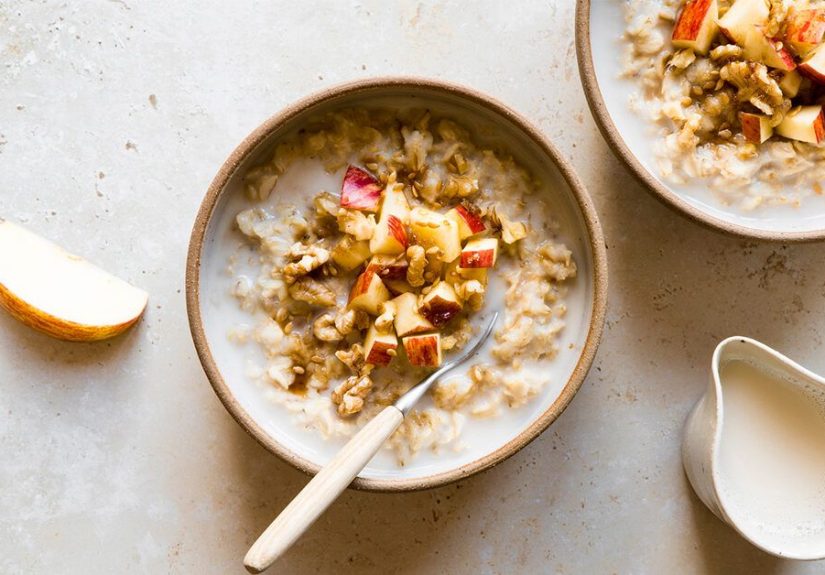
- Fresh fruit like berries, banana slices, apples, or pears
- Chia seeds or ground flaxseed
- A small portion of nuts or nut butter
- Plain Greek yogurt
- Cinnamon or pumpkin spice
- Unsweetened milk or fortified soy milk
- Egg whites stirred in while cooking, for extra protein
These toppings add texture, flavor, fiber, or protein without making the bowl overwhelmingly sweet.
Toppings that can quietly push calories higher
- Large amounts of syrup or honey
- Big scoops of nut butter
- Sweetened dried fruit in generous portions
- Granola on top of oatmeal, which is a very “double breakfast” move
- Chocolate chips, cookie butter, or sweetened coconut flakes
- Flavored creamers or sweetened condensed milk
Again, none of these are forbidden. The issue is frequency and amount. A drizzle is different from a pour. A spoonful is different from a mound with structural integrity.
How to build a weight-friendly oatmeal bowl
If you want oatmeal that supports steady energy and helps with appetite, aim for balance instead of perfection.
Start with plain oats
Choose plain steel-cut, rolled, or plain instant oats when possible. This helps you avoid surprise added sugars.
Add protein
Protein makes a big difference in how satisfying breakfast feels. Good options include Greek yogurt, cottage cheese on the side, eggs, milk, soy milk, or a sensible amount of protein powder.
Add fiber and volume
Fruit adds natural sweetness and extra fiber. Berries and apples are especially helpful because they bring flavor without making the bowl taste like melted candy.
Use fats strategically
A little healthy fat can improve flavor and satisfaction. Nuts, seeds, or nut butter work well, but keep the amount intentional.
Go easy on the sweet stuff
Before adding sugar, try cinnamon, vanilla, mashed banana, or fruit. You may find you need less sweetness than you think.
Examples of smarter oatmeal combinations
Classic balanced bowl
Rolled oats cooked with milk, topped with blueberries, cinnamon, and a spoonful of chopped walnuts.
Higher-protein option
Steel-cut oats with Greek yogurt, strawberries, and chia seeds.
Savory oatmeal
Oats cooked with a pinch of salt, topped with a soft egg, sautéed spinach, and a sprinkle of cheese. Yes, savory oatmeal exists. No, it is not a prank.
Fast weekday bowl
Plain instant oats with banana slices, peanut butter, and cinnamon. Quick, practical, and less likely to lead to a midmorning pastry emergency.
Can oatmeal make you hungrier later?
It can, depending on how you prepare it. A bowl made mostly of oats and sugar may digest faster and leave you hungry sooner, especially if it is low in protein and fat. That is one reason some people say oatmeal “does not stick with them.” Often, the problem is not the oats. It is the lack of balance.
If your breakfast is just instant oatmeal with extra sugar, you may get a quick burst of energy followed by hunger not long after. But when oatmeal includes protein, fiber, and a little fat, it tends to be much more satisfying.
What about overnight oats?
Overnight oats can be a great option, especially for busy mornings. They are portable, easy to prep, and endlessly customizable. They can also become oddly dessert-like if every ingredient in the jar is sweet. Keep an eye on sweetened yogurt, flavored milk, syrup, granola, and oversized portions. The mason jar is cute, but it is not a force field against excess calories.
A better overnight oats formula includes plain oats, unsweetened milk, fruit, chia seeds, and one protein source such as Greek yogurt or protein powder. That gives you convenience without turning breakfast into a parfait with trust issues.
Who should pay extra attention to toppings?
Anyone can benefit from checking what goes into the bowl, but it matters even more if you are trying to manage appetite, improve blood sugar control, or keep breakfast satisfying without overdoing it. Oatmeal is a healthy base, but the details matter. This is especially true when eating packaged flavored oatmeal or restaurant oatmeal, where sugar and portions can be much higher than expected.
Real-world experiences with oatmeal, appetite, and weight
In real life, people usually do not struggle with oatmeal because of oats alone. They struggle because oatmeal feels so healthy that it can become a place where “just a little extra” happens over and over. One person starts with a small bowl at home and feels great all morning. Another person orders a giant café oatmeal, adds sweetener, dried cranberries, granola, nuts, and extra nut butter, then wonders why they are eating a light lunch at 11 a.m. and still not seeing the results they want.
A common experience is that plain oatmeal feels boring at first, so people keep sweetening it until it tastes like dessert. Then they get used to that level of sweetness and plain oats seem sad by comparison. But once people gradually shift toward fruit, cinnamon, vanilla, and more textured toppings, the bowl often becomes satisfying in a different way. Less candy-shop, more actual breakfast.
Another real-world pattern is that oatmeal can seem “too light” when it is made with only water and no protein. That usually leads to the famous second breakfast problem. You know the one: the bowl is gone by 8:00, and by 9:45 you are staring dramatically into the fridge as if it has betrayed you personally. When people add Greek yogurt, milk, nuts, seeds, or eggs on the side, they often report much better staying power.
Texture also matters more than many people expect. Some find instant oatmeal comforting but not especially filling. Others feel much more satisfied with steel-cut or old-fashioned oats because the chewiness slows them down and makes the meal feel substantial. Sometimes the best oatmeal for weight management is not the one with the fewest ingredients. It is the one that keeps you satisfied long enough to stop thinking about snacks every twenty minutes.
There is also the convenience factor. Many people succeed with oatmeal because it is predictable. It is easier to make a balanced choice when breakfast does not require a full cooking show production. Oats can be prepped ahead, packed for work, microwaved quickly, and customized to fit changing schedules. That consistency matters. A decent breakfast you will actually eat beats a “perfect” breakfast that exists only in wellness videos and the imagination of very organized strangers.
And then there is the emotional side of food. Oatmeal can become a comfort meal, especially in cold weather or stressful seasons. There is nothing wrong with that. A warm bowl can be grounding and enjoyable. The trick is recognizing when comfort turns into autopilot. If the same bowl gets sweeter, larger, and heavier every week, it may be time for a reset. Not punishment. Just awareness.
Many people do best when they stop asking whether oatmeal is good or bad and start asking better questions: Does this breakfast keep me full? Does it taste good without needing a sugar avalanche? Am I eating enough protein? Am I building a bowl on purpose, or just throwing ingredients at it like a breakfast confetti cannon?
Those are the questions that lead to better results. Oatmeal is not a magic weight-loss food, and it is not a hidden cause of weight gain either. It is a flexible, nutritious base. What you do with it is what counts.
Conclusion
So, does oatmeal lead to weight gain? Not on its own. Plain oatmeal can absolutely fit into a balanced diet and may even help with fullness and meal satisfaction. The bigger issue is what goes into the bowl. Portions that are too large, frequent added sugars, and calorie-dense toppings can turn a wholesome breakfast into one that is far heavier than intended.
The good news is that oatmeal is easy to fix. Start with plain oats, add some protein, use fruit for sweetness, and be intentional with toppings like nuts, seeds, and nut butter. Done well, oatmeal is not the problem. It is one of the more practical breakfasts around.