Table of Contents >> Show >> Hide
- What Is a Doppelganger Finder?
- Why Do Some Strangers Look Uncannily Alike?
- How a Doppelganger Finder Usually Works
- Are Doppelganger Finder Results Actually Accurate?
- Why Lighting, Angle, and Expression Matter So Much
- Privacy First: Before You Upload Your Face, Read This
- Why People Are So Obsessed With Finding a Lookalike Twin
- How to Get Better Results From a Doppelganger Finder
- Experiences People Often Have When They Meet Their Doppelganger
- Final Takeaway
Somewhere out there, a stranger may have your eyebrows, your smile, and that suspiciously specific “I know where the good snacks are” expression. That possibility is exactly why the phrase doppelganger finder has become catnip for the internet. People love the idea of discovering a lookalike twin, whether it is a celebrity match, a random face from another continent, or a person who looks so much like them that friends would absolutely send the wrong text.
But the fascination is not just vanity with better lighting. A doppelganger search taps into something deeper: identity, curiosity, genetics, technology, and the strange thrill of realizing your face may not be as one-of-a-kind as you thought. Modern tools now use facial matching, photo databases, and AI-driven comparisons to hunt for your face double. The results can be hilarious, uncanny, flattering, inaccurate, or all four at once.
This article breaks down what a doppelganger finder really is, how these tools work, why some strangers genuinely look alike, what privacy issues deserve your attention, and why meeting your face twin can feel like starring in a very low-budget science-fiction movie.
What Is a Doppelganger Finder?
A doppelganger finder is any tool, platform, or search method designed to locate people who resemble you. The word “doppelganger” originally carried a ghostly, folklore-heavy meaning, but today it is usually used in a simpler way: a person who looks a lot like someone else. In modern internet language, that means your face twin, your lookalike, or the person strangers keep mistaking for you in photos.
Some doppelganger finders are playful and social. They compare uploaded selfies against a database of user-submitted photos. Others are closer to face match tools, analyzing facial landmarks and ranking similar-looking people. And then there are the casual versions: social media trends, celebrity lookalike quizzes, and those group chats where one friend posts, “I found your clone,” followed by a photo that is either alarmingly accurate or criminally lazy.
The goal is simple: find resemblance. The reasons people use these tools, however, vary wildly. Some want entertainment. Some want to test how unique their features are. Some are curious about genetics. Some just want to know whether they are one algorithm away from being mistaken for a mildly famous actor from a streaming show nobody can remember the title of.
Why Do Some Strangers Look Uncannily Alike?
The short answer is that facial similarity is real, and it is not always random. Research on unrelated people with very similar faces suggests that strong lookalikes can share notable genetic similarities, even when they are not close relatives. That does not mean your doppelganger is your secret sibling from a melodramatic season finale. It means the architecture of the human face is influenced by biology in ways that can occasionally produce remarkably similar results in unrelated people.
Genes Matter, but They Are Not the Whole Story
Facial structure is shaped by genetics, but also by age, body composition, grooming, expression, hairstyle, and even how a person carries themselves. Two unrelated people can have a similar nose shape, jawline, eye spacing, and cheek structure. Add matching haircuts, glasses, beard choices, or makeup style, and suddenly the resemblance goes from “sort of” to “wait, are we sure?”
That is why some of the strongest lookalike pairs seem eerie at first glance. The match is not only about bone structure. It is also about presentation. Humans do not meet each other as geometry; we meet each other as full visual packages. Facial hair, lighting, expression, camera angle, posture, and style can all push resemblance into uncanny territory.
Your Brain Also Loves Patterns
Humans are excellent pattern detectors. Sometimes a little too excellent. We are wired to spot similarity quickly, especially in faces. That helps explain why people often swear two strangers are identical when, on closer inspection, they simply share a few standout features. Your brain sees the same eyes, same smile, same haircut, and calls the case closed before the evidence has even had coffee.
So yes, some doppelgangers are genuinely striking. Others are part biology, part styling, and part your brain enthusiastically freelancing.
How a Doppelganger Finder Usually Works
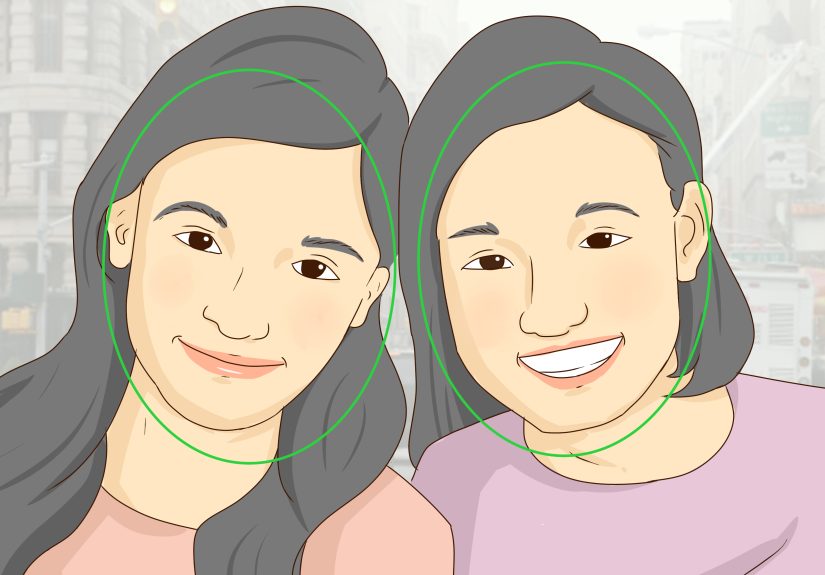
Most lookalike finder tools follow a basic pattern. You upload a clear photo. The system detects your face. Then it turns visible facial details into numerical data points. These can include spacing between the eyes, the curve of the lips, the shape of the chin, the length-to-width ratio of the face, and other measurable features. After that, the tool compares your face data with faces in its database and returns the closest matches.
Step 1: Face Detection
The system first identifies whether a face is present in the image. It also looks for key areas like the eyes, nose, and mouth. This is why most doppelganger platforms ask for a front-facing image with decent lighting. If your photo is blurry, half-covered by hair, tilted at a dramatic angle, or taken during an emotional support thunderstorm, your results may be messy.
Step 2: Feature Extraction
Once the face is detected, the software measures visual patterns and creates a face model or template. Some mainstream photo tools do this to organize personal images. Others do it to compare your face with a pool of potential matches. The software is not “seeing” your face the way a human does. It is translating your appearance into data and testing similarity scores.
Step 3: Matching and Ranking
After the template is created, the tool compares it against stored images. Then it ranks possible matches. The larger and more diverse the image pool, the better the odds of finding a compelling result. A tiny database may tell you that your twin is basically just the least wrong option in the room.
This is also why one platform may call you the long-lost cousin of a movie star, while another insists your soul match is a dentist from Ohio. The result depends on the database, the algorithm, the photo quality, and how the system defines similarity.
Are Doppelganger Finder Results Actually Accurate?
Accurate enough to be fun? Often yes. Accurate enough to be treated like destiny, science, or legal proof of your mirror-born counterpart? Absolutely not.
Face-recognition systems can make two kinds of mistakes: they can fail to match the same person across different images, or they can wrongly link two different people. That second error matters a lot in the world of doppelganger search, because a convincing false positive can look magical when it is really just a technical overreach.
High-quality facial systems have improved dramatically over time, but performance still varies across algorithms. Official testing has also shown that error rates can differ across demographic groups and that some false positives are driven by facial similarity itself. Translation: a good system can still make weird calls, and some tools are better than others by a mile.
So when a doppelganger finder gives you a match, treat it like a strong suggestion, not a courtroom exhibit. It is a fascinating output, not a divine proclamation from the Temple of Cheekbones.
Why Lighting, Angle, and Expression Matter So Much
If you have ever looked incredible in one selfie and like a confused time traveler in the next, you already understand the problem. Face matching is sensitive to image quality. Lighting can wash out features or deepen shadows. Tilted heads change proportions. Glasses create reflections. Smiling broadly can shift visible facial geometry. Even camera lens distortion can nudge a result in the wrong direction.
That is why many platforms recommend a straight-on photo with your whole face visible. No sunglasses. No hair covering the eyes. No dramatic side profile that says “album cover” instead of “useful for comparison.” The less visual noise in the image, the better the odds that the system compares your actual features instead of your accessories and ambitions.
Privacy First: Before You Upload Your Face, Read This
This is the part where the party puts on a seatbelt. A face is not just a photo. In many contexts, it is biometric data. That means uploading your image to a doppelganger app or face-matching service deserves more thought than clicking “I agree” and hoping the legal language was just decorative.
Check What the Service Collects
Some tools simply compare your photo and display a result. Others may store your image, create a persistent facial template, retain metadata, or use your submission to improve the system. Read the privacy policy. Yes, really. You do not have to read it like a dramatic monologue, but at least confirm what happens to your photo after upload.
Look for Deletion Controls
Can you delete your image later? Can you remove your profile? Does the service explain how long it keeps your face data? These are not tiny details. They are the difference between a fun experiment and a very strange long-term relationship with a server you have never met.
Prefer Limited Sharing
If a tool asks for access to your entire photo library, pause. A face search should not require the digital equivalent of handing over your junk drawer, childhood albums, vacation folder, and screenshot cemetery. Share only what is needed.
On-Device Is Often Better
Some mainstream photo products organize faces locally or with stronger privacy controls, which can reduce the amount of personal imagery sent elsewhere. That does not automatically make every feature harmless, but it is usually better than spraying your selfie into the cloud and praying it lands somewhere honorable.
Why People Are So Obsessed With Finding a Lookalike Twin
The appeal of a lookalike twin is emotional as much as visual. It raises irresistible questions. Are we shaped by the same genes? Do we move the same way? Would we laugh at the same joke? Would my doppelganger also pretend to understand modern art while actually looking for the snack table?
Meeting someone who looks like you can feel validating, unsettling, funny, or weirdly intimate. Faces are tied to identity. We are used to seeing ourselves as singular. So when another person shows up wearing your approximate visual blueprint, it can scramble the brain in a surprisingly profound way.
There is also a social-media effect. A good doppelganger match is irresistibly shareable. It creates instant engagement because everyone wants to vote on whether the resemblance is “same person,” “distant cousins,” or “this algorithm needs a nap.”
How to Get Better Results From a Doppelganger Finder
If you want your face match results to be useful instead of chaotic, a little setup goes a long way.
Use a Clear, Front-Facing Photo
Natural light helps. Look straight at the camera. Keep your face unobstructed. Think passport photo, but less haunted.
Skip Heavy Filters
Beauty filters, aggressive smoothing, and cartoonish edits can distort facial details. If your skin looks airbrushed by angels, the software may struggle to match the actual human underneath.
Try More Than One Photo
One image rarely tells the whole story. A neutral expression, a smiling shot, and a second clean front-facing image can give a better sense of consistent facial structure.
Use More Than One Platform
Different databases produce different outcomes. If two or three services keep pointing toward the same style of match, that is more meaningful than one platform confidently pairing you with a complete stranger who shares only your eyebrows and a dangerous amount of optimism.
Experiences People Often Have When They Meet Their Doppelganger
Now for the part everyone secretly cares about: what does it actually feel like to meet your face twin? Based on recurring stories from lookalike communities, media features, and social sharing, the experience is often equal parts laughter, disbelief, and mild existential static.
The first reaction is usually visual shock. People stare. Then they laugh, because the brain briefly loses Wi-Fi. Some say it feels like looking into a mirror with slightly different settings. Others say the resemblance is strongest in motion: a shared smile, the same head tilt, a similar way of widening the eyes when surprised. That is often where the uncanny feeling spikes.
Family members tend to have the best reactions. They either freeze in confusion or become instant detectives. “Wait, now smile.” “Turn your head.” “Say something again.” It becomes a live-action side-by-side comparison nobody asked for but everyone immediately commits to with frightening seriousness.
Then comes the strange social effect. Two lookalikes walking into the same room pull attention like magnets. Friends, coworkers, and random people suddenly become amateur facial analysts. People compare noses, then mouths, then eyebrows, then declare that one person is “the weekend version” of the other. It is affectionate nonsense, but it reveals how quickly humans build stories from resemblance.
Many people also report a curious emotional closeness, even when they have just met. Not because the other person is secretly them, obviously, but because visual familiarity lowers the social temperature. It can feel easier to talk, easier to joke, and easier to connect. There is a built-in icebreaker when the icebreaker is literally your face.
That said, not every experience is magical. Sometimes the photos looked far more dramatic than the in-person meeting. Sometimes the resemblance disappears once the angles change. Sometimes one person is thrilled and the other is politely wondering how long this comparison party is going to last. A doppelganger encounter can be delightful, but it is still a human interaction, not a cinematic reveal arranged by fate and flattering studio lighting.
There is also the identity angle. For some people, meeting a lookalike twin is pure fun. For others, it is oddly reflective. It can make you think about how much of your face feels uniquely yours, how much is inherited design, and how much of “you” lives beyond appearance. You start with a selfie experiment and somehow end up pondering selfhood in your kitchen.
And yes, plenty of stories are simply hilarious. Matching outfits happen by accident. Friends mix up names. Photos become impossible to caption without using the word “clone.” One person realizes the other has the same haircut and immediately changes salons out of principle. Another discovers their so-called twin has the opposite personality and decides the universe clearly enjoys irony.
In the end, doppelganger experiences are memorable because they feel both intimate and absurd. You are meeting a stranger, but your eyes keep insisting they are familiar. It is one of the few modern internet experiments that can lead from algorithmic curiosity to a genuinely human moment. Also, if nothing else, it makes for an unbeatable profile-picture update.
Final Takeaway
A doppelganger finder is part science, part entertainment, and part identity experiment. The best tools can reveal genuinely striking facial similarities, and research suggests that some strong lookalikes may even share meaningful genetic traits. At the same time, face matching is never perfect. Results depend on image quality, database size, algorithm design, and privacy practices that deserve real scrutiny.
So, who is your lookalike twin? Maybe a stranger across the world. Maybe someone in the next city. Maybe a celebrity with your nose and none of your student-loan history. The smart approach is to enjoy the search, stay skeptical of overhyped results, and protect your data while you satisfy your curiosity.
Because finding your doppelganger should be fun. It should not require sacrificing your entire camera roll to the gods of facial recognition.