Table of Contents >> Show >> Hide
- Start With a Simple Concept: “Upstairs” vs. “Downstairs”
- Color Palette: Manor House Warmth With a Hint of 1920s Shine
- Lighting: Make It Look Like a Scene (Not Like You’re Looking for Your Keys)
- The Main Event: A Downton-Inspired Table Setup
- Signature Decor Props: Small Touches With Big Downton Energy
- Create a Tea & Treat Station That Looks Styled, Not Stuffed
- Tea Etiquette Without the Anxiety
- Decor for the Screen Area: Hide Modern Stuff Like a Pro
- A Costume Corner and Photo Spot Guests Will Actually Use
- Sound Design: The Secret Ingredient
- Quick Downton Decor Checklist (So You Don’t Spiral)
- Common Mistakes (and How to Fix Them Fast)
- Make It Interactive Without Turning It Into a Game Show
- Bonus: The Experience (Why This Theme Feels So Good in Real Life)
- SEO Tags
If you’ve ever watched Downton Abbey and thought, “I would like to live inside this show, preferably near a tray of tea and far from any scullery drama,” welcome. A Downton Abbey viewing party is basically permission to make your living room feel like an English country house for one glorious eveningwithout actually inheriting the estate, dealing with leaky roofs, or learning how many forks are “too many forks” (spoiler: there is no such thing).
This guide focuses on Downton Abbey viewing party decor that’s historically inspired but totally doable in a modern home. We’ll pull in the visual cues that make the series feel so richwarm lamplight, layered textiles, polished details, and a table that looks ready for a scenethen translate them into practical setups. You’ll get “upstairs” elegance, “downstairs” coziness, and enough little touches to make guests say, “Wait… did you hire a butler?” (You did not. You simply own napkin rings.)
Start With a Simple Concept: “Upstairs” vs. “Downstairs”
One of the easiest ways to make your decor feel instantly Downton is to divide your space into two moods:
- Upstairs (formal): polished, symmetrical, candlelit, florals, a “please don’t put your feet on the ottoman” vibe.
- Downstairs (cozy): practical, bustling, snack-forward, and a little more mix-and-matchlike the staff is keeping the house (and your guests) running.
You don’t need two rooms. Use zones. Your coffee table becomes the “drawing room” centerpiece (upstairs), and the kitchen counter becomes the “servants’ hall” buffet (downstairs). Guests will naturally drift between themlike characters with excellent timing and questionable secrets.
Color Palette: Manor House Warmth With a Hint of 1920s Shine
Downton’s look isn’t one flat “old-timey” color. It evolves across the years, shifting from Edwardian richness to brighter, sleeker notes as the 1920s approach. For a viewing party, pick a palette that reads “period” without turning your house into a haunted museum:
Three easy palette options
- Classic Abbey: ivory, warm beige, deep burgundy, antique gold.
- Garden Tea: cream, soft blush, pale green, butter yellow.
- Late-Season Glam: champagne, black accents, peacock blue, a touch of brass.
Quick win: pull one “hero color” (burgundy, navy, or emerald) into the room using throw pillows, a table runner, or a stack of books with matching spines. You’re not repainting wallsyou’re “styling with intention,” which sounds fancy and also costs less.
Lighting: Make It Look Like a Scene (Not Like You’re Looking for Your Keys)
If you do only one thing, do this: switch from overhead lighting to layered lighting. Downton’s mood is built with lamps, warm pools of light, and glow that makes everything feel importanteven a plate of biscuits.
How to nail the Downton glow
- Table lamps on side tables and consoles (two is better than one).
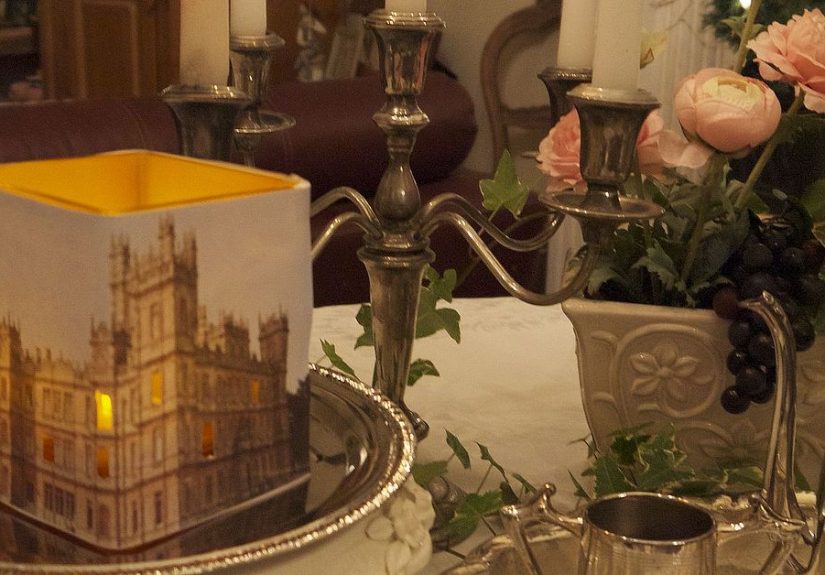
- Battery tapers in candlesticks for safe, steady ambiance.
- Tea lights scattered in small holders along the table for sparkle.
- Lampshades (especially fabric shades) to soften the light and make it feel period-adjacent.
Hide modern glare: dim your TV area lighting and add a lamp behind the seating zone. The screen stays watchable, but the room still looks like you might start discussing inheritances at any moment.
The Main Event: A Downton-Inspired Table Setup
A viewing party doesn’t require a formal dinner, but it does benefit from a table that feels like a set piece. Think: layered linens, real napkins, a centerpiece that doesn’t block conversation, and small “prop-like” details that signal care.
Build the base (fast and foolproof)
- Tablecloth or runner: lace, linen, damask-look, or any soft floral pattern.
- Plates: mismatched vintage works perfectly if the colors coordinate.
- Napkins: cloth if possible. Tie with ribbon or twine for a finished look.
- Place cards: simple folded cardstock with names in a “calligraphy-ish” font (your printer is your staff now).
Centerpiece ideas that look expensive (but aren’t)
- Low florals in small vasesclustered so it feels lush without being tall.
- Mini arrangements in teacups or small creamers for a tea-room vibe.
- Fruit + flowers: pears, clementines, or grapes tucked around greenery reads “old-world” instantly.
- Books + brass: stack a few hardcovers, top with a small vase or candleholders.
Pro tip: keep centerpieces low. Downton conversations are sharp enough without your guests shouting over hydrangeas.
Signature Decor Props: Small Touches With Big Downton Energy
The show’s look is built from texture and detailframes, trays, polished metal, and items that feel collected over time. You can borrow that feeling with a few strategic pieces.
1) A “butler’s tray” moment
Set up a tray on an ottoman or sideboard with teacups, sugar bowl, lemon slices, and a small vase. The tray instantly reads “service.” Even if you’re serving yourself. Especially if you’re serving yourself.
2) Framed “ancestry” wall (low effort, high payoff)
Create a mini gallery of thrifted frames. Print black-and-white “portraits” (public-domain vintage photos or your own guests in faux-serious poseskeep it tasteful). Arrange them in a cluster for instant manor-house drama.
3) Folding screen or room divider (the secret weapon)
If you can, use a folding screen to hide modern clutter (or the reality that your dining area is also your “package delivery zone”). It’s historically inspired and practicalexactly the kind of multi-tasking Downton would approve of.
4) Mirrors and sparkle
Adding a mirror behind the tea station or near the dining table helps bounce light and makes the room feel larger and more “grand.” If you have a standing mirror, it also doubles as a photo spotguests can check hats at a flattering angle, which is basically a public service.
Create a Tea & Treat Station That Looks Styled, Not Stuffed
Your food can be simple. The presentation is what sells the theme. Aim for height, symmetry, and “small bite” elegance.
What to display (decor-friendly foods)
- Tiered stand: cookies, mini pastries, or store-bought treats arranged neatly.
- Tea sandwiches: cut into triangles or fingers; keep them dainty.
- Scones or biscuits: served with jam and (optional) cream or butter.
- Fruit: grapes, berries, sliced orangescolor + freshness.
How to make it feel “period”
- Use small labels (e.g., “Cucumber Sandwiches,” “Lemon Cakes”) on folded cards.
- Put tongs or small serving forks beside each platter.
- Group items in odd numbers (3 jars, 5 plates) so it looks styled.
- Add one polished metal element: a tray, a teapot, or candleholders.
If you want a “cocktail hour” feel without age-restricted beverages, serve a sparkling mocktail in coupe glasses (sparkling water + citrus + a little simple syrup). It reads fancy, photographs well, and nobody has to whisper, “Is this legal for the youngest cousin?”
Tea Etiquette Without the Anxiety
A Downton party is funnot a final exam. Still, a few light etiquette touches can make the experience feel authentic:
- Offer lemon and milk as tea add-ins, plus sugar cubes if you have them.
- Set out small plates so guests don’t juggle snacks like they’re fleeing a scandal.
- Use napkins. Cloth napkins elevate the whole mood instantly.
Optional: place a small “tea tip” card by the station (“Stir gently. Pinkies may remain blissfully unstrained.”). It gets laughs and sets the tone: we’re here for vibes, not for judgment.
Decor for the Screen Area: Hide Modern Stuff Like a Pro
Your TV is the only truly modern thing that must remain visible. Everything else? Disguise it.
- Conceal cables with a decorative box or a basket.
- Cover the media console with a runner and a few books (leave ventilation for electronics).
- Add two side elements: a lamp on one side, a small arrangement on the other. It frames the screen like a “stage.”
For extra points: add a small sign near the seating area that says “Drawing Room.” People will laughand then immediately start behaving like they’re at a titled person’s house.
A Costume Corner and Photo Spot Guests Will Actually Use
You don’t need full cosplay, but you do want a corner that encourages guests to play along.
Easy costume props
- Long pearl necklaces, gloves, fascinators, hair combs
- Bow ties, suspenders, a flat cap
- A lace shawl or a faux fur stole (very “countess at dinner”)
Photo backdrop ideas
- A folding screen + a side table with a lamp
- A small “portrait wall” of frames
- A “calling card” sign (printed on cardstock) that says “Welcome to the Abbey”
Sound Design: The Secret Ingredient
Before the episode starts, play light background music: classical strings, soft piano, or early jazz for a late-era vibe. Keep it low. You want “grand house ambiance,” not “string quartet aggressively auditioning in your kitchen.”
Quick Downton Decor Checklist (So You Don’t Spiral)
- Lighting: lamps + candles (real or battery)
- Table: cloth, napkins, a centerpiece, serving pieces
- Props: tray, frames, books, something shiny (brass/silver)
- Tea station: labels, tiered stand, cups, spoons
- Comfort: throw blankets, extra pillows (Downton is fancy, but your guests are still human)
- Photo corner: a mirror or screen + a few accessories
Common Mistakes (and How to Fix Them Fast)
1) Everything is too dark
Fix: add one more lamp. The answer is almost always “one more lamp.”
2) The decor looks like “random antiques,” not a theme
Fix: repeat two materials (like brass + linen) and one color (like burgundy) in multiple places.
3) The snack area feels messy
Fix: put everything on trays, add labels, and leave empty space. Negative space is the real VIP guest.
Make It Interactive Without Turning It Into a Game Show
Light activities can keep the mood fun between episodes (or during dramatic pauses when everyone needs to breathe):
- Trivia cards at each seat
- “Upstairs/Downstairs” vote: guests pick which snack belongs where
- Best hat or “Most Likely to Deliver a Withering One-Liner” (gentle awards only)
Bonus: The Experience (Why This Theme Feels So Good in Real Life)
Here’s the funny thing about a Downton Abbey viewing party: the decor doesn’t just sit there looking prettyit changes how people act. The moment guests step into a room lit by warm lamps instead of harsh overheads, they start talking differently. Not “putting on an accent” differently (please don’t), but slower, cozier, and more present. A candle on the coffee table makes even the most casual friend pause like they’re about to reveal a family secret… or at least ask politely where you found those napkins.
The first “wow” moment usually happens at the table. It’s not because your guests have never seen food (they have). It’s because the table feels like an invitation to linger. Tiered stands and small plates naturally encourage grazing and conversationpeople take a bite, comment on the pattern on a teacup, and suddenly someone is telling a story about their grandmother’s china cabinet or that one thrift-store find they still brag about. The decor gives everyone a shared language: textures, little details, and a sense that the night is intentionally different from regular life.
Then there’s the photo corner effect. You might think people will ignore it. They won’t. Give a group a mirror, a few costume accessories, and one good lamp, and you’ve basically created a happiness machine. Someone tries on gloves “as a joke,” then someone else adds pearls, and suddenly you have a lineup of guests taking turns posing like they’re about to descend a staircase in a season finale. The best part is that it’s not about looking perfectit’s about having a setting that makes silliness feel classy. (That’s rare. Treasure it.)
Even the “downstairs” snack station becomes its own kind of story. People love seeing the practical side of a theme: labeled jars, a tray of tea bags, a neat stack of plates, a little sign that says “Servants’ Hall.” It makes guests feel taken care of. And there’s something oddly satisfying about watching someone refill the sugar bowl like they’re doing an important job for the household. At some point, a friend will inevitably straighten the teaspoons with intense focus. Let them. That’s their character arc.
As the episode rolls, the room starts to feel like a tiny theater. The lighting softens faces, the table decor catches glints of reflection, and the whole place becomes more immersiveless “watching TV,” more “event night.” You’ll notice guests reacting together more: laughing at the same lines, gasping at the same plot turns, and trading quick looks like they’re all in on the same inside joke. Great decor creates a shared mood, and a shared mood makes a night memorable.
And when it’s over, the leftover details keep working. Guests take one last cookie because it’s on a pretty stand. They pour one more cup of tea because the tray looks inviting. They linger for the post-episode debrief because the room feels calm and special. That’s the true win: Downton Abbey viewing party decor isn’t just about looking on-themeit’s about building a space that makes people want to stay, talk, laugh, and feel a little more “occasion” than “routine.” In other words: you created the vibe. The house approves.