Table of Contents >> Show >> Hide
- First, What Counts as an “Electric Vehicle”?
- The First EV Era: When Electricity Was the Cool New Thing
- Why EVs Lost the First Time
- The Long Nap, Then the Wake-Up Calls
- The Modern Comeback: Batteries, Software, and a Better EV Deal
- What EV History Teaches Us (Besides “Never Bet Against a Better Battery”)
- Common EV Myths (Historical Edition)
- Experience Add-On: What EV History Feels Like in Real Life (About )
- Conclusion
Electric vehicles (EVs) feel like the newest kid on the drivewayquiet, clever, and somehow already better at parallel parking than the rest of us. But here’s the plot twist: EVs aren’t new. They’re more like that band your older cousin loved in high schoolgone for a while, then suddenly “back,” and now everyone is acting like they just discovered them.
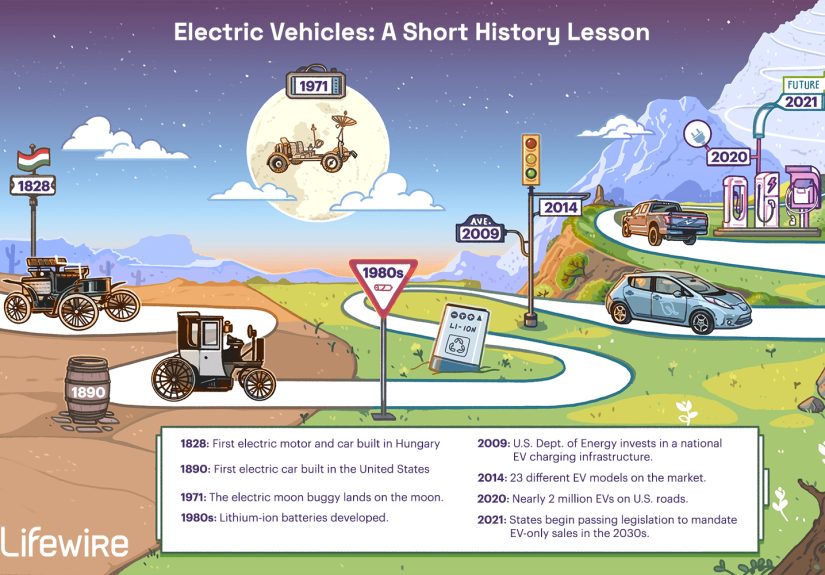
To understand where EVs are going, it helps to know where they’ve been: from 1800s science experiments to early-1900s city streets, through a long nap during the gasoline boom, and into today’s battery-electric comeback fueled by better tech, tougher air-quality rules, and (let’s be honest) a desire to stop paying so much at the pump.
First, What Counts as an “Electric Vehicle”?
“EV” gets tossed around like it’s one single thing, but it’s really a family photo:
- BEV (Battery Electric Vehicle): All-electric. No gasoline engine. Think “plug in, drive off quietly.”
- PHEV (Plug-in Hybrid Electric Vehicle): Has a battery you can plug in, plus a gas engine for longer trips.
- HEV (Hybrid Electric Vehicle): No plugging in. The battery is charged by the engine and regenerative braking.
This history lesson mainly focuses on BEVsthe pure electric cars that run on stored electricity and a motor, rather than gasoline and thousands of tiny explosions per minute.
The First EV Era: When Electricity Was the Cool New Thing
1830s–1880s: The “It Moves!” Phase
Early electric transportation started as experimentsproof that electricity could power motion, long before anyone had a practical way to store lots of energy on board. In the 1830s, inventors in Europe and the U.S. built crude electric carriages and motors, but batteries were heavy, expensive, and not especially eager to be recharged. These early prototypes weren’t ready to replace horses so much as impress dinner guests.
1890s: America’s “First Successful” Electric Car Shows Up
By the late 1800s, storage batteries improved enough for something resembling a real vehicle. In the United States, William Morrisonoften credited with building the first successful American electric car around 1890created a six-passenger electric wagon that helped spark serious interest. It wasn’t sleek, but it was real transportation: proof that electricity could move people, not just ideas.
1900–1910s: EVs Peak Early (Like a One-Hit Wonder That Actually Deserved More)
Around 1900, EVs were genuinely competitive. In fact, at a major car show that year, about a third of the automobiles on display were electric. That makes sense when you remember what gas cars were like back then: loud, smelly, and started by hand-crankingan activity that doubled as both exercise and risk management. Early electric cars, by contrast, were clean, quiet, and easier to operate. For city drivingshort trips, smoother roads, predictable routeselectric made a lot of sense.
EVs also fit the early “urban” reality. Many people didn’t drive cross-country; they drove across town. Electricity in cities was expanding. And when you’re mostly traveling a few miles at a time, you don’t need a massive rangeyou need convenience.
Why EVs Lost the First Time
Gasoline Got Cheap, Roads Got Longer, and Convenience Won
EVs didn’t disappear because they were “bad.” They faded because gasoline cars improved fast and the world around them changed. Internal combustion vehicles got cheaper to buy (thanks to mass production), easier to start, and easier to refuel almost anywhere. Meanwhile, early battery tech stayed limited: heavy packs, modest range, and slow recharging.
A key moment: the spread of electric starters and electric lighting on gasoline cars in the early 1910s. That removed one of EVs’ biggest advantagesease of use. Once you could start a gasoline car without wrestling it like a lawn mower possessed by demons, the gas option got a lot more attractive for everyday drivers.
EVs Became “Specialty,” While Gas Became “Default”
EVs found nichesdelivery fleets, certain city services, specific usersbut they stopped being the default personal vehicle choice. By the time highways expanded and long-distance travel became a bigger part of American life, gasoline’s fast refueling and longer range became the deciding factors. EVs weren’t dead; they were just stuck waiting for batteries to catch up.
The Long Nap, Then the Wake-Up Calls
1960s–1970s: Smog, Oil Shocks, and Government R&D
After decades of dominance by gasoline cars, EV interest resurfaced when the downsides of oil dependence and tailpipe pollution got harder to ignore. In the 1970s, rising oil prices and gasoline shortagesespecially around the 1973 oil embargopushed the U.S. to explore alternatives. Congress passed legislation in 1976 supporting electric and hybrid vehicle research and development, and automakers experimented with prototypes and limited trials.
The problem? The batteries still weren’t ready for prime time. Many EVs of that era had low top speeds and short ranges, which made them feel less like “cars” and more like “golf carts with ambition.” Still, the groundwork mattered: it kept the idea alive and funded the kind of research that pays off later.
1990s: Regulation Forces the Conversation
The 1990s brought a different kind of push: policy. Federal clean-air requirements tightened pollution standards, and California’s Zero-Emission Vehicle (ZEV) program, launched in 1990, required automakers to deliver ZEVs to the California market. This wasn’t a gentle suggestionit was a signal that the future might not be 100% gasoline forever.
This era also produced one of the most famous “almost” stories in EV history: the GM EV1. Designed as a modern electric car for a mass market, the EV1 was built beginning in 1996, with 1,117 vehicles produced and mostly leased to drivers in certain states. The EV1 became a cultural flashpointbeloved by drivers, debated by policymakers, and ultimately discontinued. Whether you view it as a noble experiment, a business mismatch, or a lesson in timing, the EV1 proved something important: the idea wasn’t the problem. Scaling it was.
The Modern Comeback: Batteries, Software, and a Better EV Deal
Late 1990s–2000s: Hybrids Rebuild Trust
Before full battery-electric cars surged, hybrids helped make electrification normal. The Toyota Priusfirst mass-produced as a hybrid in the late 1990s, then widely sold in the 2000sshowed drivers that electric motors and batteries could be reliable, practical, and (bonus) good for fuel economy. It was a bridge technology that made “electric help” feel less weird.
2008–2010s: Lithium-Ion Changes the Game
The true turning point for modern BEVs was lithium-ion battery technology paired with smarter power electronics and better software. Suddenly, EVs weren’t only about being “clean”; they were about being genuinely good cars: strong acceleration, lower maintenance, and the magic trick of charging at home.
Cost mattered too. Over time, battery pack prices dropped dramatically as production scaled and designs improved. The result: longer range became common, and EVs stopped being “limited experiments” and started becoming real competitors in mainstream segments.
2010s–2020s: Charging Infrastructure Becomes the Real Story
Once EVs could go farther, the question shifted from “Can I drive it?” to “Can I conveniently charge it?” Home charging is the secret weaponwaking up to a “full tank” is a lifestyle upgrade. But public charging matters for apartments, road trips, and anyone who doesn’t have a dedicated parking spot.
The U.S. charging landscape expanded quickly. By early 2023, there were roughly 132,000 publicly accessible charging ports in the United States (including both Level 2 and DC fast charging), and DC fast charging made up a meaningful share of public ports. That growth is supported by federal and state programs and a whole lot of private investment.
Of course, charging has also been… complicated. Different connector standards have competed in the U.S., including CCS, CHAdeMO, and newer standardization efforts around Tesla’s design. The trend has been toward greater interoperability, but the “dongle era” (adapters, apps, memberships, and more apps) has been very real for drivers.
What EV History Teaches Us (Besides “Never Bet Against a Better Battery”)
1) Technology Alone Doesn’t WinSystems Do
EVs were viable early on for short city trips. They lost when gasoline built an unbeatable system: cheap fuel, easy refueling, fast improvement, and cultural momentum. Modern EVs are rising because their system is improving too: better batteries, more charging, stronger incentives, and expanding model choices.
2) Policy Has Been a Repeating Character
EVs tend to surge when air-quality rules, energy security, or climate goals become urgent. From clean-air regulations to California’s ZEV program, policy has repeatedly nudged the market toward electrificationespecially when the technology is close enough to make that nudge meaningful.
3) The “EV vs. Gas” Argument Is Really About Convenience
Most drivers don’t wake up thinking, “Today I shall optimize drivetrain efficiency.” They want a car that starts every time, goes where they need, fits their budget, and doesn’t require a PhD in charging etiquette. EVs win when they feel easy: reliable range, simple charging, and predictable costs.
Common EV Myths (Historical Edition)
Myth: “EVs are a brand-new invention.”
Reality: EVs have been part of the automotive story since the earliest days. The industry didn’t “invent” EVs recentlyit finally built the batteries and infrastructure to make them work at massive scale.
Myth: “EVs failed once, so they’ll fail again.”
Reality: EVs didn’t fail because people hated electricity. They lost because gasoline offered a better overall deal at the time. Now the deal is changing: better batteries, more chargers, and a lot more momentum.
Myth: “Charging is always a nightmare.”
Reality: Public charging can be frustrating in some places, but home charging can be ridiculously convenient. The gap between “best-case EV life” and “worst-case EV life” is realso the industry’s job is to make the best case more common.
Experience Add-On: What EV History Feels Like in Real Life (About )
Reading EV history is one thing. Living in its latest chapter is anotherbecause EVs don’t just change what’s under the hood; they change how you think about “fuel.” The first time you drive a modern EV, the quiet is usually the headline. Not “silent like a spaceship” (marketing loves that), but “silent like your brain finally has room to think.” You notice tires on pavement, wind at highway speed, the click of a turn signal. It’s a calmer kind of driving, which is funny because the acceleration can also feel like the car just discovered espresso.
Then you meet the emotional roller coaster known as range. Early EV owners in the 2010s used to talk about range the way hikers talk about water: constantly, nervously, and with a tone that suggested they’d been hurt before. Modern ranges are better, but the habit lingers. You might find yourself doing mental mathdistance, temperature, speed, “Do I really need to run the heater?”and then laughing because you’ve never once asked your gasoline car to estimate its feelings about the weather.
Charging becomes a routine, and routines are where EVs either win your heart or test your patience. If you can charge at home, it’s almost unfair: you plug in at night, and the car is “full” by morning. No detours, no gas station smells, no trying to remember if your card reader is going to accept your existence today. But if you rely on public chargingapartment living, street parking, busy citiesyou get a more old-school experience: planning, waiting, and learning which stations are dependable. It can feel like the early 1900s again, when EVs were great… as long as your world stayed local.
Road trips are where EVs teach you the biggest historical lesson: infrastructure is destiny. A good fast-charging stop feels futuristicstretch your legs, grab a snack, come back with meaningful miles added. A bad stop feels like you’ve time-traveled to the “dark ages” of EV development: broken charger, confusing app, awkward line, and someone on the phone saying, “Have you tried unplugging it and plugging it back in?” (Which, to be fair, is also how the internet works.) Add in connector transitions and adapters, and you understand why charging standards matter so much: the goal is for drivers to think about travel, not hardware.
The most surprising “experience” piece, though, is community. EV drivers swap tips like gardeners: which charger is reliable, how cold weather affects range, what settings help efficiency, which apps are worth keeping. It’s the modern version of the early EV erapeople figuring it out together, because the technology is moving fast and the rules of the road are still settling. In a way, driving an EV today feels like being in a history book that hasn’t finished printing yet. And that’s kind of the fun part.
Conclusion
Electric vehicles have lived three lives: the early rise, the long gasoline-era sleep, and the modern comeback powered by better batteries, smarter engineering, and a growing charging network. The story isn’t simply “EVs are the future.” The story is that EVs have always been a credible ideaand whenever technology and infrastructure line up with what drivers actually need, EVs return to the spotlight.
If history is any guide, the next chapter won’t be decided by hype. It’ll be decided by the unglamorous stuff: battery costs, charging reliability, grid upgrades, simpler standards, and making EV convenience feel normal everywherenot just in the best-case neighborhoods. In other words: the same way gasoline won the first time. Not by being perfect, but by being easy.