
Table of Contents >> Show >> Hide
- Martin Campbell’s Secret Sauce (And Why It Matters for This Ranking)
- How This Ranking Works
- Every Martin Campbell Movie, Ranked
- #21 Intimate Games (1976) (uncredited)
- #20 The Sex Thief (1973)
- #19 Eskimo Nell (1975)
- #18 Three for All (1975)
- #17 Beyond Borders (2003)
- #16 Dirty Angels (2024)
- #15 Green Lantern (2011)
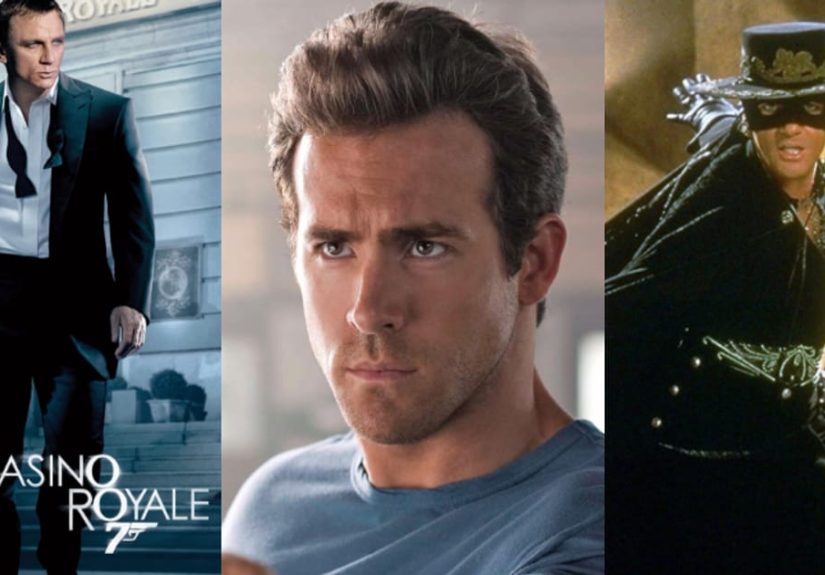
- #14 The Legend of Zorro (2005)
- #13 Memory (2022)
- #12 Criminal Law (1988)
- #11 Defenseless (1991)
- #10 Vertical Limit (2000)
- #9 Cleaner (2025)
- #8 Cast a Deadly Spell (1991)
- #7 No Escape (1994)
- #6 Edge of Darkness (2010)
- #5 The Protégé (2021)
- #4 The Foreigner (2017)
- #3 The Mask of Zorro (1998)
- #2 GoldenEye (1995)
- #1 Casino Royale (2006)
- What This Ranking Reveals About Martin Campbell
- Not Yet Ranked: The One to Watch Next
- of “Marathon Experience” Notes for a Martin Campbell Ranking Night
If you’ve ever watched a slick action sequence and thought, “Wow, that was so clean I could eat popcorn off it,” there’s a decent chance Martin Campbell was involved. He’s the director who helped reboot James Bond twice, launched iconic star personas, and provedover and overthat a movie can be loud without being confusing.
This is a full Martin Campbell filmography ranking of his directed movies (including his made-for-TV feature and an early uncredited directing credit). We’re counting down from the “well… it exists” tier to the films that belong in the “queue it up again” hall of fame.
Martin Campbell’s Secret Sauce (And Why It Matters for This Ranking)
Campbell’s best work has a few consistent traits:
- Action you can follow: clear geography, sharp cutting, and stakes that don’t get lost in the noise.
- Star-making confidence: he frames leads like they’re already legendsthen dares them to live up to it.
- Old-school craftsmanship: even when the script is wobbly, the directing often stays sturdy.
How This Ranking Works
Rankings are opinion by nature, but I’m not throwing darts at a movie poster (though that would be very on-brand for an action director). Each entry weighs:
- Overall film quality: storytelling, pacing, performances, and rewatch value.
- Direction: how much Campbell’s craft elevates (or can’t save) the material.
- Cultural impact: influence, franchise legacy, and “people still talk about it” energy.
- Execution vs. ambition: big swings are welcomeif they connect.
Every Martin Campbell Movie, Ranked
Note: This list focuses on movies Campbell directed (not episodes of TV series). One early title includes an uncredited directing role.
#21 Intimate Games (1976) (uncredited)
This is the hardest entry to “rank” because Campbell’s role is uncredited, and the film isn’t widely discussed compared to the rest of his career. It’s here mostly for completeness. Think of it as a historical footnote: the early-credit era before he became the guy studios called when they wanted something to feel expensive and kinetic.
#20 The Sex Thief (1973)
Campbell’s directorial debut lives in the “’70s British adult-oriented comedy” lanemore curiosity than must-watch. You can spot the early instincts for pacing and set-piece rhythm, but it’s not the Campbell most people come for. Consider it an origin story with training wheels (and a very different sense of humor than his later mainstream work).
#19 Eskimo Nell (1975)
A satirical comedy that’s far more notable as a time capsule than a modern recommendation. The premise aims for absurdity, but the tone is inconsistent and the laughs can feel dated. Still, it shows Campbell learning how to juggle competing agendas in a storysomething he’d later do more successfully with studios, stars, and franchises all pulling in different directions.
#18 Three for All (1975)
A musical comedy with sunshine, travel vibes, and light misadventure. It’s a smaller, earlier-scale project that doesn’t scream “future Bond reboot guy,” but it does highlight Campbell’s ability to keep a plot moving and manage ensembles. If you’re doing a full Martin Campbell marathon, this is one of those “early chapter” watches.
#17 Beyond Borders (2003)
Ambitious? Yes. Smoothly executed? Not consistently. The film wants to blend sweeping romance with humanitarian crisis drama, and that’s a tough tonal mix even on a perfect day. Campbell gives it polish and some striking locations, but the story can feel like it’s torn between being a grand love story and a lecturewithout fully landing as either.
#16 Dirty Angels (2024)
This modern action-thriller has the kind of setup that could be a tight, suspenseful ridebut the finished product is uneven. Campbell’s action direction still shows flashes of competence (he knows how to stage movement and urgency), yet the overall package struggles with momentum and coherence. It’s not his worst-directed film, but it’s one of the least satisfying.
#15 Green Lantern (2011)
The most famous “what happened here?” entry in Campbell’s catalog. It has a charismatic lead, a big comic-book mythology, and a studio-scale budgetyet it never quite finds a tone that feels confident. Some of the problem is script and worldbuilding, but even Campbell’s usually reliable clarity gets swallowed by effects-heavy chaos. Not unwatchable, just… frustrating.
#14 The Legend of Zorro (2005)
Sequels have a sneaky habit of forgetting what made the original fun. This one has spectacle and recognizable stars, but it often feels overstuffed, like it’s trying to be bigger instead of sharper. Campbell’s craftsmanship keeps it moving, yet the spark of The Mask of Zorro is harder to recapture here.
#13 Memory (2022)
A late-era Liam Neeson thriller that’s efficient, grim, and very “you know the drill.” Campbell brings professionalismclean action beats, steady pacingbut the story leans familiar and emotionally chilly. If you like the Neeson-thriller formula, this will go down smoothly; if you’re hoping for something surprising, you’ll be checking your watch.
#12 Criminal Law (1988)
A tense legal thriller with a grimy edge and a cat-and-mouse vibe. It’s not top-tier Campbell, but it’s more interesting than many give it credit forespecially if you like courtroom thrillers that feel slightly mean. The direction is controlled and the tone is unapologetically dark, even when the plot gets a little pulpy.
#11 Defenseless (1991)
One of Campbell’s more under-the-radar thrillers, and a reminder that he can do suspense without relying on explosions. The film’s tension plays in smaller spacesrelationships, vulnerability, and danger that creeps rather than charges. It won’t be everyone’s favorite, but it’s a solid watch if you’re exploring the deeper cuts in his filmography.
#10 Vertical Limit (2000)
A survival-action movie that understands the primal fear of heights and cold. Campbell’s direction sells the physical danger and keeps the set pieces readableno small feat when the environment is the enemy. Some character beats are thin, but as a high-stakes adventure, it delivers the sweaty-palmed tension it promises.
#9 Cleaner (2025)
A modern “contained action” thriller with a familiar setup (high-rise peril, hostage pressure, one capable hero). Campbell does what he does best: keeps the action legible, tightens the screws, and gives the lead moments to look genuinely resourceful. It’s not reinventing the genre, but it’s a competent, entertaining rideespecially if you like your thrillers brisk.
#8 Cast a Deadly Spell (1991)
A delightful genre mash-up: noir detective vibes plus supernatural weirdness. Campbell directs it with a straight face (which is the correct choice), letting the absurdity play without winking too hard. The result is a cult-friendly, “they don’t make these anymore” kind of watchimperfect, creative, and oddly charming.
#7 No Escape (1994)
A punchy sci-fi action adventure with a prison-island premise and a rough-edged intensity. Campbell’s action staging is energetic and clear, and the movie moves with the confidence of a director who knows how to keep audiences locked in. It’s not as famous as his franchise work, but it’s a strong mid-’90s action thriller that deserves rediscovery.
#6 Edge of Darkness (2010)
A revenge thriller with political paranoia baked into the walls. Campbell adapts the mood of the source material into something mainstream but still grim, anchoring the story with a heavy lead performance and an escalating sense of conspiracy. The filmmaking is steady and purposefulless flashy than Bond, but tense in a slow-burn way.
#5 The Protégé (2021)
A stylish action thriller that gives its cast room to have fun, even when the plot gets twisty in a “sure, why not?” way. Campbell’s direction boosts the film’s slickness: fights are staged cleanly, and the pace rarely sags. It’s not a masterpiece, but it’s one of his most enjoyable modern-era entries.
#4 The Foreigner (2017)
A sharp, grounded thriller that blends personal grief with geopolitical tension. Campbell keeps the tone serious and the suspense tight, letting the story simmer rather than sprint. It’s one of his best examples of “adult thriller craftsmanship”the kind of movie that doesn’t need a cape or a tuxedo to feel intense.
#3 The Mask of Zorro (1998)
Pure crowd-pleasing adventure, executed with style. Campbell balances romance, comedy, swordplay, and sweeping spectacle without letting any one ingredient overpower the others. The action is elegant and readable, the performances pop, and the film has that rare quality: it feels like a classic the first time you watch it.
#2 GoldenEye (1995)
The Bond reset that brought 007 roaring into a new era. Campbell’s direction modernizes the franchise while keeping it unmistakably Bond: big stunts, crisp suspense, and a lead debut that feels instantly iconic. The set pieces are staged with confidence, and the movie has that “everyone’s bringing their A-game” momentum from start to finish.
#1 Casino Royale (2006)
Campbell’s crown jewel: a reinvention that made Bond feel dangerous, human, and immediate. The action is thrilling and physical (you can almost feel the bruises), but the film also nails tension in quieter momentsespecially when ego, charm, and vulnerability collide. It’s not only one of the best Bond films; it’s one of Campbell’s best-directed films, period.
What This Ranking Reveals About Martin Campbell
Campbell’s peaks come when he’s given a strong character spine to hang the action on. When the story has a clear emotional engineBond earning his edge, Zorro passing the torch, a parent digging into a conspiracyhis direction turns efficiency into electricity.
When the script is messy or overstuffed, he can still deliver competent set pieces, but even his craftsmanship has limits. (Yes, directors are powerful. No, they cannot personally wrestle a third-act CGI vortex into coherence.)
Not Yet Ranked: The One to Watch Next
Just Play Dead (TBA) is listed as a Campbell-directed project in post-production. Since it hasn’t widely premiered at the time of writing, it’s not included in the rankingyet. When it’s out, we’ll see whether it lands closer to his lean thrillers or his more uneven late-era action entries.
of “Marathon Experience” Notes for a Martin Campbell Ranking Night
If you’re planning a “Every Martin Campbell movie, ranked” watch-through, the experience is weirdly satisfyinglike organizing your entire closet and discovering you own seven identical black T-shirts, but you love them anyway. Campbell’s movies tend to create a specific rhythm: setup, pressure, escalation, and then action that’s staged like a problem-solving exercise. Even when a film isn’t great, you’ll often notice how watchable it is moment-to-moment because the scenes are built to move.
A fun way to do the marathon is to start with one of his peaks (Casino Royale or GoldenEye) so you can lock in what “top-tier Campbell” feels like: crisp geography, forward momentum, and characters who look like they’re making real choices under real stress. Then, when you dip into the rougher entries, you’ll spot the difference immediately. The weaker films aren’t always badly directedthey’re often films where the story and tone don’t give Campbell the right runway. It’s like watching an elite driver stuck in traffic. The skills are there; the situation is not cooperating.
Another “marathon moment” you’ll likely notice: Campbell is sneaky good at introductions. He knows how to present a lead so you understand them fastwhat they want, what they fear, and what they’re capable of. That’s why his franchise reboots hit so hard. In a single film, he can reset an iconic character without making it feel like homework. The best example is Craig’s Bond: you don’t just hear he’s dangerousyou see it in how the action is filmed, how the camera lingers on the physical effort, and how the quiet scenes don’t let him hide behind charm.
For snacks-and-friends viewing, the middle tier is surprisingly ideal. Movies like Cleaner, No Escape, or The Protégé tend to deliver steady thrills without demanding that everyone in the room treat the film like a sacred text. You can talk, laugh, rewind a moment that’s ridiculous (affectionately), and still follow what’s happening. That’s a rare skill in modern action: clarity is a gift.
If you’re watching the early ‘70s titles, the “experience note” is simple: treat them like a museum stop, not the main event. They’re part of the story of how Campbell got here, but they’re not the reason his name carries weight in action cinema. Save the real celebration for the films where his strengths shine: the big reboots, the elegant adventure, and the grounded thrillers that prove he can do more than just blow things uphe can make you care while they’re blowing up.






 Close
Close