
Table of Contents >> Show >> Hide
- What Exactly Is Ironstone, Anyway?
- Why Farmhouse Lovers Obsess Over Ironstone Platters
- How to Tell if Your Ironstone Platter Is the Real Deal
- Styling a Farmhouse Ironstone Platter in Every Room
- Where to Find Farmhouse Ironstone Platters
- Caring for Your Ironstone Platter
- Real-Life Farmhouse Ironstone Platter Experiences
- Final Thoughts
There are a few things that instantly whisper “cozy farmhouse” the way a
chippy, heavy, white ironstone platter does. Set one in the middle of a
farmhouse table, piled with roast chicken and herbs, or hang a cluster of
them on the wall, and suddenly the whole space feels like it’s been loved
for generationseven if you just finished assembling your dining chairs
with an Allen wrench yesterday.
A farmhouse ironstone platter is more than a serving
piece. It’s part history lesson, part workhorse, part decor hero. From its
19th-century roots in England as the “poor man’s porcelain” to its current
status on Pinterest boards and in modern farmhouse kitchens across
America, ironstone has earned its spot as a timeless classic in home
decor and tableware.
What Exactly Is Ironstone, Anyway?
Ironstone isn’t actually made of iron, and no, it won’t stick to a
magnet. It’s a type of durable, vitreous pottery developed in the early
1800s in Staffordshire, England, as a more affordable, sturdier
alternative to fine porcelain. Makers like Mason’s, Johnson Brothers, and
other English potteries helped popularize ironstone, and by the 1840s it
was crossing the Atlantic and landing on American tables in a big way.
From “Poor Man’s Porcelain” to Farmhouse Star
Originally marketed as everyday tableware, ironstone became popular
because it was tough. It could handle hot food, frequent washing, and
large family gatherings without turning into a cabinet full of chipped
heartbreak. Over time, its clean lines and creamy white glazes started to
appeal to collectors and decorators. Today, those same traitssimplicity,
durability, and a soft white finishmake an ironstone platter perfect for
farmhouse decor.
You’ll find vintage and antique ironstone platters in all kinds of
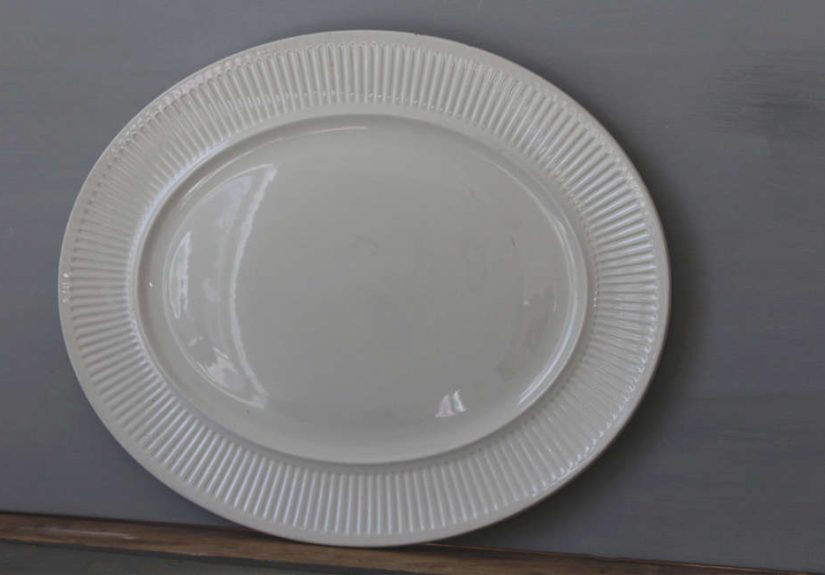
shapes: oval meat platters with juice wells, chunky rectangular trays
with scalloped edges, and delicate oval serving pieces with subtle
embossing or raised rims. Some are plain white; others have brown or blue
transferware designs. All of them bring a sense of age and authenticity
to a room.
Why Farmhouse Lovers Obsess Over Ironstone Platters
So what makes the farmhouse ironstone platter such a
superstar in country and cottage-style homes? It comes down to a few key
qualities.
1. The Perfect Neutral
Ironstone’s soft white or creamy glaze plays well with everything:
reclaimed wood, galvanized metal, ticking stripe linens, vintage glass,
and greenery. It adds light without screaming for attention, which is
exactly what you want from a foundational decor piece in a
farmhouse kitchen or dining room.
2. Built-In Character
Collectors love ironstone’s quirks: small pits in the glaze, subtle
warping, crazing (those fine spiderweb lines in the surface), and age
stains that look like tea someone spilled a century ago and politely
never mentioned. Instead of seeing these as flaws, farmhouse decor leans
into them as patina. The platter looks like it has stories, even
if you just found it last week at a thrift store.
3. Form Meets Function
A farmhouse ironstone platter isn’t just pretty to look at; it works
hard, too. On holidays, it holds the turkey or ham. On regular days, it
corrals fruit on the counter or becomes a base for candles and seasonal
decor. When it’s not in use, it stacks nicely in a hutch or rests on a
plate rack, acting as art.
4. They Layer Beautifully
Ironstone platters are especially fun for people who love to style
shelves. Different shapes and sizes layer together effortlessly. A large
oval platter makes a backdrop, smaller pieces stand in front, and a
pitcher or bowl sits in front of those. You get instant depth and that
“collected over time” look that modern farmhouse design is all about.
How to Tell if Your Ironstone Platter Is the Real Deal
If you’ve ever stood in a thrift store aisle whispering, “Are you real
ironstone or just pretending?” to a platter, you’re not alone. Spotting
authentic vintage or antique ironstone isn’t complicated once you know
what to look for.
1. Check the Weight and Feel
Ironstone tends to be heavier and denser than modern stoneware. Pick up
the platterif it feels surprisingly hefty for its size, that’s a good
sign. The body is usually thick, with solid, substantial rims.
2. Look for Maker’s Marks and Stamps
Flip the platter over and check the underside. Authentic pieces often
have a maker’s mark (sometimes called a backstamp) that includes:
- The pottery name (like Mason’s, Johnson Brothers, Homer Laughlin, or English Ironstone Tableware)
- Phrases such as “Ironstone China,” “Royal Ironstone,” or simply “Ironstone”
- Sometimes an English registry diamond or number on 19th-century pieces
Not all ironstone platters are marked, and not every mark guarantees age
or rarity, but a clear stamp is a helpful clue. If you’re collecting
seriously, learning a few common ironstone marks can keep you from
overpaying for reproductions.
3. Watch the Color and Glaze
Ironstone is usually a soft white, creamy white, or slightly gray white.
Many older platters show:
- Crazing (fine lines in the glaze)
- Tea-colored stains or “toastiness” around the edges
- Uneven glaze pooling near the rim or the well
Modern “ironstone-inspired” pieces often have a very bright, uniform
white glaze and look almost too perfect. They can still be lovely for
everyday use, but they won’t have the same depth of character as a true
vintage or antique ironstone platter.
4. Study the Shape
Traditional ironstone platters often have classic silhouettes:
- Oval meat platters with a shallow well
- Scalloped or paneled rims
- Rectangular serving trays with rounded corners
Overly ornate handles, super thin edges, or very modern shapes can be a
hint that what you’re holding is newer ceramic made in an “ironstone
style” rather than period ironstone.
Styling a Farmhouse Ironstone Platter in Every Room
One of the best things about a farmhouse ironstone platter is how
ridiculously versatile it is. It’s like the little black dress of your
housedress it up, dress it down, and it always works.
In the Kitchen and Dining Room
-
Everyday fruit tray: Pile lemons, limes, or apples on a
large oval platter and leave it on your island or table. Instant color,
instant charm. -
Serving board upgrade: Use an ironstone platter instead
of a wooden board for cheese, charcuterie, or dessert. The white
background makes food pop in photos and feels crisp and classic. -
Centerpiece base: Place mason jars, candles, and small
vases on a platter for an easy farmhouse table centerpiece. Swap out
greenery and accents seasonally.
On Open Shelves and in a Hutch
A row of ironstone platters leaning along the back of a cabinet or hutch
creates a beautiful backdrop for your everyday dishes and glassware.
Layer smaller pieces, like creamers, bowls, or pitchers, in front to give
your display depth and dimension.
Plate racks or wall ledges are fantastic for showing off your favorite
platters. Mix round plates with oval platters and one or two transferware
pieces to keep things interesting.
On the Wall (Yes, Really)
Hanging ironstone platters as wall art is a classic farmhouse move.
Create:
- A symmetrical arrangement over a sideboard
- A vertical row in a narrow hallway
- A clustered “gallery wall” of platters in different sizes
Use sturdy plate hangers or disc hangers rated for the weight of heavy
ironstone. These platters are tough, but no one wants to hear the sound
of “antique hitting hardwood” at 2 a.m.
In the Entryway or Living Room
Ironstone platters make great catch-all trays on a console table. Set one
by the front door with a little dish for keys, a candle, and a small vase
of greenery. In the living room, use a platter as a base on your coffee
table to hold a stack of books, coasters, and a plant.
Where to Find Farmhouse Ironstone Platters
Half the fun of ironstone is the hunt. Here are some of the most common
places people score real farmhouse ironstone platters:
-
Thrift stores and charity shops: These are hit or miss,
but when you find a heavy old platter among the everyday dishes, it’s a
small thrill. -
Flea markets and antique malls: Great for curated
pieces and larger platters. Prices varyexpect to pay a bit more for
well-known makers or particularly large, impressive pieces. -
Online marketplaces: Etsy, eBay, and vintage-focused
online shops often have dedicated sections for ironstone platters. You
can search by size, maker, or style. -
Vintage pop-up markets and barn sales: These events are
prime territory for stacks of farmhouse dishes and serving pieces.
If you’re just starting a collection, don’t stress about perfection. Look
for pieces that you love, even if they’re a little stained or crazed. A
farmhouse ironstone platter with a few age spots blends beautifully into
a relaxed, lived-in home.
Caring for Your Ironstone Platter
Once you’ve adopted a platter (or five), you’ll want to take care of it
so it lasts another few decades.
-
Hand wash is safest: Many collectors avoid the
dishwasher for older ironstone, especially pieces with heavy crazing.
Sudden temperature changes and strong detergents can worsen cracks and
stains. -
Go gentle on stains: For stubborn discoloration, some
people soak platters in warm water with a mild cleaner. Avoid harsh
bleach or abrasive scrubbers that can damage the glaze. -
Be mindful with very old pieces: Antique ironstone
platters with deep crazing or hairline cracks are better used for dry
food or purely decorative purposes, especially if you’re concerned
about food safety. -
Store carefully: When stacking platters, place a soft
cloth or felt between them to avoid scratching.
Real-Life Farmhouse Ironstone Platter Experiences
Ask any ironstone lover about their collection, and you’ll quickly learn
that every platter comes with a story.
Maybe your first farmhouse ironstone platter came from a Saturday
morning flea market. You weren’t even looking for dishesjust fresh
flowers and maybe a cinnamon rollbut there it was at the end of a
wobbly folding table. A heavy oval platter, its glaze crisscrossed with
fine crazing, slightly toasted around the edges like a perfectly baked
marshmallow. The tag said five dollars. You tried to act casual when you
paid, but inside you were already planning where it would go on your
kitchen shelves.
At home, you washed it carefully and set it behind your everyday dinner
plates. Suddenly, your little stack of white dishes looked intentional,
collected, even a bit fancy. When friends came over, someone always
pointed to that platter and said, “Ooh, where did you get that?” And just
like that, you were an ironstone person.
Maybe the next platter came from a road tripan antique mall off the
highway, where you promised yourself you’d “just look.” This one was
larger, with a scalloped edge and a faint mark on the back from an old
English pottery. It cost more than you meant to spend, but the weight of
it in your hands felt like history. You imagined the Sunday roasts and
holiday meals it had already seen before it ended up in your cart.
Over time, you started using ironstone platters for everything:
-
As a base for a cluster of candles and pumpkins in the fall, when your
house smells like cinnamon and everyone pretends they’re not already
thinking about pie. -
Under a row of tiny bottlebrush trees at Christmas, sprinkled with faux
snow, instantly turning your mantle into a little winter village. -
To serve a simple breakfastjust toast, scrambled eggs, and berriesbut
somehow it felt like a cozy bed-and-breakfast moment because it was all
lined up on an old ironstone platter.
You also learn a few lessons along the way. Like the time you tested the
dishwasher with a heavily crazed piece “just once” and the stains darkened
slightly. Not a disaster, but enough to remind you that old pottery and
modern machines don’t always mix. Or the time a guest tried to carry a
fully loaded platter one-handed and you realized: these pieces really are
heavier than they lookuse two hands and don’t be a hero.
As your collection grows, you might find yourself rearranging shelves
just to make a better display. Tall platters in the back, medium ones in
front, small dishes and pitchers tucked at the edges. You notice how the
soft white surfaces reflect light, and how even on a gray day the room
feels brighter because of that line of ironstone along the wall.
One of the sweetest parts of owning farmhouse ironstone platters is the
way they connect the everyday and the special. You might use the same
platter to:
- Hold cupcakes at a birthday party
- Carry a simple roast chicken for a weeknight dinner
- Display seashells from a family beach trip
- Hold candles during a quiet at-home date night
The platter becomes a quiet witness to all of itholidays and Tuesdays,
wins and losses, full tables and late-night leftovers. That’s the magic
of a farmhouse ironstone platter: it serves food, anchors decor, and
slowly collects memories.
And the best part? You don’t need a perfect or expensive collection to
enjoy that magic. One well-loved ironstone platter on your table or wall
can be enough to bring that warm, timeless farmhouse feeling into your
homeand it might just be the start of a lifelong hunt for “just one
more.”
Final Thoughts
A farmhouse ironstone platter is a small thing that makes a big impact.
It brings together history, practicality, and beauty in a way that fits
effortlessly into modern farmhouse, cottage, and country-style homes.
Whether you’re serving a crowd, styling a shelf, or simply resting it in
a hutch to enjoy its quiet charm, ironstone gives your space a sense of
depth and story that brand-new pieces can’t always match.
Start with one platter you love. Learn its maker, notice its details, and
let it earn a place in your daily life. Before long, you might find that
your farmhouse style doesn’t feel quite complete without that comforting
glow of creamy white ironstone anchoring your decor.
SEO JSON





 Close
Close