Table of Contents >> Show >> Hide
- Why Free Car Seat Programs Matter
- Where to Find a Free Car Seat for an Infant or Toddler
- 1. Start with Your Local Health Department
- 2. Check WIC Offices and WIC Referral Partners
- 3. Ask Your Medicaid or CHIP Plan
- 4. Contact Safe Kids Coalitions and CPSTs
- 5. Call Hospitals, Birthing Centers, and Pediatric Clinics
- 6. Try 2-1-1 and Community Resource Lines
- 7. Look for Buckle Up for Life Partners
- What Types of Free Car Seats Are Usually Available?
- How to Qualify for a Free Car Seat
- How to Get One Today: A Practical Same-Day Action Plan
- Important Safety Rules Before Accepting Any Car Seat
- Free Car Seat vs. Low-Cost Car Seat: What to Expect
- How to Choose the Right Free Seat for Your Child
- Common Mistakes That Can Delay Your Free Car Seat
- Questions to Ask Before Your Appointment
- Real-World Experiences: What Families Often Learn While Searching
- Final Thoughts: Safe Rides Should Not Depend on Your Budget
Car seats are one of those baby items that look simple until you actually need one. Suddenly, you are decoding weight limits, rear-facing rules, harness slots, expiration dates, and mysterious phrases like “LATCH system” while your baby stares at you like a tiny quality-control manager. The good news? If buying a new infant or toddler car seat feels financially impossible right now, you may have real options.
Across the United States, many hospitals, health departments, Medicaid managed care plans, WIC-connected programs, Safe Kids coalitions, nonprofit agencies, and community safety organizations help eligible families get a free car seat or a very low-cost one. Some programs provide the seat after a short safety class. Others require a referral, proof of income, pregnancy status, Medicaid enrollment, WIC participation, or attendance at a car seat inspection appointment.
This guide explains where to look, what to ask, how to qualify, and how to avoid unsafe shortcuts. Because when it comes to babies, toddlers, and car travel, “close enough” is not the family motto we are aiming for.
Why Free Car Seat Programs Matter
A car seat is not just another baby product sitting between diapers and pacifiers on the parenting checklist. It is a safety device designed to protect a child’s head, neck, spine, and body in a crash. For infants and toddlers, the right seat, used correctly every single ride, can make a major difference.
Car crashes remain a serious risk for children, and safety organizations consistently emphasize three basics: choose the correct seat for your child’s age and size, install it properly, and use it correctly every time. That sounds easy until you realize many families are juggling money stress, transportation issues, confusing manuals, hand-me-down gear, and laws that vary from state to state.
Free car seat programs help close that gap. They do not simply hand out a box and wave goodbye. The best programs include education from a trained child passenger safety technician, often called a CPST. That matters because even a brand-new, top-rated seat can underperform if the harness is loose, the recline angle is wrong, or the seat is installed with both LATCH and the seat belt when the manufacturer says not to do that. Parenting already has enough plot twists; your car seat should not be one of them.
Where to Find a Free Car Seat for an Infant or Toddler
There is no single national “free car seat office” where every family applies. Instead, assistance is usually local. Your fastest path is to contact several sources on the same day, because one agency may be out of seats while another has a class next week.
1. Start with Your Local Health Department
County and city health departments are often the best first call. Many run child passenger safety programs, injury prevention programs, or maternal and child health services. Some distribute free or reduced-cost car seats to families who meet income guidelines. Others host safety seat classes where eligible parents receive a seat after completing education.
When you call, say something clear and direct: “I need help getting a safe car seat for my infant or toddler. Do you have a low-income car seat program, child passenger safety class, or referral list?” That one sentence can save you from being transferred around like a lost sock in the laundry.
2. Check WIC Offices and WIC Referral Partners
WIC serves pregnant women, postpartum and breastfeeding parents, infants, and children up to age five who meet program requirements. WIC itself is mainly known for nutrition support, breastfeeding help, and referrals, but many local WIC offices know exactly which community agencies offer free car seats, vouchers, safety classes, or reduced-cost seats.
Some states and local programs connect WIC participants with car seat distribution events. In certain places, families may need a WIC voucher, proof of participation, or an appointment at an approved car seat assistance station. Do not assume every WIC office gives out seats directly. Instead, ask, “Do you refer families to any free car seat or child passenger safety programs?”
3. Ask Your Medicaid or CHIP Plan
Medicaid and CHIP benefits vary by state and by managed care plan. Some plans offer extra pregnancy or newborn benefits, sometimes called value-added benefits. These may include a car seat, baby supplies, rewards that can be used for baby gear, or transportation-related safety support.
If you are pregnant, recently delivered, or have a baby enrolled in Medicaid or CHIP, call the member services number on your insurance card. Ask: “Does my plan offer a free car seat, pregnancy reward, newborn safety benefit, or Start Smart-style baby program?” Also ask whether you must complete a pregnancy notification form, attend prenatal visits, join a care management program, or request the seat before a certain week of pregnancy.
This is one of those calls where details matter. A benefit may exist, but you may need to enroll in a maternity program or complete paperwork before the deadline. In other words, call before the baby shower cake is gone.
4. Contact Safe Kids Coalitions and CPSTs
Safe Kids Worldwide and local Safe Kids coalitions help families find car seat checkup events, inspection stations, and child passenger safety technicians. Not every inspection site gives away seats, but technicians usually know the local landscape better than almost anyone.
Ask whether there are upcoming car seat check events, low-income distribution programs, hospital partnerships, or nonprofit agencies currently providing infant or convertible seats. If your first nearby event is only for inspections, still go if you already have a seat. A CPST can help confirm whether it fits your child and vehicle, and they may know where to find help if it does not.
5. Call Hospitals, Birthing Centers, and Pediatric Clinics
Hospitals and pediatric clinics are another strong source, especially if you are pregnant or recently delivered. Some hospitals have injury prevention departments, social workers, community benefit programs, or safety centers that provide free or discounted car seats for eligible families.
Before delivery, ask the hospital’s maternity unit or social work department whether they provide car seats or referrals. After birth, ask your pediatrician’s office whether they know of local programs. Pediatric teams often hear the same question from many parents, so they may have a current list of agencies, classes, and emergency resources.
6. Try 2-1-1 and Community Resource Lines
Calling 2-1-1 can connect you with local health and human service programs. Depending on your area, the referral specialist may be able to search for car seat assistance, baby supplies, transportation help, family resource centers, and nonprofit agencies. Be specific with your request and mention that you need an infant or toddler seat, not just “baby items.”
If you are in a rural area, 2-1-1 can be especially helpful because the nearest program may be run through a county agency, fire department, hospital, or regional nonprofit rather than a big-name organization.
7. Look for Buckle Up for Life Partners
Buckle Up for Life works with community partners to provide child passenger safety education and free car seats to families in need. Families generally do not apply through one national form; instead, seats are distributed through participating local organizations. That means your best move is to search for local partners, ask health departments and Safe Kids coalitions, or contact community agencies that run child safety events.
Programs like this usually pair the seat with education and installation support. That is exactly what you want. A free seat is helpful; a free seat installed correctly is the parenting jackpot.
What Types of Free Car Seats Are Usually Available?
Availability depends on funding and inventory. Programs may offer:
- Rear-facing infant seats: Often used from birth until the baby reaches the seat’s height or weight limit.
- Convertible car seats: Can be used rear-facing for infants and toddlers, then forward-facing later when the child is ready.
- All-in-one seats: Some programs may offer these, but they are usually more expensive and less commonly distributed for free.
- Forward-facing harness seats: Sometimes available for older toddlers who have outgrown rear-facing limits.
- Booster seats: More common in programs serving older children, though this article focuses on infants and toddlers.
For infants and toddlers, rear-facing is the key phrase to remember. The American Academy of Pediatrics recommends that children ride rear-facing as long as possible, until they reach the highest weight or height allowed by the car seat manufacturer. Many convertible seats allow children to remain rear-facing beyond age two, which is why a convertible seat can be a smart request if your baby is growing faster than your laundry pile.
How to Qualify for a Free Car Seat
Eligibility rules vary, but many programs use similar requirements. You may be asked to show one or more of the following:
- Proof of pregnancy or your child’s age
- Proof of residency in the county or service area
- Participation in WIC, SNAP, Medicaid, CHIP, TANF, or a similar program
- Income eligibility based on household size
- Photo identification
- Vehicle information, if installation help is included
- Attendance at a safety class or car seat inspection appointment
Some programs serve pregnant parents in the last trimester. Others help children up to a certain age or weight. Some require the custodial parent, guardian, or foster parent to attend the training. If you are caring for a child through kinship care, foster care, or emergency placement, explain your situation. Many agencies are used to helping families whose paperwork is not perfectly tidy.
How to Get One Today: A Practical Same-Day Action Plan
You may not walk out with a free car seat today, because inventory and appointments vary. But you can absolutely make meaningful progress today. Here is a smart order of operations.
Step 1: Gather Basic Information
Before you call anyone, write down your child’s age, weight, height, and current seat situation. If you are pregnant, note your due date and how many weeks pregnant you are. Also gather proof of benefits if you receive WIC, Medicaid, SNAP, TANF, or CHIP.
Step 2: Call Your County Health Department
Ask for child passenger safety, injury prevention, maternal child health, or community education. If they do not have a program, ask who does. The magic words are: “Who distributes free or low-cost car seats in this county?”
Step 3: Call WIC and Medicaid
If you are enrolled in WIC, call your local WIC office. If you have Medicaid or CHIP, call your health plan. Ask specifically about free car seats, vouchers, pregnancy rewards, newborn benefits, and referrals.
Step 4: Search for a Car Seat Check Event
Find a CPST or car seat inspection event near you. Even if the event does not distribute seats, the technician may know current local options. Ask whether any upcoming classes include a free seat for eligible families.
Step 5: Call Hospitals and Family Resource Centers
Try the hospital where you delivered or plan to deliver, plus local family resource centers, pregnancy support programs, community action agencies, and children’s hospitals. Ask whether they provide seats directly or require a referral.
Step 6: Take the First Appointment You Can Actually Attend
Programs may fill quickly. If an agency offers a class next Tuesday, take it if you can. Ask what documents to bring, whether the child must be present, whether your vehicle must be available, and whether the seat will be installed during the appointment.
Important Safety Rules Before Accepting Any Car Seat
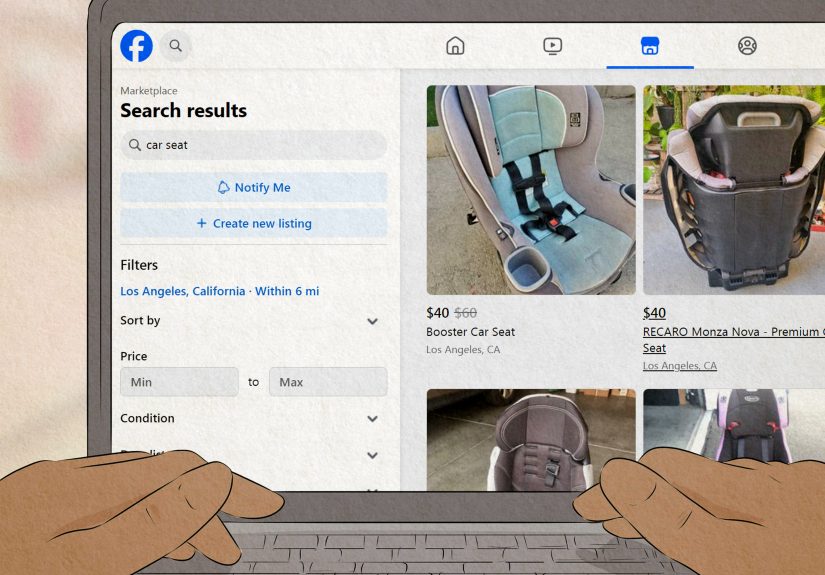
A free car seat is only a good deal if it is safe. Be careful with used seats from online marketplaces, garage sales, or strangers. A seat may look fine but still be expired, recalled, missing parts, previously crashed, or cleaned with harsh chemicals that weaken the straps.
Before accepting any car seat, check:
- The expiration date
- The model number and manufacture date
- Whether it has ever been in a crash
- Whether all labels and instructions are present
- Whether the harness, chest clip, buckle, padding, and base are complete
- Whether it has been recalled
When in doubt, ask a CPST. Do not use a seat with an unknown history. “It was probably never in a crash” is not the kind of mystery novel your baby needs to star in.
Free Car Seat vs. Low-Cost Car Seat: What to Expect
Some families qualify for a completely free car seat. Others may be offered a low-cost seat after completing education. For example, a program may ask for a small contribution, while another may provide the seat at no cost but require a class. Both options can be excellent if the seat is new, appropriate for your child, and supported by proper installation education.
If you cannot find a free seat immediately, ask about waiting lists, upcoming grant cycles, seasonal safety events, and nearby counties. Some programs receive shipments at certain times of the year, especially around Child Passenger Safety Week. You can also ask whether churches, diaper banks, community action agencies, or family shelters have referral partnerships.
How to Choose the Right Free Seat for Your Child
The best car seat is not always the fanciest one. It is the one that fits your child, fits your vehicle, and can be used correctly every trip. For infants, that usually means a rear-facing infant seat or a rear-facing convertible seat. For toddlers, it often means a convertible seat used rear-facing until the child reaches the seat’s rear-facing height or weight limit.
Read the manual. Check the labels. Follow the recline angle for your child’s age. Make sure the harness is snug, with the chest clip at armpit level. For rear-facing seats, harness straps usually come from at or below the child’s shoulders. For forward-facing seats, straps usually come from at or above the shoulders. Always confirm with your specific seat manual.
Also remember that bulky coats and car seat harnesses are not best friends. Thick jackets can compress in a crash, leaving the harness too loose. Dress your child in thin layers, buckle the harness snugly, and place a blanket or coat over the harness if needed.
Common Mistakes That Can Delay Your Free Car Seat
Many families miss out simply because they do not know the process. Avoid these common mistakes:
- Waiting until discharge day: If you are pregnant, start calling before the baby arrives.
- Asking only one agency: Call several sources because funding changes often.
- Skipping the class: Many programs require education before giving out a seat.
- Forgetting documents: Bring proof of benefits, ID, and child information if requested.
- Assuming used is fine: Used seats with unknown history can be unsafe.
- Ignoring installation help: A free inspection can catch mistakes you did not know were there.
Questions to Ask Before Your Appointment
When a program says yes, do a tiny celebration dance, then ask practical questions:
- Do I qualify based on income, WIC, Medicaid, SNAP, or pregnancy status?
- What documents should I bring?
- Will the car seat be new?
- Will a certified technician help install it?
- Should I bring my child and vehicle?
- What type of seat is available?
- Is there a cost, donation, or class fee?
- Can foster parents, grandparents, or guardians apply?
Write down the name of the person you spoke with, the appointment time, and the address. If you are relying on a ride, confirm whether the vehicle used for the appointment must be the one your child rides in most often.
Real-World Experiences: What Families Often Learn While Searching
Families looking for free car seats often discover that the search is less like ordering a pizza and more like solving a community resource puzzle. The first call may not produce a seat, but it often produces a lead. One parent might call the health department and learn that seats are only distributed after a monthly class. Another might call WIC and get referred to a local Safe Kids coalition. A grandparent caring for a toddler might find help through a family resource center rather than a hospital. The path is not always straight, but it is usually there if you keep asking specific questions.
A common experience is surprise at how much education comes with the seat. Some caregivers arrive expecting a quick pickup and leave understanding recline angles, harness height, tether use, and why the chest clip belongs at armpit level instead of somewhere near the belly button like a wandering tourist. That education can feel overwhelming at first, but it is also empowering. Many parents say they felt more confident after a CPST watched them install the seat themselves instead of simply doing it for them.
Another lesson is that timing matters. Pregnant parents may have more options if they start during the third trimester rather than waiting until the baby is born. Medicaid plan benefits may require forms before delivery. Health department classes may fill up quickly. Hospital social workers may need time to arrange assistance. The earlier you ask, the more doors you can knock on before the baby decides to make a grand entrance.
Families also learn that “free” does not always mean “instant.” A program may have seats but only for residents of a specific county. Another may serve only WIC participants. Another may be waiting for grant funding. This can be frustrating, especially when the need is urgent. The best strategy is to stay polite, persistent, and organized. Keep a short call log with names, phone numbers, eligibility rules, and next steps. It may feel old-school, but a notebook can beat a stressed-out memory every time.
Many caregivers also discover that the safest seat is not necessarily the biggest, most expensive, or most stylish. A basic new car seat that fits the child, fits the vehicle, and is installed correctly is far better than a fancy used seat with missing instructions or unknown crash history. Safety does not care whether the fabric pattern matches the diaper bag. Safety is wonderfully unfashionable that way.
Finally, parents often leave these programs with more than a car seat. They gain a local contact for future questions, learn when to move from rear-facing to forward-facing, understand how to check recalls, and know where to go if they switch vehicles. That knowledge travels with the family long after the appointment ends. A free car seat program is not just a giveaway; at its best, it is a confidence-building pit stop for one of the most important rides of your child’s life.
Final Thoughts: Safe Rides Should Not Depend on Your Budget
If you need a free car seat for an infant or toddler, start with your local health department, WIC office, Medicaid or CHIP plan, Safe Kids coalition, hospital, and 2-1-1. Ask direct questions, gather your documents, and take any required safety class seriously. The goal is not just to get a seat. The goal is to get the right seat, install it correctly, and use it properly every time your child rides.
Money may be tight, but safety resources do exist. Be persistent, be specific, and do not be embarrassed to ask. Babies do not come with a low-cost accessory bundle, and toddlers certainly do not come with a volume control. Getting help with a car seat is a responsible step, not a failure. It means you are doing exactly what parents and caregivers are supposed to do: protecting the smallest passenger in the car, one buckle click at a time.