
Table of Contents >> Show >> Hide
- The Goal of Glaucoma Treatment: Protect the Optic Nerve by Lowering IOP
- Eye Drops: The Everyday Workhorses
- Laser Treatments: Office Procedures That Can Pack a Punch
- Surgery: When Drops and Lasers Aren’t Enough (or Aren’t a Good Fit)
- How Doctors Choose: The Real Decision Factors
- What You Can Do Between Visits (That Actually Helps)
- When to Seek Urgent Care
- Conclusion: You’ve Got Optionsand Options Are Power
- Real-Life Experiences: What Glaucoma Treatment Feels Like Day to Day (The Part Nobody Prints on the Bottle)
Glaucoma is the sneaky kind of eye problem: it can damage the optic nerve slowly and quietly, like a tiny leak that ruins a ceiling before you notice the first water spot.
The good news is that most glaucoma can be managedoften for decadeswhen it’s found early and treated consistently.
The not-as-fun news is that treatment usually means playing the long game: lowering eye pressure (intraocular pressure, or IOP) day after day, year after year.
This guide breaks down the big three treatment bucketseye drops, laser procedures, and surgeryso you can understand what they do, why doctors choose one path over another,
and what the real-world experience tends to feel like. (Spoiler: most of it is far less dramatic than it sounds. “Laser trabeculoplasty” is not a sci-fi weapon. It’s more like a very specialized plumbing tune-up.)
The Goal of Glaucoma Treatment: Protect the Optic Nerve by Lowering IOP
For many people, glaucoma treatment is all about reducing eye pressure enough to slow or stop damage to the optic nerve. Not everyone with glaucoma has “high” pressure, and not everyone with
high pressure has glaucoma, but IOP is the most common (and most treatable) risk factor. Think of your eye like a sink that’s always running a little: fluid is constantly produced and constantly draining.
If the drain is sluggish, pressure rises. Treatment either helps the fluid drain better or reduces how much fluid is made.
Your eye doctor will often set a target pressurea goal range that’s individualized based on your optic nerve appearance, visual field tests, corneal thickness, current IOP, age, and how quickly changes are happening.
Targets can change over time. If glaucoma is stable, the target might stay the same. If tests show progression, the target usually gets lower.
Eye Drops: The Everyday Workhorses
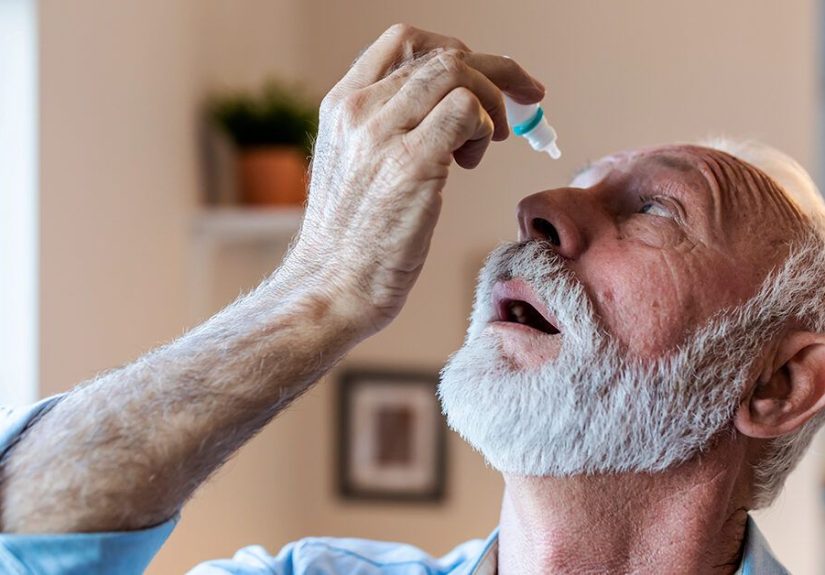
Prescription glaucoma eye drops are often the first treatment people meet (and then see again… and again… and again).
The main advantage: they’re non-invasive and adjustable. The main challenge: you have to actually use them, correctly, on scheduleforever-ish.
1) Prostaglandin Analogs (Often First-Line)
Prostaglandin analogs (like latanoprost) are commonly used as a first step because they tend to be effective, once-daily, and relatively easy to fit into real life.
They generally work by increasing fluid outflow through pathways that are sort of like adding an extra exit ramp to a busy highway.
Common side effects can include eye redness, irritation, and gradual cosmetic changes such as eyelash growth or darkening of the iris in some people. These are often more “surprising in the mirror” than medically dangerous,
but they matter to quality of lifeso tell your eye doctor if a drop is bothering you.
2) Beta Blockers
Beta blockers (like timolol) usually lower IOP by reducing fluid production. They can be very effective, but because a small amount can be absorbed systemically,
they may not be ideal for everyoneespecially people with certain breathing or heart rhythm conditions. Your clinician weighs benefits and risks based on your medical history.
3) Alpha Agonists
Alpha agonists (like brimonidine) can lower IOP by both reducing fluid production and increasing outflow. They can be a useful add-on, but some people develop allergy-like redness or itching over time.
If your eyes suddenly start acting like they’re offended by your existence, the drop may be the culprit.
4) Carbonic Anhydrase Inhibitors (CAIs)
Topical CAIs (like dorzolamide or brinzolamide) mainly reduce fluid production. They’re often used as additional therapy when one drop isn’t enough.
Oral CAIs exist too, but they’re typically reserved for specific situations due to systemic side effects.
5) Rho Kinase Inhibitors and Newer Options
Some newer medications, including Rho kinase inhibitors (such as netarsudil), target the eye’s drainage system to improve outflow and can be especially helpful in certain patients.
Like all drops, they can cause redness or irritationbecause eyes have very strong opinions.
6) Combination Drops, Preservative-Free Choices, and Cost Reality
Many people end up on more than one medication. To simplify routines, clinicians sometimes prescribe combination drops that include two medications in one bottle.
If irritation is a problem, preservative-free formulations may helpespecially for people with dry eye or sensitive ocular surfaces.
Cost matters. Some drops have widely available generics; others do not. If a prescription is too expensive, say so.
Eye doctors and pharmacists can sometimes switch to a more affordable equivalent or help with insurance steps.
How to Get the Most Benefit from Eye Drops
- Use the “one drop” rule: More is not better. One well-placed drop beats three that roll down your cheek.
- Don’t stack drops instantly: If you use multiple drops, spacing them a few minutes apart can help absorption.
- Ask about punctal occlusion: Gently closing the eyelids and pressing the inner corner can reduce systemic absorption for some medications.
- Build a habit loop: Tie drops to a daily anchor (brushing teeth, coffee, bedtime alarm). Your future self will thank you.
- Bring your bottles to appointments: It’s the easiest way to verify what you’re actually taking.
Laser Treatments: Office Procedures That Can Pack a Punch
Laser treatments for glaucoma aren’t the “pew-pew” kind. They’re typically quick, in-office procedures designed to lower IOPeither by improving drainage or, in certain cases, addressing a narrow/blocked angle.
For some people, laser can reduce the need for drops. For others, it’s a powerful add-on.
Selective Laser Trabeculoplasty (SLT) and Argon Laser Trabeculoplasty (ALT)
Trabeculoplasty targets the trabecular meshworkthe eye’s primary drainage tissue in many forms of open-angle glaucoma.
SLT is commonly used today and can be considered early in treatment for open-angle glaucoma or ocular hypertension.
ALT is an older method that’s used less often now.
What does SLT feel like? Many people describe mild discomfort or a “pressure-y” sensation during treatment, followed by some temporary irritation.
The goal is improved outflow and lower IOP, and results can last months to years. Some patients may need repeat treatment or still require drops.
Laser Peripheral Iridotomy (LPI) for Angle-Closure Risk
Not all glaucoma is open-angle. In angle-closure glaucoma (or when someone is at high risk), the drainage angle can become too narrow or suddenly blocked.
A laser peripheral iridotomy (LPI) creates a tiny opening in the iris to help fluid move more freely and reduce the chance of a dangerous pressure spike.
If your doctor is talking about narrow angles, it’s not a casual fun factit can be a major decision point, because an acute angle-closure attack is an emergency.
Cyclophotocoagulation and Other “Reserve Tank” Lasers
For certain advanced or difficult-to-control cases, doctors may use laser procedures that reduce fluid production by treating the ciliary body (the part that makes the fluid).
Newer approaches (including “micropulse” techniques) aim to lower risk while still helping reduce IOP. These are typically considered in more complex situations.
What to Expect After Laser
After many laser procedures, you’ll use anti-inflammatory drops for a short period and return for pressure checks.
Some people notice blurry vision or light sensitivity for a day or two; others feel nearly normal quickly.
Your doctor’s follow-up schedule is not “optional homework”it’s how they confirm the pressure is responding safely.
Surgery: When Drops and Lasers Aren’t Enough (or Aren’t a Good Fit)
“Surgery” sounds like the final boss, but glaucoma surgery is really a toolbox with different optionsranging from very minimally invasive procedures to traditional surgeries designed for advanced disease.
Doctors consider surgery when glaucoma is progressing, when target IOP is very low, when medications aren’t tolerated, or when adherence is a major barrier.
Trabeculectomy: The Classic Pressure-Lowering Workhorse
Trabeculectomy creates a new pathway for fluid to leave the eye, forming a small “bleb” (a reservoir) under the eyelid.
It can lower pressure significantly and is often used for moderate-to-advanced glaucoma or when very low target pressures are needed.
It also requires careful follow-up. Healing and scarring can affect long-term success, so doctors may use medications during and after surgery to reduce scarring risk.
The post-op period often includes multiple visits, adjustments, and close monitoring.
Tube Shunts (Glaucoma Drainage Devices)
Tube shunts (also called glaucoma drainage devices) divert fluid to a small plate-like reservoir.
They’re commonly used in more complex glaucoma casessuch as eyes with prior surgeries, certain inflammatory conditions, or when a trabeculectomy is less likely to succeed.
Like trabeculectomy, they can be very effective, but they require ongoing care and monitoring.
MIGS: Minimally Invasive Glaucoma Surgery
MIGS procedures are designed to lower IOP with a generally quicker recovery and a different safety profile than traditional surgery.
They’re often considered for mild to moderate glaucoma, especially when someone is already having cataract surgery.
MIGS can reduce pressure and/or reduce medication burden, but they may not lower IOP as dramatically as trabeculectomy in advanced disease.
MIGS is a category, not one single procedure. Options may include microstents that enhance drainage, procedures that remove or bypass part of the trabecular meshwork,
or devices/procedures that widen or access the eye’s natural drainage pathways. Your surgeon chooses based on anatomy, severity, goals, and experience.
Gel Stents and Micro-Bypass Devices
Some procedures use tiny implants to create or enhance drainage pathways. A well-known example is a gel stent designed for certain refractory or difficult-to-control open-angle glaucomas.
These approaches can sit between MIGS and traditional filtering surgery in terms of invasiveness and IOP-lowering potential.
Sustained-Release Implants: “Set It and Forget It” (Sort Of)
Not every “procedure” is a full surgery. Sustained-release implants placed in or near the front of the eye can deliver a pressure-lowering medication over time.
For some patients, these options reduce dependence on daily dropsespecially if adherence is hard or the ocular surface is irritated.
They still require follow-up and aren’t right for everyone, but they represent a growing “interventional glaucoma” approach that blends medication and procedure-based care.
How Doctors Choose: The Real Decision Factors
If glaucoma treatment feels like a choose-your-own-adventure book written by an ophthalmologist, that’s because it kind of is.
The “best” treatment depends on the whole context, including:
- Type of glaucoma: primary open-angle, angle-closure risk, secondary glaucomas, and more
- Severity and progression: stable early disease vs. evidence of ongoing optic nerve damage
- Target IOP: how low the pressure needs to go to protect vision
- Medication tolerance: side effects, dry eye, allergy, systemic considerations
- Adherence realities: schedules, dexterity, memory, travel, lifestyle
- Eye anatomy and cataracts: certain procedures pair well with cataract surgery
- Risk tolerance and follow-up ability: some surgeries require more intensive post-op visits
- Cost and access: medication affordability and local availability of procedures
A quick example: someone newly diagnosed with mild open-angle glaucoma might start with a once-daily prostaglandin dropor choose SLT early to reduce drop burden.
Another person with narrow angles might need LPI to reduce emergency risk. Someone with a cataract and mild-to-moderate glaucoma might consider cataract surgery plus a MIGS procedure.
And someone with advanced disease and ongoing progression may need trabeculectomy or a tube shunt to reach a very low target IOP.
What You Can Do Between Visits (That Actually Helps)
Glaucoma management is a team sport, and you’re on the roster. Practical steps that make a real difference:
- Keep appointments: pressure checks and visual field testing are how progression is detected.
- Use drops exactly as prescribed: “mostly” is a dangerous word in glaucoma care.
- Report side effects early: there are often alternativessuffering in silence isn’t a treatment plan.
- Maintain an updated medication list: include eye drops, supplements, and systemic meds.
- Ask for technique coaching: many clinics will demonstrate proper drop instillation.
When to Seek Urgent Care
Most glaucoma is chronic and slow-moving. But certain situationsespecially symptoms suggesting a sudden spike in eye pressureshould be treated as urgent.
If you experience sudden severe eye pain, significant vision changes, intense headache with nausea, or halos around lights, seek emergency evaluation immediately.
(This is especially important for people at risk for angle-closure.)
Conclusion: You’ve Got Optionsand Options Are Power
Glaucoma is serious, but it isn’t hopeless. Eye drops can be highly effective. Lasers can meaningfully reduce pressure and sometimes reduce medication dependence.
Surgery offers additional paths when stronger pressure control is needed. The right plan is the one that matches your glaucoma type, target pressure, lifestyle, and tolerance
and evolves as your eyes change over time.
If there’s one takeaway, it’s this: consistency beats intensity. One perfect week of drops won’t protect your optic nerve if it’s followed by months of “I forgot.”
And one big procedure won’t replace follow-up care. The best outcomes usually come from a steady partnership with an eye care team and a plan you can actually live with.
Real-Life Experiences: What Glaucoma Treatment Feels Like Day to Day (The Part Nobody Prints on the Bottle)
Let’s talk about the human side of glaucoma treatmentthe routines, the little surprises, and the “wait, that’s normal?” moments that often show up after diagnosis.
Because while glaucoma care is deeply technical, living with it is mostly… ordinary life plus a few extra steps.
Starting eye drops is often the first emotional speed bump. Many people feel fine when they’re diagnosed, which makes it oddly hard to take the condition seriously.
You’re asked to treat something you can’t feel to prevent something you don’t want to imagine. It’s like being told to start flossing immediately because your dentist saw a future version of you.
The first few weeks are usually about building a habit: remembering the time, figuring out the technique, and discovering whether your eyes are chill about it or dramatically offended.
A surprisingly common experience is realizing you’re “missing” the eye more often than you thought. The fix is usually simple: tilt your head back, look up, pull down the lower lid,
and aim for the pocket. One drop. Then gentle eyes-closed time. No blinking like you’re trying to send Morse code.
Side effects are where reality gets personal. Some people barely notice anything. Others notice redness, stinging, or dryness that makes them wonder if their eyes are auditioning for a sad movie.
This is the point where good communication matters. Many side effects can be reduced by switching the medication, changing preservatives, adjusting timing, or adding dry-eye support.
And if cost becomes the barrier, that’s not a moral failingit’s a logistics problem that deserves a real solution (generics, alternatives, insurance steps, or assistance programs).
Laser treatment (like SLT) tends to feel scarier in anticipation than in reality. People often imagine a long procedure with dramatic recovery.
In many cases, it’s a short office visit with a few bright lights and a sensation that’s more “pressure and mild zap” than “pain.”
Afterward, some folks feel a little scratchy or light-sensitive for a day, and many are surprised by how normal everything seems by the next morning.
The bigger “experience” part is the follow-up: coming back to check pressure, seeing whether the laser gave you that satisfying drop in IOP, and deciding whether you can reduce medications.
When it works well, patients often describe it as reliefnot just for the eye, but for the daily routine.
Surgery is where people commonly feel the most anxiety, and that’s completely understandable. The language sounds intense.
But the day-to-day experience after glaucoma surgery is often less about dramatic discomfort and more about rules: multiple follow-up appointments, a schedule of post-op drops,
protecting the eye, and being careful with certain activities as healing progresses. Many patients say the most surprising part is how important the post-op period isbecause success isn’t only what happens in the operating room.
It’s also how your eye heals, whether scarring develops, and how carefully the pressure is managed afterward.
Over time, most people settle into a new normal. The fear that comes with the word “glaucoma” often softens into something more practical:
“I have a plan, I have a schedule, I know what my tests mean, and I show up for checkups.” That mindset shift is powerful.
It turns glaucoma from a looming mystery into a manageable conditionone routine, one appointment, one pressure check at a time.






 Close
Close