Table of Contents >> Show >> Hide
- What Is Hanger Steak?
- Why Roasted Red Pepper Sauce Works So Well
- Ingredients
- How to Roast Red Peppers
- How to Make Roasted Red Pepper Sauce
- How to Cook Hanger Steak
- Grilling Method
- Doneness Guide for Hanger Steak
- Best Side Dishes
- Recipe Variations
- Storage and Make-Ahead Tips
- Common Mistakes to Avoid
- Complete Hanger Steak With Roasted Red Pepper Sauce Recipe
- Helpful Experience Notes for Better Results
- Conclusion
Hanger steak with roasted red pepper sauce is the kind of dinner that makes people pause mid-bite and suddenly become very quiet. That is usually a good sign. This cut of beef is intensely flavorful, pleasantly chewy in the best steakhouse way, and dramatic enough to feel special without demanding that you mortgage the house for a ribeye the size of a paperback novel.
The sauce is where the recipe gets its cape. Roasted red peppers bring sweetness, smoke, and color; garlic adds punch; vinegar or lemon gives the whole thing a bright little elbow nudge; and olive oil pulls it together into a silky sauce that loves steak almost as much as steak loves salt. The result is a restaurant-style hanger steak recipe that still behaves like a practical weeknight dinner.
This guide walks through how to choose hanger steak, trim it, season it, cook it in a skillet or on the grill, blend a bold roasted red pepper sauce, and serve the whole thing without panic. No culinary degree required. A meat thermometer helps, a hot pan helps, and a willingness to let the steak rest before slicing is non-negotiable. The steak has done its part. Let it take a nap.
What Is Hanger Steak?
Hanger steak, also called hanging tender, butcher’s steak, or onglet, is a richly flavored beef cut from the plate area near the diaphragm. It has a loose, coarse grain and a deep beefy taste that makes it a favorite among cooks who like character in their steak. It is not as buttery-soft as filet mignon, and that is exactly the point. Hanger steak has personality. Filet mignon wears a tuxedo; hanger steak shows up in a leather jacket and somehow knows the chef.
Because of its grain, hanger steak responds beautifully to bold seasoning, quick marinades, and high-heat cooking. The key is not to overcook it and not to slice it the wrong way. Cook it hot, rest it well, and slice it thinly against the grain. Do that, and you get tender pieces with big flavor and a sauce that clings to every slice.
Why Roasted Red Pepper Sauce Works So Well
Roasted red pepper sauce is a natural match for hanger steak because it balances richness with brightness. The steak brings savory depth and char. The peppers bring sweetness. Garlic, smoked paprika, and vinegar add sharpness and warmth. A small amount of almonds, breadcrumbs, or even Greek yogurt can give the sauce body, but this version keeps the texture smooth and flexible.
Think of the sauce as a cousin of romesco, but streamlined for home cooking. It is smoky, red, glossy, and useful far beyond this recipe. Spoon leftovers over eggs, roasted potatoes, grilled chicken, sandwiches, grain bowls, or a heroic piece of crusty bread eaten while standing at the counter. We have all been there.
Ingredients
For the Hanger Steak
- 1 1/2 to 2 pounds hanger steak, trimmed of silver skin and center membrane
- 1 1/2 teaspoons kosher salt
- 1 teaspoon freshly ground black pepper
- 1 tablespoon neutral oil, such as avocado, canola, or grapeseed oil
- 1 tablespoon olive oil
- 2 garlic cloves, smashed
- 2 sprigs fresh thyme or rosemary
- 1 tablespoon unsalted butter, optional
For the Roasted Red Pepper Sauce
- 2 large roasted red bell peppers, peeled and seeded, or 1 drained 12-ounce jar roasted red peppers
- 1 small garlic clove, grated or minced
- 2 tablespoons extra-virgin olive oil
- 1 tablespoon red wine vinegar or fresh lemon juice
- 1 teaspoon smoked paprika
- 1/4 teaspoon ground cumin, optional
- 1/4 teaspoon red pepper flakes, optional
- 2 tablespoons toasted almonds or walnuts, optional for texture
- 1 tablespoon chopped parsley
- Kosher salt and black pepper, to taste
- 1 to 2 tablespoons warm water, as needed to loosen
How to Roast Red Peppers
If using jarred roasted red peppers, congratulations: you have already made a strong life choice. Drain them well and pat them dry so the sauce does not become watery. If roasting fresh peppers, place whole red bell peppers directly over a gas flame, under a broiler, or on a hot grill. Turn them until the skins are charred and blistered all over.
Transfer the peppers to a bowl, cover them, and let them steam for 10 minutes. The skins will loosen, making them easier to peel. Remove the skins, stems, and seeds. Do not rinse the peppers under water unless absolutely necessary, because rinsing can wash away some of that smoky roasted flavor. A few stubborn blackened bits are fine; they are flavor freckles.
How to Make Roasted Red Pepper Sauce
Add the roasted peppers, garlic, olive oil, vinegar or lemon juice, smoked paprika, cumin, red pepper flakes, nuts if using, parsley, salt, and pepper to a blender or food processor. Blend until mostly smooth. Taste and adjust. If the sauce tastes flat, add a pinch of salt or a few more drops of vinegar. If it tastes too sharp, add a little more olive oil. If it is too thick, blend in warm water one tablespoon at a time.
The sauce should be bright, smoky, and spoonable, not stiff like dip and not thin like soup. It should glide across the plate with confidence. If sauces had LinkedIn profiles, this one would describe itself as “versatile, flavor-forward, and highly collaborative.”
How to Cook Hanger Steak
Step 1: Trim the Steak
Many hanger steaks have a tough membrane running through the center. Some butchers remove it, but not always. If it is still attached, use a sharp knife to separate the two long steak pieces from the membrane. Also trim away excess silver skin. This step matters because the membrane stays tough no matter how nicely you talk to it.
Step 2: Season Generously
Pat the steak very dry with paper towels. Moisture is the enemy of browning, and browning is where the steak earns applause. Season all sides with kosher salt and black pepper. You can season it 30 minutes ahead, or even several hours ahead if refrigerating uncovered. For a quick dinner, seasoning right before cooking still works.
Step 3: Sear in a Hot Pan
Heat a heavy cast-iron skillet over medium-high to high heat until very hot. Add neutral oil, then carefully add the steak. Sear without moving it for about 3 minutes, until a deep brown crust forms. Flip and cook the second side for another 3 minutes. Reduce the heat slightly if the pan begins smoking aggressively.
Add olive oil, smashed garlic, herbs, and butter if using. Tilt the pan and baste the steak for 1 to 2 minutes. Continue cooking until the internal temperature reaches your preferred doneness. For many steak lovers, hanger steak shines around medium-rare to medium, but food-safety guidance recommends cooking whole beef steaks to 145°F with a rest. Use an instant-read thermometer and make an informed choice based on your preference and needs.
Step 4: Rest Before Slicing
Transfer the steak to a cutting board and rest it for 8 to 10 minutes. Resting allows juices to redistribute instead of spilling across the board like a tiny beef tragedy. Spoon a little roasted red pepper sauce onto plates while the steak rests.
Step 5: Slice Against the Grain
Look for the direction of the muscle fibers, then slice across them into thin strips. This is one of the most important steps in any hanger steak recipe. Cutting with the grain can make a good steak seem chewy. Cutting against it makes each bite tender, juicy, and easier to love.
Grilling Method
To grill hanger steak, preheat the grill to high heat and clean the grates well. Oil the grates lightly, then grill the steak for about 4 to 6 minutes per side, depending on thickness and desired doneness. If the outside browns before the inside is ready, move the steak to a cooler part of the grill and finish it with indirect heat.
Grilling adds a smoky edge that pairs beautifully with roasted red pepper sauce. If you are cooking outside, consider charring the peppers on the same grill before cooking the steak. This is efficient, delicious, and makes you look like someone who has a plan.
Doneness Guide for Hanger Steak
Temperature is more reliable than guessing by touch, especially with hanger steak. Pull the steak a few degrees before your final target because carryover cooking will continue as it rests. Rare is usually around 120°F to 125°F, medium-rare around 130°F to 135°F, medium around 140°F to 145°F, and medium-well beyond that. USDA food-safety guidance recommends 145°F for beef steaks followed by at least a 3-minute rest.
Hanger steak can become tough when cooked too far past medium, so if tenderness is your top goal, avoid taking it into well-done territory. If you prefer steak more cooked, slice it extra thin and serve it with plenty of sauce. Sauce is not a magic wand, but it is close.
Best Side Dishes
This hanger steak with roasted red pepper sauce recipe works with simple sides that do not compete with the main event. Crispy roasted potatoes are a classic choice. A peppery arugula salad with lemon vinaigrette keeps the plate fresh. Grilled asparagus, charred broccolini, sautéed green beans, or roasted carrots all fit comfortably beside the smoky sauce.
For a heartier meal, serve the steak over creamy polenta, mashed potatoes, couscous, or rice pilaf. The red pepper sauce seeps into grains and starches beautifully. If you are hosting, add warm bread to the table and watch the sauce disappear faster than your confidence during a smoke alarm incident.
Recipe Variations
Make It Spicier
Add extra red pepper flakes, a small roasted jalapeño, or a pinch of cayenne to the sauce. Keep the heat balanced so it supports the steak rather than tackling it.
Make It Creamy
Blend in a spoonful of Greek yogurt, sour cream, crème fraîche, or mayonnaise after the sauce cools slightly. This creates a richer, smoother sauce that is especially good for sandwiches.
Make It More Like Romesco
Add toasted almonds, a small piece of toasted bread, more smoked paprika, and a splash of sherry vinegar. The result is thicker, nuttier, and excellent with grilled vegetables.
Use Another Steak Cut
If you cannot find hanger steak, use skirt steak, flank steak, flat iron, or bavette. Cooking times will vary, but the same principles apply: high heat, a good sear, resting time, and slicing against the grain.
Storage and Make-Ahead Tips
The roasted red pepper sauce can be made up to 4 days ahead and stored in an airtight container in the refrigerator. Stir before serving, and loosen with a teaspoon of water or olive oil if it thickens. The steak is best eaten shortly after cooking, but leftovers can be stored in the refrigerator for 3 to 4 days.
To reheat steak without turning it into shoe leather, warm it gently in a low oven or slice it cold and use it in salads, sandwiches, tacos, or grain bowls. Cold hanger steak with roasted red pepper sauce on toasted bread is not a compromise. It is lunch with excellent judgment.
Common Mistakes to Avoid
The first mistake is skipping the trim. If the center membrane is still there, remove it or ask your butcher to do it. The second mistake is cooking the steak in a lukewarm pan. Hanger steak needs quick, confident heat to create a crust before the interior overcooks. The third mistake is slicing too soon. Resting is not decorative; it keeps the steak juicy.
Another common mistake is forgetting acidity in the sauce. Roasted peppers are sweet, and steak is rich. Vinegar or lemon juice keeps the sauce lively. Finally, do not drown the steak. Spoon the sauce under the slices, over the top, or alongside the meat. The goal is partnership, not a red pepper swimming pool.
Complete Hanger Steak With Roasted Red Pepper Sauce Recipe
Prep Time
20 minutes
Cook Time
12 to 16 minutes
Rest Time
8 to 10 minutes
Total Time
40 to 45 minutes
Servings
4 servings
Instructions
- Trim the hanger steak by removing any silver skin and the tough center membrane. Pat the steak dry.
- Season the steak on all sides with kosher salt and black pepper.
- Make the sauce by blending roasted red peppers, garlic, olive oil, vinegar or lemon juice, smoked paprika, cumin, red pepper flakes, nuts if using, parsley, salt, and pepper. Add warm water as needed until spoonable.
- Heat a cast-iron skillet over medium-high to high heat. Add neutral oil.
- Sear the steak for about 3 minutes on the first side, then flip and cook for about 3 minutes on the second side.
- Add olive oil, garlic, herbs, and butter if using. Baste for 1 to 2 minutes while cooking to your preferred internal temperature.
- Transfer the steak to a cutting board and rest for 8 to 10 minutes.
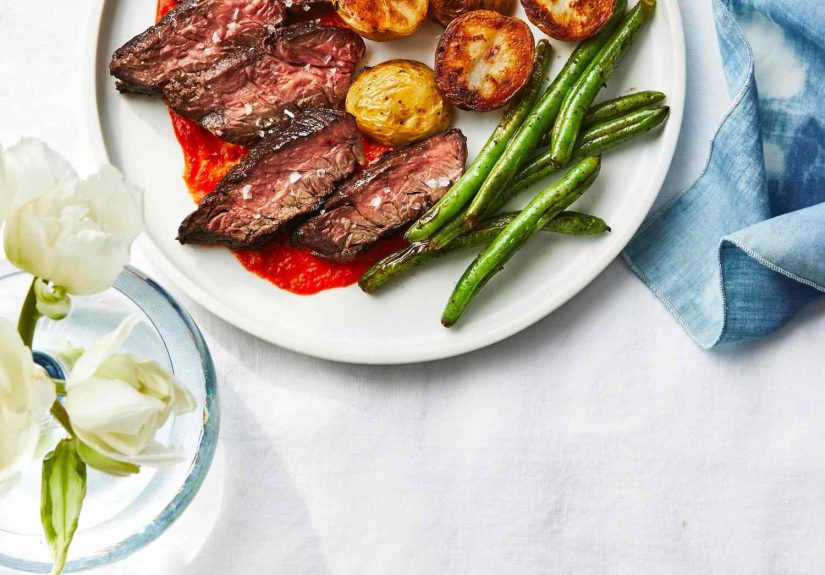
- Spoon roasted red pepper sauce onto plates. Slice steak thinly against the grain and arrange over the sauce.
- Finish with parsley, flaky salt, black pepper, and an extra drizzle of olive oil if desired.
Helpful Experience Notes for Better Results
The first time many home cooks make hanger steak, they treat it like any other steak: season, sear, slice, serve. That can work, but hanger steak rewards a little more attention. The biggest lesson is that trimming matters. A beautifully cooked hanger steak can still feel tough if the center membrane was left in place. If you are buying from a butcher counter, ask whether it has been trimmed. If the answer sounds vague, ask again with the seriousness of someone negotiating international peace.
Another experience-based tip is to dry the steak more thoroughly than you think necessary. Hanger steak often comes wrapped tightly, and surface moisture can build up. Pat it dry, wait a minute, and pat it again. A dry surface browns faster, and faster browning means you can build crust without overcooking the inside. This is especially important in a home kitchen, where stovetops may not blast heat like restaurant burners.
The sauce is also better when tasted in layers. After blending, it may seem good but slightly sleepy. Add a pinch of salt and taste again. Then add a few drops of vinegar or lemon juice and taste once more. Suddenly the sauce wakes up. Roasted red peppers are naturally sweet, so they need acid and salt to become savory enough for steak. Smoked paprika adds depth, but use it carefully. Too much can make the sauce taste dusty or heavy. A teaspoon is usually plenty.
If you are cooking for guests, make the roasted red pepper sauce first. It holds well, and it removes one task from the final cooking rush. Steak waits for no one, and once the pan is hot, things move quickly. Have the sauce ready, plates nearby, tongs in hand, thermometer accessible, and cutting board clear. This is not about being fancy. It is about not opening drawers with greasy hands while the steak is sprinting toward medium-well.
For serving, avoid piling thick slices in a heap. Hanger steak looks and eats better when sliced thinly and spread slightly across the plate. Spoon sauce underneath for a restaurant-style look, then add a few small spoonfuls on top. The contrast of red sauce, browned steak, green herbs, and maybe golden potatoes makes the dish look far more complicated than it is. This is the home cook’s secret weapon: maximum visual drama, minimum emotional damage.
Leftovers deserve respect, too. Thin slices of cold hanger steak are excellent in a sandwich with roasted red pepper sauce, arugula, and a swipe of mayonnaise. They also work in tacos with pickled onions or over rice with a fried egg. The sauce can become a dressing with extra olive oil and vinegar, or a dip with a spoonful of yogurt. In other words, this recipe is not just dinner. It is tomorrow’s lunch trying to look casual.
Conclusion
Hanger steak with roasted red pepper sauce is a bold, practical, deeply satisfying recipe for anyone who wants steakhouse flavor without steakhouse fuss. The cut is beefy and distinctive, the sauce is smoky and bright, and the method is straightforward once you understand the essentials: trim the membrane, sear over high heat, use a thermometer, rest the meat, and slice against the grain.
This is the kind of dish that feels equally right for a Friday night dinner, a small gathering, or a “yes, I absolutely deserve steak today” situation. Serve it with potatoes, salad, grilled vegetables, or bread, and let the roasted red pepper sauce do what it does best: make everything on the plate taste a little more exciting.