Table of Contents >> Show >> Hide
- Why the Canteen Hook and Knob Stands Out
- What MoMA Adds to the Conversation
- Design Details That Make It Memorable
- How to Use It at Home Without Overthinking It
- Why This Kind of Hardware Matters More Than People Think
- The Aesthetic: Utility With a Wink
- Who Should Buy Into This Look
- Final Thoughts
- Extended Experience: What It Feels Like to Live With Hardware Like This
Some design objects shout for attention. Others lean against the wall, act helpful, and quietly become the smartest thing in the room. The Canteen Hook and Knob at MoMA belongs to the second category. It is modest, compact, and deeply practical, yet it has the kind of visual confidence that makes people stop mid-step and say, “Wait, why is that hook better-looking than my entire entryway?”
That reaction is part of the appeal. Good hardware is rarely just hardware. The best pieces solve a daily problem, improve the feel of a space, and add a little character without turning your wall into a stage production. The Canteen Hook and Knob, associated with designers Ed Carpenter and André Klauser and stocked through MoMA’s design-minded retail lens, is a great example of that balance. It turns an ordinary household needhanging a coat, bag, towel, or aproninto a small design event.
In a world full of forgettable knobs and hooks, this one has a point of view. It looks industrial but not cold, playful but not childish, and sculptural without becoming one of those objects you are afraid to actually touch. That is a sweet spot few products hit, especially in the humble universe of hardware.
Why the Canteen Hook and Knob Stands Out
The story behind the piece helps explain its appeal. The Canteen Hook and Knob was originally designed for the seating booths of the British restaurant chain Canteen, then became part of the broader Very Good & Proper design language. That origin matters because it tells you exactly what the object was built to do: survive real life while still looking sharp. This was not dreamt up for a gallery pedestal and then awkwardly forced into home use. It came from a commercial setting where durability, visibility, and ease of use mattered.
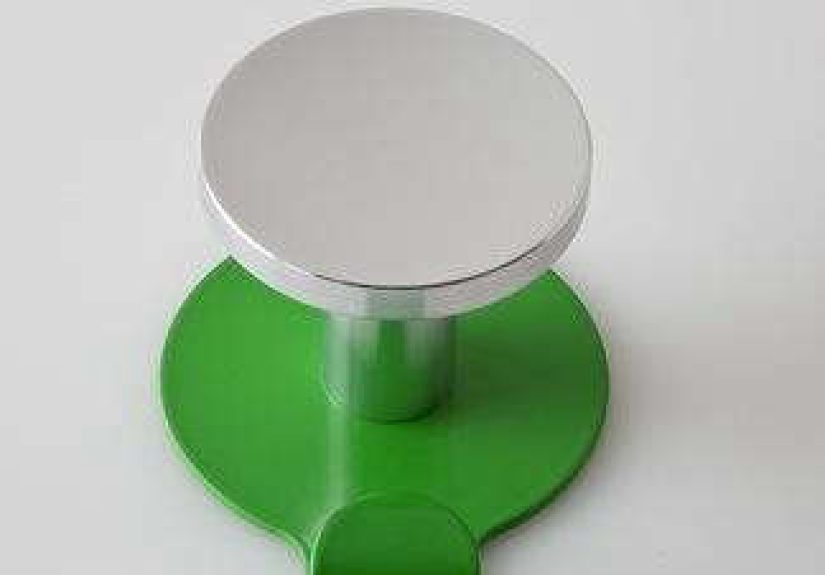
That practical DNA is visible in the form itself. The rounded aluminum knob is easy to grab, easy to spot, and satisfying to use. The steel backplate and integrated hook make the piece feel more complete than a basic peg or a lonely metal nub. It is a tiny composition rather than a random part. The backplate also serves a very practical purpose: it helps protect the wall from scuffs and scratches while visually covering the fixing points. In other words, it does cleanup duty while looking polished. That is multitasking with manners.
The result is a product that feels thoughtfully resolved. Nothing looks extra. Nothing looks timid. Every part appears to have a job, and every job has been handled with a designer’s eye.
What MoMA Adds to the Conversation
Seeing the Canteen Hook and Knob at MoMA changes how many people read it. MoMA Design Store is not just another shop that tosses stylish objects onto a white shelf and hopes for the best. Its point of view is shaped by the museum’s long history with architecture and design, including the establishment of the world’s first curatorial department devoted to architecture and design in 1932. That heritage matters because it means products are judged not only by trend appeal, but by design quality, usefulness, originality, and the clarity of the idea behind them.
MoMA’s selection process is famously rigorous. Products are filtered through design criteria and then evaluated through a curatorial lens. So when an item like the Canteen Hook and Knob appears in that context, it signals something important: this is not merely a decent hook. It is a small object that expresses bigger ideas about modern living, functional beauty, and everyday design literacy.
Put more simply, MoMA tends to reward objects that do not waste your time. The Canteen Hook and Knob fits that philosophy beautifully. It is direct. It is useful. It is visually memorable. It does not ask you to decode it with a graduate seminar in object theory. You see it, you use it, and you appreciate that someone put real thought into making a basic household element better.
Design Details That Make It Memorable
1. A Strong Industrial Character
The Canteen Hook and Knob has an industrial flavor, but it is the charming kindnot the “this café only serves toast on shovels” kind. Its materials and proportions recall mid-century utility pieces, workshop fittings, and public-space hardware that was built to last. Yet the object is refined enough for contemporary interiors, especially those that favor clean lines, restrained palettes, and tactile materials.
2. Form and Function Are Fully Integrated
Many hooks are either visually interesting or truly practical. This one manages both. The knob gives you a front-facing place to hang or drape something quickly, while the hook element expands its usefulness. A tote can hang from one part, a scarf can be looped over another, and a robe can land there without sliding to the floor in protest. That layered functionality is one reason the piece feels smarter than its size suggests.
3. The Backplate Is the Secret Weapon
A plain hook can sometimes leave the wall looking nicked, dirty, or unfinished. Here, the backplate acts like a frame and a shield at the same time. It makes the hardware feel intentional, especially on painted walls, millwork, mudroom panels, or cabinetry. It also gives the piece a stronger silhouette from a distance, which is why it reads almost like a tiny wall sculpture when not in use.
How to Use It at Home Without Overthinking It
One reason this piece keeps attracting design lovers is that it is flexible. You can use it in a dozen different rooms and still make it feel right at home.
Entryway
This is the obvious choice, and for good reason. A row of Canteen hooks can turn a blank wall into a functional landing zone for coats, bags, hats, dog leashes, and the occasional umbrella that claims it is “dry enough.” In smaller homes, wall hooks can do the work of bulkier storage pieces while keeping the floor more open.
Kitchen
In the kitchen, hardware often acts like jewelry for cabinetry. But hooks add another layer: they help the room work harder. The Canteen Hook and Knob is especially good for aprons, towels, market bags, and even lightweight utensils near a prep zone. It suits kitchens that lean modern, utilitarian, or Scandinavian-inspired, but it can also bring contrast to warmer spaces with wood fronts or painted cabinetry.
Bathroom
Bathrooms benefit from hardware that feels crisp and compact. This piece has enough personality to elevate a powder room, yet enough restraint to avoid dominating a small wall. It is a strong candidate for towels, robes, and clothes, especially if you want something that looks more architectural than a standard chrome hook from aisle twelve.
Bedroom or Closet
Installed near a wardrobe, it becomes a handy perch for tomorrow’s outfit, a belt, a favorite bag, or that jacket you are definitely hanging up properly this time. In a closet, it offers a stylish place for frequently used items without cluttering rods or shelves.
Office or Studio
Small hardware can make a workspace feel calmer and more organized. Use it for headphones, a tote, measuring tape, or cords that would otherwise perform interpretive dance across your desk. The point is not just storage. It is visual order.
Why This Kind of Hardware Matters More Than People Think
It is easy to dismiss hooks and knobs as finishing touches, but that misses the bigger design truth. Hardware is one of the most intimate parts of a home. You touch it constantly. You rely on it without thinking. It helps determine whether a room feels polished, awkward, warm, strict, inviting, or forgettable.
Design publications and renovation experts repeatedly point out that hardware can completely change how cabinetry and walls read. A flat surface becomes more architectural with the right pull. A dead corner becomes useful with the right hook. A simple refresh can feel custom once thoughtful hardware enters the picture. The Canteen Hook and Knob works so well because it understands this principle at a small scale. It is not trying to renovate your room all by itself. It is simply upgrading the way the room behaves.
That makes it a particularly strong fit for people who love design but do not want a full remodel just to feel inspired again. Swapping in more intelligent hardware is one of the least dramatic and most effective ways to make a space feel considered. No demolition. No existential crisis in the tile aisle. Just a better object in a better place.
The Aesthetic: Utility With a Wink
What really makes the Canteen Hook and Knob memorable is its tone. It has seriousness, but not stiffness. It nods to utilitarian design from the 1940s and 1950s, yet it does not feel nostalgic in a dusty way. Instead, it feels edited for modern interiors: cleaner, a bit sharper, and more self-aware.
That balance is why it can sit comfortably inside many design styles. In a minimal home, it adds depth without clutter. In a more eclectic space, it offers a grounded industrial note. In a family house, it is durable enough to be used constantly. In a design-forward apartment, it quietly proves that even the smallest decisions deserve some taste.
And yes, there is something a little funny about how much personality can live inside a hook. But that is what design people have been trying to tell the world for ages: the “small stuff” is often doing the heavy lifting.
Who Should Buy Into This Look
The Canteen Hook and Knob will especially appeal to homeowners, renters, designers, and detail-obsessed people who believe a room is only as good as its quietest object. It is for anyone who appreciates hardware that feels more like a design decision than a default purchase.
It is also a strong fit for shoppers who like MoMA’s approach to the home: objects that are useful first, but not visually anonymous. You do not need a museum-level budget or a loft in Tribeca to appreciate that mindset. You just need to enjoy the moment when an everyday object turns out to be smarter, nicer, and more satisfying than expected.
Final Thoughts
Hardware rarely gets headline treatment, but the Canteen Hook and Knob at MoMA earns it. It is a reminder that great design does not require a giant footprint, a flashy finish, or a dramatic sales pitch. Sometimes all it takes is one well-shaped knob, one sturdy hook, and one backplate that understands the assignment.
What makes this object so compelling is its refusal to separate utility from beauty. It embraces both. It comes from a practical origin, carries a clear design idea, and fits naturally into the museum-store tradition of elevating daily life through well-made objects. It is exactly the kind of piece that makes you rethink what home hardware can be.
In the end, the Canteen Hook and Knob does something all great design should do: it improves the ordinary. And frankly, the ordinary could use the help.
Extended Experience: What It Feels Like to Live With Hardware Like This
Living with a piece like the Canteen Hook and Knob is less about one dramatic reveal and more about a series of small, satisfying moments. That may sound suspiciously poetic for a hook, but good hardware really does change the rhythm of daily life. You notice it when you come home tired and hang your bag without fumbling. You notice it when a damp towel stays where it belongs. You notice it when a wall that used to look blank or messy suddenly feels structured and useful.
One of the best experiences associated with this kind of hardware is the tactile one. Many mass-market hooks do the job, technically speaking, but they often feel thin, flimsy, or visually disposable. A better-designed piece gives off a subtle confidence. The knob feels substantial. The hook feels deliberate. The backplate makes the installation look grounded, not accidental. Even before you hang anything on it, it seems ready for the task. That little sense of readiness adds more comfort than people expect.
There is also a visual calm that comes from using hardware with a clear form. In an entryway, for example, a row of matching hooks can make the chaos of coats, hats, and bags feel less chaotic. The area looks planned rather than panicked. In a kitchen, a hook near a prep zone makes towels and aprons easier to reach, which sounds minor until you realize how often you reach for those things. In a bathroom, a sculptural hook can elevate the room simply by replacing a generic builder-grade fixture that never had any charisma to begin with.
Another part of the experience is the pleasure of noticing the object when it is not in use. The Canteen Hook and Knob is not only functional when loaded up with stuff. It still contributes something when empty. That matters in design. Plenty of household items disappear when idle, but the best ones hold their own visually. An empty hook can still read as a composed element on the wall, almost like punctuation for the room. It says, “This space has been thought through,” without being loud about it.
For design lovers, there is an extra layer of enjoyment in knowing that an everyday object carries a real design pedigree. Buying or using something connected to MoMA’s design-store sensibility is not just about prestige. It is about participating in a tradition that takes ordinary life seriously. You are reminded that home objects do not need to be grand to be intelligent. A coat hook can still reflect material awareness, proportion, utility, and taste.
Perhaps the most relatable experience, though, is this: once you install one thoughtful piece of hardware, the cheap and clunky pieces around it start to look a little embarrassed. That is the danger of good design. It raises your standards, politely but permanently.