Table of Contents >> Show >> Hide
- What Makes Homemade Eggnog So Much Better?
- Food Safety First: The Raw Egg Question (And the 160°F Rule)
- The Best Homemade Eggnog Recipe (Cooked Custard-Style)
- Flavor Tweaks and Variations
- Make-Ahead, Storage, and Serving Tips
- Troubleshooting: How to Save Eggnog From Holiday Chaos
- A Note on “Aged Eggnog”
- Conclusion: Your New Holiday Superpower
- Kitchen Experiences: Real-Life Lessons From Making Homemade Eggnog (About )
Eggnog is the holiday drink equivalent of a cozy sweater: warm, nostalgic, and occasionally a little itchy if you overdo the nutmeg.
The store-bought cartons do the job, surebut homemade eggnog is a different creature entirely: silkier, fresher, and customizable enough
to keep both “I like it light” people and “make it taste like a cookie that pays rent” people happy.
Below you’ll find a safe, custard-style homemade eggnog recipe that tastes classic and rich without relying on raw eggs.
We’ll also cover boozy and non-alcoholic options, make-ahead tips, troubleshooting, and the truth about “aged eggnog” (a.k.a. the science
experiment your fridge didn’t ask forbut might enjoy anyway).
What Makes Homemade Eggnog So Much Better?
Homemade eggnog isn’t just “milk with vibes.” A great eggnog has a few things going on at once:
creamy dairy, real vanilla, warm spices, and an emulsified, custardy body from eggs and sugar. When you make it yourself, you control the
sweetness (no sugar bomb), the thickness (no gluey texture), and the spice level (nutmeg should whisper, not shout).
Another perk: you can choose your eggnog personality. Want it airy and frothy? Fold in whipped egg whites right before serving.
Prefer it smooth and spoon-coating? Go custard-style. Want it boozy? Pick your spirit lineup like you’re casting a holiday movie.
Food Safety First: The Raw Egg Question (And the 160°F Rule)
Traditional eggnog recipes sometimes use raw eggs. That can be risky because raw or undercooked eggs can carry Salmonella.
The simplest way to keep homemade eggnog both delicious and safer is to use a cooked egg base and heat it to
160°F (71°C). That temperature is widely used in food-safety guidance for egg-based mixtures.
Pasteurized Eggs vs. Egg Products
You’ll see “pasteurized eggs” in storesthese are shell eggs treated to reduce risk. You may also see pasteurized liquid egg products,
which are pasteurized by definition for retail distribution. Pasteurization helps, but many food-safety resources still recommend using a cooked
base for eggnog when possible, especially if you’re serving a crowd.
Who Should Avoid Raw-Egg Eggnog?
If you’re serving young kids, pregnant people, older adults, or anyone with a weakened immune system, a cooked eggnog base is the smart move.
(Also: if your guests include a person who reads food labels for fun, cooked eggnog will save you from a spirited lecture.)
The Best Homemade Eggnog Recipe (Cooked Custard-Style)
This recipe delivers a classic, rich holiday eggnog with a smooth custard bodyno raw eggs required. It’s inspired by techniques used by
trusted recipe developers: gently warming dairy with spice, tempering eggs, then cooking just to safe temperature for a velvety finish.
You can serve it “as is” or add alcohol by the glass (or by the batch).
Ingredients (Makes about 8 cups; 8–10 servings)
- 6 large egg yolks
- 2/3 cup granulated sugar (reduce to 1/2 cup if you like it less sweet)
- 3 cups whole milk
- 1 1/2 cups heavy cream
- 1/4 teaspoon kosher salt (tiny amount, big payoff)
- 1 tablespoon vanilla extract (or 1–2 teaspoons vanilla bean paste)
- 1/2 teaspoon freshly grated nutmeg, plus more for garnish
- Optional warm spice: 2 whole cloves OR 1 small cinnamon stick (remove after steeping)
- Optional alcohol: bourbon, rum, brandy/cognac (see boozy options below)
Equipment You’ll Want
- Medium saucepan
- Whisk
- Instant-read thermometer (strongly recommended for perfect texture and safety)
- Fine-mesh strainer
- Large bowl or pitcher
Step-by-Step Instructions
-
Whisk yolks + sugar until pale.
In a bowl, whisk the egg yolks with the sugar until the mixture looks lighter in color and slightly thickened. This sets you up for a smoother custard. -
Warm the dairy and spices.
In a saucepan over medium heat, combine the milk, cream, salt, nutmeg, and (if using) cloves or cinnamon.
Heat until the mixture is steaming and hot but not boilingaim for roughly 150°F if you’re tracking it. Turn off the heat and let it steep for
5 minutes for extra spice depth. -
Temper the eggs (aka: don’t make scrambled nog).
Slowly drizzle about 1 cup of the hot milk mixture into the yolks while whisking constantly. This gently raises the egg temperature without curdling. -
Cook to 160°F.
Pour the tempered egg mixture back into the saucepan. Cook over medium-low heat, whisking constantly, until the custard reaches
160°F. It should look slightly thickened and coat the back of a spoon. Do not let it boil. -
Strain and chill.
Remove from heat and strain through a fine-mesh strainer into a clean bowl or pitcher (this removes spice bits and any accidental tiny curds).
Stir in vanilla extract. Cool at room temperature for 20–30 minutes, then refrigerate until cold. -
Serve like a pro.
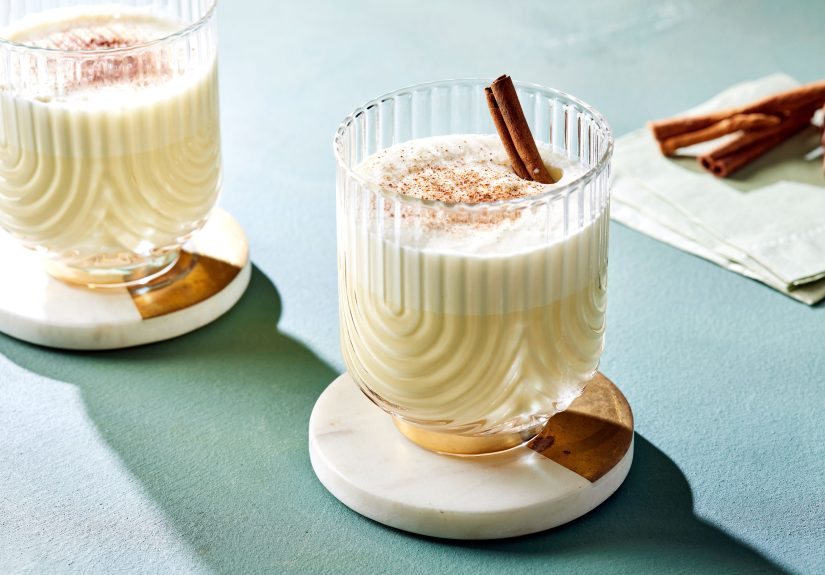
Pour into glasses, grate fresh nutmeg over the top, and add a cinnamon stick if you’re feeling festive. Serve cold (traditional) or gently warmed
(cozy and underrated).
Alcohol Options (Batch or By-the-Glass)
Eggnog is famously friendly with brown spirits. For a balanced flavor, many classic approaches use bourbon for vanilla-caramel notes,
dark rum for warmth, and brandy/cognac for fruity depth. You have two easy paths:
-
By the glass (best for mixed crowds):
Add 1–1.5 oz liquor per serving, then stir. This keeps a kid-friendly base available. -
By the batch:
Start with 1 to 1 1/2 cups total spirits for the full recipe, chill, then adjust to taste. (You can always add more; you can’t un-add it.)
Suggested combos:
All bourbon (simple, classic), all rum (more tropical warmth), or a bourbon-rum-brandy trio for maximum holiday drama.
Flavor Tweaks and Variations
Extra-Frothy “Party Bowl” Eggnog
If you love the airy, cloudlike texture some iconic recipes brag about, you can add foam without sacrificing safety:
right before serving, vigorously shake individual portions with ice in a cocktail shaker (or a mason jar), then strain into a glass.
This creates a lighter texture and makes the drink extra coldespecially helpful if your eggnog is rich.
Non-Alcoholic Eggnog That Doesn’t Taste Like “Sad Milk”
Skip the booze and lean into flavor: use a little extra vanilla, keep the salt, and don’t be shy about fresh nutmeg. If you want a more “dessert”
vibe, top with lightly sweetened whipped cream. The custard base keeps it indulgent even without spirits.
Dairy-Free (or Dairy-Light) Options
Dairy-free eggnogs often use homemade nut milk (like cashew or hazelnut) for richness, plus warming spices and citrus zest for complexity.
If you want an easier compromise, try a “dairy-light” version: swap half the milk for a creamy alt milk (like oat) and keep some real cream
for body. The goal is a silky texture, not “holiday water.”
Spice, Sweetness, and Thickness Controls
- Too sweet? Add a pinch more salt, or dilute with a splash of cold milk.
- Too thick? Whisk in milk a tablespoon at a time until it pours the way you like.
- Not spiced enough? Fresh nutmeg is the cheat code. Grate it right on top.
- Want deeper spice? Steep whole spices (cinnamon/cloves) in warm dairy, then remove.
Make-Ahead, Storage, and Serving Tips
Eggnog is a make-ahead champion. In fact, it usually tastes better after a night in the fridge because the flavors meld and mellow.
Store it in a sealed container and keep it refrigerated.
How Long Does Homemade Eggnog Last?
For a cooked eggnog base, plan on enjoying it within a few days for best flavor and freshness. If you add alcohol, it may keep longer,
but “longer” isn’t a substitute for good food-safety habitsalways keep it cold and use your senses.
Serving Ideas That Feel Fancy (But Aren’t Annoying)
- Fresh nutmeg on top (non-negotiable, honestly).
- A cinnamon stick stirrer (your guests will think you tried harder than you did).
- A tiny pinch of extra nutmeg + a few drops of vanilla for aroma.
- For adults: a float of dark rum or a bourbon drizzle (go slowthis is a drink, not a dare).
Troubleshooting: How to Save Eggnog From Holiday Chaos
“My Eggnog Got Grainy”
That usually means the eggs got too hot too fast. Next time: lower the heat and whisk constantly, and use a thermometer.
For now, strain it well and chillit may smooth out. A quick blend (carefully, once cooled) can help texture too.
“It Tastes Eggy”
Add more vanilla, a pinch of salt, and fresh nutmeg. Chill overnighttime helps. Alcohol (even a little) also rounds out the flavor.
“It’s Too Thick After Chilling”
Totally normal: cold dairy thickens. Whisk in milk a splash at a time until it pours smoothly.
A Note on “Aged Eggnog”
Aged eggnog became famous thanks to well-known recipes that combine eggs, sugar, dairy, and a robust mix of spirits, then let the mixture rest
in the fridge for weeks (or longer). Fans say aging creates a smoother, more integrated flavorless “boozy punch,” more “holiday velvet.”
Here’s the practical takeaway: aging can be delicious, but it’s not a magic safety wand. Some food-safety guidance cautions that alcohol alone
shouldn’t be relied on to eliminate bacterial risk in raw eggs. If you want the “aged” vibe with fewer worries, start with a cooked custard base
(like this recipe), then add spirits and let it rest a couple of days to a week for mellowing.
Conclusion: Your New Holiday Superpower
Homemade eggnog doesn’t require a culinary degreejust a whisk, a thermometer, and the willingness to treat eggs gently. Make the custard base,
chill it, then decide whether you’re going family-friendly, full boozy, or “one glass and I’m done decorating the tree.”
Once you taste the real thingfresh nutmeg, balanced sweetness, creamy bodyyou may never look at the grocery carton the same way again.
Kitchen Experiences: Real-Life Lessons From Making Homemade Eggnog (About )
If you’ve never made homemade eggnog before, the first “experience” usually arrives right on schedule: the moment you realize eggs are
emotionally sensitive and do not appreciate being rushed. The difference between “silky custard” and “holiday scrambled eggs” is basically
one impatient minute on medium-high heat. The good news is that once you’ve done it oncewith a thermometer as your holiday guardian angel
you’ll wonder why you ever thought eggnog needed to come from a carton with a screw cap.
Another common experience: discovering that nutmeg is powerful. Pre-ground nutmeg is fine in a pinch, but freshly grated nutmeg
smells like the holidays moved into your kitchen and started paying utilities. It also tastes cleaner and less dusty. Many home cooks end up doing
a little taste test: one glass with pre-ground, one with fresh. The fresh-nutmeg glass tends to “win” so decisively it feels like a rigged election
(a delicious, non-political one).
Then there’s the sweetness factor. Store-bought eggnog often leans very sweet, which can be comforting for some people and overwhelming for others.
When you make it yourself, you get to watch how different palates react. The “dessert drink” crowd will happily go with the full sugar amount,
while the “I want eggnog, not frosting” crowd will appreciate dialing it back. A fun trick is to keep the base moderately sweet and let people
customize: add a splash of bourbon, a dusting of nutmeg, maybe a dollop of whipped cream for those who believe beverages should double as pie.
Hosting reveals another truth: eggnog is a social drink with a logistics problemit takes up fridge space. If you’re making a big batch,
you’ll need a pitcher (or two), and suddenly your refrigerator looks like it’s running a dairy-themed Airbnb. The workaround is simple:
make the custard base ahead, store it tightly sealed, and don’t add any foamy elements (like whipped whites or whipped cream) until serving time.
If you want that frothy texture people love, shaking individual servings with ice (even in a mason jar) gives you instant lift without needing
an industrial mixer or a new countertop appliance you’ll swear you’ll use “all the time.”
Finally, there’s the experience of choosing alcohol. Bourbon brings caramel and vanilla notes, rum adds warmth, and brandy/cognac contributes
fruity depth. People tend to have surprisingly strong opinions heresometimes based on taste, sometimes based on one dramatic holiday story that
begins with “So I had eggnog at my uncle’s house…” A smart party move is offering the eggnog base as the foundation, then letting guests pick
their own spirit. It keeps everyone happy and prevents the night from turning into “Who put HOW much rum in this?”
The biggest lesson? Homemade eggnog isn’t just a recipeit’s a small, cozy ritual. It smells like warm spice, tastes like a treat, and feels like
a holiday tradition you can actually control. And honestly, controlling something during the holidays is basically a miracle.