Table of Contents >> Show >> Hide
- The War Behind the 44-Day War
- Why Combat Drones Became the Face of the War
- Drones Did Not Fight Alone
- The Air-Defense Lesson: Old Shields Met New Arrows
- The Information War: Drone Footage as Psychological Pressure
- The Battle for Shusha and the Collapse of the Stalemate
- Why Azerbaijan Was Ready and Armenia Was Not
- What the 44-Day War Taught the World
- Did Combat Drones Really End the War?
- The Human Cost Behind the Technology
- Experience-Based Reflections: What This War Feels Like From the Ground Level of History
- Conclusion: The War That Made the Sky Impossible to Ignore
- SEO Tags
For decades, Nagorno-Karabakh was the kind of conflict analysts loved to call “frozen,” which is a polite way of saying everyone knew it could melt at the worst possible moment. Then, in the fall of 2020, the ice cracked. In just 44 days, Azerbaijan dramatically changed the military and political map of the South Caucasus, defeating Armenian forces in a war that had seemed locked in place since the early 1990s.
The headline explanation was simple: combat drones. Videos of armored vehicles, artillery positions, and air-defense systems being struck from above spread across social media and news broadcasts. Suddenly, drones were not just gadgets for wedding photographers, package-delivery dreamers, or neighbors who take “checking the gutters” too seriously. They were central actors in a modern battlefield.
But the real story is more interesting than “drones won the war.” Combat drones helped Azerbaijan end a decades-long military stalemate because they were part of a wider system: surveillance, precision strikes, artillery coordination, information warfare, better planning, Turkish support, Israeli-made loitering munitions, and an Armenian defense network that struggled to adapt. Drones did not replace strategy. They punished the side that had not updated its strategy fast enough.
The War Behind the 44-Day War
The Nagorno-Karabakh conflict traces back to the collapse of the Soviet Union. Nagorno-Karabakh is internationally recognized as part of Azerbaijan, but it had a majority ethnic Armenian population and became the center of a brutal war in the late 1980s and early 1990s. Armenian forces took control of Nagorno-Karabakh and surrounding Azerbaijani districts, leaving hundreds of thousands displaced and creating one of the post-Soviet world’s longest-running disputes.
For years, the conflict sat in an uncomfortable pause. Skirmishes continued. Diplomats talked. Ceasefires were signed, broken, repaired, and broken again. Meanwhile, Azerbaijan used oil and gas revenue to modernize its military, while Armenia relied heavily on older defensive systems, mountainous terrain, and the assumption that the status quo would hold.
That assumption aged about as well as milk in a parked car. On September 27, 2020, large-scale fighting erupted again. By November 9, a Russian-brokered ceasefire had ended the war. Azerbaijan had recaptured the seven surrounding districts and parts of Nagorno-Karabakh itself. The war lasted 44 days, but it overturned nearly three decades of military reality.
Why Combat Drones Became the Face of the War
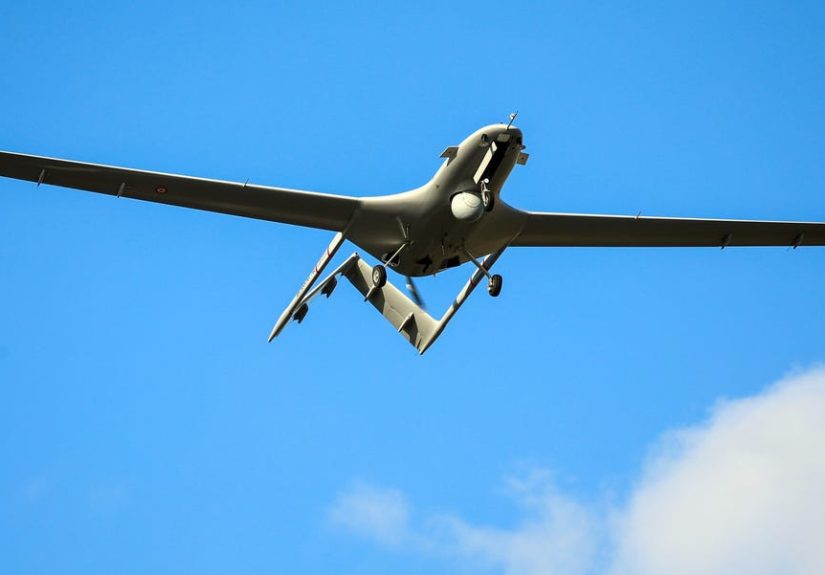
Combat drones became the symbol of the 2020 Nagorno-Karabakh war because they offered something every military commander wants and very few get cheaply: persistent eyes in the sky combined with the ability to strike. Azerbaijan used Turkish-made Bayraktar TB2 drones and Israeli-made loitering munitions, including systems often described as “kamikaze drones,” to find, track, and attack Armenian military assets.
These systems did not need to behave like traditional fighter jets. They could stay airborne longer, monitor front lines, and feed information into a broader strike network. When Armenian units moved, drones could see them. When air-defense systems switched on, loitering munitions could threaten them. When tanks or artillery were parked in exposed positions, the sky became an accountant with a very strict audit policy.
The most important advantage was not just destruction. It was visibility. Traditional camouflage, mountain cover, and defensive depth were less useful when drones could scan positions from above and pass targeting information to artillery or missile units. In older wars, hidden equipment might stay hidden. In 2020, “hidden” often meant “waiting to be uploaded in drone footage.”
Drones Did Not Fight Alone
One of the biggest mistakes people make about the 44-day war is treating drones as a magic wand. They were not. Azerbaijan’s success came from combining drones with artillery, intelligence, electronic warfare, special forces, political messaging, and years of military preparation. In other words, drones were the starring actor, but they had a full production crew.
Azerbaijan used drones to locate targets and expose weaknesses. Artillery and rocket systems then helped exploit those weaknesses. Loitering munitions could suppress or destroy air-defense assets, opening space for other drones to operate more freely. Once Armenian formations were under constant observation, movement became dangerous, reinforcement became harder, and defensive positions became less secure.
This combination created a battlefield problem Armenia struggled to solve: how do you defend fixed or slow-moving assets when your opponent can watch, wait, and strike from above? Tanks, artillery pieces, supply vehicles, and air-defense systems all became vulnerable if they were poorly dispersed, inadequately concealed, or unable to move quickly.
The Air-Defense Lesson: Old Shields Met New Arrows
Armenian forces had air-defense systems, but many were designed for a different threat environment. They were built mainly to counter aircraft, not small drones and loitering munitions operating in coordinated waves. This mismatch mattered. A defense system can be powerful on paper and still be awkward against the wrong kind of threat. A sledgehammer is impressive, but it is not what you want when mosquitoes invade the picnic.
Azerbaijan reportedly used decoys, surveillance drones, and strike systems to identify and weaken Armenian air defenses. Once those defenses were suppressed, the rest of the battlefield became more exposed. This is why analysts often describe the war as a lesson in air-defense modernization. The question was no longer only, “Can you shoot down aircraft?” It became, “Can you survive being watched continuously by cheaper, smaller, and more numerous unmanned systems?”
That lesson traveled far beyond the Caucasus. Militaries around the world studied the conflict because it showed how relatively affordable drone systems could threaten expensive equipment when used intelligently. It did not mean tanks were obsolete or air defenses useless. It meant any force that ignores drones is volunteering for an unpleasant demonstration.
The Information War: Drone Footage as Psychological Pressure
Combat drones changed more than the physical battlefield. They changed the emotional and political battlefield too. Azerbaijan released drone footage showing strikes against Armenian equipment, turning battlefield success into public messaging. These videos were not just evidence of military progress; they were morale weapons.
For Azerbaijani audiences, the footage reinforced confidence and national momentum. For Armenian soldiers and civilians, it created pressure and uncertainty. For international observers, it shaped the story of the war: Azerbaijan looked modern, precise, and technologically prepared, while Armenia appeared exposed and reactive.
This was warfare in the smartphone age. In the past, governments might announce battlefield gains through official statements. In 2020, drone footage made the war visually immediate. The world did not simply read that an armored unit had been hit. It watched the clip, often within hours. That changed how people understood the conflict, even when footage lacked full context.
The Battle for Shusha and the Collapse of the Stalemate
The capture of Shusha, known to Armenians as Shushi, was one of the decisive moments of the war. The city sits on high ground near Stepanakert, Nagorno-Karabakh’s main city, and has deep cultural and strategic importance. When Azerbaijani forces took Shusha in early November 2020, Armenia’s military position became extremely difficult.
Drones helped shape the conditions for this outcome by weakening Armenian defenses across the front, disrupting logistics, and making reinforcement dangerous. But the final push also involved ground forces, maneuver, morale, and geography. This is another reminder that drones did not “win” in isolation. They made traditional military tasks easier for one side and harder for the other.
After Shusha fell, Armenia accepted a ceasefire agreement brokered by Russia. The deal ended active fighting, deployed Russian peacekeepers, and required Armenia to withdraw from additional territories. For Azerbaijan, it was a historic victory. For Armenia, it was a national trauma. For the rest of the world, it was a loud warning: wars that look frozen can become very unfrozen when technology, money, and political will align.
Why Azerbaijan Was Ready and Armenia Was Not
Azerbaijan had spent years preparing for a rematch. Its defense spending grew significantly over time, supported by energy revenue. It purchased drones and loitering munitions, deepened military ties with Turkey and Israel, and studied recent conflicts where unmanned systems had performed well. Azerbaijan did not simply buy equipment; it built a concept around that equipment.
Armenia, by contrast, entered the war with older systems, weaker resources, and assumptions shaped by the previous conflict. Its defensive posture had worked for decades, but it was not prepared for a battlefield where being seen could quickly mean being struck. Static positions, exposed vehicles, and insufficient drone defenses created vulnerabilities that Azerbaijan exploited.
This does not mean Armenia lacked courage or discipline. Wars are not video games, and soldiers on both sides faced danger and hardship. The issue was structural. Armenia’s forces were fighting a 21st-century surveillance-strike campaign with too many 20th-century habits. That is a painful recipe, like bringing a fax machine to a cybersecurity conference.
What the 44-Day War Taught the World
1. Visibility Can Be as Important as Firepower
The side that sees better often shoots better. Drones gave Azerbaijan persistent visibility over parts of the battlefield. That made Armenian movement risky and reduced the value of concealment. Modern armies now understand that hiding from drones is not a bonus skill; it is basic survival.
2. Cheap Systems Can Threaten Expensive Platforms
The war showed that relatively lower-cost drones and loitering munitions can threaten tanks, artillery, and air-defense systems that cost far more. This does not make heavy equipment irrelevant, but it does force armies to rethink protection, dispersion, mobility, and layered defense.
3. Air Defense Must Be Layered and Flexible
Traditional air-defense systems alone are not enough. Forces need layered protection against aircraft, missiles, drones, and small unmanned systems. They also need training and tactics that assume the enemy is watching from above.
4. Information Warfare Is Now Built Into Combat
Drone footage can shape public opinion, boost morale, intimidate opponents, and influence international perception. In modern conflict, cameras are not just recording history; they are helping write it in real time.
5. Technology Rewards Preparation, Not Panic
Azerbaijan’s advantage came from years of procurement, training, and integration. Buying drones at the last minute would not have produced the same effect. Technology works best when doctrine, training, logistics, and leadership are ready to use it.
Did Combat Drones Really End the War?
Combat drones helped end the 44-day war, but they did not solve the conflict. That distinction matters. Azerbaijan’s drone-enabled campaign broke Armenia’s battlefield position and forced a ceasefire. However, political tensions, humanitarian suffering, displacement, and competing national claims continued after 2020. In 2023, Azerbaijan launched another operation and regained full control over Nagorno-Karabakh, leading to the mass departure of ethnic Armenians from the region.
So, the phrase “combat drones ended a decades-long war” should be understood carefully. Drones helped end a decades-long military stalemate and decisively ended the 2020 phase of the war in 44 days. They did not magically produce reconciliation, justice, or lasting peace. Machines can change borders faster than they can heal societies.
The Human Cost Behind the Technology
It is easy to discuss drones as sleek tools of modern war, but the 44-day war was not a technology demo. Thousands of soldiers and civilians were killed. Families were displaced. Communities were shaken. Cultural sites, homes, and infrastructure became part of a bitter dispute that reached far beyond the battlefield.
That is why any serious analysis of drone warfare must avoid treating it like a highlight reel. Combat drones can reduce risk for the side operating them, but they do not make war clean. They may improve targeting in some cases, but they can also accelerate escalation, spread fear, and make military action feel politically easier.
The Nagorno-Karabakh war showed that drones are powerful, but the deeper lesson is not “buy drones and win.” The deeper lesson is that technology without diplomacy can turn old disputes into faster, sharper tragedies.
Experience-Based Reflections: What This War Feels Like From the Ground Level of History
Studying the 44-day war feels a little like watching the future arrive early and without asking permission. For decades, many people imagined drone warfare as something reserved for superpowers with large budgets and global reach. Nagorno-Karabakh changed that perception. It showed that smaller states, if they plan carefully and invest strategically, can use unmanned systems to reshape a battlefield that once seemed fixed.
The first experience this topic offers is a lesson in humility. Military traditions can be powerful, but they can also become comfortable blankets. Armenia’s defensive confidence was built on past victory, difficult terrain, and years of holding the line. Yet history does not give loyalty discounts. What worked in the 1990s did not work the same way in 2020. The battlefield had changed, and the side that adapted faster gained the advantage.
The second experience is about visibility. In everyday life, we understand how cameras change behavior. People act differently when they know they are being watched. On a battlefield, that effect becomes extreme. Drones made it harder for forces to move, gather, hide, or resupply without risk. The psychological weight of constant observation can be enormous. Even when a drone is not striking, its presence can shape decisions.
The third experience is that technology is never just technology. A drone is not decisive because it has wings, sensors, or a remote connection. It becomes decisive when commanders know how to use its information, when artillery can respond, when communications work, and when political leaders understand the timing. Azerbaijan’s drone campaign mattered because it was connected to a larger military plan. Without that system, drones would have been expensive flying cameras with attitude problems.
The fourth experience is the danger of public simplification. After the war, many headlines treated drones as the single explanation. That is understandable because drones were visible, dramatic, and easy to explain. But real wars are messy. Azerbaijan also benefited from stronger resources, Turkish support, Israeli technology, better operational preparation, and Armenian weaknesses. The drone story is true, but it is not the whole truth.
The fifth experience is moral discomfort. Drone warfare can look precise from a distance, especially when viewed through edited clips. But real people live beneath those pixels. Families lose relatives. Soldiers face fear. Civilians flee homes. The screen can make war feel clean, but the ground tells another story. Any article about combat drones should remember that the most important result of war is not the viral video; it is the human aftermath.
Finally, the 44-day war teaches that “frozen conflicts” are rarely frozen forever. They are more like pressure cookers with bad wiring. When diplomacy fails, military innovation can suddenly make old borders negotiable by force. Combat drones did not invent the Armenia-Azerbaijan conflict, but they changed the cost, speed, and visibility of fighting it. That is why Nagorno-Karabakh remains one of the most important case studies in modern warfare.
Conclusion: The War That Made the Sky Impossible to Ignore
The 2020 Nagorno-Karabakh war did not prove that drones alone can win every conflict. It proved something more useful and more unsettling: combat drones can be decisive when they are integrated into a smart military system and used against an opponent that is not prepared for constant aerial surveillance and precision strikes.
In 44 days, Azerbaijan broke a decades-long stalemate, recaptured major territories, and forced a ceasefire that transformed the South Caucasus. Drones were central to that outcome, but they were not magic. They worked because they were connected to planning, artillery, intelligence, diplomacy, and years of military investment.
The lesson for the world is clear. The age of drone warfare is not coming. It has already arrived, wearing a headset, watching from above, and reminding every army that the sky is no longer empty.
Note: This article is written for historical and analytical understanding. It does not provide technical instructions, operational guidance, or advice on using weapons or drone systems.