
Table of Contents >> Show >> Hide
- The Ideal Temperature Range for Most Houseplants
- Why “Hot” Feels Different to a Plant Than It Does to You
- Signs Your Houseplant Is Too Hot
- Common Hot Spots in the Home
- Are Some Houseplants More Heat-Tolerant?
- How to Protect Houseplants During Hot Weather
- Heat Stress and Pests: The Sneaky Connection
- What to Do If Your Houseplant Got Too Hot
- Experience Notes: What Hot Weather Teaches You About Houseplants
- Conclusion
Houseplants are often described as “tropical,” which makes many people assume they can handle any temperature short of lava. Unfortunately, your monstera is not a tiny jungle superhero. Your pothos is not training for a desert ultramarathon. And your peace lily, dramatic by nature, may faint at the first sign of a heat vent.
So, how hot is too hot for houseplants? The horticulturist’s short answer is this: most common houseplants are happiest between 65°F and 80°F. Many can tolerate brief periods in the mid-to-upper 80s, and some tough plants can survive short spells near 90°F. But once indoor temperatures stay above 85°F to 90°F, especially with dry air, direct sun, or poor watering, heat stress can show up fast.
The real danger is not always the number on the thermostat. It is the microclimate around the plant: a sunny windowsill that bakes like a cookie sheet, a radiator that blasts one side of the foliage, an air conditioner creating wild swings, or a balcony that turns from “bright and cheerful” to “botanical frying pan” by noon.
The Ideal Temperature Range for Most Houseplants
Most foliage houseplants, including pothos, philodendron, peace lily, dracaena, Chinese evergreen, and many ferns, prefer daytime temperatures around 65°F to 80°F. At night, a slight drop is usually fine and even beneficial. Many indoor plants like nighttime temperatures roughly 5°F to 10°F cooler than daytime conditions.
Flowering houseplants can be a little fussier. African violets, orchids, poinsettias, cyclamen, and holiday cactus often bloom better when nights are cooler. Too much heat may shorten bloom life, dry flower buds, or cause flowers to drop before you even get the chance to admire them and say, “Look, I am finally a plant person.”
Quick Temperature Guide
- 60°F to 65°F: Safe for many houseplants, but growth may slow.
- 65°F to 80°F: The comfort zone for most indoor foliage plants.
- 80°F to 85°F: Usually okay if humidity and watering are managed well.
- 85°F to 90°F: Watch carefully for heat stress, especially near windows.
- Above 90°F: Too hot for many houseplants over long periods.
- Above 95°F: High-risk territory, especially in direct sun or dry air.
Why “Hot” Feels Different to a Plant Than It Does to You
You can walk away from a hot window. Your houseplant cannot. That is the first problem. The second problem is that plants cool themselves through transpiration, which is the process of releasing water vapor through leaf pores. When temperatures rise, plants lose moisture faster. If roots cannot replace that moisture quickly enough, leaves wilt, curl, crisp, or brown.
Low humidity makes the problem worse. A room at 86°F with 55% humidity may be manageable for many tropical plants. A room at 86°F with dry furnace air or a heater blasting nearby can be much more stressful. In other words, your plant is not only asking, “How hot is it?” It is also asking, “How dry is it, how bright is the sun, how damp are my roots, and why am I next to this toaster-shaped radiator?”
Signs Your Houseplant Is Too Hot
Heat stress in houseplants can look suspiciously like other problems, including underwatering, overwatering, pest damage, or too much direct sunlight. That is why you need to look at the pattern, not just the symptom.
1. Crispy Brown Leaf Edges
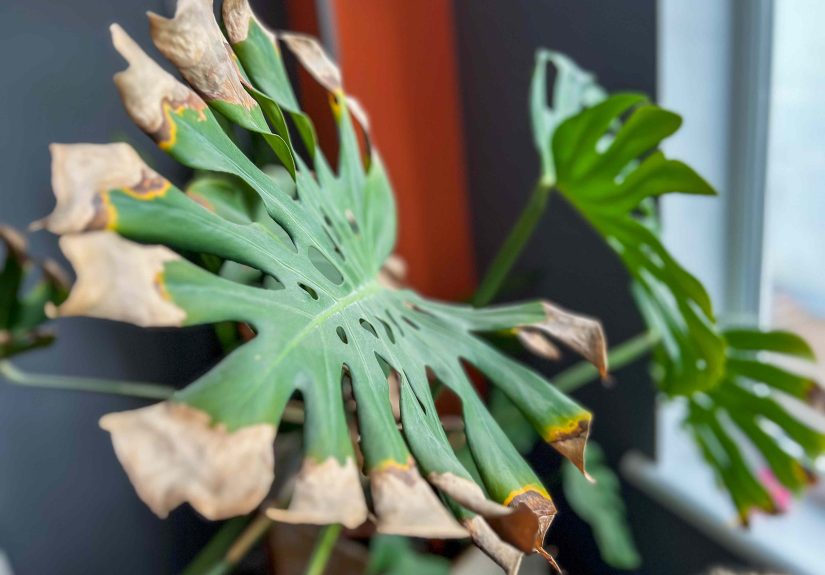
Dry, brown edges are one of the classic signs of heat and humidity stress. This is especially common on tropical plants with thinner leaves, such as calatheas, ferns, peace lilies, and some philodendrons. If the browning appears mostly on the side facing a heater, vent, or sunny window, the plant is basically pointing at the culprit.
2. Wilting Even When the Soil Is Moist
If your plant wilts but the potting mix is still damp, do not automatically add more water. Heat can make leaves lose moisture faster than roots can deliver it. Overwatering at this moment can suffocate roots and create a second problem. Check the soil, move the plant out of direct heat, and let it recover in bright, indirect light.
3. Yellowing Leaves and Sudden Leaf Drop
Plants often drop leaves when conditions change quickly. A sudden move from a mild room to a hot window, from indoors to a blazing patio, or from humid summer air to dry heated air can trigger leaf drop. The plant is not being rude. It is reducing the amount of foliage it has to support.
4. Scorched or Bleached Patches
Sun scorch looks like pale, tan, white, or brown patches on leaves. It often appears after a houseplant is moved into stronger light too quickly. Heat and intense sunlight through glass can damage leaves, especially on plants grown in lower indoor light. Once a leaf is scorched, it will not turn green again, but new growth can be healthy if conditions improve.
5. Flower Buds Drying Up
Flowering plants may respond to heat by dropping buds, browning petals, or finishing their bloom show early. Hot, dry air is especially hard on poinsettias, orchids, African violets, and holiday cactus.
Common Hot Spots in the Home
Your thermostat may say 76°F while your plant’s actual spot is much hotter. That is why a cheap digital thermometer can be a plant-saving tool. Place it near the foliage, not across the room. You may discover that the “perfect bright window” becomes a tiny greenhouse at 2 p.m.
Sunny Windowsills
South- and west-facing windows can become very hot, particularly in summer. Some succulents and cacti enjoy bright light, but many tropical foliage plants prefer bright, indirect light. If leaves feel warm to the touch or the potting mix dries within a day, move the plant a few feet back or add a sheer curtain.
Heat Vents and Radiators
Direct hot air is one of the quickest ways to stress a houseplant. It dries leaves, lowers humidity, and creates temperature swings. Keep plants away from furnace vents, fireplaces, space heaters, radiators, and appliances that release heat.
Balconies, Patios, and Porches
Many houseplants enjoy spending summer outdoors, but they need gradual acclimation. A plant used to indoor light can burn badly if placed straight into full sun. Start in shade, protect from wind, and increase light exposure slowly over a week or two.
Are Some Houseplants More Heat-Tolerant?
Yes. Succulents, cacti, snake plants, ponytail palms, jade plants, and some hoyas generally tolerate warmth better than thin-leaved tropical plants. However, “heat-tolerant” does not mean “please roast me.” Many succulents still prefer typical indoor temperatures and can suffer if trapped in a hot, poorly ventilated window.
On the sensitive side, ferns, calatheas, marantas, peace lilies, African violets, fittonias, and many orchids can struggle when heat combines with low humidity. These plants often prefer stable warmth, not extreme heat.
How to Protect Houseplants During Hot Weather
Move Plants Out of Harsh Direct Sun
If a plant is wilting every afternoon, fading, or developing scorched patches, shift it away from the glass. Bright, indirect light is usually safer for tropical foliage plants. A sheer curtain can soften intense sun while still giving plants plenty of light.
Water by Soil Moisture, Not by Panic
Hot weather can increase watering needs, but do not water blindly. Stick a finger one to two inches into the potting mix. If it is dry at that depth, water thoroughly until excess drains out. If it is still damp, wait. Plants in small pots, terra-cotta containers, and bright windows usually dry faster than plants in large plastic pots or lower light.
Raise Humidity Around Tropical Plants
Many houseplants prefer humidity around 40% to 60%, while some tropical species enjoy even higher humidity. Grouping plants together can create a slightly more humid microclimate. A humidifier is usually more effective than casual misting. Pebble trays can help a little, as long as the pot is not sitting directly in water.
Improve Airflow Without Creating a Wind Tunnel
Still, hot air can encourage stress and pests. Gentle airflow from a fan across the room can help, but avoid blasting plants directly. Think “soft breeze,” not “leaf tornado.”
Pause Fertilizing During Severe Heat
When plants are stressed, they are not in the mood for a buffet. Fertilizer can add pressure to roots when the plant is already struggling. Wait until temperatures stabilize and the plant resumes normal growth.
Do Not Spray Oils or Soaps on Hot, Stressed Plants
Insecticidal soap and horticultural oil can be useful, but they may injure plants when used in high heat or on drought-stressed foliage. Treat pests in cooler conditions, follow the product label, and test a small area first when dealing with delicate plants.
Heat Stress and Pests: The Sneaky Connection
Hot, dry conditions can encourage spider mites, one of the most annoying houseplant pests. They are tiny, fast-breeding, and rude enough to leave fine webbing like they are decorating for a haunted greenhouse. Stressed plants are also more vulnerable to insects in general.
Check the undersides of leaves, stems, and new growth. Look for stippling, webbing, sticky residue, or tiny moving dots. Rinsing foliage with water, increasing humidity, and isolating infested plants can help reduce the problem before it turns into a full-scale mite convention.
What to Do If Your Houseplant Got Too Hot
First, move the plant to a cooler spot with bright, indirect light. Do not place it in deep darkness unless it is severely wilted and needs a short recovery period. Check soil moisture before watering. If the mix is bone dry, water slowly and thoroughly. If it is wet, focus on airflow and temperature instead.
Trim fully dead leaves, but leave partially damaged leaves if they still contain green tissue. They can continue photosynthesizing while the plant recovers. Avoid repotting unless the roots are rotting or the potting mix has become hydrophobic and refuses to absorb water. Repotting is stressful, and a heat-stressed plant already has enough drama.
Experience Notes: What Hot Weather Teaches You About Houseplants
After caring for houseplants through sticky summers, dry winters, and a few “why is this leaf crispy?” mysteries, one lesson becomes very clear: heat problems are usually location problems. The plant that struggles in one corner may thrive three feet away. That small move can change light intensity, airflow, humidity, and leaf temperature.
One common experience is the deceptive sunny windowsill. It looks perfect in the morning: bright, cheerful, Instagram-worthy. By midafternoon, the same spot can become a heat trap. A pothos may forgive you. A calathea may file an emotional complaint. A fern may simply brown at the edges and make you feel judged. Moving sensitive plants slightly back from the window often solves more problems than changing the watering schedule five times.
Another real-world lesson is that watering more is not always the answer. When a peace lily wilts in heat, the instinct is to grab the watering can like a plant paramedic. Sometimes that is correct. Other times the soil is already moist, and the plant is wilting because its leaves are losing water faster than the roots can supply it. In that case, more water can create soggy soil and unhappy roots. The better move is shade, stable temperature, humidity, and patience.
Heat vents are another sneaky villain. A plant can look fine all fall and then decline once the heating system starts. The leaves nearest the vent crisp first, while the rest of the plant looks confused. This uneven damage is a clue. Rotate the plant, move it away from the blast, and add humidity if the room is dry. Plants do not enjoy sitting in front of a furnace any more than you enjoy standing behind a bus exhaust pipe.
Outdoor summer vacations for houseplants also require humility. Many indoor plants benefit from fresh air and brighter seasonal light, but they need a gentle introduction. Moving a philodendron directly from a living room to full sun is like sending an office worker to run a marathon on a beach at noon. Start in shade. Increase exposure slowly. Watch the leaves. If they fade, curl, or scorch, back off.
The most helpful habit is observation. Touch the pot. Check the soil. Look at which side of the plant is damaged. Notice when symptoms appear: morning, afternoon, after the heat turns on, after a move outdoors, or after a heat wave. Houseplants rarely suffer silently. They leave clues everywhere. You just have to read the leafy little crime scene.
Conclusion
So, how hot is too hot for houseplants? For most indoor plants, sustained temperatures above 85°F to 90°F are where caution begins, and anything above 90°F can quickly become stressful when combined with direct sun, dry air, or inconsistent watering. The safest goal is a stable indoor range of about 65°F to 80°F, with cooler nights, gentle humidity, and protection from vents, radiators, fireplaces, and blazing windows.
The good news is that houseplants do not need perfect conditions. They need reasonable conditions, steady care, and an owner who does not panic-water every time a leaf looks dramatic. Keep them comfortable, watch for heat-stress symptoms, and remember: if the spot feels like a sauna to you, your fern is probably not having a spa day.





 Close
Close