Table of Contents >> Show >> Hide
- So, How Long Did It Take for the Titanic to Sink?
- The Titanic Sinking Timeline: From Iceberg to Ocean Floor
- Why Did the Titanic Take Nearly Three Hours to Sink?
- Was the Titanic Really “Unsinkable”?
- Why Weren’t There Enough Lifeboats?
- How Cold Was the Water When the Titanic Sank?
- Did the Titanic Sink Faster Than Other Ships?
- Why the Titanic Timeline Still Fascinates People
- Common Myths About the Titanic’s Sinking Time
- Lessons from the Titanic’s 2 Hours and 40 Minutes
- Personal Experience: Understanding the Titanic Timeline in a More Human Way
- Conclusion: The Titanic Sank in 2 Hours and 40 Minutes, But Its Story Still Echoes
The short answer: the RMS Titanic took about 2 hours and 40 minutes to sink after striking an iceberg. The ship hit the iceberg at approximately 11:40 p.m. on April 14, 1912, and disappeared beneath the North Atlantic at about 2:20 a.m. on April 15, 1912. That is less time than most people spend watching a long movie, waiting at the DMV, or deciding what to order from a menu with too many chicken sandwiches.
But the full story is far more dramatic than a simple timestamp. The sinking of the Titanic was not a sudden plunge, at least not at first. It was a slow, chilling, and increasingly desperate sequence of events: an iceberg warning ignored too late, a glancing collision, flooding compartments, lifeboats lowered under capacity, distress calls sent into the dark, and a final collapse that turned the world’s most famous ocean liner into a symbol of human overconfidence.
This article breaks down the Titanic sinking timeline, explains why the ship stayed afloat for nearly three hours, and explores what those final hours reveal about engineering, decision-making, survival, and the uncomfortable truth that “unsinkable” is not a safety plan.
So, How Long Did It Take for the Titanic to Sink?
The Titanic took approximately 2 hours and 40 minutes to sink from the moment it struck the iceberg to the moment it vanished beneath the ocean. The collision occurred at about 11:40 p.m. ship’s time on Sunday, April 14, 1912. The ship fully sank at about 2:20 a.m. on Monday, April 15, 1912.
That timeline is one of the most important facts in Titanic history because it shows that the disaster was not instantaneous. There was time to react, time to launch lifeboats, time to send distress signals, and time for passengers to realize that the unthinkable was becoming very thinkable. Unfortunately, there was not enough time for rescue ships to arrive before the ship went down.
The nearest vessel that responded effectively, the RMS Carpathia, arrived after the Titanic had already sunk. By then, survivors were waiting in lifeboats in the freezing North Atlantic, hoping the tiny lights on the horizon were not another cruel trick of the night.
The Titanic Sinking Timeline: From Iceberg to Ocean Floor
11:40 p.m. The Iceberg Collision
At around 11:40 p.m. on April 14, the Titanic struck an iceberg on its starboard side. The ship was traveling through the North Atlantic on its maiden voyage from Southampton, England, to New York City. It had already received multiple ice warnings, but the ocean was unusually calm, the night was moonless, and spotting ice ahead was extremely difficult.
The iceberg did not slice the ship open like a movie villain with a giant can opener. Instead, the collision caused a series of openings and damage along the hull. Water began entering several forward compartments. The problem was not only that water got in; it was that too many compartments were flooding at once.
Shortly After Midnight The Damage Becomes Clear
After the collision, passengers felt different things depending on where they were. Some noticed a vibration or grinding sensation. Others barely noticed anything at all. That is one reason the early phase of the disaster was so deceptive. The ship did not immediately tilt dramatically or announce its doom with cinematic background music.
Below decks, however, the situation was serious. Ship designer Thomas Andrews reportedly assessed the damage and understood that the Titanic could not remain afloat. The ship’s watertight compartments were designed to slow flooding, not perform miracles. Water could spill over the tops of bulkheads as the bow sank lower, creating a chain reaction that would eventually drag the ship down.
12:15 a.m. Distress Calls Are Sent
Around 12:15 a.m., the wireless operators began sending distress messages. These calls reached several ships, including the Carpathia, which changed course and steamed toward the disaster site. The tragic catch was distance. Even at full speed, help could not arrive in time.
This is one of the most painful parts of the Titanic final hours: rescue was coming, but the clock was faster than the rescue ship. The Titanic had less than three hours. The Carpathia needed more.
12:40 a.m. The First Lifeboats Are Launched
The first lifeboats were lowered around 12:40 a.m., roughly one hour after the iceberg collision. Many early lifeboats left with empty seats. This happened for several reasons: confusion, disbelief, poor organization, concerns about whether the boats could safely hold full loads, and the fact that many passengers were reluctant to leave a huge, brightly lit ship for a small boat hanging over a dark ocean.
In hindsight, it seems impossible that anyone would hesitate. But in the moment, the Titanic still looked safer than the lifeboats. The ship was large, warm, and familiar. The lifeboats were small, cold, and terrifying. Human beings are not always great at making perfect decisions during midnight maritime emergencies. Shocking, I know.
1:20 a.m. to 2:00 a.m. The Bow Sinks Lower
As more water entered the ship, the bow sank deeper and the stern began rising. The angle increased gradually, then more noticeably. Panic grew as passengers and crew understood that the ship was truly going down. Lifeboat launches became more urgent. Collapsible boats were prepared. The deck sloped. Movement became harder. Time, once measured in hours, now felt like it was being counted in heartbeats.
This middle stage is important because it shows how the sinking accelerated. The Titanic did not sink at a steady pace. The first part was slow enough to create confusion. The final part was fast enough to become chaos.
Around 2:15 a.m. The Final Minutes Begin
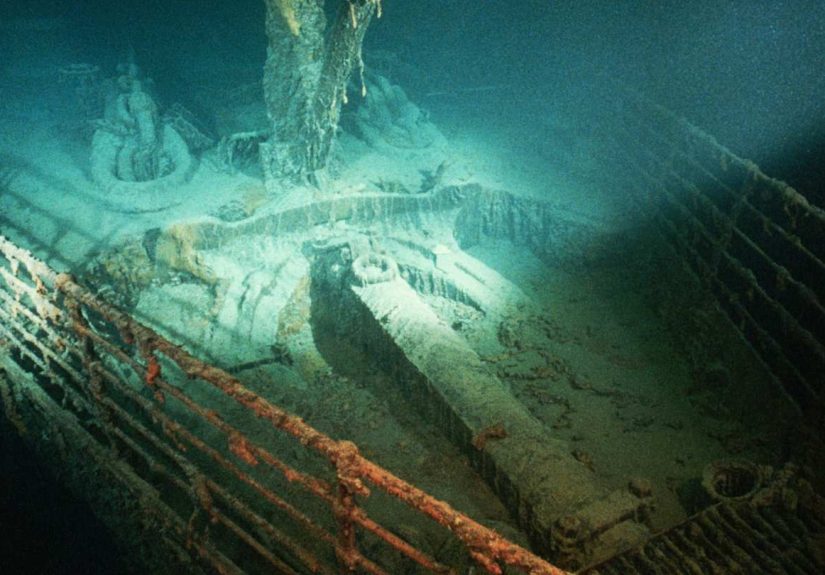
By about 2:15 a.m., the stern rose dramatically as the bow pulled downward. The strain on the ship’s structure became immense. The liner eventually broke apart, with the bow and stern separating before sinking. For decades, people debated whether the Titanic broke in two, but modern wreck exploration confirmed that it did.
The final minutes were the most dramatic, but they were only the last chapter of a disaster that had been unfolding for nearly three hours. The sinking was slow enough to be agonizing, yet still too fast for enough help to arrive.
2:20 a.m. The Titanic Sinks
At approximately 2:20 a.m., the Titanic disappeared beneath the surface of the North Atlantic. The ship that had been promoted as a marvel of modern engineering was gone. More than 1,500 passengers and crew died, while about 700 survived. Exact numbers vary slightly depending on the historical source, but the scale of the tragedy is not in doubt.
From collision to sinking, the answer remains clear: the Titanic took about 2 hours and 40 minutes to sink.
Why Did the Titanic Take Nearly Three Hours to Sink?
The Titanic stayed afloat for nearly three hours because it was built with watertight compartments that slowed the flooding. These compartments were a major safety feature. The ship could survive certain flooding scenarios, such as water entering a limited number of compartments. Unfortunately, the iceberg damaged too many sections along the hull.
Think of it like a phone advertised as water-resistant. A splash? Fine. A quick dunk? Maybe. Dropping it into the ocean and asking it to stream videos from the sea floor? That is where optimism becomes comedy.
The Titanic was not poorly built in a simple sense. It was advanced for its time. But its safety design had limits, and the iceberg pushed beyond those limits. Once enough forward compartments flooded, the bow dipped lower. Water then moved from one compartment to another as the ship’s angle changed. The result was progressive flooding.
Was the Titanic Really “Unsinkable”?
The word “unsinkable” is one of the most famous parts of the Titanic legend, but it needs context. The ship was widely viewed as extremely safe because of its size, design, and compartment system. Over time, public memory turned that confidence into the stronger claim that the ship was considered absolutely impossible to sink.
Whether the exact phrase was used as boldly before the disaster as it was afterward, the attitude certainly existed. The Titanic represented industrial confidence at full volume. It was luxurious, enormous, and technologically impressive. It had electric lights, elegant dining rooms, grand staircases, and enough social class separation to make a modern elevator feel politically complicated.
The sinking shattered more than a ship. It damaged the belief that technology alone could conquer nature. The North Atlantic did not care how expensive the carpet was.
Why Weren’t There Enough Lifeboats?
One of the most painful questions in the Titanic disaster is why the ship did not carry enough lifeboats for everyone on board. The Titanic had lifeboat capacity for roughly half the people aboard. Even worse, some boats were launched before being filled to capacity.
At the time, lifeboat rules were outdated and based partly on ship tonnage rather than the total number of passengers and crew. The Titanic actually carried more lifeboats than the law required, which sounds impressive until you remember that the law was not impressive. It was like bragging that you brought two umbrellas for a hurricane.
After the disaster, maritime safety regulations changed. Ships were required to carry enough lifeboat spaces for everyone aboard, lifeboat drills became more important, and radio watch practices improved. The tragedy became a turning point in modern maritime safety.
How Cold Was the Water When the Titanic Sank?
The water in the North Atlantic was extremely cold, near freezing. That made survival difficult for anyone who entered the ocean. Life jackets helped people stay afloat, but they could not protect against the intense cold. Many of those who survived were people who made it into lifeboats before the ship sank.
This detail matters because it explains why the timing was so deadly. Had rescue ships been closer, more lives might have been saved. Had more lifeboats been available and properly filled, the survival count might have been much higher. The disaster was not caused by one failure. It was a stack of failures, each one making the next more dangerous.
Did the Titanic Sink Faster Than Other Ships?
The Titanic’s sinking time of 2 hours and 40 minutes was neither instant nor slow enough to save everyone. Some ships have sunk in minutes. Others have remained afloat much longer after damage. What makes the Titanic unusual is the combination of its size, fame, luxury, and the detailed timeline of its final hours.
The ship’s size may make people assume it should have floated longer. But size alone does not determine survival. Flooding location, hull damage, compartment design, sea conditions, crew response, and rescue distance all matter. A big ship can still be vulnerable if water enters in the wrong places and keeps spreading.
Why the Titanic Timeline Still Fascinates People
People keep asking, “How long did it take for the Titanic to sink?” because the answer feels strangely human. Two hours and forty minutes is long enough to imagine decisions being made. It is long enough to wonder what you would do. It is long enough for courage, confusion, denial, sacrifice, and fear to exist side by side.
The timeline also creates a haunting contrast. At 11:30 p.m., passengers were aboard one of the most luxurious ships in the world. Less than three hours later, that ship was gone. The shift from comfort to catastrophe happened within a single night.
That is why the Titanic is not just a maritime story. It is a story about assumptions. It asks what happens when people trust systems too much, prepare too little, and realize too late that nature does not negotiate.
Common Myths About the Titanic’s Sinking Time
Myth 1: The Titanic Sank Immediately After Hitting the Iceberg
False. The ship took about 2 hours and 40 minutes to sink. The early damage was serious, but the sinking unfolded gradually before accelerating near the end.
Myth 2: Everyone Knew Right Away That the Ship Would Sink
False. Many passengers did not initially understand the danger. Some thought the lifeboat evacuation was unnecessary. Others stayed inside because the ship still appeared stable for a time.
Myth 3: The Iceberg Made One Giant Gash
Not exactly. The damage was more complex than a single dramatic tear. The iceberg caused openings and structural damage along the starboard side, allowing water into multiple compartments.
Myth 4: The Titanic Was Doomed Only Because It Was Going Too Fast
Speed was a factor often discussed by historians, but the disaster involved many issues: ice warnings, visibility, lifeboat capacity, ship design limits, wireless communication, and evacuation procedures. The sinking was a chain reaction, not a one-button disaster.
Lessons from the Titanic’s 2 Hours and 40 Minutes
The Titanic disaster teaches several lasting lessons. First, safety systems must be designed for real emergencies, not comfortable assumptions. Second, regulations must keep up with technology. Third, communication matters. Fourth, drills and preparation are not boring details; they are the difference between order and panic.
Perhaps the biggest lesson is humility. The Titanic was a masterpiece of its age, but even masterpieces need backup plans. Confidence is useful. Overconfidence is confidence wearing a fake mustache and causing problems.
Personal Experience: Understanding the Titanic Timeline in a More Human Way
Learning about the Titanic as a timeline rather than just a famous disaster changes the way the story feels. When people hear that the ship sank, they often imagine one dramatic moment: iceberg, panic, plunge, end credits. But when you sit with the actual timing11:40 p.m. to 2:20 a.m.the story becomes more personal, more uncomfortable, and much easier to imagine.
Think about what 2 hours and 40 minutes feels like in everyday life. It is a long school exam. It is a flight between two nearby cities. It is enough time to watch a movie, complain about the movie, check reviews, and still have time left to argue that the book was better. On the Titanic, that same stretch of time contained disbelief, investigation, warnings, evacuation, distress calls, separation, bravery, and loss.
One powerful way to experience the timeline is to read it minute by minute. At first, the events seem strangely calm. The ship hits the iceberg, but many passengers are not alarmed. Some come out to look around. Some return to their rooms. The engines stop. Crew members inspect damage. It does not yet feel like the end of the world. That slow beginning is almost more frightening than instant chaos because it shows how disaster can arrive politely, wearing a quiet face.
Then the timeline tightens. Lifeboats begin leaving. Distress signals go out. The bow settles lower. The angle of the deck changes. People who doubted the danger begin to understand. The ship’s size, once comforting, becomes part of the horror. Something that large should not be disappearing. And yet it is.
Visiting a maritime museum, watching a serious documentary, or studying survivor accounts can make the sinking time feel even more real. The objects connected to the disasterlife jackets, menus, letters, photographs, deck plansremind us that the Titanic was not just steel and steam. It was full of people with dinner plans, travel hopes, family worries, business appointments, and probably at least one person who packed too many shoes.
The most meaningful experience comes from comparing the calm before midnight with the urgency after 1:30 a.m. That contrast explains why the Titanic remains so unforgettable. The disaster was not only about a ship hitting ice. It was about how quickly normal life can become history. It was about decisions made under pressure. It was about technology meeting nature and discovering that nature had not read the brochure.
Understanding how long it took for the Titanic to sink also makes the event feel less like legend and more like a sequence of human moments. Two hours and forty minutes was enough time for some people to survive because of courage, luck, access, or quick action. It was also not enough time for everyone. That is the heartbreaking balance at the center of the story.
In the end, the Titanic timeline is memorable because it gives shape to the tragedy. It lets us see the disaster not as a single point in history, but as a narrowing hallway of choices. The clock started at 11:40 p.m. By 2:20 a.m., the ship was gone. More than a century later, those 160 minutes still ask us to pay attention.
Conclusion: The Titanic Sank in 2 Hours and 40 Minutes, But Its Story Still Echoes
The RMS Titanic took about 2 hours and 40 minutes to sink after striking an iceberg. The collision happened around 11:40 p.m. on April 14, 1912, and the ship sank at approximately 2:20 a.m. on April 15, 1912. Those final hours included confusion, courage, delayed evacuation, distress calls, and the tragic realization that the world’s most celebrated ocean liner was not immune to disaster.
The sinking of the Titanic remains powerful because it combines exact timing with timeless lessons. It reminds us that engineering matters, preparation matters, communication matters, and humility matters most of all. The ship lasted less than three hours after impact, but the questions raised by its sinking have lasted for more than a century.
Note: This article is written for web publication and synthesizes widely documented historical information from reputable educational, archival, maritime, and historical sources. Direct source links are intentionally omitted to keep the HTML clean for publishing.