
Table of Contents >> Show >> Hide
- The Short Answer: A Good Showerhead Cleaning Schedule
- Why Your Showerhead Needs Cleaning in the First Place
- How Often Should You Clean a Showerhead Based on Your Home?
- Signs Your Showerhead Is Overdue for Cleaning
- How to Clean a Showerhead the Right Way
- Cleaning Mistakes Experts Want You to Stop Making
- How to Keep a Showerhead Cleaner Longer
- When to Replace the Showerhead Instead of Cleaning It
- Real-Life Experiences: What This Looks Like in Actual Homes
- Final Thoughts
Your showerhead works hard. It wakes you up on sleepy Mondays, rinses out shampoo on rushed mornings, and occasionally delivers a dramatic cold splash when someone flushes a toilet at the wrong time. But despite being one of the most-used fixtures in the bathroom, it is also one of the most ignored. Until, of course, it starts spraying sideways like a tiny lawn sprinkale on a regular schedule. In many homes, that means a quick wipe every week and a more thorough cleaning about once a month. If your water is soft and buildup is minimal, you may be able to stretch that deep clean to every two or three months. If you have hard water, heavy daily use, or visible residue, you may need to clean it more often.
That is the practical answer. The more useful answer is why the schedule matters, what signs mean your showerhead is overdue, and how to clean it without damaging the finish. Let’s get into it.
The Short Answer: A Good Showerhead Cleaning Schedule
If you want the simplest possible routine, here it is:
- Weekly: Wipe the outside of the showerhead and clear the nozzles with a soft cloth or soft brush.
- Monthly: Do a deeper clean to remove mineral scale and buildup.
- Every 1 to 3 months: A reasonable deep-clean range for homes with lighter use or softer water.
- Immediately: Clean it sooner if you see white crust, pink slime, reduced water pressure, or uneven spray.
Think of it like dental care, but for plumbing. A little maintenance now prevents a much uglier situation later.
Why Your Showerhead Needs Cleaning in the First Place
Mineral Buildup Is the Main Trouble-Maker
In many American homes, water contains dissolved minerals like calcium and magnesium. That is what people mean when they talk about hard water. Over time, those minerals leave deposits behind, especially where water repeatedly sprays, dries, and reheats. Your showerhead is basically a VIP lounge for limescale.
Once scale builds up inside the nozzles, a few annoying things happen fast: water flow drops, spray gets uneven, pressure feels weak, and stray jets start shooting toward the shower curtain, wall, or your unsuspecting face. If you have ever wondered why your shower suddenly feels less spa and more “confused garden hose,” buildup is often the answer.
Biofilm and Germ Growth Can Also Happen
Showerheads are not just dealing with minerals. Moisture, warmth, and residue can also encourage biofilm, which is the slimy layer that can form inside wet fixtures. No, this is not the beginning of a sci-fi movie, but it is a reminder that showerheads are not self-cleaning just because water runs through them.
Visible buildup matters for another reason too: when scale and grime collect, they can create places where germs are more likely to hang around. That does not mean you need to panic and treat your bathroom like a biohazard zone. It does mean routine cleaning is smart, especially if someone in the home is older, immunocompromised, or sensitive to indoor air and water quality issues.
Efficiency Drops When the Spray Pattern Gets Clogged
A clean showerhead does more than look shinier. It also performs better. When nozzles are clogged, people often stay in the shower longer trying to rinse off soap or shampoo. That means more water use, more energy use, and more time wondering why your hair still feels like it is full of conditioner.
If you use a water-efficient showerhead, regular maintenance helps it keep doing what it was designed to do: deliver good coverage without wasting water.
How Often Should You Clean a Showerhead Based on Your Home?
There is no single magic number for every household because shower use varies wildly. A guest bath shower used twice a month has a very different life than the primary bathroom shower used by two adults, one teenager, and a child who treats bath time like a water park.
Clean Monthly if You Want the Safest General Rule
For most households, a monthly deep clean is the sweet spot. It is frequent enough to prevent heavy scale, but not so frequent that it becomes another exhausting chore on your already overachieving cleaning list.
Monthly cleaning makes even more sense if:
- You have hard water
- You notice white mineral spots on faucets or glass
- Your bathroom gets humid and poorly ventilated
- Several people use the same shower every day
- You use a rainfall or multi-setting showerhead with more nozzles to clog
Weekly Wipes Help Prevent the Gross Stuff
A quick weekly wipe is not overkill. It is the little habit that keeps grime from setting up permanent residence. You do not need a complicated routine. Just wipe the face of the showerhead with a soft cloth after bathroom cleaning, or lightly spray and wipe it as part of your regular shower maintenance.
This is especially helpful if you tend to see early mineral spotting, soap residue, or those mysterious pink-orange streaks that show up in damp bathrooms like they are paying rent.
Every 2 to 3 Months May Be Fine in Low-Buildup Homes
If your home has soft water, the shower is lightly used, and the spray still looks strong and even, you may be able to stretch deeper cleaning to every two or three months. That said, waiting until the showerhead looks visibly crusty is not a winning strategy. Preventive cleaning is easier, faster, and much less gross.
Signs Your Showerhead Is Overdue for Cleaning
You do not need a lab test to know your showerhead is asking for help. The signs are usually obvious:
- Weak water pressure even though the rest of the plumbing seems fine
- Uneven spray or water shooting in odd directions
- White or chalky residue on the face of the fixture
- Pink, orange, or slimy film around the nozzles
- Dripping after shutoff because deposits interfere with normal flow
- A “less satisfying” shower that feels more misty than steady
In short, if your showerhead is behaving like it is improvising, it probably needs attention.
How to Clean a Showerhead the Right Way
The best cleaning method depends on the amount of buildup and the finish of the fixture. In many cases, a vinegar-based soak works well for mineral deposits. But you should always check the manufacturer’s care guidance first, especially for special finishes.
Method 1: The Bag-and-Soak Trick
This is the classic move for a fixed showerhead that is not terribly clogged.
- Fill a sturdy plastic bag with a vinegar-and-water solution or the cleaner recommended by the manufacturer.
- Place the bag over the showerhead so the spray face is submerged.
- Secure it with a rubber band or twist tie.
- Let it soak for the recommended time.
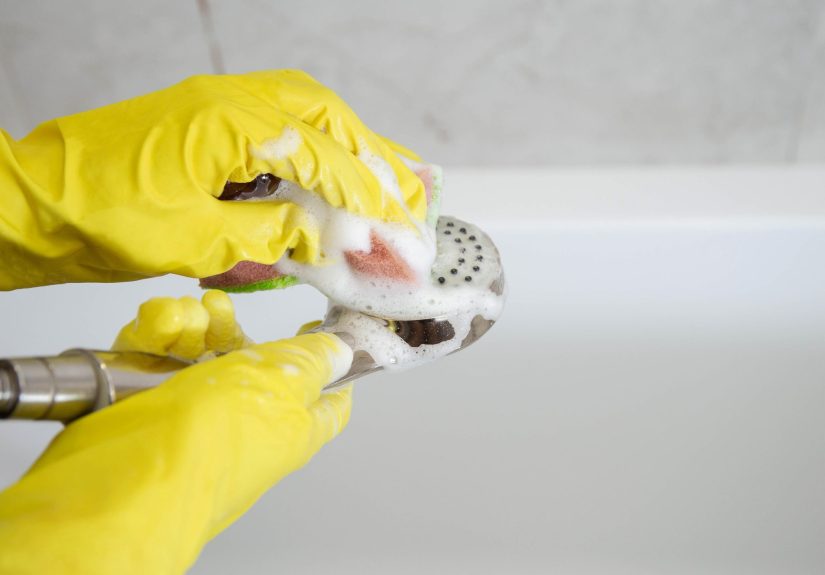
- Remove the bag, scrub gently with a soft toothbrush, and run hot water through the showerhead.
This method is popular because it is easy, cheap, and satisfying in a “look at all that gunk come off” kind of way.
Method 2: Remove and Soak for a Deeper Clean
If the showerhead is heavily clogged, removing it often works better.
- Unscrew the showerhead according to the manufacturer’s instructions.
- Soak it in the recommended solution.
- Use a soft brush to loosen residue.
- Rinse thoroughly.
- Clear nozzle openings gently if needed.
- Reattach and run water to flush out loosened debris.
This method gives you better access to the spray face and makes it easier to inspect washers, connections, and thread buildup at the same time.
Use a Gentle Touch
A showerhead is not a cast-iron skillet. Do not attack it with steel wool, a knife tip, or anything else that seems dramatic and “effective” at 10 p.m. when you are annoyed. Soft cloths, nylon brushes, and non-abrasive cleaning methods are the safer choice.
Cleaning Mistakes Experts Want You to Stop Making
Using Harsh or Abrasive Cleaners
Many showerheads have finishes that can be damaged by harsh chemicals or abrasive tools. That means scrubbing powders, rough pads, and overly aggressive cleaners can leave you with a fixture that is clean but permanently dulled, scratched, or corroded. That is not a great trade.
Ignoring the Manufacturer’s Instructions
Not every finish loves the same cleaning routine. Some manufacturers allow a diluted vinegar solution. Others warn you to limit contact time or avoid certain finishes entirely. If your showerhead is brass, gold-tone, nickel, or another specialty finish, read the care instructions before soaking it like a pickle.
Mixing Cleaners
This should be a permanent rule in every bathroom: do not mix cleaning products. Vinegar plus bleach is a hard no. So is casually combining random products because the internet said it was “extra powerful.” So is setting off your smoke alarm while trying to descale a fixture. Choose one method and keep ventilation going.
Waiting Until the Water Pressure Is Terrible
If you only clean the showerhead once it is already clogged, you are signing up for more soaking, more scrubbing, and more muttering under your breath. Lighter, more regular cleaning is easier on both your schedule and your sanity.
How to Keep a Showerhead Cleaner Longer
- Wipe the showerhead during weekly bathroom cleaning.
- Run the bathroom fan after showers to reduce lingering humidity.
- Dry surrounding fixtures if mineral spotting is common.
- Consider a water softening solution if hard water is a constant problem.
- Choose a showerhead with easy-clean nozzles if you are replacing one.
- Inspect spray holes before buildup becomes obvious.
These habits do not take much time, but they make deep cleaning less dramatic. And frankly, your future self deserves fewer dramatic bathroom chores.
When to Replace the Showerhead Instead of Cleaning It
Sometimes cleaning is not the answer. If your showerhead is old, leaking, badly corroded, cracked, or still performing poorly after a proper descale, replacement may be the smarter move.
You may also want to replace it if:
- The finish is damaged beyond repair
- The nozzles remain clogged even after cleaning
- It lacks modern water efficiency
- You want better pressure, coverage, or a handheld option
A newer showerhead can improve the experience and may help save water too, especially if you upgrade to a water-efficient model from a reputable brand.
Real-Life Experiences: What This Looks Like in Actual Homes
One reason this topic lands with so many homeowners is that almost everyone has had a showerhead moment. Maybe the water pressure slowly dropped so gradually you did not notice it at first. Maybe one nozzle started squirting sideways. Then three more joined the rebellion. Before long, your shower felt less like a relaxing rinse and more like a prank from your plumbing.
In homes with hard water, the change is often surprisingly fast. People notice a chalky ring forming around the spray face, and soon the once-even stream turns patchy. A homeowner might assume the plumbing is failing, when really the showerhead is just packed with mineral deposits. After one proper cleaning, the difference can feel immediate. The spray gets fuller, rinsing takes less time, and suddenly the shower feels newer without buying a single thing.
Renters often have a different version of the same story. They move into a place where the bathroom looks clean enough, but the showerhead has clearly lived a previous life. The water dribbles instead of sprays. There may be visible crust around the nozzles. A quick soak and scrub can make that fixture feel transformed, which is one of the rare cleaning jobs that offers almost instant emotional payoff. It is deeply satisfying, like unclogging a vacuum or finally peeling off the protective film from a new appliance.
Families with one heavily used bathroom tend to learn the schedule lesson the fastest. When several people shower daily, buildup appears sooner, and neglected fixtures start showing it. Parents often notice kids complaining that shampoo is “taking forever” to rinse, while adults start blaming the water pressure in the neighborhood. In reality, the showerhead may just need monthly attention instead of occasional panic-cleaning.
There is also the aesthetic side. Even when performance is still decent, a dirty showerhead can make the whole shower look dingy. You can scrub the tile, polish the handle, wash the curtain, and still have the fixture sitting there with a white crusty halo like it has given up on life. Cleaning it pulls the whole space together in a way people do not always expect.
Another common experience is discovering that “more product” is not the same as “better result.” Plenty of people start with harsh cleaners, aggressive brushes, or random DIY combos, only to realize that the finish looks worse afterward. The better lesson is usually this: routine, gentle maintenance beats occasional chemical warfare.
And perhaps the most relatable experience of all is simple neglect. Showerheads are easy to forget because they live above eye level and seem to be constantly rinsed already. But once people add them to a weekly or monthly bathroom routine, they often wonder why they waited so long. The shower works better, the fixture looks better, and the whole bathroom feels fresher. Not bad for a chore that usually takes less time than scrolling for something to watch after dinner.
Final Thoughts
If you have been waiting for an official excuse to finally clean your showerhead, this is it. The best schedule for most homes is simple: wipe it weekly, deep clean it monthly, and adjust based on your water quality and how much use it gets. If you have hard water, visible buildup, or weak spray, clean it sooner. If your fixture has a specialty finish, follow the manufacturer’s care instructions and avoid harsh cleaners.
The goal is not perfection. The goal is a shower that works properly, looks clean, and does not blast one rogue stream directly into your ear. That is a very reasonable standard for modern life.







 Close
Close