Table of Contents >> Show >> Hide
- What Does “Meant To Be” Even Mean?
- How to Tell If You Feel Younger or Older Than Your Years
- The Biggest Factors That Influence the Age You Feel
- 1. Movement: The Closest Thing to a Time Machine
- 2. Sleep: The Most Underrated Anti-Aging Strategy
- 3. Food: Not a Moral Test, Just Fuel and Information
- 4. Stress: The Age Accelerator Nobody Orders
- 5. Smoking and Alcohol: Quietly Expensive Habits
- 6. Relationships and Social Connection
- 7. Mindset: The Story You Tell Yourself Matters
- So, How Old Are You Meant To Be?
- How to Start Feeling More Like Your Best Age
- Experiences That Reveal Your “Real” Age
- Conclusion
Some people are 28 and already making “oof” noises when they stand up. Others are 67, hiking on weekends, learning Italian, and acting like the future still owes them a few surprises. So what gives? If your driver’s license says one thing but your energy, mood, and outlook say something else, you are asking a very modern question: how old are you meant to be?
The fun answer is: maybe not the age on your birthday cake. The smarter answer is that age works in layers. There is your chronological agethe number of candles, taxes, and “Happy Birthday” texts. Then there is your biological age, which reflects how your body is holding up. Then comes your subjective age, or how old you actually feel. And finally, there is your social age: the role you are playing in life, whether that feels like “I’m just getting started” or “Please do not schedule anything after 8 p.m.”
That is why the question is not really, “How old am I?” It is, “How am I aging?” And that is much more interesting. The good news is that while you cannot negotiate with time, you can absolutely influence how you experience it. Your habits, mindset, stress level, sleep quality, movement, relationships, and even how you talk to yourself all help shape the age you seem to live from the inside out.
What Does “Meant To Be” Even Mean?
Let’s clear this up before we drift into horoscope territory. “Meant to be” does not mean a mystical age assigned by the universe, like 42 with excellent knees. It means the age that matches your current health, resilience, energy, and attitude more than the number on your ID card.
In other words, the age you are “meant to be” might be the one your body and mind are behaving like right now. That can be younger than your actual age, older than it, or weirdly both. You can have the wisdom of 70, the knees of 85, the playlist of 19, and the sleep schedule of a retired housecat.
Instead of treating age like a single number, think of it as a report card with several categories:
Chronological Age
This is the official one. It is useful for birthday discounts, medical forms, and realizing actors in old sitcom reruns were somehow younger than you thought. But it does not tell the whole story.
Biological Age
This is about how your body functions. Blood pressure, blood sugar, fitness, muscle strength, sleep habits, inflammation, and other health markers all influence whether your body seems “older” or “younger” than your years. Two people born in the same year can have very different biological ages.
Subjective Age
This is how old you feel. Strange as it sounds, this matters. Research on subjective aging suggests that people’s perceptions of their age are linked with health, functioning, and overall well-being. Feeling younger does not make you immortal, but it often goes hand in hand with more engagement, better habits, and a stronger sense of possibility.
Social and Emotional Age
This is about how you move through life. Are you curious? Adaptable? Burned out? Hopeful? Bitter because a teenager called your favorite song “vintage”? Emotional age can affect how alive you feel just as much as physical health.
How to Tell If You Feel Younger or Older Than Your Years
You do not need a laboratory, a wizard, or a wellness influencer holding a green smoothie to get a rough idea. Start with honest observation.
You may feel younger than your age if you tend to:
Wake up with decent energy most days, recover fairly well from stress, stay active without feeling destroyed afterward, remain curious about new things, keep up with relationships, and imagine a future that still feels open.
You may feel older than your age if you often:
Feel chronically tired, avoid movement because everything aches, sleep poorly, live in a constant state of tension, feel emotionally flat, isolate yourself, or act as if your best years are permanently behind you.
That does not mean you are failing at aging. It means your body and mind are sending feedback. And unlike bad bangs, most of that feedback can be worked with.
The Biggest Factors That Influence the Age You Feel
1. Movement: The Closest Thing to a Time Machine
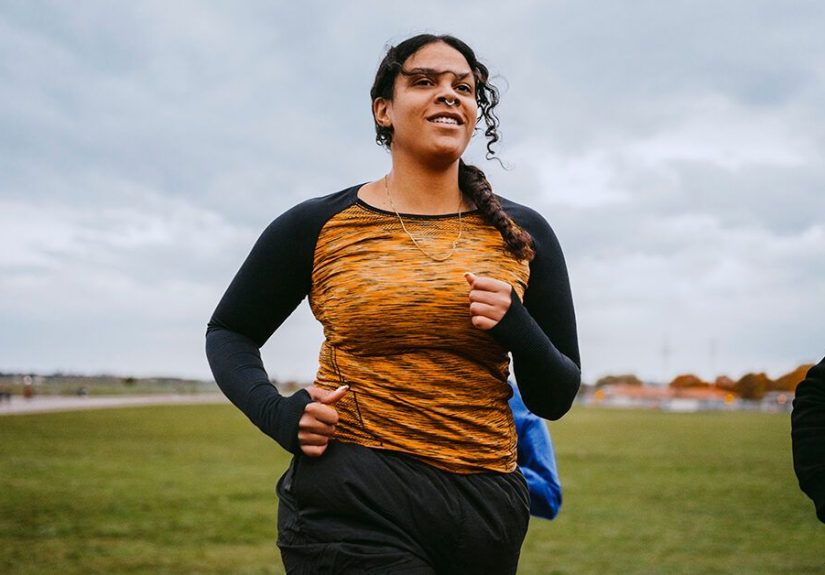
Regular physical activity is one of the strongest predictors of healthy aging. Not because it magically erases birthdays, but because it supports heart health, brain health, sleep, mobility, balance, mood, and muscle mass. Those are the things that make people feel capable, steady, and alive.
You do not need to become the type of person who says “leg day” with spiritual intensity. Walking, biking, dancing, swimming, lifting weights, gardening, climbing stairs, and doing balance exercises all count. The point is not perfection. The point is reminding your body that it is still expected to participate in life.
If you move regularly, your “meant to be” age may feel younger because your body has more functional reserve. You bounce back faster. Daily life feels easier. Stairs become stairs again instead of a personal attack.
2. Sleep: The Most Underrated Anti-Aging Strategy
People love to chase big, dramatic health hacks while ignoring the deeply unglamorous power of sleep. But poor sleep can make anyone feel 112 by noon. It affects mood, focus, appetite, stress tolerance, immune function, and energy.
When sleep is consistently bad, people often report feeling older, foggier, and less resilient. When sleep improves, life usually feels more manageable almost immediately. A regular sleep schedule, a comfortable room, less late-night screen time, and a wind-down routine may sound boring, but so does feeling terrible every day.
3. Food: Not a Moral Test, Just Fuel and Information
Your diet does not have to be flawless to support healthy aging. It just has to be supportive more often than chaotic. Eating patterns centered on fruits, vegetables, whole grains, lean proteins, beans, nuts, seeds, and healthy fats tend to help people feel more energized and stable over time.
On the other hand, a steady routine of ultra-processed convenience meals, high sugar intake, and “coffee now, regret later” living can leave you sluggish and inflamed. Food is not about earning youth points. It is about giving your body materials it can actually use.
4. Stress: The Age Accelerator Nobody Orders
Chronic stress can make even a young person feel ancient. It can show up as tension, poor sleep, irritability, brain fog, comfort eating, headaches, low motivation, and a general sense that life is one long email subject line marked urgent.
Stress management is not a luxury item for people with matching yoga sets. It is part of healthy aging. Breathing exercises, journaling, therapy, time outside, exercise, social support, meditation, prayer, and simply building more margin into your day can all help reduce the feeling that you are being chased by life.
5. Smoking and Alcohol: Quietly Expensive Habits
If the question is “What makes people feel older than they are?” smoking belongs very high on the list. It is hard on the heart, lungs, blood vessels, and overall health. Heavy or frequent alcohol use can also interfere with sleep, mood, judgment, and long-term wellness. Neither habit is exactly handing your future self a fruit basket.
If you want to feel younger, one of the least glamorous but most effective moves is reducing or quitting what is actively wearing you down.
6. Relationships and Social Connection
Isolation ages people in ways that are hard to measure but easy to feel. When you are connected to others, you tend to feel more grounded, supported, and engaged. Conversations stimulate the brain. Laughter reduces stress. Feeling needed gives shape to time.
People often assume aging is mainly about skin and joints. It is also about belonging. If your life has become too solitary, your age may feel heavier. A younger-feeling life usually includes some form of meaningful connection, whether that is family, friends, neighbors, volunteering, faith community, or a standing coffee date with someone who knows your entire backstory and still shows up.
7. Mindset: The Story You Tell Yourself Matters
If you keep telling yourself, “I’m too old for that,” your brain listens. Over time, that story can shrink your behavior before your body truly requires it. But if you think, “I may need to adapt, but I am not done,” you stay more engaged with the world.
This is not fake positivity. Nobody is suggesting you grin through arthritis and sign up for parkour. It simply means that your beliefs about aging influence how you show up. A more flexible, hopeful mindset often supports healthier habits and better well-being.
So, How Old Are You Meant To Be?
Try this simple thought exercise. Ask yourself these questions:
How is my energy?
Not “Can I survive on caffeine and denial?” Real energy. Enough to work, think, move, and enjoy parts of the day?
How is my recovery?
Do I bounce back after a stressful week, a bad night of sleep, or a tough workout? Or do I stay wrecked for days?
How is my curiosity?
Do I still want to learn, try, explore, and change? Curiosity is one of the strongest signs a person is still psychologically alive.
How is my mobility?
Can I walk comfortably, lift things I need, get up from the floor, climb stairs, and handle daily tasks without feeling like my body filed a complaint?
How is my mood?
Do I feel emotionally available to life, or mostly drained, numb, or cynical?
How are my habits?
Am I consistently doing the things that support healthy aging, or am I accidentally training for burnout?
If your answers sound more vibrant, adaptable, and resilient than your chronological age might suggest, you may be “meant to be” younger in lived experience. If your answers feel worn down, depleted, and disconnected, then your current lifestyle may be aging you faster than necessary.
That is not bad news. That is useful news.
How to Start Feeling More Like Your Best Age
You do not need a life overhaul worthy of a documentary montage. Small, repeatable changes matter more.
Move daily
Even ten to twenty minutes of walking can begin to shift energy and mood. Add strength training when you can. Muscle is one of your best allies as you age.
Protect sleep like it is part of your job
Because honestly, it kind of is. A steady bedtime, less late-night doomscrolling, and a darker, cooler bedroom can make a surprisingly big difference.
Eat like you plan to need your organs later
No drama. Just more whole foods, fewer nutritional jump scares, and enough protein, fiber, and hydration to keep your body from running on fumes.
Reduce chronic stress where possible
Not every stressor can be removed. But some can be reduced, scheduled around, talked through, or met with better coping tools.
Stay connected
Text someone. Call someone. Join something. Isolation makes time feel heavier.
Keep a future
Plan a trip. Learn a skill. Start a project. People tend to feel older when they stop imagining what comes next.
Experiences That Reveal Your “Real” Age
Here is where the question gets personal. Most people do not discover their “meant to be” age during a medical checkup. They discover it in ordinary moments.
Maybe it happens when you spend a weekend outdoors, walking more than usual, laughing with friends, sleeping well, and eating like an adult who respects vegetables. On Monday, you feel clear-headed, lighter, and weirdly optimistic. Your joints are not singing, but they are no longer composing angry poetry. You think, “Oh. So this is what my body feels like when I stop treating it like a rental car.” In that moment, you feel youngernot because your birth year changed, but because your systems are finally working with you.
Or maybe the opposite happens. You string together late nights, too much takeout, very little movement, nonstop stress, and exactly zero real downtime. After a week or two, you feel older than everyone in line at the pharmacy. Your patience is thin, your posture is tragic, and even opening a jar feels symbolic. That experience teaches the same lesson from the other direction: age is not only counted. It is experienced.
Some people notice their age in social settings. There is the person who lights up in conversation, stays curious, asks questions, and leaves dinner energized. There is another who feels exhausted before the appetizers arrive because they have been lonely, overworked, and mentally elsewhere for months. Same room. Same actual age. Entirely different lived age.
Many people also discover their age through challenge. Start a new class, travel somewhere unfamiliar, volunteer, return to exercise, or learn technology you once swore was invented by gremlins. At first, you may feel old because you are rusty. But then something surprising happens: competence returns. Confidence follows. Your internal age shifts. You stop identifying as “past it” and start acting like a person still in motion.
Then there are the quieter experiences: getting up from the floor without using furniture as emotional support, sleeping through the night, remembering where you left your keys, realizing your mood is stable for no dramatic reason, or noticing that you no longer dread ordinary tasks. These small wins are not flashy, but they are often the clearest signs that you are moving toward a younger, healthier lived age.
What people usually mean when they ask, “How old am I meant to be?” is really this: How alive, capable, hopeful, and connected am I supposed to feel? And the answer is often better than expected. In many cases, the version of you that feels younger is not hidden in the past. It is waiting on the other side of a few boring, powerful habits done consistently enough to change your baseline.
So if you have been feeling older than your years, do not treat that as a permanent identity. Treat it as information. And if you already feel younger than your age, protect the habits that got you there. Because the goal is not to be 21 forever. The goal is to be fully yourself at whatever age you arestrong, awake, engaged, and still interested in tomorrow.
Conclusion
Your real age is more than a number. It is a living mix of biology, mindset, energy, habits, and connection. If you want to know how old you are meant to be, look at how you feel, how you function, and how you are living. The answer may be younger than you think. And if it is not, that does not mean you are stuck. It means there is room to shift the story.