Table of Contents >> Show >> Hide
- Step 1: Make Sure You’re Eligible (So You Don’t Waste a Trip)
- Step 2: Choose the Right License Type (Public vs. Confidential)
- Step 3: Pick a County (And Check Appointments, Hours, and Rules)
- Step 4: Gather the Documents You’ll Actually Need
- Step 5: Apply (Online, In Person, or BothDepending on the County)
- Step 6: Pay the Fee (And Know It Varies a Lot)
- Step 7: Get the License, Then Plan the Ceremony Within the Time Limit
- Step 8: Order Certified Copies (Because You’ll Need Proof Later)
- Frequently Asked Questions (So You Don’t Have to Panic-Search Later)
- Real-World Experiences & Pro Tips (What Couples Commonly Run Into)
- Conclusion
Getting a marriage license in California sounds like it should involve a quest, three signatures in triplicate, and a wise clerk guarding a bridge who demands you answer riddles.
Luckily, it’s more like: pick a county, bring the right ID, pay the fee, and don’t forget a witness if you need one. The “romance” comes laterusually right after you find parking.
This guide walks you through the process in eight clear steps, plus practical tips to avoid the most common facepalm moments (expired IDs, missing witnesses, and the classic
“Wait… we needed an appointment?”). Since details can vary by county, think of this as a smart roadmapand always double-check your specific county clerk’s website before you go.
Step 1: Make Sure You’re Eligible (So You Don’t Waste a Trip)
Before you pick outfits or argue about cake flavors, confirm the basics. California generally requires both parties to be unmarried and able to prove identity and age.
Most couples applying are 18+; if someone is under 18, California has additional court requirements (more on that below).
Quick eligibility checklist
- You’re not currently married (to anyone, including each otheryes, people ask).
- You can show valid photo ID with your name and date of birth.
- You know how any prior marriage ended (date + type of endingdivorce, dissolution, annulment, or death). Some counties may ask for documents.
Teen note (because California law is specific here): If either person is under 18, you typically need a court order and parental/guardian consent.
Confidential marriage licenses are generally not available for minors. If this applies, contact your county clerk and the local superior court for the exact steps.
Step 2: Choose the Right License Type (Public vs. Confidential)
California offers two main types of marriage licenses: public and confidential. The one you pick affects witnesses, privacy, and who can access records later.
The ceremony is still a ceremony either wayyour aunt will cry either way.
Public marriage license
- Typically requires at least one witness at the ceremony.
- Record is public (people who qualify can request copies later, depending on the type of certified copy and rules).
- Works well for most couples and most wedding styles.
Confidential marriage license
- No witness required in many counties (and the license itself generally does not include witness signatures).
- More private record access (often limited to the spouses unless a court order is provided).
- Usually requires the couple to be living together as spouses at the time of application and signing an affidavit.
- Both parties must be 18+ in many counties for a confidential license.
If you’re not sure which to choose, ask yourself:
Do we want the record more private, and do we qualify for confidential?
If yes, confidential might fit. If not, public is the default for most couples.
Step 3: Pick a County (And Check Appointments, Hours, and Rules)
In California, marriage licenses are issued by county clerks. You can often apply in any California county, but you must follow that county’s process.
Some counties are appointment-heavy; others offer walk-ins, limited windows, or online forms that must be completed first.
What to check on your county clerk site before you go
- Appointment vs. walk-in (and how far out appointments book).
- Online application requirement (many counties want you to complete a form online and bring confirmation).
- Accepted payment methods (cash, card, money ordervaries).
- Translation rules if your documents aren’t in English.
- Whether civil ceremonies are offered on-site (some clerks perform ceremonies in-office; others have limited schedules).
Pro tip: If you’re planning a courthouse-style ceremony, try to book the license + ceremony in the same trip, if your county offers it.
It’s the administrative version of “one-stop shopping,” but with nicer outfits.
Step 4: Gather the Documents You’ll Actually Need
The best way to make this easy is to arrive with documents that match county requirements. The most common delay is not “love isn’t real,” it’s “your ID expired.”
Bring these essentials
- Valid, unexpired photo ID (commonly accepted: driver’s license, state ID, passport, military ID; some counties accept additional government IDs).
- Info about previous marriages (date ended + how it ended). Some counties may request proof (like a final judgment or death certificate copy).
- Payment method accepted by your county clerk.
If you’re choosing a confidential license
- Be prepared to sign an affidavit and confirm you’re living together as spouses (as required in many counties).
- Make sure you meet the county’s age/eligibility rules for confidential licenses.
Good news: California does not generally require blood tests for a marriage license, and many counties note there are no citizenship or residency requirements.
(Stillalways verify your county’s current checklist.)
Step 5: Apply (Online, In Person, or BothDepending on the County)
This is where county differences matter most. Many counties use a two-part process:
you complete an online application, then you appear in person to present ID, sign, and pay.
A lot of counties require both parties to appear together when the license is issued.
What the application experience typically looks like
- Fill out the county’s marriage license application (often online).
- Bring your confirmation page (if required) to the county clerk’s office.
- Show valid photo ID for both parties.
- Review spelling and personal details carefully (this becomes a legal record).
- Sign forms as instructed by the clerk.
Special situations (rare, but real)
If one partner can’t appear due to hospitalization, incarceration, or certain military circumstances, some counties and state forms provide specific procedures
(often involving notarized signatures, proof, and strict limitations). If this is you, contact your county clerk before doing anything elsethese cases are detail-heavy and time-sensitive.
Step 6: Pay the Fee (And Know It Varies a Lot)
Marriage license fees in California vary by county and by license type. Some counties post clear fee schedules online, and ceremony fees are usually separate.
If you’re trying to budget, treat the fee like parking in downtown L.A.: assume it won’t be the cheapest part of your day, but it will be predictable if you check ahead.
Example of what fees can look like
- Public marriage license: often around the $70–$120 range (county-dependent).
- Confidential marriage license: sometimes slightly different from public (again county-dependent).
- Civil ceremony fee: separate in counties that offer ceremonies.
- Witness fee (if you forget one): some offices can provide a witness for an additional charge.
Money-saving move: If your county requires a witness for a public license ceremony, bring one with you.
That’s an easy cost to avoidand it’s also a great way to make a friend feel important for 90 seconds.
Step 7: Get the License, Then Plan the Ceremony Within the Time Limit
Once issued, a California marriage license is generally valid for a limited time window. That means you should plan your ceremony date (or courthouse appointment)
so you don’t end up re-buying a license because life got busy.
Key timing rules to remember
- Use it within the validity window (commonly 90 days from issuance).
- Get married in California (licenses issued in California are generally intended for ceremonies performed within the state).
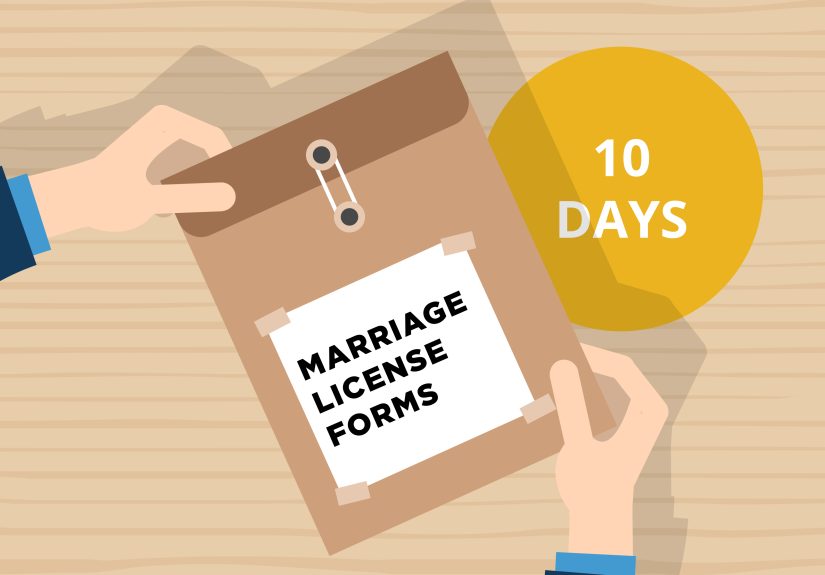
- After the ceremony, the license must be returned for registration (often handled by the officiant; many counties note a “return within 10 days” rule).
Who can perform the ceremony?
California allows marriages to be solemnized by certain authorized individuals, including religious officiants (like a priest, minister, or rabbi) and some civil officials.
Many counties also offer a “Deputy Commissioner for a Day” style program that can allow a friend or family member to perform the ceremony after completing county requirements.
Witness rules (don’t get surprised)
- Public license: typically requires at least one witness signature.
- Confidential license: generally does not require witnesses.
Real-life example: If you’re doing a tiny ceremony in a backyard, a public license means you need an extra person present to sign.
A confidential license might avoid that requirementbut only if you qualify for confidential and prefer the privacy trade-offs.
Step 8: Order Certified Copies (Because You’ll Need Proof Later)
After your marriage license is returned and registered, you can request certified copies of the marriage record.
You might need a certified copy for a name change, benefits, insurance, immigration paperwork, or just to satisfy a very determined HR department.
How copies work in practice
- Public marriage records are generally easier to request (rules still applysome requests require authorized purposes for certain copy types).
- Confidential marriage records are typically restricted, often available only to the spouses (and sometimes only with ID, in person), unless a court order is provided.
- Processing times varysome counties register quickly; others take longer, especially during busy seasons.
Pro tip: Order at least 1–2 certified copies if you anticipate paperwork. It’s cheaper (and less annoying) than ordering one,
realizing you need another, and re-entering your information while muttering, “I just got married and THIS is my new hobby?”
Frequently Asked Questions (So You Don’t Have to Panic-Search Later)
Can we apply and get married the same day?
Sometimes, yesif your county offers same-day appointments and civil ceremonies, and if you bring everything required (IDs, payment, witness if needed).
But many counties book out, so check availability early.
Do we need to be California residents?
Many county clerks state there are no California residency requirements to obtain a marriage license. You can often apply in a California county even if you live elsewhere,
as long as you follow that county’s process and get married in California.
What if my ID is not in English?
Some counties require documents in English or require certified translations. If your situation involves non-English documents, check your county’s specific rules before your appointment.
What about name changes?
Name changes after marriage can involve multiple agencies (Social Security, DMV, passport, banks). Many couples start by ordering a certified copy of the marriage record,
then updating Social Security, then DMVyour exact path depends on your goals and documents.
Real-World Experiences & Pro Tips (What Couples Commonly Run Into)
Let’s talk about the part nobody posts on Instagram: the “getting the license” experience. Not the ceremony. Not the vows. The standing-in-line-with-a-folder experience.
Here are a few real-world patterns couples commonly reportso you can sidestep the little stress traps.
1) The appointment scramble is real. Plenty of couples assume they can stroll in on a random Tuesday, breeze through, and grab a license like it’s a coffee order.
In practice, counties can have limited appointment windows, restricted walk-in hours, or online applications that must be completed first. A common story goes like this:
they show up confident, only to learn the next appointment is two weeks out. The fix is simple: check the county site first and treat it like booking a haircut before prom.
2) The “witness surprise” is the #1 tiny disaster. If you’re using a public marriage license, you usually need a witness at the ceremony.
Couples planning a micro-ceremony sometimes forget this. Cue the moment where two people in formal outfits scan the room like,
“Do we have a witness… or do we have to invite the UPS driver into our love story?” Solution: assign a witness in advance, and confirm whether your county can provide one if needed.
3) People underestimate how picky “valid ID” can be. Counties commonly require unexpired, government-issued photo identification.
If you bring an expired license or a document the clerk can’t accept, you may have to reschedule. Couples who breeze through tend to do one thing:
they lay out IDs the night before like they’re packing for a flightbecause you basically are, except the destination is “legally married.”
4) The confidential vs. public choice feels abstract until it isn’t. Some couples choose confidential because they like the privacy and
(in many counties) the “no witness” convenience. Others choose public because it’s the standard option and simpler to explain later.
The best experiences tend to come from couples who decide early, confirm they qualify, and don’t switch license types at the counter after a 40-minute drive.
5) The most “adult” moment is ordering certified copies. It sounds boring until you need it for insurance, benefits, or a name change.
Couples who have the smoothest post-wedding paperwork usually order at least one or two certified copies as soon as the record is registered.
It’s one of those small moves that prevents weeks of “Wait, who do I call?” later.
Bottom line: the best marriage license experience is the one where you’re over-prepared by 10%IDs checked, appointment confirmed, witness assigned,
and payment ready. Then you can save your emotional energy for the important stuff, like deciding whether your first dance song is romantic or “ironically iconic.”
Conclusion
Applying for a marriage license in California is straightforward when you follow a simple plan: confirm eligibility, choose the right license type, check your county’s process,
bring valid ID, pay the fee, and complete your ceremony within the required time window. Add a witness if your license requires one, make sure the signed license gets returned for
registration, and order certified copies so future paperwork doesn’t turn into a scavenger hunt.