
Table of Contents >> Show >> Hide
- Crested Gecko Care at a Glance
- 15 Steps to Care for a Crested Gecko
- Step 1: Start With a Healthy, Captive-Bred Gecko
- Step 2: Choose the Right Enclosure Size (Bigger Is Better)
- Step 3: Build a Climbing Jungle (Branches, Vines, and Safe Plants)
- Step 4: Pick the Right Substrate (and Consider a Drainage Layer)
- Step 5: Nail the Temperature Range (Moderate, Not Toasty)
- Step 6: Create a Humidity Cycle (Humid Nights, Drier Days)
- Step 7: Set Lighting for a Day/Night Schedule (Optional UVB Done Right)
- Step 8: Provide Water Two Ways: Droplets and a Dish
- Step 9: Use Crested Gecko Diet (CGD) as the Staple
- Step 10: Follow a Feeding Schedule That Matches Age
- Step 11: Offer Insects for Enrichment (Size and Safety Matter)
- Step 12: Use Supplements Wisely (Don’t Turn Dinner Into a Chemistry Lab)
- Step 13: Clean on a Schedule (Spot Clean Daily, Deep Clean Regularly)
- Step 14: Handle Gently (And Never Grab the Tail)
- Step 15: Monitor Health (Small Problems Get Big Fast)
- Conclusion: A Happy Crestie Is a Consistent Crestie
- Keeper Experiences: The Stuff Guides Don’t Always Mention (But You’ll Definitely Live Through)
Crested geckos (aka “cresties”) are the rare pet that can look like a tiny dragon, smile like a cartoon, and still be
genuinely beginner-friendlyas long as you respect the humidity. They don’t need blazing desert heat, they don’t
require a daily bug buffet, and they’re perfectly happy living in a leafy vertical “apartment” where the furniture is
mostly branches.
This guide breaks down crested gecko care into 15 practical steps you can actually followcovering enclosure setup,
temperature and humidity, feeding, handling, cleaning, and health. If you do these things consistently, your crestie
will thrive… and you’ll quickly learn the sacred truth of reptile keeping: the enclosure hygrometer is the real pet,
and you’re just its employee.
Crested Gecko Care at a Glance
Crested geckos are arboreal (they love climbing), mostly active at night, and do best in moderate temperatures with a
daily humidity cycle. Their staple diet is a prepared crested gecko diet (CGD) powder mixed with water, plus insects
for enrichment and nutrition. They can be handled, but they’re also enthusiastic jumpersthink “tiny frog with a
tail,” except… sometimes the tail becomes optional.
15 Steps to Care for a Crested Gecko
Step 1: Start With a Healthy, Captive-Bred Gecko
The easiest crested gecko to care for is the one that starts out healthy. Buy captive-bred from a reputable breeder or
store, and look for clear eyes, a full body (not bony), smooth skin, and alert behavior. Ask what the gecko is eating
and how often. A crestie that already accepts CGD and occasional insects will make your life dramatically easier.
Pro tip: if you’re brand new, avoid taking home a gecko with a “mystery issue” that someone assures you is “probably
nothing.” Your future self will not enjoy that surprise side quest.
Step 2: Choose the Right Enclosure Size (Bigger Is Better)
Crested geckos want height more than floor space. For an adult, aim for a tall, well-ventilated enclosure that lets
them climb, perch, and hop. A commonly recommended minimum is around 18" x 18" x 24", and many keepers
go taller/larger to give more usable space. If you can upgrade to something taller, do ityour gecko will use every inch.
For juveniles, a smaller “grow-out” setup can help them find food and feel secure. Think of it like moving a toddler
into a mansion: adorable, but they might get lost on the way to dinner.
Step 3: Build a Climbing Jungle (Branches, Vines, and Safe Plants)
A bare tank is a stressful tank. Fill the enclosure with climbing options: cork bark tubes, sturdy branches, flexible
vines, and ledges. Provide multiple “routes” so your gecko can travel without having to do a dramatic free-solo climb
every time.
Add visual cover with live or artificial plants. A crestie that feels hidden is a crestie that feels confidentkind of
like wearing sunglasses indoors, but cuter and less suspicious.
Step 4: Pick the Right Substrate (and Consider a Drainage Layer)
Substrate affects humidity, cleanliness, and safety. For very small geckos, paper towels can be a simple, hygienic
option. For larger juveniles and adults, moisture-friendly natural substrates (like bioactive soil mixes, coco fiber,
and leaf litter blends) help maintain humidity and look great.
If you go natural, consider a drainage layer (LECA/clay balls or similar) under the soil to prevent the bottom from
becoming a swamp. Aim for a few inches of substrate so it can hold moisture without staying soaking wet.
Step 5: Nail the Temperature Range (Moderate, Not Toasty)
Crested geckos are sensitive to overheating. In most homes, typical room temperatures work well. Your goal is a stable,
moderate range with a gentle gradientgenerally the low-to-upper 70s°F during the day is a sweet spot for many setups.
Avoid prolonged high heat. If your enclosure regularly creeps into the low-to-mid 80s°F and stays there, it’s time to
cool things down with AC, fans, moving the enclosure, or adjusting heat sources. Overheating is one of the fastest ways
to turn “easy pet” into “emergency vet visit.”
Step 6: Create a Humidity Cycle (Humid Nights, Drier Days)
Crested gecko humidity shouldn’t be “always wet.” Instead, aim for a daily rhythm: bump humidity up with misting
(often in the evening), then let it gradually dry down during the day. Many keepers target a daytime range roughly
around the mid-range and allow higher spikes after mistingas long as it dries out later.
Use a hygrometer. Guessing humidity by “vibes” is how you end up with either a crispy enclosure or a mold farm. Your
goal is moist air, not permanently soggy surfaces.
Step 7: Set Lighting for a Day/Night Schedule (Optional UVB Done Right)
Even though cresties are more active at night, a consistent light cycle supports their natural rhythm. Use a simple
day/night schedule (often around 12 hours on, 12 off) with a bright, plant-friendly LED if you have live plants.
UVB is often considered optional for survival, but many modern husbandry standards support low-level UVB for
potential benefits (behavior, natural calcium metabolism, overall wellness). If you provide UVB, keep it gentle, use
quality bulbs, and create shaded areas so your gecko can self-regulate. Think “morning sun through leaves,” not “tanning salon.”
Step 8: Provide Water Two Ways: Droplets and a Dish
Crested geckos often drink water droplets after misting. Still, it’s smart to offer a small, clean water dish as a
backupespecially in drier climates or if you’re dialing in your misting schedule.
Change water regularly, keep the dish easy to find, and don’t place it where substrate will constantly get kicked in
like confetti at a tiny reptile parade.
Step 9: Use Crested Gecko Diet (CGD) as the Staple
A high-quality commercial crested gecko diet is the foundation of feeding. Mix powder with water to a smooth,
lickable consistencymany people aim for something like ketchup or a thin smoothie. Too thick and it dries out fast;
too thin and it becomes “soup with commitment issues.”
Offer it in a shallow dish placed on a ledge or feeding platform. Many cresties prefer eating off the groundbecause
they’re classy like that.
Step 10: Follow a Feeding Schedule That Matches Age
Feeding frequency depends on age, growth, and individual appetite. A common approach:
- Juveniles: CGD more frequently (often daily), with insects regularly.
- Adults: CGD every couple of days, with insects less often.
Remove leftover food within about 24 hours (sooner if your room is warm). Old CGD becomes a science experiment, and
the only creature that should be culturing things in your home is not your gecko.
Step 11: Offer Insects for Enrichment (Size and Safety Matter)
Insects add enrichment and nutrients, but keep them appropriate: crickets, dubia roaches, black soldier fly larvae, or
other reputable feeders. A good safety rule is to offer insects no larger than the width of your gecko’s head.
Gut-load insects before feeding (give them nutritious food), and avoid wild-caught bugsthose can bring pesticides and
parasites to the party, and nobody invited them.
Step 12: Use Supplements Wisely (Don’t Turn Dinner Into a Chemistry Lab)
If you feed insects, dust them lightly with calcium. Whether you use calcium with or without D3 depends on your
lighting setup (especially whether you provide UVB). Many keepers also add a multivitamin occasionally (for example,
about monthly), but be cautious: over-supplementation can be as problematic as deficiency.
If you’re unsure, a reptile veterinarian can help you tailor supplements to your specific setup. “A little extra
powder” is not a scientific planno matter how confident the internet sounds.
Step 13: Clean on a Schedule (Spot Clean Daily, Deep Clean Regularly)
Good hygiene prevents odor, mold, and health issues. Spot clean droppings daily or as you see them. Clean food dishes
after each use. Wipe down glass when water spots and residue build up.
For deep cleaning, how often depends on your substrate choice:
- Simple setups: replace substrate and disinfect decor on a routine schedule.
- Bioactive setups: focus on spot cleaning, plant care, and periodic maintenance rather than total teardown.
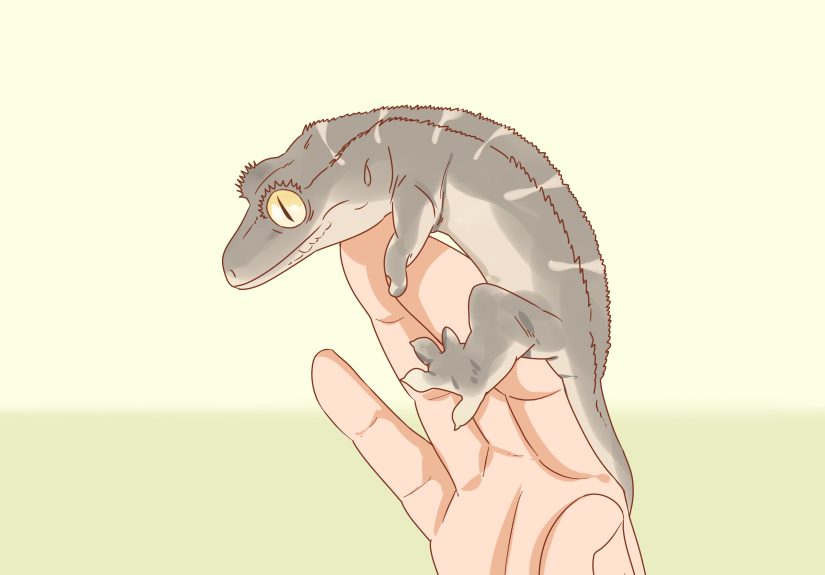
Step 14: Handle Gently (And Never Grab the Tail)
Crested geckos can be handled, but start slow. Let your gecko get used to your presence, then use a gentle “scoop”
instead of grabbing from above. Keep sessions short at firstthink minutes, not an entire movie marathon.
Handle over a bed or soft surface. Cresties can leap unexpectedly, and gravity is undefeated. Also: never restrain by
the tail. Crested geckos can drop their tails as a defense mechanism, and it won’t grow back. Tailless cresties are
affectionately called “frog butts,” but your gecko would prefer to keep their original equipment if possible.
Step 15: Monitor Health (Small Problems Get Big Fast)
The best crested gecko care includes regular observation. Weigh your gecko periodically (a kitchen scale works great),
watch for steady appetite, and look for normal shedding. Common red flags include persistent lethargy, stuck shed on
toes, swollen jaw or limbs, wheezing/clicking, mouth redness, sudden weight loss, or signs of dehydration.
If something seems off, don’t “wait and see” for weeks. Reptiles are masters at looking fineuntil they’re not. Find a
qualified reptile/exotics veterinarian for wellness checks, fecal testing (especially for new animals), and guidance if
you’re troubleshooting husbandry.
Conclusion: A Happy Crestie Is a Consistent Crestie
Caring for a crested gecko is less about complicated equipment and more about consistent basics: a tall, enriched
habitat, moderate temperatures, a healthy humidity cycle, a reliable CGD feeding routine, and gentle handling. Once
your setup is stable, crestie care becomes refreshingly simplelike tending a tiny rainforest roommate who pays rent in
silent judgment and occasional dramatic jumps.
Get the environment right, and your crested gecko will do what they do best: climb, explore, eat like a polite little
gremlin, and occasionally stare at you as if you’re the one living in their enclosure.
Keeper Experiences: The Stuff Guides Don’t Always Mention (But You’ll Definitely Live Through)
Most crested gecko care guides sound smooth and tidylike your gecko will politely follow the rules, eat on schedule,
and pose for glam shots under perfect humidity. Reality is more… educational. Here are some real-world experiences many
keepers run into, plus what they usually learn the hard way (so you don’t have to).
First, the “humidity roller coaster.” New keepers often panic-mist because the number drops, then panic-mist again
because the glass looks dry, and suddenly the enclosure smells like a mushroom festival. The breakthrough moment is
realizing that cresties do better with a cycle, not constant wetness. Once you accept “humid at night, drier by
day” as your guiding philosophy, you stop fighting your enclosure and start managing itlike a tiny weather system you
control with a spray bottle and self-restraint.
Second, feeding surprises. Some cresties demolish CGD like it’s their job. Others take tiny licks and leave you
wondering if the food evaporated or if you imagined owning a gecko at all. Keepers learn to judge progress by
consistency: offer food, note whether it’s being eaten over time, and track weight. A gecko that’s maintaining weight,
pooping normally, and acting alert is usually doing fineeven if they eat like a dainty little critic sampling a new
restaurant.
Third, the “my gecko is a professional jumper” era. Many owners start handling over a couch, then upgrade to handling
over a bed after the first unexpected leap. Cresties can go from calm to airborne in half a second, and the lesson is
simple: assume launch is always possible. Handling is a skill you build togethershort sessions, gentle scoops, and
letting the gecko choose when to step onto your hand. The goal isn’t to “tame” them like a dog; it’s to make them feel
safe enough that they don’t treat you like a moving tree in a hurricane.
Fourth, the bioactive temptation. Plenty of keepers start with paper towels and a hide, then see a gorgeous planted
vivarium online and immediately want to become a rainforest architect. Bioactive can be fantastic, but it’s a hobby
within a hobby: plants need light, soil needs balance, and cleanup crews need the right moisture to function. A common
experience is building a stunning setup… then discovering your gecko sleeps behind the same leaf every day like it’s
the only leaf that exists. Don’t take it personally. Your gecko is not an interior design client.
Finally, the “new keeper nerves” fade into routine confidence. The first month can feel like you’re constantly
troubleshooting: humidity, feeding, hiding, lighting, cleaning. Then one day you realize you’re not worried anymore.
You’re just maintaining a stable, healthy environment. That’s the real secret of crested gecko care: once the habitat
is dialed in, your daily work is smalland your gecko’s quality of life is huge.







 Close
Close