
Table of Contents >> Show >> Hide
- The Quick Answer (For the Impatient Gardener)
- Step 1: Make Sure You Have the “Color-Changing” Kind
- Step 2: Understand the Science (So You Don’t Fight the Wrong Battle)
- Step 3: Test Your Soil First (Because Guessing Is Expensive)
- How to Turn Hydrangeas Blue (Pink → Blue)
- How to Turn Hydrangeas Pink (Blue → Pink)
- The Easiest Method: Use Containers to Control Color
- Common Problems (And the Fixes That Make You Feel Like a Wizard)
- Best Practices for Success (AKA How to Avoid the ‘Hydrangea Chaos Era’)
- Color Recipes (Simple, Not Reckless)
- Real-World Experiences: What Gardeners Commonly Notice (About )
- Conclusion
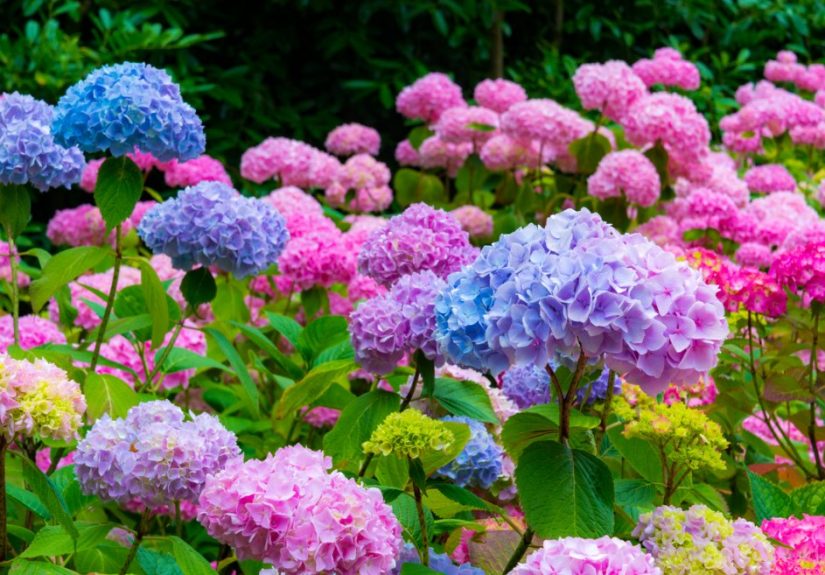
Hydrangeas are basically the mood rings of the shrub worldexcept instead of reflecting your feelings,
they reflect your soil chemistry. Want electric-blue blooms? Prefer cotton-candy pink? You can
often nudge your hydrangea in either direction, as long as you understand one big truth:
it’s not “magic,” it’s pH + aluminum.
This guide breaks down what actually works (and what belongs in the gardening-myth museum), with clear steps,
realistic timelines, and a few laughsbecause if you’re going to obsess over soil pH, you deserve joy.
The Quick Answer (For the Impatient Gardener)
-
To turn blooms blue: make soil more acidic (lower pH) and ensure aluminum is available.
Common tools: elemental sulfur (gentler) or aluminum sulfate (faster, but easier to overdo). -
To turn blooms pink: make soil more alkaline (raise pH) so the plant can’t take up much aluminum.
Common tool: garden lime (often dolomitic lime). - To get purple: aim for the “in-between” pH zone (often a mildly acidic-to-near-neutral range) and let the plant do its ombré thing.
Step 1: Make Sure You Have the “Color-Changing” Kind
Not all hydrangeas do the color-swap routine. The most reliable color-changers are:
bigleaf hydrangea (Hydrangea macrophylla) and mountain hydrangea (Hydrangea serrata).
These include mophead and lacecap types.
Hydrangeas that usually do NOT change color
- Panicle hydrangea (H. paniculata) (think cone-shaped blooms)
- Smooth hydrangea (H. arborescens) (like ‘Annabelle’)
- Oakleaf hydrangea (H. quercifolia)
- White bigleaf cultivars (white generally stays whitesometimes aging to green, blush, or rose, but not via pH “blueing”)
Also: even within color-changing types, some cultivars are bred to stay reliably pink, blue, or multicolored.
So if your plant refuses to cooperate, it may not be stubbornyou may have a cultivar with a strong opinion.
Step 2: Understand the Science (So You Don’t Fight the Wrong Battle)
Here’s the core idea: blue hydrangeas happen when the plant can take up aluminum.
Soil pH doesn’t “paint” petals by itselfit changes whether aluminum is available for the plant to absorb.
- Acidic soil (lower pH): aluminum becomes more available → blooms shift bluer.
- Alkaline soil (higher pH): aluminum becomes less available → blooms shift pinker.
Bonus twist: high phosphorus can reduce aluminum uptake, which often keeps blooms pink
even if your pH isn’t sky-high. Translation: the wrong fertilizer can sabotage your color goals.
Step 3: Test Your Soil First (Because Guessing Is Expensive)
Before you add anything, test your soil pH. A simple home test kit can help, and a lab soil test is even better
(especially if you’ve been “seasoning” your garden with random amendments for years).
Target pH ranges (common guidelines)
| Goal Bloom Color | Typical Target Soil pH | What You’re Really Controlling |
|---|---|---|
| Blue | About 5.0–5.5 | Increase aluminum availability and uptake |
| Purple / Mixed | About 5.6–6.4 (varies) | “In-between” aluminum availability |
| Pink | About 6.0–7.0+ | Limit aluminum uptake by raising pH |
If your hydrangea is already purple or half-and-half, your soil is basically saying,
“I contain multitudes.” It’s often sitting in that middle pH zone.
How to Turn Hydrangeas Blue (Pink → Blue)
To get blue flowers, you want two things:
(1) acidic soil and (2) aluminum the plant can access.
Many soils naturally contain aluminum, but availability depends on pH.
Option A: Elemental sulfur (steady, generally gentler)
Elemental sulfur acidifies soil gradually. It’s often considered a “safer bet” than relying heavily on aluminum sulfate
because it reduces the chance of aluminum-related stress.
- Test pH so you know your starting point.
-
Apply sulfur around the drip line (the outer edge of the plant’s canopy), not right against the stems.
Water well afterward. -
Re-test in a few weeks to a couple of months (timing varies by soil type and weather).
Adjust graduallythis is a long game, not a microwave meal.
Option B: Aluminum sulfate (faster, but easy to overdo)
Aluminum sulfate can both acidify and directly supply aluminum. Many gardeners use it as a soil drench.
A commonly cited approach is dissolving 1 tablespoon per gallon of water and applying as a drench
during spring, repeating monthly for a short series (often three applications).
- Avoid splashing leaves. Aim the drench at the soil.
- Water normally after application so the amendment distributes into the root zone.
-
Don’t “double it” because you’re excited. Too much can stress roots and harm the plant.
(Hydrangeas are dramatic enough without chemistry burns.)
Fertilizer tip for bluer blooms
If you’re trying to push blue, avoid high-phosphorus fertilizers. Excess phosphorus can interfere with aluminum uptake.
Choose a fertilizer approach that supports your goal (often lower phosphorus, and follow label guidance).
Timeline reality check
You might see subtle shifts within the same season, but full color conversion often shows best in the
next bloom cycle. Large shrubs can take months to respond.
How to Turn Hydrangeas Pink (Blue → Pink)
Pink blooms usually mean the plant can’t access much aluminum. The simplest way to encourage pink
is to raise soil pH with lime.
Option A: Garden lime (the classic approach)
- Test soil pH so you know how far you need to move.
-
Apply lime around the drip line, not at the trunk. Water it in.
(Think: “season the soil,” not “salt the wound.”) - Re-test later and repeat gently as needed until you reach your pink-friendly pH range.
Option B: Liquid lime drench (a faster nudge)
Some extension-style guidance suggests a short series of drenches (often spring to early summer), using a solution such as
1 tablespoon of lime per gallon of water applied to the soil. This can be useful when you want a quicker pH nudge,
but you still need to avoid over-application.
Important caution: Don’t push pH too far
Very alkaline soil can make it harder for plants to access certain nutrients (iron is a common one), which can lead to
yellowing leaves (chlorosis). The goal is “pink blooms,” not “plant nutrition crisis.”
The Easiest Method: Use Containers to Control Color
If your in-ground soil keeps “buffering back” (clay soils love doing this), containers are your secret weapon.
With pots, you can control the growing mix, the amendments, and even the watering source.
Container strategy that actually feels manageable
- Start with a quality potting mix (often more predictable than native soil).
- Adjust pH with targeted amendments (sulfur for blue, lime for pink), in small increments.
-
Watch your water: if your tap water is very hard/alkaline, it can slowly push pH upward over time.
Some gardeners switch to rainwater to reduce the “my hose is undoing my progress” problem.
Common Problems (And the Fixes That Make You Feel Like a Wizard)
Problem: “I lowered the pH, and it’s still pink.”
- Possible cause: Not enough available aluminum.
- Fix: Consider an approach that supplies aluminum (carefully), or confirm with a soil test.
- Also check: Are you using a high-phosphorus fertilizer? That can keep blooms pink.
Problem: “Some flowers changed, some didn’t.”
- Possible cause: Soil pH varies across the root zone, or the plant is mid-transition.
- Fix: Keep amendments consistent around the drip line; retest and adjust gradually.
Problem: “My hydrangea is near concrete and refuses to go blue.”
- Possible cause: Concrete can raise local alkalinity.
- Fix: Use containers, raised beds, or focus amendments more precisely (and test again).
Problem: “I tried coffee grounds / eggshells / vinegar / baking soda.”
These are the gardening equivalent of “my cousin’s roommate’s dog walker swears this works.”
Some organic materials can slightly influence soil over time, but they’re often too mild,
too slow, or too inconsistent for reliable color control.
Baking soda, in particular, can contribute to salt buildupbad news for roots.
Best Practices for Success (AKA How to Avoid the ‘Hydrangea Chaos Era’)
- Change slowly. Big pH swings can stress plants.
- Always water in amendments. Concentrated pockets can burn roots.
- Keep amendments away from the trunk. Work around the drip line.
- Retest pH. Soil chemistry isn’t a “set it and forget it” streaming subscription.
- Be patient. Many gardeners see the best results the following bloom season.
Color Recipes (Simple, Not Reckless)
Recipe: “Make it Blue” checklist
- Confirm it’s a bigleaf or mountain hydrangea (and not a white cultivar).
- Target pH around 5.0–5.5.
- Use sulfur for gradual acidification; consider aluminum sulfate only with careful dosing.
- Avoid high-phosphorus fertilizers; choose a feeding plan that supports aluminum uptake.
Recipe: “Make it Pink” checklist
- Confirm it’s a color-changing variety.
- Target pH around 6.0–7.0+ (depending on your cultivar and local soil behavior).
- Apply garden lime gradually and retest.
- Consider containers if your native soil keeps pulling pH back down.
Real-World Experiences: What Gardeners Commonly Notice (About )
One of the most common “first-time hydrangea color experiments” starts with optimism and ends with someone
staring at a soil test strip like it’s a tiny, confusing piece of modern art. Gardeners often report that the biggest
surprise isn’t how to change colorit’s how long it takes. The plant doesn’t flip a switch overnight.
Instead, the shift can look like a slow fade: a pink bloom develops lavender edges, or a blue mophead starts throwing
purple tones as the season progresses. That in-between phase can feel like the shrub is trolling you, but it’s usually
a sign your pH is moving toward the middle range and the plant is responding in real time.
Another frequent experience: “I did everything right… except I forgot the water.” Consistent moisture matters because
amendments need to move into the root zone to do their job. Gardeners sometimes sprinkle sulfur or lime on the surface,
get busy, then wonder why nothing changedmeanwhile the amendment is sitting there like an unopened package on a porch.
Those who water in thoroughly (and mulch afterward) often describe more predictable results, especially in hot climates
where dry soil can slow down soil chemistry changes.
People also run into the “hidden alkalinity” problem. Many gardeners only think about soil pH, then discover their
tap water is hard and slowly nudging the soil back toward alkaline. In those cases, the gardener’s routine
becomes a tug-of-war: they acidify for blue, then the hose quietly votes for pink. A common workaround is collecting
rainwater (when practical) or using containers where the soil mix is easier to manage. Similarly, gardeners with plants
near sidewalks, driveways, or foundations frequently notice it’s harder to keep blooms blue, even with regular
acidifyingbecause the surrounding environment can influence the soil over time.
A very relatable moment happens when someone tries a “gentle” internet hackcoffee grounds, eggshells, or a splash of
something from the kitchenand expects dramatic results. Gardeners who track changes closely often conclude those methods
are better viewed as soil-improvement habits (composting, organic matter) than dependable color controls. When they switch
to targeted amendments (sulfur, lime, or carefully dosed aluminum sulfate), results tend to become more consistentespecially
when paired with periodic soil tests and a “small changes, repeated” mindset.
Finally, gardeners often describe the emotional arc of hydrangea color control as: excited → confused → mildly obsessed → proud.
The proud part usually arrives when they stop chasing perfection and start tracking the process: taking a photo each week,
noting pH readings, and realizing the shrub is responding, just not on a human schedule. Once that clicks, the whole project
feels less like battling nature and more like collaborating with itscience fair vibes, but with prettier flowers.
Conclusion
Changing hydrangea color is absolutely doableif you have the right type of hydrangea, a clear pH target,
and the patience to let soil chemistry catch up to your dreams. Aim acidic (and aluminum-available) for blue,
aim more alkaline for pink, and accept purple as the universe’s way of saying, “Both can be true.”
Test, tweak, repeat… and enjoy your shrub’s surprisingly dramatic personality.







 Close
Close