Table of Contents >> Show >> Hide
- Before You Start: What You Need
- Step 1: Set Up Like a Pro (So You Practice Like One)
- Step 2: Warm Up for Better Touch (and Fewer “Oof” Moments)
- Step 3: Learn the “One-Touch Catch” (Your Freestyle Foundation)
- Step 4: Build Your Juggling Base (Feet → Thighs → Head)
- Step 5: Learn Stalls (Where Tricks Stop Looking Like Accidents)
- Step 6: Master the “Around the World” (Your First Classic Freestyle Trick)
- Step 7: Add Two More Beginner Tricks (and Turn Them Into Combos)
- Step 8: Practice Smart (So You Improve Faster Than Your Frustration)
- Common Mistakes (and How to Fix Them Fast)
- Quick Reality Check: Progress Isn’t Linear (and That’s Normal)
- Extra: Real-World Experiences People Have While Learning Freestyle Football Tricks (500+ Words)
- Conclusion
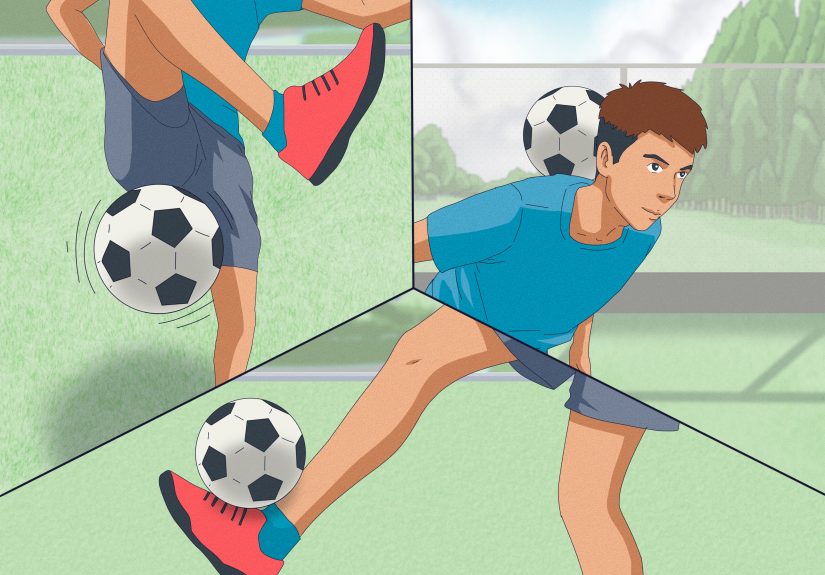
Freestyle football (you’ll also hear “freestyle soccer” in the U.S.) is basically the art of making a soccer ball do whatever you wantwithout it
escaping like it just remembered it left the stove on. The good news: you don’t need a stadium, a coach, or a dramatic slow-motion montage. You need
a ball, a little space, and the willingness to look mildly ridiculous for a few days while your feet learn the language of control.
This guide breaks freestyle football tricks into an 8-step progression so you can build real ball mastery (not just random chaos).
We’ll start with juggling fundamentals and work toward classic freestyle moves like foot stalls and around-the-world.
Along the way, you’ll get drills, coaching cues, and a practice plan that won’t fry your legs.
Before You Start: What You Need
- A properly inflated soccer ball (size 5 for most teens/adults; size 4 for many younger players).
- Flat, open space (grass, turf, gym floor, drivewayjust not next to traffic, windows, or your mom’s favorite garden pots).
- Shoes with good grip (or clean indoor shoes if you’re inside).
- Optional but helpful: a wall for rebounds, a phone tripod for filming, and a sense of humor.
Step 1: Set Up Like a Pro (So You Practice Like One)
Pick the right ball and surface
Freestyle is all about feedback: every touch tells your brain what to do next. A ball that’s too soft feels “dead,” and a ball that’s overinflated
bounces like it’s auditioning for a trampoline commercial. Use a normal training ball at the recommended pressure. Then choose a surface where the
ball behaves predictably (flat beats lumpy).
Create a “safe fail zone”
You’re going to drop the ball. A lot. Make it easy to retrieve: practice away from stairs, streets, and anything breakable. If you’re indoors, keep
it clear of lamps, pets, and that one fragile item your household treats like a national treasure.
Mini-goal for Step 1
Stand on one leg for 20 seconds per side while gently tossing the ball between your hands. If balancing feels wild, freestyle will feel wild tooso
we start here.
Step 2: Warm Up for Better Touch (and Fewer “Oof” Moments)
Freestyle football tricks demand ankle control, hip mobility, and quick adjustments. A short warm-up makes your touches cleaner and lowers your injury
risk. Keep it simple and dynamic.
5–8 minute warm-up (no equipment needed)
- Light jog or marching in place (60 seconds)
- Ankle circles (10 each direction per foot)
- Leg swings (front/back and side-to-side, 10 each)
- Bodyweight squats (10 slow reps)
- Calf raises (15 reps)
- Quick feet (20 seconds)
Pro tip: save long static stretching for after
Dynamic movement is great before training. Longer static holds are better after you’re warm and finishing up.
Step 3: Learn the “One-Touch Catch” (Your Freestyle Foundation)
If freestyle football had a driver’s license test, this would be the parallel parking portion. It teaches you the core mechanic behind juggling:
controlled lift, not a wild kick.
How to do it
- Hold the ball in your hands at waist height.
- Drop it straight down.
- Tap it up with the laces/top of the foot (not the toe). Keep your ankle firm and your toes slightly up to make a flat surface.
- Catch it in your hands.
Coaching cues that actually work
- Small swing, big control: lift from the knee more than the hip.
- Keep it low: aim for knee-to-waist height. Higher isn’t harder; it’s just harder to chase.
- Eyes on the bottom of the ball: that’s where your contact target lives.
Mini-goal for Step 3
Get 5 clean one-touch catches in a row on your right foot and 5 on your left. If your left foot feels like it’s sending texts with
mittens on, congratsyou’re normal.
Step 4: Build Your Juggling Base (Feet → Thighs → Head)
Juggling is the engine that powers most freestyle soccer tricks. The goal isn’t just “more juggles.” The goal is repeatable touches
that set up the next move. Think: rhythm, not panic.
Progression A: Bounce juggling (beginner-friendly)
Tap the ball up, let it bounce once, tap it again. This slows the chaos and lets you focus on clean contact. Alternate feet when you can.
Progression B: Two-touch patterns (control builder)
- Right foot, right foot, catch.
- Left foot, left foot, catch.
- Right-left-right-left, catch.
Progression C: Add thighs (the “easy mode” of juggling)
Thigh juggles are often easier than feet at first because the surface is bigger. Raise the thigh, let the ball pop up, catch, repeat. Then go:
thigh-thigh-catch. Eventually mix: foot → thigh → catch.
Optional: headers for the juggling ladder
If you include your head, use your forehead area (the flatter contact point) and keep your body under the ball. Start with gentle popsthis isn’t
a “launch the ball into orbit” situation.
Mini-goal for Step 4
Hit 10 consecutive juggles (any combination of feet/thighs) while keeping the ball mostly between knee and waist height.
Step 5: Learn Stalls (Where Tricks Stop Looking Like Accidents)
A stall is controlled “catching” of the ball on your body. It’s what turns juggling into freestyle football tricks because it gives you time to set up
the next move. Start simple: foot stall and thigh stall.
Foot stall (top-of-foot catch)
- Pop the ball up lightly (or drop from your hands).
- Point your toes slightly up and raise your foot so the top becomes a “shelf.”
- Absorb the ball by relaxing slightly as it landsthink “catch,” not “bounce.”
Thigh stall
Lift your thigh like a tabletop. Drop the ball softly and cushion it. If it rolls off, adjust your thigh angletiny changes matter.
Balance hacks
- Use your arms like tightrope poles.
- Keep your chest tall and your core lightly braced.
- Practice stalls near knee height firstlow control beats high chaos.
Mini-goal for Step 5
Get 3 foot stalls per side (doesn’t have to be consecutive) and 3 thigh stalls. Your first stall will feel like
balancing a bar of soap on a skateboard. Keep going.
Step 6: Master the “Around the World” (Your First Classic Freestyle Trick)
The around-the-world (ATW) is a staple freestyle soccer trick: you juggle the ball up and circle your foot around it before touching
it again. It looks like magic. It’s actually timing + a quick loop.
ATW breakdown (inside-to-outside version)
- Start with a controlled juggle on your dominant foot.
- Pop the ball slightly higher than normal (still not sky-high).
- As the ball rises, circle your foot around the outside of the ball.
- Meet the ball again with the same foot to continue juggling.
Drill: “Half-world” practice
If full ATW feels impossible, do a partial circle. Pop the ball, loop your foot halfway, then catch the ball or let it drop. This trains speed and
path without requiring perfection.
Common ATW fixes
- If you miss under the ball: your circle is too slowmake the loop tighter and quicker.
- If the ball flies away: your pop is too strong or angledaim straight up.
- If you clip the ball: start the circle earlier (as the ball rises, not when it’s falling).
Mini-goal for Step 6
Land one clean ATW on your dominant foot. Then celebrate responsibly (water counts as a celebration beverage, yes).
Step 7: Add Two More Beginner Tricks (and Turn Them Into Combos)
Once you can juggle, stall, and ATW, you can start building a “freestyle vocabulary.” Here are two beginner-friendly moves that pair well with your
new skills: the crossover and a simple flick-up to start tricks from the ground.
Trick 1: Crossover (basic version)
A crossover is when one foot passes over the ball while the other foot continues the juggling rhythm.
- Do a normal juggle with your right foot.
- As the ball rises, swing your left foot across and over the ball’s path.
- Let the ball fall and tap it up again (usually with the right foot to start).
Trick 2: Flick-up (easy setup from the ground)
Freestyle isn’t just in the airyou need ways to start. A simple flick-up gets the ball off the ground so you can juggle or stall.
- Place the ball on the ground.
- Roll it slightly toward you with the sole of your foot.
- As it rolls, “scoop” upward with the top of your foot to pop it into your juggling zone.
Now build combos (this is where it gets fun)
Combo A (beginner): Flick-up → 3 juggles → foot stall
Combo B (intermediate beginner): 5 juggles → ATW → 2 juggles → stall
Combo C (confidence builder): Thigh juggle → thigh juggle → foot juggle → crossover → catch
Mini-goal for Step 7
Create one combo you can repeat 3 times in a session (even if it ends with a catch). Consistency beats “I did it once and never again.”
Step 8: Practice Smart (So You Improve Faster Than Your Frustration)
Freestyle football tricks improve through repetition, but not mindless repetition. Use short, focused sets and track what you’re training. Your brain
loves goals almost as much as it loves procrastinating.
Use the “3-layer” practice method
- Layer 1 (technique): slow drills (one-touch catch, bounce juggling, stalls)
- Layer 2 (skill): clean reps (10 juggles, 1 ATW attempt, 5 crossovers)
- Layer 3 (freestyle): free play for creativity (combos, music, flow)
Sample 15–20 minute session (repeat 3–5 days/week)
- Warm-up: 5–8 minutes
- One-touch catch: 3 minutes (alternate feet)
- Juggling ladder: 5 minutes (feet + thighs)
- Stalls: 3 minutes (foot stall attempts)
- Trick focus: 4 minutes (ATW or crossover)
- Free combo time: 2 minutes (make it fun)
Track one number (and one feeling)
- Number: best juggle streak, stalls landed, or ATWs hit.
- Feeling: what improved today (balance, touch softness, timing).
Common Mistakes (and How to Fix Them Fast)
“My touches are all over the place.”
Keep the ball lower (knee-to-waist). Use smaller leg swings and aim for the bottom-center of the ball. Big kicks = big problems.
“My ankle feels floppy.”
For laces juggling, keep the ankle firm so the foot acts like a stable platform. If you’re toe-tapping, the ankle can be a bit softerbut for clean
freestyle foundations, firm contact usually wins.
“I can do it once, but not twice.”
That’s not failure; that’s information. Film 10 seconds and check: is your pop straight up? Are you under the ball? Did the ball drift because your
body drifted? Fix the root cause, not the symptom.
“My weaker foot is useless.”
Give it a job it can succeed at: one-touch catches and bounce juggling. Two minutes per session adds up fastand suddenly your weak foot stops acting
like it’s new to Earth.
Quick Reality Check: Progress Isn’t Linear (and That’s Normal)
Some days you’ll feel unstoppable. Other days the ball will hit your shin 47 times and you’ll question physics. Skill learning comes in waves: your
brain collects messy reps, then organizes them while you sleep, and thenrandomlyyou level up. That’s not motivational poster talk. That’s motor learning.
Extra: Real-World Experiences People Have While Learning Freestyle Football Tricks (500+ Words)
Most beginners share the same early experience: they start practicing freestyle soccer tricks with big energy, big dreams, and even bigger touches.
The ball rockets to shoulder height, drifts forward, and suddenly you’re jogging after it like it owes you money. This phase is normal, and it’s
honestly usefulbecause it teaches you the first “hidden rule” of freestyle: control the height, control the game. When learners
finally commit to keeping touches between the knee and waist, things start clicking.
Another common experience is discovering that juggling is less about leg strength and more about tiny, repeatable movements.
People often report a “lightbulb moment” when they stop swinging the whole leg and start lifting from the knee with a stable ankle. The ball becomes
quieter. The sound of contact changes. Instead of loud thuds, you get soft taps. It’s the difference between trying to wrestle the ball and actually
guiding it. Many learners also notice that once their touch gets softer, their body relaxesand suddenly balance improves without extra effort.
Stalls are their own emotional roller coaster. At first, the ball refuses to stay put. People describe it like trying to balance a coin on a moving
hand: you think you’re steady, then the ball rolls off in slow motion. The breakthrough usually comes from two adjustments: (1) creating a flatter
“shelf” with the foot or thigh, and (2) learning to absorb the ball instead of meeting it stiffly. Once that absorption feeling
arrivesalmost like cushioning an eggyou’ll hear learners say, “Ohhh, THAT’S what a stall is.”
The around-the-world trick is where frustration and excitement collide. Many people can picture the motion perfectly but mistime the circle, so the
foot loops around air while the ball drops like, “Nice try.” The common learning pattern is: a handful of awkward half-circles, then a couple of
accidental successes, followed by a long stretch where it disappears again. That “now I can, now I can’t” stage is extremely typical. It usually means
your timing is close but not consistent. Learners who stick with short setslike 10 focused attempts, rest, then 10 moretend to improve faster than
people who grind for an hour while getting tired and sloppy.
Socially, freestyle practice can feel oddly public even when nobody is watching. People often worry they look silly chasing the ball. The funny truth is:
nearly every freestyler you’ve ever admired spent weeks doing exactly that. Many learners eventually reframe the “embarrassing” part as a sign they’re
doing real work. Some even make a game out of it: they practice in a corner of a park, set a tiny goal (like 10 juggles), and quit while they’re ahead.
That builds confidence because the session ends with a win, not a defeat.
Finally, there’s the “flow” experiencewhen the juggling rhythm becomes calming. Learners describe it as zoning in on the ball’s spin and movement.
Your brain gets quiet because it has one clear job: touch, adjust, touch. This is one reason freestyle football tricks become addictive. You can train
alone, improve measurably, and feel that satisfying mix of focus and creativity. Over time, the ball starts behaving less like a runaway pet and more
like a dance partner. And yes, you’ll still drop itjust with a lot more style.
Conclusion
Learning how to do freestyle football tricks isn’t about “secret moves”it’s about building control step by step. Nail the basics (one-touch catch,
juggling, stalls), then add classic tricks like around-the-world and crossovers, and finally string them into combos. Practice short, practice often,
and keep the ball in that sweet knee-to-waist zone. The ball will still fall sometimes… but eventually it’ll fall because you tried something new,
not because your foot forgot what it’s doing.