
Table of Contents >> Show >> Hide
- What Does It Mean to Tread Water?
- What Is the Eggbeater Kick?
- Safety First: Practice the Smart Way
- The Basic Body Position for Treading Water
- How to Use Your Arms: Sculling for Support
- How to Eggbeater Kick Step by Step
- Common Beginner Mistakes
- Beginner Drills to Improve Your Eggbeater Kick
- How Long Should a Beginner Practice?
- Eggbeater Kick vs. Other Treading Techniques
- How to Stay Relaxed While Treading Water
- When to Get Help From an Instructor
- Practical Experience: What Learning the Eggbeater Kick Feels Like
- Conclusion
Learning how to tread water is one of those swimming skills that looks easy until you try it and discover your legs have filed a formal complaint. One minute you are upright and confident; the next, your chin is negotiating with the waterline. The good news? Treading water is a learnable skill, and the eggbeater kick is one of the best techniques for staying vertical, stable, and surprisingly calm in deep water.
This beginner’s guide explains how to eggbeater kick, how to tread water without wasting energy, and how to build confidence step by step. Whether you want to feel safer at the pool, prepare for open-water swimming, improve water polo skills, or simply avoid looking like a panicked blender, the goal is the same: stay relaxed, stay balanced, and let the water help you.
What Does It Mean to Tread Water?
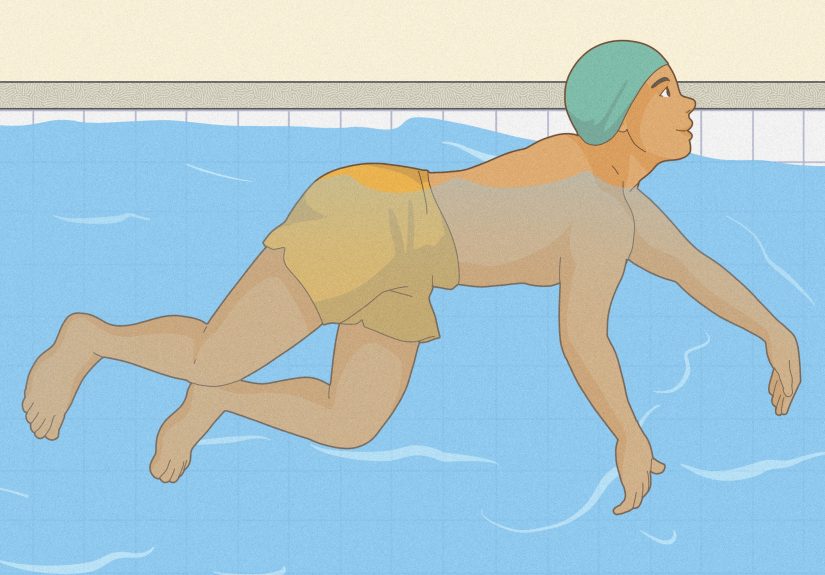
Treading water means staying upright in the water with your head above the surface while using your arms and legs to create enough lift to remain afloat. Unlike swimming laps, you are not trying to travel forward. You are trying to hold your position, breathe comfortably, and conserve energy.
Water-safety organizations often treat treading water as a core survival skill because it gives you time. Time to breathe. Time to look for an exit. Time to wait for help. Time to realize that jumping into the deep end just because your friend said “trust me” was not a fully developed safety plan.
Beginners usually start with simple kicks such as the flutter kick, bicycle kick, or breaststroke kick. The eggbeater kick is more advanced, but it is also more efficient once you learn the rhythm. That is why water polo players, artistic swimmers, lifeguards, and strong recreational swimmers use it so often.
What Is the Eggbeater Kick?
The eggbeater kick is a circular leg movement used to keep the body upright in deep water. Imagine an old-fashioned kitchen eggbeater spinning in two opposite circles. Your legs do something similar: one leg circles outward and inward while the other leg moves in the opposite rhythm. Instead of kicking both legs at the same time, you alternate them so there is constant pressure against the water.
The result is steady lift. With a basic breaststroke kick, your body may bob up and down because both legs kick and recover together. With the eggbeater, one leg is always helping while the other resets. That continuous action creates a smoother, more stable tread.
In water polo, the eggbeater kick is essential because players need their hands free to pass, shoot, block, and defend. For beginners, the same skill is valuable for a simpler reason: it helps you stay afloat without feeling like you are fighting the entire pool.
Safety First: Practice the Smart Way
Before you practice treading water or the eggbeater kick, choose the right environment. Use a supervised pool, stay near a wall or lane line, and practice where a lifeguard or capable adult can help if needed. If you are not already comfortable in deep water, begin in chest-deep water and work with a qualified swim instructor.
Do not practice alone. Do not hold your breath for long periods. Do not push yourself to exhaustion. And please do not test your new skill in open water, currents, lakes, rivers, or the ocean until you are confident, supervised, and properly prepared. Pools are predictable. Nature is beautiful, but sometimes nature wakes up and chooses chaos.
A good beginner goal is to tread water for 30 seconds comfortably, then one minute, then two minutes. The goal is not dramatic splashing. The goal is calm control.
The Basic Body Position for Treading Water
Your body position matters before your legs even start moving. Beginners often lean too far back or curl forward, which makes the kick weaker. Aim for a tall, vertical posture.
Keep Your Head Relaxed and Above Water
Look forward, not straight up. Your head should feel balanced over your spine. If you lift your chin too high, your hips may sink. If you tuck your chin too much, you may feel cramped and anxious.
Use a Tall Torso
Think “sitting on a tall stool.” Your chest stays lifted, your core gently engaged, and your shoulders relaxed. You do not need a superhero pose. You need a stable, comfortable posture that lets your legs move freely.
Keep Your Knees Wide
The eggbeater works best when your knees are slightly wider than your hips. This creates a broad base, almost like a triangle under the water. A narrow kick makes you wobble. A wide base gives you balance.
How to Use Your Arms: Sculling for Support
Before your eggbeater kick becomes strong, your hands will help a lot. The best arm movement for treading water is called sculling. Sculling means moving your hands side to side in small sweeping motions to create gentle lift and stability.
Place your arms slightly out in front of your body at about chest level. Keep your elbows soft. Turn your palms slightly outward as your hands move away from each other, then slightly inward as they come back. The motion should feel like spreading peanut butter on invisible toast under the water.
Do not slap the water. Do not push straight down. Downward pushing may lift you for a second, but it wastes energy and makes you bounce. Smooth side-to-side pressure is more efficient.
How to Eggbeater Kick Step by Step
The eggbeater kick can feel strange at first because each leg has its own job. Do not rush. Learn one leg, then the other, then combine them slowly.
Step 1: Practice on the Pool Edge
Sit on the edge of the pool with your thighs near the edge and your lower legs in the water. Open your knees comfortably. Start with one leg. Move your lower leg in a wide circular motion, as if your foot and shin are stirring a big pot of soup.
Your foot should be flexed, not pointed. A pointed foot slices through the water. A flexed foot catches water. Think of your foot and inner calf as paddles.
Step 2: Learn the Direction of Each Leg
For many swimmers, the right leg circles counterclockwise and the left leg circles clockwise when looking down at your own knees. The exact feeling may vary slightly, but the main idea is that the legs rotate in opposite directions and alternate their power.
If that sounds like your legs are reading separate instruction manuals, welcome to the club. Go slowly. The eggbeater is coordination first, power second.
Step 3: Make One-Leg Circles in the Water
Hold the wall or use a pool noodle for support. Practice circling one leg while the other leg hangs relaxed. Focus on feeling pressure against the inside of your foot, ankle, shin, and calf. Then switch legs.
At this stage, do not worry about looking athletic. Your only goal is to feel the water. The best swimmers are not attacking the pool; they are negotiating with it.
Step 4: Alternate the Legs
Now try both legs. When one leg is pressing through its power phase, the other leg is recovering and preparing to press. The movement should be continuous, not jerky. If both legs kick at the same time, you are doing more of a breaststroke kick. That can still tread water, but it will not give you the smooth support of an eggbeater.
Step 5: Add Gentle Sculling Hands
Once your legs are moving, add your hands. Keep the arm motion small and smooth. Your arms are not the main engine; they are the balance system. If your legs get confused, return to the wall and reset.
Step 6: Breathe Normally
Beginners often hold their breath without realizing it. That makes everything harder. Breathe in a steady rhythm. Relax your jaw. Drop your shoulders. If your face looks like you are solving taxes underwater, pause and reset.
Common Beginner Mistakes
Mistake 1: Kicking Too Fast
Fast does not always mean effective. A frantic eggbeater wastes energy. Try slower, wider circles. You want pressure on the water, not a tiny underwater tap dance.
Mistake 2: Pointing the Toes
Pointed toes are great for ballet and certain swim strokes, but they are not ideal for eggbeater support. Flex your feet so they catch more water. Your foot should feel like a paddle, not a spaghetti noodle.
Mistake 3: Knees Too Close Together
If your knees drift inward, you lose your base. Keep your knees open and your hips loose. The eggbeater depends heavily on hip mobility, so tight hips may make the movement feel awkward at first.
Mistake 4: Pushing Down With the Hands
Beginners often push water straight down with their hands. This creates bouncing and fatigue. Scull side to side instead. Keep your hands underwater and use small angle changes with your palms.
Mistake 5: Leaning Back
Leaning back makes your legs move in front of you instead of underneath you. Stay tall and vertical. Imagine a string gently lifting the top of your head.
Beginner Drills to Improve Your Eggbeater Kick
Pool-Edge Circles
Sit on the pool edge and practice 20 slow circles with each leg. Focus on flexed feet, wide knees, and smooth movement. This drill removes the fear of sinking so your brain can learn the pattern.
Wall-Supported Eggbeater
Hold the wall with both hands and practice the kick while staying vertical. Then hold with one hand. Then use fingertips only. Gradually reduce support as your balance improves.
Noodle Support Drill
Place a pool noodle under your arms or across your chest. Practice the eggbeater kick while the noodle gives you extra flotation. This is especially helpful for nervous beginners.
Hands-Out Challenge
Once you can tread comfortably with sculling hands, try lifting your hands out of the water for three seconds. Then five. Then ten. This drill shows whether your legs are truly supporting you.
Silent Tread Drill
Try to tread water with as little splash as possible. Quiet water usually means smoother technique. If the pool sounds like a washing machine full of sneakers, slow down.
How Long Should a Beginner Practice?
Short, consistent practice is better than one exhausting session. Try five to ten minutes of focused eggbeater practice during a swim workout. Begin with supported drills, then attempt short free treads.
A simple beginner progression might look like this:
- Week 1: Practice pool-edge circles and wall-supported kicks.
- Week 2: Add noodle support and short 15-second treads.
- Week 3: Tread for 30 to 60 seconds with gentle sculling.
- Week 4: Try hands-out challenges and longer relaxed intervals.
Progress depends on comfort, strength, mobility, and swimming background. Some people learn the rhythm quickly. Others need more time. Both are normal. The water does not hand out report cards.
Eggbeater Kick vs. Other Treading Techniques
The eggbeater kick is not the only way to tread water. A beginner may use a bicycle kick, flutter kick, or modified breaststroke kick. Each has a place.
The bicycle kick feels natural to many beginners, but it can be inefficient because the feet may slip through the water. The flutter kick can work for short periods, but it often burns energy quickly. The breaststroke kick provides strong lift, but because both legs kick together, it may create bobbing.
The eggbeater kick is popular because it creates continuous support. It also keeps the upper body stable, which is why it is so useful for water polo and rescue skills. However, it requires coordination and hip mobility. If it feels impossible on day one, that does not mean you are bad at swimming. It means you are learning a technical movement.
How to Stay Relaxed While Treading Water
Relaxation is not just a nice bonus; it is part of the technique. Tension makes your movements stiff and wastes energy. If you panic, you may kick faster, breathe shorter, and sink lower. The solution is to slow down and simplify.
Use a calm breathing pattern. Keep your mouth above water, inhale normally, and exhale slowly. Let your shoulders drop. Keep your hands soft. Think of treading water as floating vertically, not climbing an invisible ladder.
If you feel tired, roll onto your back and float if you know how. Floating is a valuable partner skill to treading water. Together, floating and treading give you options.
When to Get Help From an Instructor
If you are nervous in deep water, struggle to float, or cannot coordinate the leg circles, a certified swim instructor can help. An instructor can spot small issues quickly: narrow knees, pointed toes, stiff hips, poor posture, or arm movements that waste energy.
Adults sometimes feel embarrassed about taking swim lessons, but there is no expiration date on learning. Pools are full of people improving at every age. Besides, the water does not care whether you are 8, 38, or 78. It only rewards good technique.
Practical Experience: What Learning the Eggbeater Kick Feels Like
The first experience many beginners have with the eggbeater kick is confusion. On land, the movement sounds simple: move your legs in circles. In the pool, however, your right leg may behave like it understands the assignment while your left leg starts improvising jazz. This is normal. The eggbeater kick is not only a strength skill; it is a coordination skill.
A helpful way to approach the learning process is to stop chasing height at first. Many beginners immediately try to rise high out of the water, as if they are auditioning for a dramatic sports commercial. Instead, your first goal should be comfort. Can you keep your face relaxed? Can you breathe normally? Can you feel pressure on the water during each circular kick? Those small wins matter.
One common “aha” moment happens when beginners flex their feet correctly. Before that, the legs may feel busy but useless. Once the feet flex and the inner lower leg catches water, the body suddenly receives support. It is not magic, but it can feel like the pool finally agreed to cooperate.
Another experience beginners often notice is that the arms quietly save the day. People assume treading water is all legs, but sculling hands can provide balance and confidence while the eggbeater develops. Smooth hand sculling keeps the upper body steady, especially when the legs are still learning their circular rhythm.
Fatigue is also part of the early experience. Even efficient treading can feel tiring when the movement is new because beginners tend to overwork. They kick too fast, tighten their shoulders, hold their breath, and turn a calm skill into a full-body emergency meeting. The fix is usually not more effort. The fix is better timing, wider circles, softer hands, and slower breathing.
Practice sessions become more enjoyable when you measure progress in seconds, not minutes. The first time you tread for 15 relaxed seconds is a real achievement. Then 30 seconds. Then one minute. Eventually, you may notice that your head stays steady, your breathing feels normal, and your legs move without needing a committee meeting in your brain.
For many swimmers, learning the eggbeater kick changes their relationship with deep water. Deep water becomes less intimidating because they know they can pause, breathe, look around, and choose what to do next. That confidence is the real reward. The eggbeater kick is not just a water polo trick or a pool-party flex. It is a practical skill that makes you calmer, safer, and more capable in the water.
The best advice from experience is simple: practice slowly, stay near support, and celebrate tiny improvements. The eggbeater kick may feel ridiculous before it feels natural. That is perfectly fine. Most useful skills pass through an awkward stage. Keep showing up, keep the circles wide, keep your feet flexed, and eventually your body will understand what your brain has been trying to explain.
Conclusion
Learning how to eggbeater kick and tread water gives you more than a swimming technique. It gives you confidence, control, and an important layer of water safety. Start with good body position, use gentle sculling hands, practice one leg at a time, and build your endurance gradually. Keep your feet flexed, knees wide, torso tall, and breathing calm.
The eggbeater kick may feel awkward at first, but with patient practice it becomes smoother and more efficient. You do not need to become a water polo star to benefit from it. You only need enough skill to stay relaxed, keep your head above water, and feel at home in the deep end.




 Close
Close