Table of Contents >> Show >> Hide
- What Do Chickens Eat in Stardew Valley?
- How to Feed Chickens Manually
- How to Feed Chickens with Grass Outdoors
- When Chickens Will Not Eat Grass
- How the Silo Really Works
- Automated Feeding: How to Unlock the Auto-Feed System
- Manual vs. Automated Feeding: Which Is Better?
- What Happens If You Forget to Feed Chickens?
- Winter Feeding Tips
- Common Chicken Feeding Mistakes
- Best Feeding Routine for New Players
- Experience Notes: What Feeding Chickens Feels Like in Real Gameplay
- Conclusion
- SEO Tags
Note: This article is written as an original, web-ready guide based on verified Stardew Valley gameplay information.
Feeding chickens in Stardew Valley sounds like the kind of thing that should be obvious. You buy a chicken, you put food somewhere nearby, and the tiny clucking machine rewards you with eggs. Simple, right? Then your first morning with livestock arrives, your chicken looks annoyed, the coop contains a mysterious hay box, and suddenly you are standing in Pelican Town wondering whether pixel poultry accepts room service.
The good news: chickens are easy once you understand the system. The bad news: the game does not exactly hand you a glowing neon sign that says, “Put hay on this bench, farmer.” Chickens in Stardew Valley eat either hay indoors or fresh grass outdoors. In the early game, you feed them manually. Later, with a Deluxe Coop, the process becomes automated, which is wonderful because by then you may be juggling ancient fruit wine, iridium sprinklers, and a suspiciously demanding social calendar.
This guide explains how to feed chickens in Stardew Valley manually and automatically, how silos work, why grass matters, what happens in winter, and how to avoid the classic beginner mistake of assuming the silo magically feeds everything. Spoiler: it does not. The silo is helpful, but it is not your farm’s unpaid breakfast chef until you upgrade properly.
What Do Chickens Eat in Stardew Valley?
Chickens in Stardew Valley eat two things: hay and grass. Hay is the indoor food placed on the feeding bench inside the coop. Grass is the outdoor food they eat when you open the coop door and let them roam on sunny days. Both count as food, but fresh grass is generally better for animal mood.
Think of hay as the reliable pantry meal and grass as the fresh salad bar. Hay keeps your chickens fed when they stay inside. Grass lets them graze outside, saves your hay supply, and helps keep them happier. A happy chicken is not just emotionally satisfying; it is also good business. Better mood and friendship increase your chance of receiving better-quality eggs and, eventually, large eggs.
How to Feed Chickens Manually
Manual feeding is what most players use when they first buy chickens. If you have a basic Coop or Big Coop, you must make sure hay is placed on the feeding bench whenever your chickens cannot eat grass outside.
Step 1: Get Hay
You can get hay in several ways. The most common method is to build a Silo and cut grass on your farm with a scythe. When you have an available silo, cut grass can become stored hay. Each silo holds up to 240 pieces of hay, which is enough for 240 animal meals. That sounds like a lot until winter arrives and your animals start eating like they are preparing for a tiny feathered marathon.
You can also buy hay from Marnie’s Ranch. This is useful in emergencies, especially if you forgot to prepare for winter. However, buying hay constantly can eat into your profit. Chickens are supposed to help your farm economy, not become luxury breakfast influencers.
Step 2: Enter the Coop
Walk into your coop and look for the hay hopper. This is the small box-like fixture that lets you pull hay from your silo. If your silo has hay stored, interact with the hopper to take hay into your inventory.
New players often confuse the hopper with an automatic feeder. In a basic Coop or Big Coop, it is not fully automatic. It gives you access to hay, but you still need to place that hay on the feeding bench yourself.
Step 3: Place Hay on the Feeding Bench
After pulling hay from the hopper, place it on the long feeding bench inside the coop. Each chicken needs one piece of hay per day if it eats indoors. So, if you have four chickens, place four pieces of hay. If you have eight chickens, place eight pieces. It is not glamorous, but neither is watering 80 parsnips by hand, and we all survived that.
Once the hay is on the bench, your chickens will eat it automatically during the day. You do not need to hand-feed each bird. In fact, Stardew chickens are independent enough to feed themselves from the bench but not independent enough to avoid blocking the doorway at the exact moment you are trying to leave.
How to Feed Chickens with Grass Outdoors
On sunny days outside winter, chickens can eat grass if they can get outside. To let them out, open the small animal door on the side of the coop. When the weather is good, chickens will leave the building, wander nearby, and eat available grass.
Outdoor grazing has two major benefits. First, it saves hay. Every chicken that eats grass outside does not need to eat hay from the indoor bench that day. Second, animals prefer fresh grass, so grazing can help support better mood.
How to Set Up a Good Grazing Area
Place your coop near a patch of grass or create one with Grass Starter. Many players fence in a small pasture around the coop so chickens stay close. This is not because the chickens will run away forever; it is because a compact grazing zone makes the farm easier to manage and helps you see whether enough grass is available.
A useful strategy is to place a fence post, lightning rod, or decorative object on top of a grass tile. Animals cannot eat the protected tile, but the grass can still spread around it. This creates a renewable grass patch. It is basically a tiny pasture engine, and yes, it feels like cheating until you remember that Pierre is still charging money for seeds.
When Chickens Will Not Eat Grass
Chickens do not graze every day. They stay inside when it rains, storms, snows, or during winter. They also stay inside if the coop door is closed. If they cannot go outside or cannot find grass, they need hay on the feeding bench.
This is why hay storage matters. A farm with beautiful green pastures in spring can still have hungry animals in winter if you did not stockpile enough hay. Before winter begins, count your animals and calculate your needs. One chicken eats one hay per day indoors. Winter has 28 days. Four chickens need 112 hay for the season. Twelve chickens need 336 hay, which means one silo is not enough if you rely only on stored hay.
How the Silo Really Works
The Silo is one of the best early farm buildings in Stardew Valley. It is cheaper than most farm structures, stores hay from cut grass, and connects to your coops and barns through hay hoppers. But here is the important part: a silo does not automatically place hay on the feeding bench in a basic Coop or Big Coop.
In early coop stages, the silo is storage. The hopper is access. Your hands are still the delivery service. If your chickens are not eating, check three things: does the silo contain hay, did you take hay from the hopper, and did you place it on the bench?
Automated Feeding: How to Unlock the Auto-Feed System
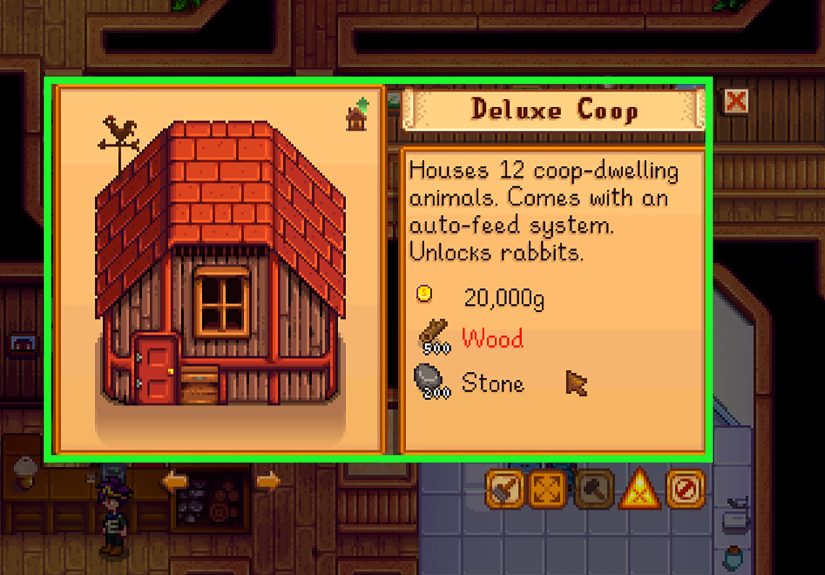
Automated feeding becomes available with the Deluxe Coop. The Deluxe Coop includes an auto-feed system that pulls hay from your silo and places it on the feeding bench automatically. This is the moment your farming life becomes much smoother.
To reach that point, you must upgrade your coop through Robin at the Carpenter’s Shop. The basic Coop houses four coop animals. The Big Coop expands capacity and adds an incubator. The Deluxe Coop increases capacity again and adds the auto-feed system. Once you have the Deluxe Coop, you no longer need to manually pull hay from the hopper and place it on the bench every morning.
Important Auto-Feeder Reminder
The auto-feeder only works if you have hay available. It is automatic, not magical. If your silos are empty, the Deluxe Coop cannot feed your chickens. The system saves time, but it does not remove the need to gather, buy, or store hay.
Also, the Big Coop does not include the auto-feed system. Many players assume “bigger” means “automated,” but Stardew Valley politely disagrees. The Big Coop is useful, especially because it unlocks more coop progress, but the true feeding automation arrives with the Deluxe Coop.
Manual vs. Automated Feeding: Which Is Better?
Manual feeding is cheaper because it works with the basic Coop and Big Coop. It teaches you how animal care works, and it is manageable when you only have a few chickens. If you are early in Year 1, there is no need to rush into a Deluxe Coop before your farm economy can handle it.
Automated feeding is better for convenience. Once your farm expands, daily chores add up quickly. You may have crops to harvest, machines to load, fish ponds to check, kegs to babysit, and villagers to chase down with birthday gifts. With a Deluxe Coop, feeding becomes one less thing to remember.
The best approach is usually this: build a Silo early, use grass whenever possible, feed manually at first, and upgrade to the Deluxe Coop when your farm income can support it. That gives you a smooth path from “confused chicken intern” to “professional egg empire manager.”
What Happens If You Forget to Feed Chickens?
If you forget to feed your chickens, they will not die. Stardew Valley is cozy, not a poultry disaster simulator. However, unfed chickens may become unhappy and stop producing eggs. Over time, missed feeding hurts your progress because animal friendship and mood matter for consistent, high-quality production.
For best results, pet your chickens daily, feed them daily, and let them eat grass when the weather allows. A chicken that is fed and loved becomes more productive. A chicken that is ignored becomes a feathery reminder that your farm management system needs improvement.
Winter Feeding Tips
Winter is the season that exposes poor hay planning. Grass does not grow normally outdoors, animals do not graze, and every chicken depends on indoor feeding. If you enter winter with a full coop and half-empty silo, you may find yourself visiting Marnie more often than expected.
Before winter starts, fill your silo or store extra hay in a chest. If you have multiple coops, calculate your hay needs carefully. For example, one Deluxe Coop with 12 chickens requires 12 hay per day. Over 28 winter days, that is 336 hay. Since one silo stores 240 hay, you need more than one silo or backup hay storage for a full Deluxe Coop.
A heater is also useful in winter. It does not feed chickens, but it helps animal mood when they are indoors during the cold season. Place one heater inside the coop; adding multiple heaters does not multiply the benefit, so save your gold for something more important, like seeds, tool upgrades, or another questionable hat from the mouse.
Common Chicken Feeding Mistakes
Assuming the Silo Feeds Chickens Automatically
This is the big one. A silo stores hay. The auto-feed system only comes with the Deluxe Coop. Until then, you must place hay on the feeding bench manually.
Forgetting to Open the Coop Door
If the door is closed, chickens cannot go outside to eat grass. Open it on sunny days to save hay and improve grazing.
Not Growing Enough Grass
A few lonely grass tiles will not support a full flock forever. Use Grass Starter, protect some grass tiles with objects, and give your chickens a steady outdoor food source.
Entering Winter With Too Little Hay
Winter feeding requires planning. Count your animals, multiply by 28, and make sure you have enough hay stored or ready to buy.
Thinking the Auto-Petter Feeds Animals
The Auto-Petter helps with petting-related mood and friendship, but it does not feed chickens. Your birds still need hay or grass. Technology can do many things, but apparently it cannot make breakfast out of vibes.
Best Feeding Routine for New Players
For a beginner-friendly routine, start by building a Silo before buying several chickens. Cut grass gradually to fill it, but do not clear every bit of grass from your farm too early. Leave some grass near the coop so your chickens can graze during spring, summer, and fall.
Every morning, check the weather. If it is sunny and not winter, open the coop door and let your chickens out. If it is raining or winter, make sure hay is on the feeding bench. Pet each chicken while you are there. Then collect eggs and move on with your day.
Once you can afford it, upgrade to the Deluxe Coop. After that, keep your silos stocked and let the auto-feeder handle indoor meals. At that stage, your main job is making sure the supply chain does not collapse. In other words, you become the logistics manager for a group of adorable egg-producing freeloaders.
Experience Notes: What Feeding Chickens Feels Like in Real Gameplay
The first time many players raise chickens in Stardew Valley, the feeding system feels oddly mysterious. You can buy the bird easily enough, name it something charming like Nugget or Princess Eggatha, and place it in the coop. Then morning arrives, and you realize that owning livestock is not just decoration. Chickens expect food. Daily. The nerve.
In early gameplay, manual feeding can actually be helpful because it teaches rhythm. You wake up, check crops, visit the coop, pet each chicken, pull hay from the hopper, place hay on the bench, collect eggs, and continue the day. This routine gives your farm a cozy structure. It also helps you notice problems quickly. If the bench is empty, you know you need hay. If the chickens are outside eating grass, you know you are saving resources. If you forgot to open the door for three sunny days, well, that is between you and your conscience.
One practical lesson is that grass is more valuable than it looks. Beginners often clear the farm aggressively because weeds, stones, and grass make the land look messy. But cutting every patch of grass before you have a Silo wastes potential feed. A smarter approach is to build the Silo early, then cut grass when you can store hay. Keep a grazing patch near the coop and let it spread. Your future winter self will thank you with the quiet dignity of someone who does not have to panic-buy hay from Marnie.
Another lesson is that the Deluxe Coop feels like a major quality-of-life upgrade. Before automation, feeding is simple but repetitive. After automation, mornings become faster. You still need to maintain hay supplies, but you no longer have to count pieces and fill the bench manually. This is especially helpful if your farm has multiple animal buildings. A few chickens are cute. Multiple full coops are an egg corporation wearing a straw hat.
Winter is where good habits pay off. Players who prepare hay in advance can glide through the season, focusing on mining, fishing, tool upgrades, and relationship building. Players who do not prepare may find themselves checking Marnie’s schedule like it is a final exam. Since her shop is not open every day, relying entirely on last-minute purchases can be frustrating. The safest habit is to check silo levels regularly in fall and store extra hay in a chest if needed.
The most satisfying setup is a mixed system: outdoor grass for sunny days, a full silo for bad weather, and a Deluxe Coop for automatic feeding. That combination gives you reliable egg production without turning every morning into a chicken catering shift. It also makes your farm feel more alive. The birds wander, the grass spreads, the eggs pile up, and you get to pretend you planned everything perfectly from the start.
Conclusion
Learning how to feed chickens in Stardew Valley is one of the first real steps toward building a profitable animal farm. The system is simple once you separate the three major parts: hay, grass, and automation. Hay feeds chickens indoors. Grass feeds them outdoors on sunny days. The Silo stores hay, but the Deluxe Coop is what finally adds automatic feeding.
For beginners, the best path is to build a Silo early, feed chickens manually in the basic Coop, use outdoor grass whenever possible, and prepare carefully for winter. When your farm income grows, upgrade to the Deluxe Coop and enjoy the freedom of automated feeding. Your chickens will be happier, your mornings will be calmer, and your egg business will run with far less drama. Well, less feeding drama. You still have to decide whether to turn those eggs into mayonnaise, gifts, recipes, or emergency snack money. Stardew Valley never runs out of tiny decisions.