Table of Contents >> Show >> Hide
- What the PS4 Blue Light of Death Actually Means
- Before You Do Anything: A 2-Minute Checklist
- Easy Fix #1: Power Cycle the “Right” Way
- Easy Fix #2: Fix the “No Signal” HDMI Handshake Problem
- Easy Fix #3: Boot Your PS4 in Safe Mode
- Safe Mode Fixes (Try These in Order)
- Easy Fix #4: Reseat (or Replace) the Hard Drive
- Easy Fix #5: Deal With Overheating and Dust (The Silent Villains)
- When “Easy Fixes” Stop Being Honest: Hardware Problems to Watch For
- A Simple Troubleshooting Flow (So You Don’t Loop Forever)
- Real-World Experiences: of “What People Actually Run Into”
- Conclusion: Get Your PS4 Back (Without Losing Your Mind)
If your PS4 powers on, flashes a pulsing blue light, and then just… sits there like it’s contemplating its life choices, you’ve likely met the infamous PS4 Blue Light of Death (BLOD). Sometimes it’s a simple “hey, my cable is loose” situation. Other times it’s a “my console needs professional help” situationlike, the kind you can’t solve with encouraging words and a snack.
This guide walks you through easy fixes first (the stuff that saves time, money, and sanity), then steps up to deeper troubleshooting like PS4 Safe Mode, rebuilding the database, and updating system software. I’ll also tell you when to stop DIY-ing and call in a repair probecause there’s no shame in admitting defeat to a tiny box that runs video games.
Quick safety note: The steps below avoid opening the console. If your PS4 is under warranty, or you’re not comfortable with hardware work, stick to the non-invasive steps and consider official support or a reputable repair shop.
What the PS4 Blue Light of Death Actually Means
On a normal boot, a PS4’s light bar typically pulses blue briefly, then turns white once it’s running properly. With BLOD, the console may:
- pulse blue continuously and never show video output
- pulse blue for a while, then power off
- turn on, but show a black screen with no signal
- behave differently depending on whether it’s a PS4, PS4 Slim, or PS4 Pro
BLOD is not one single failure. Think of it like a “check engine” light: it can point to anything from a software glitch to failing hardware. The most common buckets are:
- Power/handshake issues (power cable/outlet, HDMI cable, TV input, HDCP/handshake weirdness)
- Software/firmware issues (corrupted system files, update loops, database corruption)
- Storage issues (hard drive connection problems or drive failure)
- Overheating or internal hardware faults (power supply, HDMI port damage, motherboard/APU-related issues)
Before You Do Anything: A 2-Minute Checklist
Do these quick checks first. They fix a surprising number of “BLOD” casesespecially if the problem started after moving the console, swapping cables, or a power outage.
1) Confirm the obvious (yes, really)
- Is the TV on the correct HDMI input?
- Is the HDMI cable fully seated in the PS4 and the TV?
- Try a different HDMI port on the TV.
- Try a different HDMI cable (preferably a known-good one).
2) Remove “extras” temporarily
Unplug anything that isn’t required to boot:
- external hard drives
- USB hubs
- PSVR breakout box/cables
- charging docks and non-essential accessories
Leave only: power cable, HDMI cable, and (later) one controller via USB.
3) Check the power source
- Plug the PS4 directly into a wall outlet (skip power strips/surge protectors for now).
- Try a different outlet.
- Inspect the power cable for damage or looseness.
Easy Fix #1: Power Cycle the “Right” Way
Power cycling isn’t just “turn it off and on.” The goal is to clear residual power and force a clean startup.
- Press and hold the power button until the console fully shuts down (you may hear beeps and see the light change).
- Unplug the power cable from the console (or wall).
- Wait at least 20 minutes (yes, it’s annoying; yes, it helps).
- Plug the power cable back in and try turning the PS4 on.
If you get video output again, great. If not, move onno hard feelings, PS4.
Easy Fix #2: Fix the “No Signal” HDMI Handshake Problem
Sometimes your PS4 is on, but the TV and console fail to agree on the video signal (resolution/HDCP/handshake drama). These steps help force a new negotiation:
1) Swap the order of powering on
- Turn the TV on first, set it to the correct HDMI input, then turn the PS4 on.
- If that fails, try the reverse: PS4 first, TV second.
2) Try a lower resolution via Safe Mode (quick preview)
If the console won’t display normally, Safe Mode can allow you to force a lower resolution (like 480p) to restore output. We’ll cover Safe Mode properly nextbut keep this in mind if you suspect a display issue.
3) Inspect the HDMI port (no tools needed)
With the console off, look inside the PS4’s HDMI port using a flashlight. If the port looks bent, loose, or damaged, that’s a strong hint the issue is hardware-related. A damaged HDMI port often needs professional repair.
Easy Fix #3: Boot Your PS4 in Safe Mode
PS4 Safe Mode is like a built-in emergency room. It starts the console with minimal features so you can run repairs like updating system software, rebuilding the database, or restoring settings.
How to enter PS4 Safe Mode
- Turn the PS4 completely off (not Rest Mode).
- Press and hold the power button.
- Release after the second beep (about 7 seconds after the first beep).
- Connect a DualShock 4 controller via USB and press the PS button.
If you can’t get into Safe Mode at all, that leans more toward power/hardware troublebut try the power cycle again and use a different power cable/outlet before you assume the worst.
Safe Mode Fixes (Try These in Order)
In Safe Mode you’ll see a menu of options. Start with the least destructive. Your goal is to restore stability without nuking your data.
Safe Mode Option: Change Resolution
If BLOD is really a display negotiation issue, forcing a low resolution can bring video back long enough to update settings or run repairs. Choose the option to Change Resolution and set it to something basic. If it works, you can adjust resolution later in normal settings.
Safe Mode Option: Rebuild Database (the crowd favorite)
Rebuild Database scans the drive and rebuilds the system’s content index. It can help with sluggishness, strange boot behavior, corrupted file references, and some update-loop headaches. It usually does not delete your games or save data, but it can take anywhere from minutes to a couple of hours depending on drive size and how cluttered it is.
When to try it:
- your PS4 freezes or takes forever to load menus
- you get weird errors after an update
- you suspect corrupted data but want a non-destructive fix
Safe Mode Option: Update System Software
If a firmware update failed or your system software is corrupted, updating can fix the boot process. You usually have two routes:
- Update Using Internet (fastest when it works)
- Update from USB Storage Device (best if your PS4 is stuck or internet updating fails)
USB update tips: The PS4 expects specific folder and file naming conventions on a USB drive (and it’s picky about capitalization). If the PS4 doesn’t recognize the file, double-check the structure and try another USB drive if necessary.
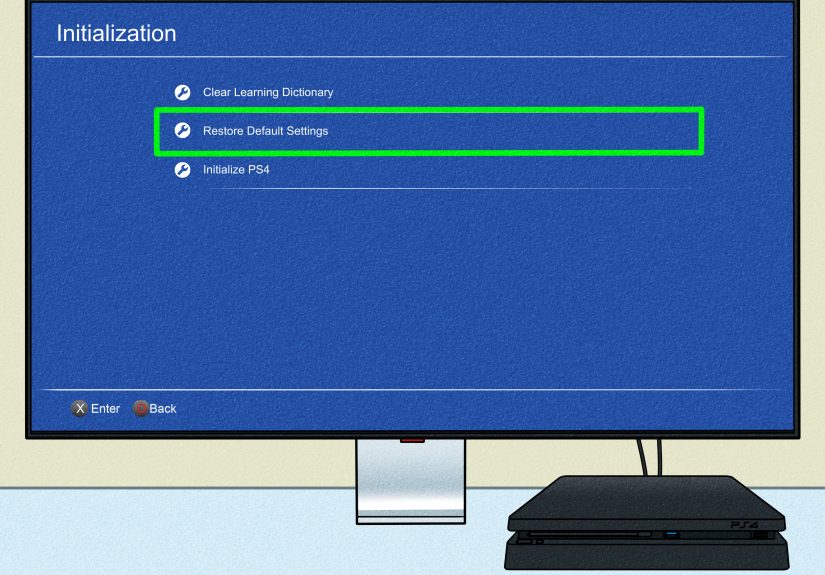
Safe Mode Option: Restore Default Settings
This resets system settings (like display/audio/network) back to defaults without necessarily deleting everything. It can help if the console is stuck because of a bad settinglike a resolution the TV can’t display.
Safe Mode Option: Initialize PS4 (Last Resort)
Initialize PS4 is the “burn it down and rebuild it” option. It typically wipes data. If you choose an option that reinstalls system software, it can fix severe corruptionbut you should assume you will lose local data unless you have backups.
If you can access Safe Mode and you’ve tried rebuild/update/restore with no luck, initialization is the final software step before you should suspect a hardware fault.
Easy Fix #4: Reseat (or Replace) the Hard Drive
A failing or poorly connected hard drive can trigger boot problems that look like BLODespecially if the PS4 turns on but won’t complete startup. The good news: checking the drive is relatively straightforward on most PS4 models.
Reseat the hard drive connection
- Power off the PS4 completely and unplug it.
- Remove the hard drive cover (model-specific, often tool-light).
- Slide the drive out carefully, then slide it back in firmly.
If your PS4 boots after reseating, the drive connection was likely loose.
Replace the hard drive if needed
If your PS4 keeps failing to boot, freezes during updates, or can’t rebuild the database, the hard drive may be dying. Replacing it with a compatible 2.5-inch drive or SSD can revive a “dead” PS4assuming the motherboard and power systems are healthy. After replacement, you’ll typically reinstall system software via USB in Safe Mode.
Easy Fix #5: Deal With Overheating and Dust (The Silent Villains)
Heat can cause unstable boot behavior, sudden shutoffs, and performance issues. If your PS4 sits in a tight cabinet, shares space with a router that runs hotter than the sun, or hasn’t been cleaned since the launch of your favorite battle royale, overheating could be contributing to the problem.
Signs heat might be involved
- the console shuts off after a short time
- fans get loud quickly
- the console feels unusually hot
- you’ve seen overheating warnings in the past
Quick cooling and airflow fixes
- Move the PS4 to an open, well-ventilated area (not inside a closed cabinet).
- Clean dust from vents using compressed air (short bursts; don’t spin fans like a wind turbine).
- Keep it off soft surfaces that block airflow (carpet, blankets, couch cushionsaka “the PS4 sauna experience”).
After improving airflow, try powering on again. If it boots, consider running a database rebuild to help the system stabilize after prior forced shutoffs.
When “Easy Fixes” Stop Being Honest: Hardware Problems to Watch For
Sometimes BLOD is your PS4 waving a tiny blue flag that says: “This is not a software issue.” Here are common hardware culprits and how to recognize them:
1) Damaged HDMI port
If the PS4 turns on but never outputs video, and you can see physical damage (bent pins, loose port), this is a prime suspect. HDMI port repair is common and typically requires soldering skills and proper tools.
2) Power supply problems
If the console pulses blue briefly and shuts off, or it’s inconsistent about powering on, the power supply could be failing. Power issues can also mimic other failures, so rule out the power outlet and cable first.
3) Motherboard/APU-related faults
This is the category you don’t want, because it’s rarely a quick DIY win. Some BLOD cases involve internal board-level faults that need professional diagnosis and repair. If your PS4 won’t reach Safe Mode consistently and software recovery doesn’t help, this becomes more likely.
So… should you repair it or replace it?
Here’s a practical rule of thumb:
- If you can enter Safe Mode and the system responds to rebuild/update/restore, try software recovery first.
- If there’s no display output but the console stays on, investigate HDMI-related issues.
- If the console powers off quickly, prioritize power and overheating checks.
- If it’s still dead after the full software checklist and basic hardware checks, consider a reputable repair shop for a quote.
A Simple Troubleshooting Flow (So You Don’t Loop Forever)
- Check HDMI + TV input (swap ports/cables)
- Unplug accessories (boot with bare minimum)
- Power cycle (full shutdown, unplug, wait)
- Enter Safe Mode
- Change Resolution → Rebuild Database → Update System Software
- Restore Default Settings
- Initialize PS4 (only if you accept data loss)
- Reseat/replace hard drive
- Consider hardware repair (HDMI port, PSU, board-level issues)
Real-World Experiences: of “What People Actually Run Into”
Let’s talk about the part guides don’t always admit: the PS4 Blue Light of Death can be weirdly inconsistent. And if you’ve been staring at that pulsing blue glow long enough, you’ve probably started bargaining with it (“If you boot one more time, I’ll stop leaving you in Rest Mode for days”). Here are common experiences PS4 owners reportand what tends to work most often.
Experience #1: “It happened after I moved my console.” This is incredibly common. The PS4 gets slid out of an entertainment center, cables get tugged, then suddenly you have BLOD and a TV that says “No Signal” like it’s personally offended. In these cases, the fix is often unglamorous: reseat the HDMI cable firmly, try a different HDMI port on the TV, and test a known-good HDMI cable. Some people also discover the HDMI port itself has loosened over timeespecially if the cable was bent at an angle behind a tight cabinet.
Experience #2: “It started after a power outage or storm.” Sudden power loss can corrupt data or interrupt system updates. That’s why the power cycle step (unplug, wait, restart) is more than superstition. If you can get into Safe Mode after a power event, Rebuild Database is a popular win because it helps the console re-index its storage after an improper shutdown. If the system update got interrupted, updating system software (internet or USB) is often the next best move.
Experience #3: “It turns on, glows blue, then shuts off fast.” This pattern scares people because it feels final. Sometimes it’s still fixableespecially if overheating is involved. Owners often report their console had been running hot for months (loud fan, cramped space, dust buildup), then one day it just… gave up. Improving ventilation, clearing dust from vents, and letting the console cool completely can bring it back long enough to back up data or run repairs. If it still shuts off quickly no matter what, power supply or internal hardware becomes more likely.
Experience #4: “Safe Mode works, but normal boot doesn’t.” Counterintuitively, this is good news. It suggests the PS4 is capable of a minimal startup, which means you have a real shot with software-side fixes. In these scenarios, people often succeed with a sequence like: Change Resolution (to restore video output), then Rebuild Database, then Update System Software. If the hard drive is failing, Safe Mode may become increasingly unstableso if rebuild/update fails repeatedly, reseating or replacing the drive becomes the next logical step.
Experience #5: “Nothing worked… until I stopped doing ten things at once.” A surprising number of successful recoveries come from simplifying the setup: unplug everything, use confirmed good cables, plug directly into the wall, and retry steps in a clean order. BLOD troubleshooting rewards calm repetition. Not because the PS4 has feelingsbut because you’re isolating variables like a detective who refuses to be distracted by vibes.
The takeaway from these real-world patterns is simple: start with cables and power, then use Safe Mode strategically, and only then assume the console has a deeper hardware fault.
Conclusion: Get Your PS4 Back (Without Losing Your Mind)
The PS4 Blue Light of Death sounds dramaticand sometimes it isbut many cases come down to fixable issues: a bad HDMI handshake, a corrupted database, a failed update, or a hard drive that needs reseating or replacing. Work from the easiest fixes upward, use Safe Mode like your built-in repair toolkit, and be honest about the point where hardware repair makes more sense than endless retries.
If your PS4 still won’t boot after power cycling, Safe Mode repairs, and storage checks, don’t blame yourself. Consoles age, components wear, and sometimes the only true fix is professional repair (or upgrading to a newer system). Either way, you’ll know you tried the smart steps firstand you didn’t immediately jump to “throw it out” like a sitcom character.