
Table of Contents >> Show >> Hide
- Oak Identification in 60 Seconds: The Cheat Sheet
- Step-by-Step: How to Identify Oak Trees (Without Guessing)
- Step 1: Confirm You’re Looking at a Tree (Not “Poison Oak”)
- Step 2: Check Leaf ArrangementAlternate Is Your Friend
- Step 3: Read the Leaf Like a Detective
- Step 4: Sort It into the Two Big Oak “Teams”
- Step 5: Use the AcornNature’s Little Name Tag
- Step 6: Check Buds and Twigs (Especially in Winter)
- Step 7: Use BarkBut Don’t Let It Boss You Around
- The Parts of an Oak Tree (And What They Do)
- Roots: The Underground MVP
- Trunk and Bark: Protection + Plumbing Highway
- Cambium and Wood: The Growth Engine
- Branches and Twigs: The Architecture
- Buds: Next Year’s Leaves and Flowers
- Leaves: Your Best ID Tool Most of the Year
- Flowers: The Underappreciated Phase
- Acorns: Fruit, Seed, and Identification Jackpot
- Common U.S. Oaks You’ll Run Into (And How to Recognize Them)
- Seasonal Oak ID: What to Look for All Year
- Practical Tips: How to Get Confident (Fast)
- 500+ Words of Real-World Experiences: What It’s Like to Learn Oak ID
- Conclusion
Oaks are the celebrities of the tree world: dramatic silhouettes, iconic leaves, and those acorns that squirrels treat like gold bars. But here’s the twist“oak” isn’t one tree. It’s a whole genus (Quercus) with loads of species across the United States, and they love to disguise themselves as one another.
This guide gives you a practical, field-ready way to identify oak trees and understand their parts (leaves, bark, buds, flowers, acorns, and more). You’ll learn the reliable “tells,” the seasonal clues, and the fastest ways to narrow an oak down to a groupand sometimes a specieswithout needing a forestry degree or a wizard staff.
Oak Identification in 60 Seconds: The Cheat Sheet
- Leaves: Most oaks have alternate, simple leaves (one leaf per node, not paired).
- Red oak group vs. white oak group:
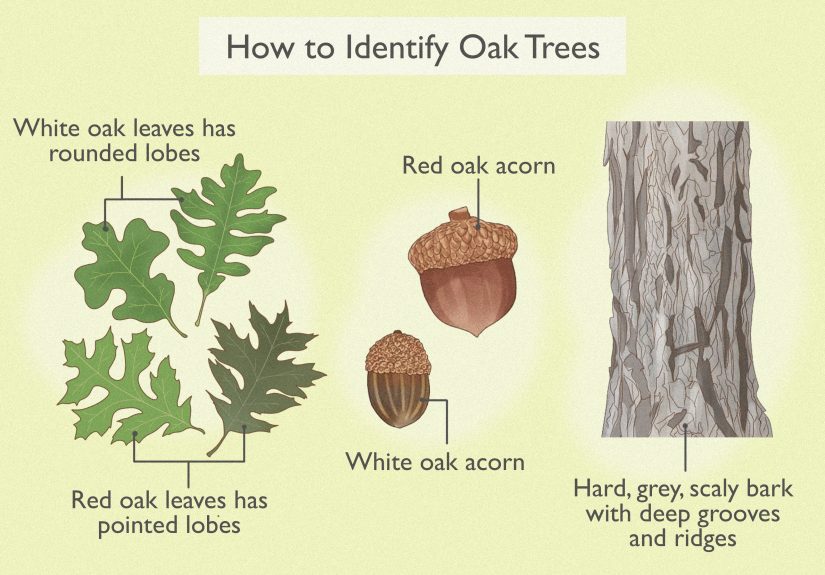
- Red oaks: leaf lobes often end in bristle tips (tiny spikes). Acorns typically take two growing seasons to mature.
- White oaks: leaf lobes usually rounded (no bristles). Acorns typically mature in one season.
- Acorns: The “cap” (cupule) shape, size, and coverage can be a big clue.
- Buds/twigs: Oaks often have clustered buds near the twig tip.
- Bark: Useful, but only once you compare it with leaves/acornsbark can be a trickster.
Step-by-Step: How to Identify Oak Trees (Without Guessing)
Step 1: Confirm You’re Looking at a Tree (Not “Poison Oak”)
First, let’s prevent misery. Poison oak is not an oak tree. It’s a rash-delivering plant in the Toxicodendron group (same family drama as poison ivy). A quick tell: poison oak typically has three leaflets per leaf. True oaks have simple leaves (one blade per leaf), even when lobed and oak-y looking.
Step 2: Check Leaf ArrangementAlternate Is Your Friend
Look at how leaves attach to the twig. In many oaks, leaves are alternate: one leaf per node, zig-zagging along the stem. If you see leaves in perfect pairs directly opposite each other all along the twig, you may be looking at a different genus (hello, maplesnice to see you, but not what we’re doing today).
Step 3: Read the Leaf Like a Detective
Oak leaves are famously variable, but they still follow patterns. Focus on these features:
- Shape: lobed, toothed, or nearly smooth (some oaks have fewer lobes than you’d expect).
- Lobe tips: rounded vs. bristle-tipped (a major red/white oak clue).
- Sinuses: the “valleys” between lobesdeep or shallow.
- Texture: leathery vs. papery; glossy vs. matte.
- Underside: pale, fuzzy, or smooth can be species-specific.
Step 4: Sort It into the Two Big Oak “Teams”
If you only learn one oak trick, make it this: many U.S. oaks fall into two major groupsoften called red oaks and white oaks. This doesn’t mean the tree is red or white. It means they share certain traits that make identification easier.
Red Oak Group: The Bristle-Tip Crew
Red oaks commonly have lobes with tiny bristles at the tipslike the leaf is wearing microscopic punk-rock spikes. Their acorns often take two growing seasons to mature, so you can sometimes find “two generations” of acorns on the same tree at once.
White Oak Group: The Rounded-Lobe Squad
White oaks usually have lobes with rounded ends (no bristles). Their acorns typically mature in one season and, in many cases, can germinate sooner after dropping (sometimes in fall), which is why wildlife often treats them like premium snacks.
Step 5: Use the AcornNature’s Little Name Tag
Acorns are the oak’s signature accessory. When you find them, examine:
- Cap shape: shallow saucer vs. deeper cup.
- Cap coverage: does it cover 1/4 of the nut… or most of it?
- Cap texture: tight scales, shaggy fringe, bumpy, or smooth.
- Acorn size and shape: long, round, narrow, chunkyyes, “chunky” is a valid field term.
Example: Bur oak is famous for acorns with a dramatic, fringed cap that can cover much of the nutlike the acorn is wearing a deluxe fur collar.
Step 6: Check Buds and Twigs (Especially in Winter)
When leaves are gone, buds become your best clues. Oaks often show clusters of buds near the twig tip. Look for:
- Terminal bud cluster: multiple buds grouped at the end of the twig.
- Bud shape: rounded vs. pointed; small vs. chunky.
- Twigs: smooth or hairy; stout or slender.
Winter ID is like a scavenger hunt for tiny details. A hand lens (or your phone’s camera zoom) helps a lot.
Step 7: Use BarkBut Don’t Let It Boss You Around
Bark changes with age and can vary with environment, so don’t use bark alone. That said, bark can confirm your leaf/acorn conclusions:
- White oak: often lighter gray and scaly/flaky on mature trunks (varies by species and age).
- Some red oaks: can develop darker ridges and a more furrowed look.
Best practice: bark should be your “third vote,” not your only vote.
The Parts of an Oak Tree (And What They Do)
Knowing the parts helps you identify themand makes you sound like you know what you’re doing in front of friends. Win-win.
Roots: The Underground MVP
Oak roots anchor the tree, absorb water and nutrients, and store energy. Many oaks develop strong structural roots and can be sensitive to soil compaction and root disturbance. If you’re trying to keep an oak healthy, treat the root zone like a “no-stomping lounge.”
Trunk and Bark: Protection + Plumbing Highway
The trunk supports the canopy and transports water and sugars. Bark protects against injury, temperature swings, and pests. Bark texture and ridge patterns can help with IDespecially when paired with twig and leaf clues.
Cambium and Wood: The Growth Engine
The cambium is the growth layer that creates new wood and inner bark. Oaks are prized for strong wood, which is why they’re used for flooring, furniture, and barrelsbasically, oaks are the tree world’s overachievers.
Branches and Twigs: The Architecture
Branch structure (wide-spreading vs. more upright) can hint at species, especially in open-grown trees. Twigs hold buds, leaves, and flowers, and their texture and bud clustering are key in winter identification.
Buds: Next Year’s Leaves and Flowers
Buds protect future growth. In oaks, the clustered terminal buds can be a helpful genus-level clue. Bud shape can help separate similar species when leaves and acorns aren’t available.
Leaves: Your Best ID Tool Most of the Year
Leaves handle photosynthesis and provide the fastest visual signals for identification. Remember the big picture: alternate arrangement, then lobe tips and shape, then texture and underside details.
Flowers: The Underappreciated Phase
Oak flowers appear in spring. Many oaks have separate male and female flowers on the same tree. The male flowers often show up as dangling catkins, while female flowers are smaller and less obvious. If you catch them at the right time, they’re excellent confirmation that you’re looking at Quercus.
Acorns: Fruit, Seed, and Identification Jackpot
Acorns are the oak’s fruit (the seed inside is the next oak tree, assuming a squirrel doesn’t cash it in first). Acorn traitscap, size, and maturation timinghelp separate red oak and white oak groups and can narrow species identification.
Common U.S. Oaks You’ll Run Into (And How to Recognize Them)
White Oak (Quercus alba)
Classic rounded lobes (no bristles), and a “friendly” leaf look that screams “storybook oak.” Often a cornerstone species in eastern forests and a favorite for wildlife.
Northern Red Oak (Quercus rubra)
Pointed lobes with bristle tips are common. Often planted as a shade tree, with strong fall color in many regions. Acorns typically mature on a two-season schedule.
Pin Oak (Quercus palustris)
Deeply lobed leaves with bristle tips and a more “cut-out” silhouette. Often used in landscaping; look for the red-oak-group leaf tip bristles and smaller acorns with a shallow cap.
Live Oak (Quercus virginiana)
Iconic in the Southeast, with sprawling limbs and a dramatic canopy. Leaves can be more oval and leathery, sometimes with minimal lobing. If you picture a coastal tree wearing Spanish moss like a fashion statement, you’re probably thinking of a live oak.
Bur Oak (Quercus macrocarpa)
Known for its bold acorns with fringed caps. Leaves can have a “waist” shape with large upper lobes. If you find a fringed acorn cap that looks like it belongs on a tiny medieval helmet, bur oak is a prime suspect.
Post Oak (Quercus stellata)
Often shows a distinctive cross-like leaf silhouette in many cases. Helpful twig/bud clues can include bud clusters near twig tips, though twig ID can be subtle and benefits from practice.
Seasonal Oak ID: What to Look for All Year
Spring
- New leaves unfurling (look for lobe shape and tips).
- Catkins (male flowers) may appeardangly, pollen-ready.
- Fresh twig growth helps you see bud arrangement.
Summer
- Leaves are fully developedbest time for leaf-based ID.
- Acorns may be forming (sometimes small, green, and easy to miss).
Fall
- Acorns drop (ID jackpot).
- Leaf color may changehelpful, but not always consistent.
Winter
- Buds and twig structure become the stars.
- Bark patterns are more visible without foliage.
- Some oaks hold dead leaves (marcescence), especially on younger treesan extra clue, not a guarantee.
Practical Tips: How to Get Confident (Fast)
Use the “Three-Feature Rule”
Never identify an oak from one feature alone. Use at least three:
- Leaves (arrangement + lobe tips)
- Acorns (cap + size + maturity timing if known)
- Buds/twigs or bark (clustered buds, twig texture, bark pattern)
If all three point the same direction, you’re usually in good shape.
Photograph Like a Pro (Even If You’re Not)
- One photo of the whole tree (shape/crown).
- One close-up of a leaf (front and back).
- One close-up of twigs/buds.
- One photo of acorns and caps (if present).
- One photo of bark (from a few feet back, not an extreme close-up only).
Expect Variation (Because Oaks Love Chaos)
Leaves can vary on the same tree (sun leaves vs. shade leaves). Young trees can look different than mature ones. Hybrids exist. Oaks are basically the improv actors of the forest: the theme is consistent, but the performance changes nightly.
500+ Words of Real-World Experiences: What It’s Like to Learn Oak ID
When people first try to identify oak trees, the experience usually starts with confidence and ends with a suspicious pile of leaves in their pocket. It’s normal. Oaks are everywhere, and your brain wants them to behave like a single, neat categorylike “dogs” or “pizza toppings.” But oaks behave more like “music genres”: the big group is clear, and then the subgenres start arguing.
A common early moment happens on a neighborhood walk. You spot a lobed leaf and think, “Oak!” Then you find another oak nearby with a leaf that looks totally differentnarrower, deeper cuts, sharper tips. That’s usually when the first breakthrough happens: you stop asking, “Is this an oak?” and start asking, “Which kind of oak group is this?” That shift from yes/no to narrowing-down is where identification becomes fun instead of frustrating.
Another classic experience is the “acorn revelation.” People often assume all acorns look the sameuntil they lay a few side by side. Suddenly you see caps that are shallow like tiny saucers, caps that are deep like little bowls, and caps with shaggy fringes that look like the acorn is wearing a Halloween costume. Once you notice cap styles, you’ll start spotting them on the ground like clues in a mystery novel. Even better: you can often identify a bur oak from a single dramatic fringed cap, which feels like finding a cheat code in a video game.
Seasonal learning is its own mini-adventure. In summer, the process tends to be leaf-driven: you compare lobe shapes, tip bristles, and leaf textures. In fall, the experience becomes a treasure huntacorns, caps, and leaf litter everywhere. In winter, things get weird in a good way: you learn to look at buds, twig thickness, and bark ridges. The first time someone correctly recognizes an oak by bud clusters at the end of a twig, they usually look around like they just performed magic. (“Did anyone see that? No? Okay, I’m still counting it.”)
People also learn quickly that oak identification is a “multiple-evidence” skill. Bark alone can fool you because it changes with age. Leaves alone can fool you because they vary across the same tree. But when you combine leaf arrangement, lobe tip style (bristles or rounded), and acorn traits, your confidence rises fast. This is why many experienced tree-spotters develop a routine: glance at the canopy shape, confirm alternate leaves, check the lobe tips, then scan the ground for acorns like you’re searching for dropped change in a couch.
Finally, one of the most satisfying experiences is realizing you can recognize “oak habitat vibes.” On a hike, you start expecting certain oaks in certain placesupland slopes, bottomlands, sandy soils, suburban lawnsthen you confirm with leaves and acorns. It’s not just identification anymore; it’s a relationship with the landscape. Oaks stop being background scenery and start being familiar characters you greet in different neighborhoods. And once that happens, you’ll never walk past an oak the same way againbecause now you know it’s not just a tree. It’s a whole story with leaves, buds, bark, flowers, and acorns as the plot points.
Conclusion
To identify oak trees reliably, use a simple strategy: start with leaf arrangement, sort into red oak vs. white oak groups using lobe tips, then confirm with acorns and buds/bark. Learn the partsleaves, buds, catkins, acorns, barkand each season becomes an oak clue festival. With a few walks and a handful of careful observations, you’ll go from “some kind of oak” to “pretty sure that’s a red oak group… possibly pin oak” faster than you think.






 Close
Close