Table of Contents >> Show >> Hide
- Why Grocery Store Flowers Can Look So Good
- What to Buy at the Store
- What You Need at Home
- How to Arrange Grocery Store Flowers Step by Step
- 1. Strip off the packaging and edit ruthlessly
- 2. Clean the vase and fill it with water
- 3. Remove leaves below the waterline
- 4. Recut the stems
- 5. Build the base with greenery
- 6. Add focal flowers in odd numbers
- 7. Add secondary flowers for fullness
- 8. Finish with filler flowers
- 9. Step back and rotate the vase
- Easy Grocery Store Flower Arrangement Ideas
- Common Mistakes That Make Flowers Look Cheap
- How to Keep Your Arrangement Looking Fresh Longer
- Practical Experience: What Actually Happens When You Arrange Grocery Store Flowers
- Conclusion
You know that moment when you grab a bouquet from the grocery store because it looks cheerful under fluorescent lighting, then get home and realize it has the posture of a tired mop? Good news: that is not the bouquet’s final form. With a few simple flower arranging tricks, grocery store flowers can look polished, intentional, and surprisingly expensive. No fancy florist badge required. No beret required either, although I will not stop you.
If you have ever wanted to turn a supermarket bouquet into something worthy of your dining table, entry console, or “casually perfect” kitchen counter photo, this guide will walk you through it. Below, you will learn how to choose the right flowers, prep them properly, build a balanced arrangement, and keep it looking fresh longer. The best part is that a pretty arrangement from grocery store flowers is less about rare blooms and more about smart editing, shape, and a little floral confidence.
Why Grocery Store Flowers Can Look So Good
Grocery store flowers get underestimated all the time, and honestly, they deserve better PR. Many supermarkets carry classic blooms that floral designers use every day: roses, tulips, carnations, alstroemeria, mums, hydrangeas, baby’s breath, eucalyptus, and seasonal filler flowers. The difference between a “just bought it” bouquet and a beautiful DIY flower arrangement usually comes down to technique.
When you remove excess packaging, recut the stems, choose a better vase, and arrange the flowers in layers, you instantly upgrade the look. A bunch that felt random in plastic can suddenly look soft, full, and styled. In other words, your bouquet is not messy. It is simply waiting for direction.
What to Buy at the Store
Start with a simple floral formula
The easiest way to make a pretty arrangement from grocery store flowers is to shop with a plan. Instead of tossing five unrelated bunches into your cart like you are on a floral game show, use this beginner-friendly formula:
- Focal flowers: the stars of the show, such as roses, lilies, hydrangeas, or large mums
- Secondary flowers: smaller blooms that support the main flowers, such as carnations, alstroemeria, spray roses, or tulips
- Filler flowers: airy accents like baby’s breath or wax flower
- Greenery: eucalyptus, ruscus, leatherleaf fern, or any leafy stems that create shape
This mix makes the arrangement feel layered instead of flat. Think of it as the floral version of getting dressed: statement piece, supporting pieces, and accessories.
Choose a color story
A good color palette can make even inexpensive flowers look elegant. For an easy win, pick one of these approaches:
- Monochromatic: shades of one color, such as blush, rose, and burgundy
- Soft and airy: white, cream, pale pink, and soft green
- Bold and cheerful: yellow, orange, coral, and bright pink
- Modern contrast: white with deep green, or purple with chartreuse greenery
If the flower cooler looks chaotic, focus on color first and type second. A limited palette often makes the arrangement look more intentional, even when the blooms come from three different supermarket buckets.
Look for flowers with life left in them
Pick stems that look fresh, upright, and hydrated. Avoid bunches with slimy stems, yellowing leaves, browning petals, or blooms that seem fully exhausted before they even leave the store. Flowers that are just starting to open often give you the best vase life, while a mix of tighter buds and partially open blooms helps the arrangement evolve over several days.
What You Need at Home
You do not need a professional floral toolkit. For a lovely supermarket bouquet arrangement, gather these basics:
- A clean vase
- Sharp scissors, pruners, or floral snips
- Fresh water
- Flower food, if included
- Optional floral tape for a grid across the vase opening
If your vase has a wide mouth and your flowers tend to flop like they lost the will to perform, a simple tape grid can help hold stems in place. It is one of those little tricks that makes you feel suspiciously competent.
How to Arrange Grocery Store Flowers Step by Step
1. Strip off the packaging and edit ruthlessly
Take off all the plastic sleeves, rubber bands, and mystery paper collars. Then separate the flowers by type. Remove any bruised petals, tired leaves, or broken stems. This part matters more than people think. Grocery bouquets often look crowded because they were packed for transport, not beauty. Once you spread everything out, you can actually see what you are working with.
2. Clean the vase and fill it with water
A clean vase is non-negotiable. Old residue and bacteria shorten the life of cut flowers fast. Wash the vase thoroughly, fill it with fresh water, and add flower food if you have it. If the bouquet came with one little packet, congratulations: you have been handed flower insurance. Use it.
3. Remove leaves below the waterline
Any leaf sitting underwater is basically planning a bacterial uprising. Strip off lower foliage so no leaves sit beneath the surface. Your arrangement will last longer, and the water will stay cleaner.
4. Recut the stems
Trim a little off the bottom of each stem at an angle just before placing it in water. This helps flowers drink better and gives them a fresh start after their trip from store to home. If the bouquet has been out of water for a while, this step is even more important.
5. Build the base with greenery
Start with greenery to create shape and movement. Let some stems lean outward and some stand a bit taller so the arrangement does not look like a flower lollipop. Greenery is the skeleton of the design. Without it, flowers tend to hover awkwardly like they are waiting for instructions.
6. Add focal flowers in odd numbers
Place your biggest or most eye-catching blooms next. Odd numbers usually look more natural than even ones, so group three or five focal flowers if possible. Space them around the arrangement rather than shoving them all into the center. You want visual balance, not a floral traffic jam.
7. Add secondary flowers for fullness
Now tuck in your supporting blooms around the focal flowers. Vary the heights slightly so the arrangement feels relaxed and dimensional. This is where the bouquet starts looking lush instead of sparse.
8. Finish with filler flowers
Use airy filler stems to soften gaps and create a finished shape. A little baby’s breath, wax flower, or delicate spriggy texture goes a long way. Do not overstuff it. A pretty arrangement needs breathing room.
9. Step back and rotate the vase
Turn the vase as you work. Grocery store flower arrangements often look good from one side and deeply confusing from the other. Rotating helps you catch bald spots, crowded areas, and any stem that is trying to stage a dramatic exit.
Easy Grocery Store Flower Arrangement Ideas
Soft romantic arrangement
Use pale pink roses, white carnations, baby’s breath, and eucalyptus. This look is classic, gentle, and hard to mess up. It works well for bedside tables, brunch tables, or anywhere you want a little softness without going full wedding centerpiece.
Bright and cheerful arrangement
Mix yellow tulips, orange spray roses, white daisies, and fresh green filler. This style feels sunny and casual, perfect for kitchens or entryways. It says, “Yes, I do have my life together,” even if there are dishes in the sink.
Modern monochrome arrangement
Choose all white flowers with green foliage: white roses, white mums, white alstroemeria, and eucalyptus. A restrained palette often looks elegant and expensive, especially in a simple glass vase.
Seasonal supermarket centerpiece
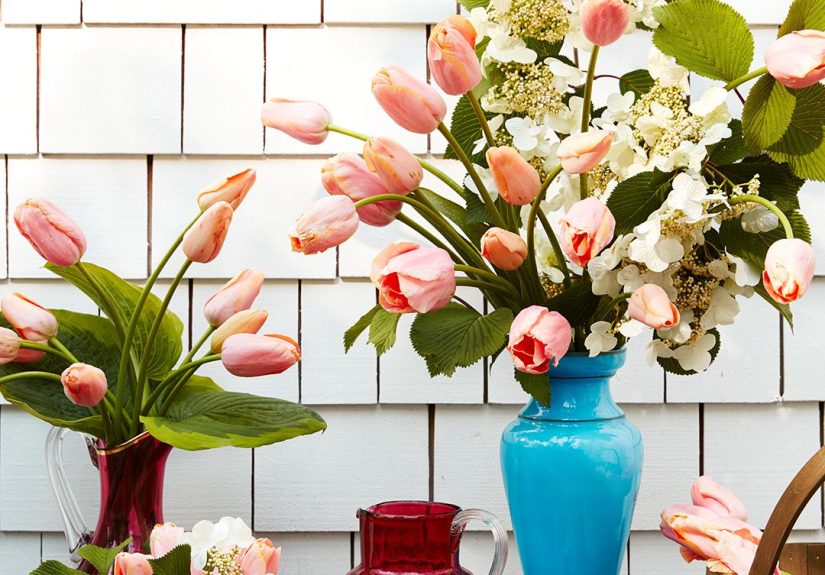
For fall, try mums, carnations, berry stems, and seeded eucalyptus. In spring, go for tulips, daffodils, and light greenery. In summer, bright mixed blooms feel playful. In winter, white flowers and dark green foliage give a crisp, clean look.
Common Mistakes That Make Flowers Look Cheap
Even beautiful blooms can look underwhelming when the arrangement goes sideways. Watch out for these common flower arranging mistakes:
- Using a vase that is too tall or too wide for the flowers
- Leaving the bouquet in its store wrap and calling it done
- Keeping all stems the same height
- Cramming too many flowers into one vase
- Skipping greenery and texture
- Letting leaves sit in the water
- Forgetting to refresh the water
One of the easiest fixes is stem variation. When every bloom hits the same height, the arrangement can look stiff and top-heavy. A few taller stems, a few lower ones, and a gently rounded shape create a much prettier result.
How to Keep Your Arrangement Looking Fresh Longer
Once you have made your pretty arrangement from grocery store flowers, the goal is to keep it alive long enough for people to admire it and for you to feel smug in a reasonable way.
- Change the water regularly, especially if it looks cloudy
- Re-trim the stems every few days
- Remove wilted blooms as they fade
- Keep the arrangement away from direct sun, heaters, and drafts
- Do not place flowers right next to ripening fruit
- Top off the water level often, because some flowers are surprisingly thirsty
If one flower variety starts fading before the others, pull it out and let the rest keep performing. A grocery store bouquet does not have to expire all at once. Think of it as a rotating cast.
Practical Experience: What Actually Happens When You Arrange Grocery Store Flowers
In real life, making a pretty arrangement from grocery store flowers rarely starts in a dreamy sunlit kitchen with perfect countertops and a string quartet in the background. It usually starts with a bunch of flowers on the passenger seat, one stem already bent, and the vague hope that this bouquet will somehow become “effortlessly elegant” by dinner. The good news is that this is exactly why grocery store flower arranging becomes such a satisfying little ritual. You do not need perfection. You just need a willingness to fuss with the stems for ten minutes and trust the process.
A common experience is realizing that the bouquet looks worse before it looks better. The minute you take off the plastic wrap, the flowers can seem uneven, floppy, and mildly chaotic. This is normal. In fact, it is part of the magic. Once the bunch is separated into focal flowers, secondary flowers, filler, and greenery, the whole thing starts making more sense. Suddenly the “mess” turns into ingredients. The roses are not random anymore. The carnations are not filler in a rude way. The eucalyptus is not extra. Everybody has a job.
Another very real experience is discovering that vase choice changes everything. A bouquet that looked awkward in a tall cylinder can become charming in a rounder vase with a narrower neck. Many people think they need better flowers when what they really need is a better container. It is a humbling but useful lesson. The same stems can go from drugstore prom to casual-luxury dinner party just by changing the vase and cutting the stems shorter.
Then there is the moment of over-arranging. Almost everyone does it at first. You keep adding stems, turning the vase, adding more stems, moving one rose a quarter inch to the left like you are defusing a bomb, and suddenly the arrangement looks packed and tense. Usually the fix is simple: remove two or three stems, let the flowers breathe, and stop trying to make every inch full. Space is part of what makes an arrangement look expensive. Flowers need room to look like themselves.
People also tend to remember the arrangements that changed over time. Tulips stretch. Roses open wider. Hydrangeas drink like they just finished a marathon. A bouquet on day one can look totally different on day three, and that is part of its charm. Some of the prettiest supermarket flower arrangements are the ones that relax and open naturally once they settle in. What begins as a neat arrangement often becomes softer and more graceful after a day or two.
Perhaps the best experience tied to grocery store flowers is how achievable they make beauty feel. You do not need a floral design class, a holiday budget, or a luxury florist to make your home feel special. A few bunches, a clean vase, and some thoughtful arranging can shift the mood of a room immediately. It is practical, affordable, and oddly comforting. And once you do it a few times, you start seeing the flower section differently. Not as a place with random bunches, but as a tiny build-your-own centerpiece bar. Which, frankly, is a much more fun way to shop.
Conclusion
Learning how to make a pretty arrangement from grocery store flowers is one of those wonderfully useful skills that looks fancy but is actually very doable. Start with a simple mix of focal flowers, supporting blooms, filler, and greenery. Prep the flowers properly, use a clean vase, vary the stem heights, and build the arrangement in layers. That is the secret. Not expensive flowers. Not floral wizardry. Just good editing, a little shape, and a willingness to trim with purpose.
Once you get the hang of it, grocery store bouquets become less like an impulse buy and more like an affordable decorating tool. You can make a cheerful centerpiece, a soft romantic bouquet, or a modern arrangement with whatever your local store has in stock. And when someone says, “Wow, where did you get those arranged?” you can smile and say, “The grocery store,” which is always deeply satisfying.