
Table of Contents >> Show >> Hide
- Why Stovetop Skillet Cookies Actually Work
- Ingredients for Chocolate Chip Stovetop Cookies in a Skillet
- Best Equipment to Use
- How to Make Chocolate Chip Stovetop Cookies in a Skillet
- What the Finished Cookies Should Look Like
- Tips for the Best Chocolate Chip Stovetop Cookies
- Flavor Variations Worth Trying
- Common Problems and How to Fix Them
- How to Serve Skillet Stovetop Cookies
- How to Store and Reheat Them
- Are Stovetop Chocolate Chip Cookies Better Than Oven Cookies?
- Experience: What It Is Really Like Making Chocolate Chip Stovetop Cookies in a Skillet
- Final Thoughts
There are two kinds of dessert emergencies in life: the kind where you run out of chocolate, and the kind where your oven decides it has entered its dramatic era. This article is for the second one. If you are craving warm, gooey chocolate chip cookies but only have a skillet and a stovetop, good news: you can absolutely make it happen. You will not get a cookie that is exactly the same as a tray baked in a perfectly calibrated oven, but you will get a batch of rich, chewy, crispy-edged cookies that taste like a cozy kitchen victory.
Chocolate chip stovetop cookies in a skillet sit somewhere between classic drop cookies and pan cookies. The bottoms get deeply golden, the centers stay tender, and the whole process feels a little rebellious in the best possible way. It is also practical. Maybe your oven is broken. Maybe you live in a tiny apartment and do not want to heat up the whole place. Maybe you just enjoy telling people, “Oh, these? I made them in a skillet,” and then accepting the applause.
Below, you will find an easy, in-depth guide to making chocolate chip stovetop cookies in a skillet, including ingredients, step-by-step instructions, troubleshooting tips, flavor upgrades, storage advice, and a longer experience section at the end with real-world lessons that make the method feel much less mysterious.
Why Stovetop Skillet Cookies Actually Work
A skillet gives cookie dough direct, steady heat from below. That means the bottoms brown beautifully, especially in cast iron, while a lid traps enough heat to help the tops cook through. In other words, your pan becomes a tiny cookie chamber. The result is not identical to oven baking, but it is deliciously close when you keep the heat low and stay patient.
This method works best when you think like a cookie whisperer instead of a pancake speedrunner. Low heat matters. A cool skillet matters. A lid matters. Slightly flattened dough matters. And resisting the urge to crank the burner up “just a little” matters most of all. The stovetop is powerful, but it is also sneaky. One moment you are making dessert; the next moment you are scenting your kitchen with Eau de Burnt Bottom.
Ingredients for Chocolate Chip Stovetop Cookies in a Skillet
This recipe makes about 8 medium cookies or 6 large cookies, depending on how generous you are feeling.
Cookie Dough
- 1/2 cup unsalted butter, softened
- 1/2 cup packed light brown sugar
- 1/4 cup granulated sugar
- 1 large egg
- 1 teaspoon pure vanilla extract
- 1 1/4 cups all-purpose flour
- 1 teaspoon cornstarch
- 1/2 teaspoon baking soda
- 1/2 teaspoon fine salt
- 3/4 cup semisweet chocolate chips
- Optional: 1/4 cup chopped dark chocolate for gooey pockets
- Optional: flaky sea salt for finishing
For the Skillet
- Butter or nonstick spray, if needed
The brown sugar helps deliver chewiness and deeper caramel flavor. A little cornstarch encourages a softer center. Semisweet chocolate keeps the sweetness balanced, while chopped chocolate creates those dramatic molten streaks that make people suddenly very interested in being your friend.
Best Equipment to Use
- 10-inch skillet, preferably cast iron or heavy nonstick
- Lid that fits the skillet, or aluminum foil
- Mixing bowl
- Wooden spoon or spatula
- Cookie scoop or tablespoon
- Cooling rack or plate
A cast-iron skillet is especially useful because it holds heat well and promotes browning. That said, a heavy nonstick skillet also works. If your skillet is very dark, expect the bottoms to brown faster. If it is lighter-colored, the cookies may cook a bit more gently. Neither is wrong. One just leans more “golden and classy,” while the other leans more “deeply caramelized and living dangerously.”
How to Make Chocolate Chip Stovetop Cookies in a Skillet
Step 1: Make the dough
In a medium bowl, cream the softened butter, brown sugar, and granulated sugar until the mixture looks smooth and fluffy. Stir in the egg and vanilla. Add the flour, cornstarch, baking soda, and salt, then mix just until no dry streaks remain. Fold in the chocolate chips and any chopped chocolate.
Do not overmix once the flour goes in. Cookie dough is not trying out for a marathon. Stir just enough to combine, then stop while you are ahead.
Step 2: Chill the dough
Cover and chill the dough for 20 to 30 minutes. This step is not just baking drama for the sake of drama. Chilling helps control spread, makes the dough easier to handle, and reduces the chance of greasy, overly flat cookies on the stovetop. If your kitchen is warm, chilling is especially helpful.
Step 3: Prep the skillet
Start with a cool skillet. Lightly grease it with a tiny amount of butter or nonstick spray, unless you are using a well-seasoned or nonstick pan that does not need it. Keep the burner off while you portion the dough. This prevents the cookies from spreading before they have a chance to set.
Step 4: Portion and flatten
Scoop 2 to 3 tablespoons of dough per cookie and place only 2 to 4 cookies in the skillet at a time, depending on pan size. Leave space between them. Gently press each mound down a little with the back of a spoon. You are not making cookie pancakes, so keep some height. Think “puffy hockey puck,” not “tiny frisbee.”
Step 5: Cook low and slow
Set the skillet over low heat and cover with a lid or a sheet of foil. Cook for about 7 to 9 minutes on the first side. Check occasionally. When the edges look set and golden brown, and the tops no longer look raw around the rim, carefully flip each cookie with a thin spatula.
Step 6: Finish the second side
Cook the second side for another 4 to 7 minutes, still covered, until the cookies are cooked through and lightly golden. The exact time depends on your skillet, the thickness of your dough, and how bossy your burner is. Total stovetop cook time is usually around 12 to 16 minutes.
Step 7: Cool slightly
Transfer the cookies to a cooling rack or plate and let them rest for 5 to 10 minutes. This is when the centers finish setting. They will be delicate right off the skillet, so treat them gently. Or, if you are eating one immediately while standing in the kitchen, accept the mess as part of the experience.
What the Finished Cookies Should Look Like
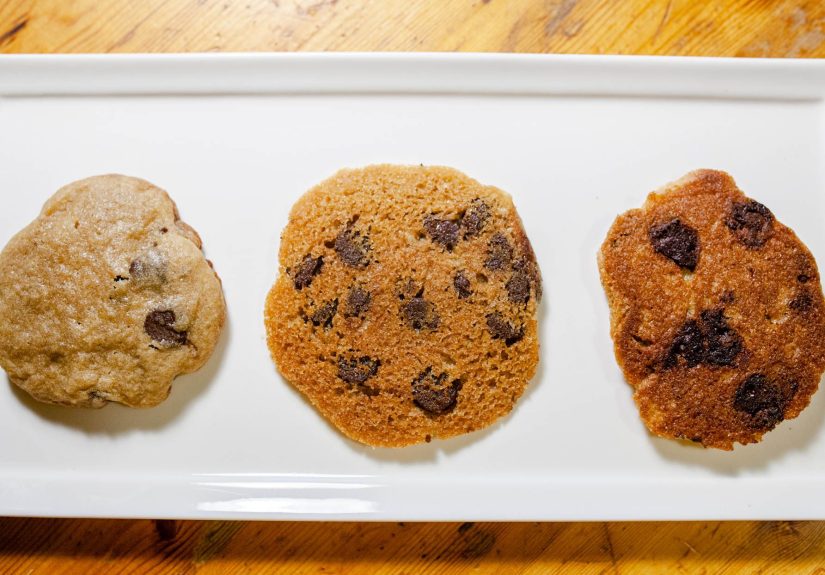
The bottoms should be golden to deep golden brown, never black. The tops should look mostly set, not glossy and wet. The centers should feel soft when gently touched, but not loose like uncooked batter. When broken open, the inside should be tender and a little gooey, with melted chocolate in every bite.
If you want a more traditional cookie appearance, skip flipping and simply cook covered until the tops are set. If you want a crisper finish on both sides, flipping is your friend. Both methods work. One is prettier, the other is crunchier, and dessert diplomacy says there is room for both.
Tips for the Best Chocolate Chip Stovetop Cookies
Keep the heat low
This is the golden rule. Medium heat is how you get dark bottoms and undercooked centers. Low heat gives the dough time to cook through while the lid traps warmth.
Use a lid every time
The covered skillet acts like a mini oven. Without that trapped heat, the tops can lag behind while the bottoms get too dark.
Test one cookie first
Every skillet behaves a little differently. Make one test cookie before cooking a full batch. It is the culinary version of sending a scout ahead.
Choose your skillet wisely
A lighter skillet may produce a gentler bottom crust, while a darker skillet can create a crispier, darker underside. If you love a deeply caramelized cookie, cast iron will probably make you very happy.
Do not overdo the dough size
Smaller portions are easier to cook evenly on the stovetop. Giant dough mounds can stay raw in the middle unless you keep the heat very low and the patience very high.
Add flaky salt at the end
This tiny detail makes a big difference. A little flaky sea salt on warm cookies wakes up the chocolate and balances the sweetness.
Flavor Variations Worth Trying
Brown Butter Version
Brown the butter first, let it cool slightly, and then make the dough. Brown butter adds nutty, toffee-like flavor that makes the cookies taste more complex and just a little fancy. It is the easiest way to make people ask, “Wait, what did you put in these?” in a flattering tone.
Chocolate Chunk Upgrade
Swap half the chips for chopped dark chocolate. Chips hold their shape better, but chopped chocolate creates melty pools, which is frankly excellent for drama and texture.
Nutty Crunch
Add 1/4 cup chopped toasted walnuts or pecans for crunch. Toasted nuts pair beautifully with brown sugar and chocolate.
Skillet S’mores Energy
Stir in broken graham crackers and mini marshmallows near the end of mixing for a campfire-inspired cookie. This version is chaotic, sticky, and very lovable.
Common Problems and How to Fix Them
The bottoms burn before the tops cook
Your heat is too high, the skillet is too hot when the dough goes in, or the cookies are too thick. Lower the heat, let the pan cool between batches if needed, and flatten the dough slightly more.
The cookies spread too much
The dough was probably too warm. Chill it longer and always start with a cool skillet.
The centers stay doughy
Cook a little longer over low heat with the lid on. Smaller cookies are also easier to cook through than oversized ones.
The cookies fall apart when flipped
Wait until the edges are more firmly golden and set, then slide the spatula fully underneath before turning. Confidence helps. So does a thin spatula.
How to Serve Skillet Stovetop Cookies
These cookies are best served slightly warm. Pair them with cold milk if you are feeling classic, coffee if you are an adult with priorities, or vanilla ice cream if you believe dessert should occasionally look like a celebration. A drizzle of caramel sauce or hot fudge also works, though at that point you are no longer making a snack. You are staging an event.
How to Store and Reheat Them
Store the cooled cookies in an airtight container at room temperature for up to 3 days. To reheat, warm them in a skillet over very low heat for 1 to 2 minutes, or microwave them for about 10 to 15 seconds. You can also freeze the dough in portions and cook later. Just thaw slightly before flattening and adding to the skillet.
Are Stovetop Chocolate Chip Cookies Better Than Oven Cookies?
Better? Not exactly. Different? Absolutely. Oven-baked cookies usually win for consistency and ease, but stovetop cookies offer a charmingly handmade texture with crisp bottoms, chewy middles, and a slightly rustic feel. They are also a lifesaver when an oven is not available. Think of them as the scrappy underdog of cookie methods: less polished, deeply satisfying, and very easy to root for.
Experience: What It Is Really Like Making Chocolate Chip Stovetop Cookies in a Skillet
The first time you make chocolate chip stovetop cookies in a skillet, there is a good chance you will feel skeptical. Cookie dough on a stovetop sounds like one of those internet ideas that is either secretly brilliant or one burned batch away from betrayal. Then the butter starts warming, the chocolate begins melting into glossy streaks, and suddenly the whole kitchen smells like a bakery that moved into your apartment without paying rent. That is usually the moment the skepticism disappears.
What surprises most people is how interactive the process feels. Oven cookies are wonderful, but they are also a little distant. You portion the dough, slide the tray in, and wait. Stovetop cookies ask you to stay involved. You listen for the gentle sizzle. You lift the lid and peek at the edges. You decide when the bottoms are golden enough and whether the cookies are ready to flip. It feels more like cooking than baking, which can be especially fun for people who are comfortable at the stove but not always confident with traditional baking.
There is also a small learning curve, and honestly, that is part of the charm. The first batch may come out slightly darker than planned. The second batch may spread less because the dough is colder. By the third batch, you suddenly feel like you have unlocked a secret household skill your ancestors would be weirdly proud of. You are no longer just making cookies; you are managing heat, texture, timing, and your own self-control while staring at melted chocolate.
Another thing people notice is how comforting the method feels. Because the cookies cook in small batches, the pace is slower and more personal. You are not churning out a giant tray for a bake sale. You are making a few warm cookies for right now. That makes them perfect for rainy evenings, late-night cravings, small apartments, dorm-style kitchens, or random afternoons when life feels rude and dessert needs to respond.
The texture is memorable too. A good stovetop skillet cookie has a crisp, deeply browned base and a soft, almost bakery-style middle. The contrast is wonderful. It tastes homemade in the best sense of the word: not factory-perfect, but rich, warm, and generous. Add a pinch of flaky salt and the flavor gets even bigger. Add vanilla ice cream and the whole situation becomes delightfully unserious.
Perhaps the best part is the story the cookies create. People expect cakes from ovens, brownies from pans, and cookies from baking sheets. They do not expect someone to casually say, “I made these chocolate chip cookies in a skillet on the stove.” That line gets attention. It also makes the dessert feel more resourceful and a little more special, as if the cookies were earned through cleverness rather than routine.
So yes, making chocolate chip stovetop cookies in a skillet can be slightly fussy the first time. You might need one test batch. You might learn that your burner runs hot, or that your dark skillet browns faster than expected. But once you get the hang of it, the method becomes surprisingly reliable. More importantly, it becomes fun. And that may be the real reason to try it. Great cookies are always welcome, but great cookies made in a way that feels clever, cozy, and just a bit rebellious? Those are hard to beat.
Final Thoughts
If you have been wondering how to make chocolate chip stovetop cookies in a skillet, the answer is simple: use a good dough, start with a cool pan, cook low and slow, and let the skillet do its thing. With the right method, you can turn a basic stovetop into a cookie-making machine that delivers warm, chewy, chocolate-packed results. No oven tantrums required.







 Close
Close