Table of Contents >> Show >> Hide
- What Is Oil Based Modeling Clay?
- Ingredient Science Made Simple
- Tools You’ll Need
- Step-by-Step: How to Make Oil Based Modeling Clay
- Three Easy Formula Variations
- Using Your Clay for Mold Work
- Safety and Smart Handling
- Troubleshooting Table
- Storage, Reuse, and Cleanup
- Conclusion
- Experience Section (Extended ~): What Makers Learn After the First Few Batches
If air-dry clay is the friend who ghosts you overnight, oil based modeling clay is the loyal one who stays soft, workable, and ready for round two (or round twenty-two).
Whether you sculpt mini creatures, prototype product ideas, build stop-motion characters, or just enjoy kneading something that does not judge your life choices, homemade oil based clay is an excellent skill to learn.
In this guide, you’ll learn exactly how to make oil based modeling clay from scratch, how to tune softness and firmness, how to avoid the “why is this a greasy brick?” phase,
and how to store your clay so it stays usable for months. We’ll also cover safety, labeling, and practical shop habits so your project is fun, not chaotic.
By the end, you’ll have a reliable base formula, several pro variations, and a troubleshooting map that saves both time and wax.
What Is Oil Based Modeling Clay?
Oil based modeling clay (often called plastilina or plasticine-style clay) is a reusable, non-drying sculpting material. It stays pliable because it uses oils and waxes
instead of water as the main binder. No water means no evaporation. No evaporation means your sculpture does not crack just because you went to sleep.
Why artists and makers love it
- Non-hardening: It stays workable for long sessions.
- Reusable: Warm it, knead it, reshape it, repeat.
- Detail-friendly: Great for texture, surface carving, and mockups.
- Mold-making companion: Sulfur-free versions work better around platinum-cure silicones.
How it differs from other clays
- Air-dry clay: Water-based, dries hard in air.
- Polymer clay: Heat-cured in an oven to harden permanently.
- Oil based clay: Stays soft; it is for modeling, not firing.
Ingredient Science Made Simple
Homemade oil based clay works because each ingredient has a job. Think of your formula like a tiny construction crew:
wax gives structure, oil gives flexibility, filler adds body, and pigment provides color. If one crew member is missing, the project gets weird quickly.
Core ingredients
- Wax phase (structure): Beeswax, microcrystalline wax, or a blend. More wax = firmer clay.
- Oil/plasticizer phase (softness): Mineral oil and/or petroleum jelly. More oil = softer clay.
- Mineral filler (body): Kaolin clay, calcium carbonate, or talc. More filler = less tacky, more sculptable mass.
- Colorant (optional): Dry pigments or oil-compatible colorants in small percentages.
Recommended beginner formula (about 900–1000 g)
- 220 g beeswax (or 150 g beeswax + 70 g microcrystalline wax)
- 130 g petroleum jelly
- 100 g mineral oil (start at 80 g, reserve 20 g for tuning)
- 500 g kaolin or calcium carbonate (or a 70/30 blend of kaolin/talc)
- 5–20 g pigment (optional)
This formula gives a medium clay that is beginner-friendly: soft enough to knead, firm enough to hold form. If your workspace runs warm, reduce oil by 10–20 g.
If your room is cold, add oil in 5 g increments while kneading.
Tools You’ll Need
- Digital kitchen scale (accuracy matters)
- Double boiler or heat-safe bowl over simmering water
- Heat-resistant spatula or silicone spoon
- Large mixing bowl
- Gloves and apron (your shirt did not volunteer)
- Fine-mesh sifter for filler (optional but helpful)
- Parchment paper or silicone mat for cooling
- Airtight storage containers
Step-by-Step: How to Make Oil Based Modeling Clay
Step 1: Prep your station
Set up on a stable, heat-safe surface. Pre-measure everything before heating. Oil based clay is easy to make, but it moves fast once melted.
Keep children and pets away from the hot phase. Open a window or use light ventilation if you’re sensitive to odors.
Step 2: Melt wax and petroleum jelly
Add wax and petroleum jelly to a double boiler over low-to-medium heat. Stir slowly until fully melted and smooth.
Do not use direct high heat. You want a clear, uniform liquidnot a bubbling science experiment.
Step 3: Add mineral oil gradually
Pour in most of the mineral oil and stir. Reserve 10–20% for final tuning.
At this stage, the mixture should look glossy and fluid.
Step 4: Pre-mix dry filler
In a separate bowl, combine kaolin/calcium carbonate/talc and pigment (if using). Break lumps so your final clay is silky instead of sandy.
Sifting the filler once is worth the effort.
Step 5: Build the clay mass
Slowly add dry filler into the hot wax-oil mix while stirring continuously.
Add in batches. If you dump all powder at once, you’ll create volcanic dust clouds and stubborn clumps.
Keep folding and stirring until it thickens into a soft paste.
Step 6: Cool to kneading temperature
Transfer the mixture onto parchment or a silicone mat. Let it cool until warm but safe to touch.
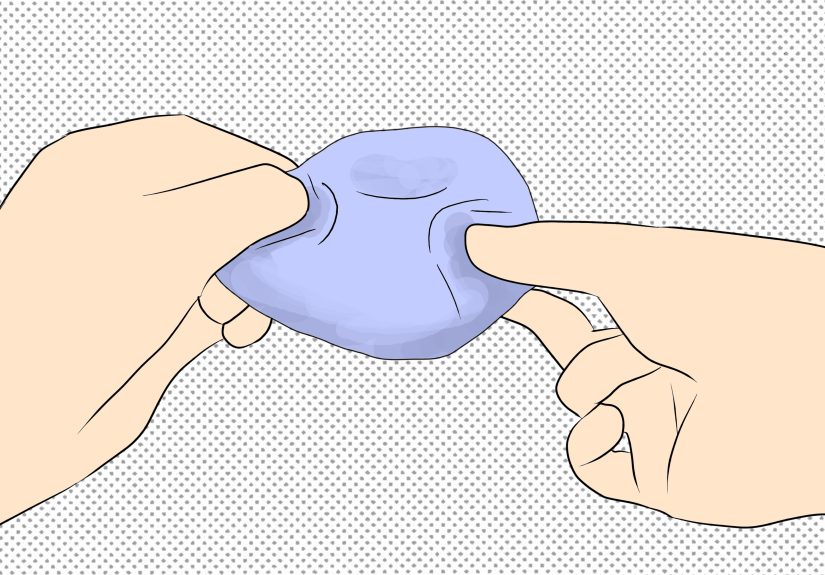
Knead with gloved hands for 5–10 minutes. This is where texture transforms from “suspicious paste” to “actual clay.”
Step 7: Tune consistency
- Too hard/crumbly? Add mineral oil 5 g at a time and knead thoroughly.
- Too sticky/soft? Add filler 10 g at a time or a small amount of firm wax.
- Too waxy and brittle? Add a little petroleum jelly.
Step 8: Rest and test
Let clay rest 12–24 hours in an airtight container, then test sculptability.
Many formulas feel softer while warm and settle firmer the next day, so avoid over-correcting too early.
Three Easy Formula Variations
1) Soft animation blend
- Reduce wax by 10%
- Increase oil/petroleum jelly by 10%
- Great for quick posing and stop-motion adjustments
2) Medium all-purpose studio blend
- Use the base formula as written
- Best for character maquettes, concept sculpting, and classroom demos
3) Hard-detail sculpting blend
- Increase firm wax by 10–15%
- Reduce oil by 10–15%
- Add 5–8% extra fine filler
- Better edge retention for sharp cuts and tool lines
Using Your Clay for Mold Work
If you plan to mold a sculpt with platinum-cure silicone, use sulfur-free clay. Sulfur can inhibit silicone cure, leading to sticky, uncured surfaces right where
you need clean details most. Even with sulfur-free clay, do a small compatibility test patch when possible.
Quick mold-prep tips
- Use clean tools dedicated to clay and silicone prep.
- Avoid cross-contamination from unknown sulfur clays.
- Seal porous masters when required by your mold system.
- Test first, mold second, panic never.
Safety and Smart Handling
Homemade clay is fun, but “non-toxic” is not the same as “snack.” Keep materials labeled and stored well.
For children’s use, prioritize products that conform to recognized art-material safety labeling and use age-appropriate supervision.
Best practices
- Work with gentle heat only; avoid open flames.
- Wear gloves when handling pigments and heated oils.
- Use basic ventilation, especially if using any solvent for cleanup.
- Never ingest ingredients; keep away from small children and pets.
- If accidental ingestion or exposure occurs, contact Poison Help in the U.S. promptly.
About solvents for smoothing
Some sculptors use tiny amounts of compatible solvents on tools for surface smoothing. If you do, keep it minimal and controlled.
Solvents can irritate skin, eyes, and breathing passages, and many are flammable. Read labels, avoid prolonged exposure, and store tightly closed.
Troubleshooting Table
| Problem | Likely Cause | Fix |
|---|---|---|
| Clay feels greasy | Too much oil or petroleum jelly | Add fine filler in small increments; knead thoroughly |
| Clay cracks while shaping | Too much wax/filler, not enough oil | Add 5–10 g oil, warm slightly, knead again |
| Clay too soft in warm room | Low wax ratio | Add firm wax; chill briefly before detail work |
| Won’t hold edges | Too much plasticizer | Increase wax/filler; rest overnight before final carving |
| Lumpy texture | Unsifted filler or rushed mixing | Re-melt gently, sift filler, remix slowly |
| Silicone cure issues | Sulfur contamination | Switch to sulfur-free clay and test compatibility patch |
Storage, Reuse, and Cleanup
Storage
- Store in airtight tubs or zipper bags.
- Keep in a cool, shaded area away from heaters and direct sun.
- Label batch date and formula so future-you can replicate success.
Reuse
One of the biggest advantages of oil based clay is reclaimability. Collect scraps, warm them gently, and knead into a fresh block.
If the reclaimed mass is dry or crumbly, add a tiny amount of oil while kneading.
Cleanup
- Wipe tools while clay is still warm with paper towels first.
- Use mild soap and warm water for final cleaning of non-porous tools.
- Avoid washing heavy wax/oil chunks directly down drains.
Conclusion
Making oil based modeling clay at home is equal parts chemistry, craft, and tiny sculptor wizardry. Start with a balanced base formula, adjust gradually,
and keep notes like a pro. Once you understand the wax-oil-filler triangle, you can create custom clay for your exact workflowfrom soft animation blends
to crisp-detail sculpting blocks.
The secret is not perfection on batch one; it’s controlled iteration. Measure, mix, test, tweak, and repeat.
Soon, you’ll have a personalized clay recipe that feels better than most off-the-shelf optionsand costs less, too.
Experience Section (Extended ~): What Makers Learn After the First Few Batches
Across classrooms, maker spaces, and small home studios, people usually have the same first reaction after making oil based modeling clay:
“Wait… this actually works?” Then comes the second reaction: “Why did I make so much of it?” The truth is, your first batch teaches more than a tutorial ever can.
Most beginners start by following a formula exactly, then discover their room temperature, tool style, and sculpting habits all influence what “perfect clay” means.
In one weekend workshop, a group of hobby sculptors tested three versions of the same base recipe: soft, medium, and hard. The soft batch was everyone’s favorite
for blocking out forms fast, but it sagged under fine detail lights. The hard batch carved beautifully yet felt stubborn during early shaping. By the end, the medium
blend won for general use, while the soft blend became the “gesture and animation” block and the hard blend became the “final detail” block. The key lesson:
you don’t need one magical recipeyou need a system of recipes.
Another common experience is the “mystery stickiness” problem. Makers often assume they ruined the batch, but usually they just added oil too quickly.
The fix is wonderfully boring: add filler slowly, knead longer than you think, then let the clay rest overnight. Several artists report that clay that felt
unusable at 8 p.m. felt excellent by morning. Patience is an ingredient, even if no one writes it on the label.
Color is where people get creative and occasionally dramatic. One artist tried to force bold color using too much liquid pigment and ended up with slippery,
streaky clay that stained everything except the sculpture. After switching to dry pigments and adding them to filler before mixing, the color became even,
the texture improved, and cleanup got easier. The practical takeaway: pre-blending dry components saves your wrists and your sanity.
For mold makers, the biggest learning moment is compatibility testing. A small test patch sounds like extra work when you are excited to pour silicone,
but experienced shops treat it like a seatbelt: quick, boring, life-saving. People who skip tests often meet sticky cure inhibition on critical details.
People who run tests sleep better.
Storage habits also separate smooth workflows from messy ones. Makers who wrap clay tightly and label batch formulas can reproduce their favorite texture on demand.
Makers who toss random scraps into a mystery bin create something closer to a geological sample than a sculpting medium. A simple label with date, wax/oil ratio,
and filler type turns trial-and-error into repeatable craft.
The most encouraging pattern from long-term users is this: your second batch is dramatically better than your first, and your fifth batch feels almost custom-manufactured.
You begin to predict how a formula will behave before you even knead it. That confidence is the real win. Oil based modeling clay is not just a material you make;
it becomes a process you master. And once you do, your sculptures spend less time fighting the medium and more time becoming exactly what you imagined.