Table of Contents >> Show >> Hide
- Why Fresh-Ingredient Smoothies Taste Better (and Feel Better)
- The Smoothie Blueprint: A Foolproof Ratio You Can Customize
- Choosing Fresh Ingredients Like a Smoothie Whisperer
- Flavor Engineering: Make It Taste Amazing Without “Added Sugar Panic”
- Texture Tricks: From Icy Sadness to Creamy Perfection
- The 6-Minute Smoothie Method (Step-by-Step)
- Food Safety & Freshness: Because Nobody Wants a “Stomach Smoothie”
- 7 Smoothie Combos Using Fresh Ingredients (No Weird Stuff Required)
- 1) Classic Strawberry-Banana (Creamy and Reliable)
- 2) Green “You Can’t Taste the Spinach” Smoothie
- 3) Blueberry-Oat Breakfast Smoothie (Stays With You)
- 4) Peach-Ginger Sunshine Smoothie
- 5) Chocolate-Cherry “It’s Basically a Milkshake” Smoothie
- 6) Citrus-Carrot Smoothie (Bright, Not Bitter)
- 7) Cucumber-Mint Melon Refresher (Hydrating and Light)
- Make It a Meal vs. Make It a Snack
- Common Smoothie Mistakes (and the Easy Fixes)
- Batch Prep: Freezer Packs That Make Mornings Ridiculously Easy
- Conclusion: Your Smoothie, Your Rules (With One Helpful Framework)
- Experience Notes: Real-World Smoothie Wins (and a Few Faceplants)
Smoothies are basically the easiest way to turn “I bought healthy groceries” into “I actually ate healthy groceries.”
They’re fast, flexible, and forgivingkind of like sweatpants, but in beverage form. And when you build them from
fresh ingredients you already love, smoothies stop feeling like a chore and start feeling like a treat that just
happens to come with vitamins.
This guide walks you through choosing ingredients, balancing flavor and nutrition, mastering texture, and avoiding
the classic “why does my smoothie taste like lawn clippings?” moment. You’ll get a simple blueprint, specific
examples, and real-world tricks for making smoothies that taste great and keep you full (without turning into a
sugar bomb).
Why Fresh-Ingredient Smoothies Taste Better (and Feel Better)
Fresh ingredients bring brighter flavor, more aroma, and better texture. A ripe peach tastes like summer. A fresh
handful of mint smells like you have your life together. And using whole foods (fruit, veggies, yogurt, nuts, oats)
makes it easier to build a smoothie that’s satisfying instead of “tasty for 12 minutes and then I’m hungry again.”
The goal isn’t to make the “healthiest smoothie on Earth.” The goal is to make a smoothie you’ll actually want
tomorrow morningbecause consistency beats perfection every time.
The Smoothie Blueprint: A Foolproof Ratio You Can Customize
If you’ve ever made a smoothie that was too thick to drink, too watery to enjoy, or somehow both… you need a ratio.
Here’s a flexible starting point for a 16–20 oz smoothie (about one large serving):
1) Liquid Base (3/4 to 1 1/4 cup)
- Best everyday picks: water, unsweetened milk (dairy or soy), unsweetened almond/oat milk, kefir
- For extra protein: milk, soy milk, or drinkable yogurt
- For extra flavor: chilled green tea, cold brew coffee (in moderation), coconut water (watch sweetness)
Tip: Skip juice as a default base. It can push sweetness way up without adding the “chewable” fullness you get from
fiber, protein, and fat.
2) Fruit (1 to 2 cups)
Fruit gives natural sweetness, body, and flavor. For most smoothies, 1 cup is plenty; go to 2 cups
if you’re using lots of greens or making a post-workout blend and want more carbs.
3) Veggies (1/2 to 2 cups)
- Beginner-friendly: baby spinach, cauliflower (fresh or frozen), zucchini (yes), cucumber
- Bolder flavor: kale, arugula, celery, beet (start small)
Veggies can upgrade nutrition without turning your smoothie into a dessert-in-disguise. Spinach is famously mild,
and cauliflower adds creaminess with very little flavor.
4) Protein (aim for 15–25g if it’s a meal)
- Greek yogurt (plain), cottage cheese (yes, it works), milk/soy milk
- Silken tofu (super smooth, neutral flavor)
- Protein powder (choose one you tolerate well; avoid extra-sugary options)
Protein matters most when a smoothie replaces a meal. Otherwise you risk the dreaded “I’m starving at 10:47 a.m.”
sequel.
5) Healthy Fat (1–2 tablespoons or 1/4 avocado)
- Nut butter, chia seeds, ground flax, hemp hearts
- Avocado (creamy texture, mild flavor)
- Nuts (blend well if you have a strong blender)
6) Fiber & “Texture Builders” (1–2 tablespoons)
- Rolled oats (soak 5 minutes or blend longer for smoothness)
- Chia seeds (thickens quickly; use less than you think)
- Ground flax (adds body and a subtle nutty taste)
Choosing Fresh Ingredients Like a Smoothie Whisperer
Pick fruit by job description
- Creamy base fruits: banana, mango, ripe pear (adds body and sweetness)
- Bright/tart fruits: berries, pineapple, citrus (adds punch and balance)
- “Dessert vibe” fruits: cherries, peaches, strawberries (pair beautifully with vanilla/cinnamon)
Use greens that match your personality
- Spinach: mild, easy, “I just want nutrients quietly.”
- Kale: more fiber and a stronger tastemassage or freeze it to mellow bitterness.
- Romaine: surprisingly smooth, less bitter than kale.
Fresh add-ins that make a big difference
- Herbs: mint with watermelon, basil with berries, cilantro with pineapple (trust the process)
- Ginger: a small knob wakes up citrus and tropical blends
- Lemon/lime: a squeeze makes flavors pop like turning on HD
Flavor Engineering: Make It Taste Amazing Without “Added Sugar Panic”
A great smoothie tastes balanced: sweet, bright, and creamy, with maybe a little spice. If your smoothies taste flat
or overly sweet, it’s usually missing one of these:
Acid (brightens)
- Lemon juice, lime juice, orange segments, pineapple
- Plain yogurt or kefir adds tang plus protein
Salt (yes, salt)
A tiny pinch can make fruit taste fruitierlike how salt makes chocolate taste more chocolatey. Don’t overdo it; this
is a whisper, not a speech.
Spice (adds “wow”)
- Cinnamon with banana, apple, pear, pumpkin-style blends
- Cocoa powder with cherry or banana
- Turmeric + ginger with mango/pineapple (add black pepper if you like it warm)
Sweetness (use the “ripe fruit first” rule)
Before adding honey or syrup, try: a riper banana, a few dates, or more berries. Most smoothies get plenty sweet
naturally when your fruit is actually ripe (revolutionary concept, I know).
Texture Tricks: From Icy Sadness to Creamy Perfection
Frozen fruit beats a cup of ice
Ice can water down flavor. Frozen fruit thickens while keeping taste strong. If you only have fresh fruit, freeze
banana slices, berries, or mango chunks for future you. Future you will be grateful and possibly compose a sonnet.
Control thickness with small adjustments
- Too thick: add liquid 2–3 tablespoons at a time
- Too thin: add frozen fruit, yogurt, oats, or a few ice cubes
- Grainy: blend longer, use softer greens, or add a bit more liquid
Blend in the right order
The easiest way to avoid “leaf confetti” is layering: liquids first, then powders/seeds, then soft foods, then
greens, then frozen stuff on top. The blades need something to grab and circulate.
The 6-Minute Smoothie Method (Step-by-Step)
- Wash and prep: rinse produce and trim bruised spots. Pat greens dry if they’re soaking wet.
- Add liquid: start with 3/4 cup.
- Add protein + fats: yogurt, nut butter, tofu, seeds.
- Add greens + fresh fruit: spinach, banana, berries, etc.
- Top with frozen fruit: this keeps the blades moving and thickens everything.
- Blend: start low, ramp up, blend 30–60 seconds until smooth. Stop and scrape once if needed.
If you want it colder without diluting: freeze your fruit, chill your liquid, or even pop the blender cup in the
freezer for 10 minutes (if your container allows it).
Food Safety & Freshness: Because Nobody Wants a “Stomach Smoothie”
Smoothies are simple, but they’re still food. Basic kitchen habits matterespecially when you’re blending raw
produce.
- Rinse produce under running water: especially items you peel or cut (bacteria can transfer from the outside to the inside).
- Skip soap on produce: stick to water and friction (a produce brush helps for firm items).
- Keep perishables cold: yogurt, milk, cut fruit, and prepped smoothie packs should be refrigerated promptly.
- If it sat out too long: when in doubt, toss it. Food poisoning does not build character.
7 Smoothie Combos Using Fresh Ingredients (No Weird Stuff Required)
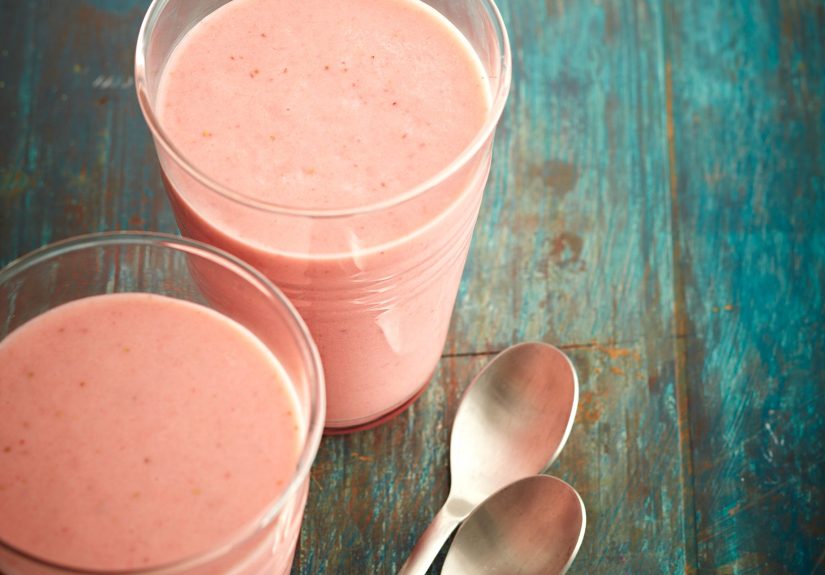
1) Classic Strawberry-Banana (Creamy and Reliable)
- 1 cup strawberries (fresh or frozen)
- 1 small banana (fresh or frozen)
- 3/4–1 cup milk (or soy milk)
- 1/2 cup plain Greek yogurt
- 1 tbsp ground flax or chia
Make it dessert-y: add 1 tsp vanilla extract and a pinch of cinnamon.
2) Green “You Can’t Taste the Spinach” Smoothie
- 1–2 cups baby spinach
- 1 cup pineapple chunks
- 1/2 banana
- 1 cup unsweetened milk or water
- 1 tbsp nut butter or 1/4 avocado
Pineapple is the bouncer at the flavor club: it kicks bitterness out.
3) Blueberry-Oat Breakfast Smoothie (Stays With You)
- 1 cup blueberries
- 1/3 cup rolled oats
- 3/4 cup milk
- 1/2 cup plain yogurt
- Pinch of cinnamon
4) Peach-Ginger Sunshine Smoothie
- 1 cup peaches (fresh or frozen)
- 1/2 cup mango
- 1/2 cup yogurt or kefir
- 1/2–1 cup water or milk
- 1–2 tsp fresh ginger (start small)
- Squeeze of lemon
5) Chocolate-Cherry “It’s Basically a Milkshake” Smoothie
- 1 cup cherries (pitted; frozen is easiest)
- 1 banana
- 3/4 cup milk or soy milk
- 1–2 tbsp cocoa powder
- 1 tbsp peanut or almond butter
Optional: a pinch of salt makes the chocolate flavor pop.
6) Citrus-Carrot Smoothie (Bright, Not Bitter)
- 1 orange (peeled) or 3/4 cup orange segments
- 1/2 cup carrot (grated or thin-sliced)
- 1/2 cup mango
- 3/4 cup water
- 1/2 cup yogurt (or silken tofu)
Carrot blends better when it’s grated or paired with a strong blender and enough liquid.
7) Cucumber-Mint Melon Refresher (Hydrating and Light)
- 1 1/2 cups watermelon
- 1/2 cucumber
- Handful of mint
- Squeeze of lime
- Optional: 1/2 cup yogurt for creaminess
Make It a Meal vs. Make It a Snack
If it’s a snack (150–250 calories-ish)
- Keep fruit to ~1 cup
- Add a little protein (yogurt, milk, tofu) or fiber (chia, flax)
- Use water or unsweetened milk as the base
If it’s a meal (more filling, more balanced)
- Include a solid protein source (Greek yogurt, soy milk, protein powder, tofu)
- Add healthy fats (nut butter, avocado, seeds)
- Add fiber/slow carbs (oats, chia, flax) so you stay full
- Include veggies to boost volume and micronutrients
Think of a meal smoothie like a bowl you can drink: it should have the same “food groups” vibe you’d want on a
plate.
Common Smoothie Mistakes (and the Easy Fixes)
- Mistake: All fruit, no protein. Fix: add Greek yogurt, tofu, or a protein powder you like.
- Mistake: Using sweetened yogurt or sweetened milk. Fix: choose unsweetened and sweeten with fruit.
- Mistake: Too much “healthy fat.” Fix: nut butter is greatjust measure (1 tbsp is usually enough).
- Mistake: Tossing in every superfood at once. Fix: pick 1–2 boosters so it still tastes good.
- Mistake: Not enough liquid, blender screams. Fix: add liquid slowly until it circulates.
- Mistake: Bitter greens overload. Fix: start with spinach, add pineapple/lemon, or use less kale.
Batch Prep: Freezer Packs That Make Mornings Ridiculously Easy
If mornings are chaos (and they usually are), freezer packs are the cheat code. The idea: portion your fruit/veg in
a bag or container, freeze, and in the morning you dump + add liquid + blend.
How to build a freezer pack
- 1 cup fruit (berries, mango, pineapple, peaches)
- 1/2 banana (sliced)
- 1/2–1 cup greens (spinach freezes well)
- Optional: 1 tbsp chia/flax in a separate tiny container (so it doesn’t clump)
In the morning: add your liquid and protein (yogurt/tofu) fresh. Blend. Feel smug.
Conclusion: Your Smoothie, Your Rules (With One Helpful Framework)
Smoothies don’t need to be complicated to be excellent. Start with the blueprint, pick produce you genuinely enjoy,
balance sweetness with protein/fiber/fat, and use frozen fruit for thickness. After a few runs, you’ll stop needing
recipes and start making smoothies like you’re running a tiny, delicious smoothie startup from your kitchen.
(Valuation: high. Stress level: low.)
Experience Notes: Real-World Smoothie Wins (and a Few Faceplants)
Let’s talk about the part nobody puts in the “perfect smoothie” posts: the learning curve. In real kitchens, the
journey to a great smoothie often includes a few weird cups you heroically drink anyway because you refuse to waste
ingredients. Consider this section a collection of common experiences many smoothie-makers run intoso you can skip
the worst experiments and keep the good lessons.
Experience #1: The “I added kale and now it tastes like regret.”
A lot of people start with kale because it has a strong “health halo.” Then they blend in a heroic amount, take a
sip, and realize they made a salad smoothie. The fix is simple: start with baby spinach (milder), use less kale,
and add balancing flavors like pineapple, mango, or a squeeze of lemon. In practice, most people find they don’t
need to force the strongest greens to get benefitsconsistency with milder greens wins.
Experience #2: The “fruit-only sugar rocket.”
Fruit is wonderful, but smoothies can become “blended dessert” fast if the only structure is bananas + juice + honey.
A common turning point is when someone adds protein (Greek yogurt, soy milk, silken tofu) and a texture builder
(oats, chia, flax). Suddenly the smoothie feels like breakfast, not a sugary snack wearing a disguise. People often
report more stable energy and fewer snack attacks when they build smoothies like meals instead of fruit punch.
Experience #3: The blender tantrum.
If your blender sounds like it’s auditioning for a horror movie, it’s usually not the blender’s faultit’s the
order and the liquid. Many home cooks learn (the loud way) that liquids go in first, and you need enough fluid for
circulation. Another practical lesson: frozen fruit on top helps pull everything down into the blades. And if
you’re using chia or oats, give them time (or a longer blend) to smooth out.
Experience #4: The “why is it watery?” heartbreak.
This one happens when you use lots of ice and fresh fruit. Ice melts, flavor fades, and the smoothie turns into a
cold, sad soup. The real-world fix many smoothie fans swear by: freeze fruit in advance. Frozen banana slices are
basically the MVPcheap, easy, and instantly creamy. People also discover that chilling the liquid (or using a cold
yogurt base) makes a smoothie colder without relying on ice for thickness.
Experience #5: The surprise hero ingredients.
Over time, many smoothie-makers develop a “secret weapon” ingredient:
lemon juice to brighten flavors, a tiny pinch of salt to intensify sweetness, ginger to
wake up fruit, or cocoa powder to turn “healthy” into “I actually want this.” Another underrated win: herbs.
Mint with watermelon tastes like summer. Basil with berries can taste fancy. These small additions often become the
difference between “fine” and “can I make that again tomorrow?”
Experience #6: The freezer-pack lifestyle upgrade.
People who stick with smoothies long-term usually simplify the routine. Freezer packs are the classic habit-hack:
portion fruit + greens once, then blend fast all week. It removes decision fatigue and makes it easier to choose a
smoothie over a drive-thru breakfast. The most common tip from regular smoothie drinkers: keep your packs simple
(one fruit, one “supporting” fruit, one green), then change the flavor with spices, extracts, or a different base.
In short: the best smoothie isn’t the one with the longest ingredient list. It’s the one you can make on a busy
morning, enjoy without forcing it, and repeat often enough that “healthy eating” feels normal. Build a formula you
like, keep experimenting in small steps, and let your taste buds be part of the decision-making team.