
Table of Contents >> Show >> Hide
- 1) Start With the “Why” (and the “Where”)
- 2) Permits, Codes, and the Unsexy Stuff That Keeps You Safe
- 3) Design the Deck Like a Puzzle You’ll Actually Enjoy
- 4) Materials: Wood vs. Composite (and What to Use Where)
- 5) Layout and Planning: Measure Twice, Dig Once (and Then Measure Again)
- 6) Footings and Posts: The Part Nobody Photos, But Everybody Needs
- 7) Framing: Ledger, Beams, Joists, and the “Make It Solid” Phase
- 8) Decking Installation: Pretty Boards, Smart Gaps
- 9) Railings, Guards, and Stairs: Safety That Still Looks Good
- 10) Finishing Touches That Make a Deck Feel Like an Outdoor Room
- Common Mistakes (So You Don’t Star in a Deck Horror Story)
- Experience: 12 Lessons From Real Deck Builds (So Yours Goes Smoother)
- 1) Your first plan is never the final plan
- 2) Layout is the easiest place to save a week
- 3) Digging is where optimism goes to retire
- 4) Buy the straight lumber first (and hide the rest)
- 5) Flashing isn’t “extra”it’s the whole point
- 6) Hardware matters more than you think
- 7) “Bouncy” decks feel cheap even when they’re expensive
- 8) Stairs are a separate project disguised as part of the deck
- 9) Order more than you thinkbut not an entire lumberyard
- 10) Make peace with cleaning and maintenance now
- 11) Small upgrades deliver big “wow”
- 12) The real win is how you’ll use it
- Conclusion
Building a deck is basically giving your house a stage. A place for burgers to sizzle, kids to cannonball into conversations, and adults to say things like “We should do this more often” while silently calculating how many boards you still need to buy.
This guide walks you through deck planning, design choices, permits, layout, footings, framing, decking, railings, stairs, and finishingwithout turning your weekend into a three-season TV drama. It’s written for DIYers, but it also respects reality: local codes exist, gravity is undefeated, and wood moves when it feels like it.
1) Start With the “Why” (and the “Where”)
Before you price out composite decking colors like you’re choosing a sports car, answer three questions:
- What’s the deck for? Grilling? Hot tub? Outdoor dining for eight? “A quiet chair and my emotional support coffee”?
- Where does the sun go? South-facing decks can cook your bare feet. Shade structures cost money but save friendships.
- How will you move through it? Doors, stairs, and traffic flow matter. A deck shouldn’t force guests to shimmy sideways like crab-walking at a wedding.
Pick a deck type: attached vs. freestanding
Attached decks use a ledger board connected to the house. They can be efficient, but that connection is also a common failure point if done wrong. Freestanding (floating) decks avoid attaching to the house, which can simplify waterproofing details and reduce riskespecially near older siding or tricky wall assemblies.
2) Permits, Codes, and the Unsexy Stuff That Keeps You Safe
Yes, permits can feel like paying someone to let you do chores. But building departments exist because decks that aren’t properly supported or connected can fail. Many jurisdictions require permits based on height, size, attachment to the home, or location on the lot. Also: inspections can save you from expensive “tear it out and redo it” moments.
Code basics you’ll hear a lot
- Guards/railings: Often required when the walking surface is more than ~30 inches above grade. Common residential guard heights are typically 36 inches minimum, though some areas require more.
- Baluster spacing: The classic safety rule is that a 4-inch sphere shouldn’t pass through guard openings.
- Connections: Codes and best-practice guides emphasize properly fastened ledgers, joist hangers, post-to-beam connectors, and hardware rated for exterior use.
Quick reality check: Codes vary by location. Treat any “standard” as a starting point, not a permission slip. If your deck will carry heavy loads (hot tub, outdoor kitchen, stone fireplace), consult a local pro or engineer.
3) Design the Deck Like a Puzzle You’ll Actually Enjoy
Choose a size using furniture math (the good kind)
A common starter deck might be 12′ x 16’big enough for a table and a grill without turning into a dance floor you didn’t ask for. As a rule of thumb:
- Allow 36–48 inches for comfortable walking paths.
- Dining for 6 usually wants a zone around 10′ x 10′ minimum (bigger is nicer).
- If you want lounging plus dining, consider “two-room deck” thinking: separate zones with a step, diagonal board pattern, or railing breaks.
Deck shape: rectangles win (but curves can be worth it)
Rectangles are efficient for deck framing and materials. Angles, curves, and multi-level layouts look greatbut add labor, waste, and complexity. If this is your first build, keep the frame simple and add style with railings, lighting, and picture-frame borders.
Plan stairs early
Stairs aren’t an afterthought; they determine how people use the space. A staircase that points toward your patio or yard “invites” movement. One that dumps you into shrubs says, “Good luck, traveler.” Many codes also have specific stair rules (rise/run, handrails, landings), so check requirements before you commit.
4) Materials: Wood vs. Composite (and What to Use Where)
Framing lumber: pressure-treated is common for a reason
Most decks use pressure-treated lumber for posts, beams, joists, and rim boards because it’s economical and rated for exterior exposure. Pay attention to treatment categories: lumber close to soil, in damp areas, or with poor airflow often needs ground-contact-rated material (even if it’s technically “above ground” in your heart).
Decking boards: pick your maintenance personality
- Wood decking (treated pine, cedar, redwood) can look fantastic, but usually requires periodic cleaning and sealing/staining.
- Composite decking typically costs more upfront but is designed for lower maintenance and consistent appearance over time. It can be a smart choice for busy households, splinter-averse feet, or anyone who doesn’t want “re-stain the deck” to become an annual tradition.
Fasteners and hardware: don’t cheap out on the invisible heroes
Exterior-rated connectors, joist hangers, structural screws/bolts, and corrosion-resistant fasteners matter because treated lumber and weather are tough on metal. Use hardware compatible with the lumber treatment and your environment (especially near salt air or pools).
5) Layout and Planning: Measure Twice, Dig Once (and Then Measure Again)
Call 811 before you dig
If you’re installing footings, you’ll be digging. In the U.S., calling 811 gets underground utilities marked. It’s quick, it’s smart, and it helps you avoid becoming a neighborhood legend for all the wrong reasons.
Set your elevation
For attached decks, the deck surface is commonly planned a bit below the interior floor to help with door thresholds and water management. For freestanding decks, plan for drainage and airflow under the frameyour deck likes to breathe.
Square the layout
Use batter boards and string lines to outline the deck footprint. Check for square by measuring diagonals: if they match, you’re square. If they don’t, your deck will slowly evolve into a parallelogram of regret.
6) Footings and Posts: The Part Nobody Photos, But Everybody Needs
Footings transfer load to the soil. If they’re undersized or too shallow, you can get settlement, wobble, or frost heave in cold climates. Many areas require footings below local frost depth; always verify local requirements.
Common footing approach
- Dig to required depth and to undisturbed soil.
- Use forms if needed, then pour concrete with appropriate reinforcement where required.
- Install post bases/anchors designed for exterior structural use.
Tip: Plan posts so beams land where they should, not where it was “easy to dig.” Your future self will appreciate it when joist spans and beam placement line up cleanly.
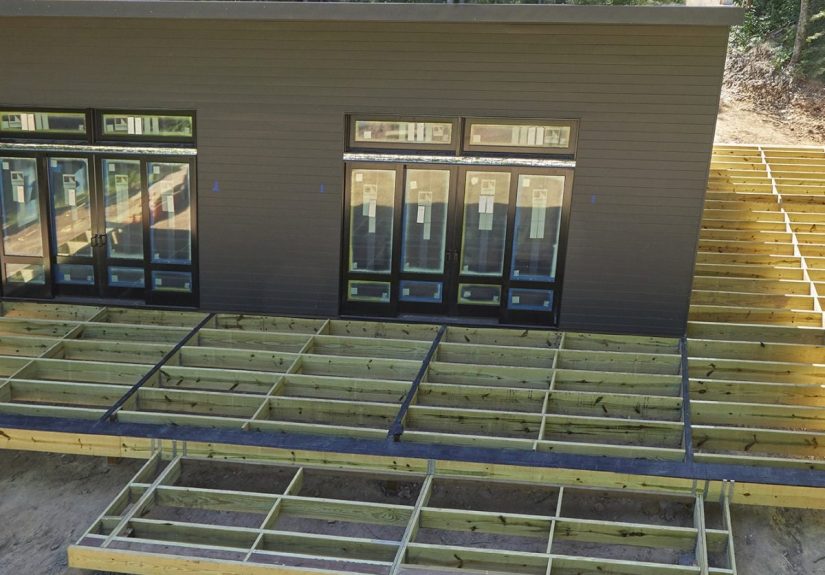
7) Framing: Ledger, Beams, Joists, and the “Make It Solid” Phase
The ledger board (attached decks)
The ledger is the bridge between deck and house. It must be properly flashed and fastened into structural framingnot just siding. The goal is twofold: keep the deck from pulling away, and keep water out of the house wall.
Best practice is to integrate flashing with the wall’s water-resistive barrier and use a layered approach (membranes + metal flashing) so water sheds outward. Also, leaving a small gap between the first deck board and the house/flashing can help drainage and drying.
Lateral load connections
Some code paths require dedicated hardware to resist the deck pulling away from the house. This often involves tension ties or connectors that link the deck framing back into the home’s framing system. Follow manufacturer instructions and local requirementsthis is not the place to improvise with “extra screws.”
Beams and posts
Beams support joists; posts support beams. There are multiple acceptable configurations (beam sitting on top of posts is common). Use approved connectors to lock everything together so the deck behaves as a single structureespecially under lateral forces like wind, movement, and enthusiastic dancing.
Joists: spacing, hangers, and staying straight
Joist size and spacing depend on span, lumber species/grade, and decking type. Many decks use 12″ or 16″ on-center spacing, and some decking products require tighter spacing for stiffness. Joist hangers should be installed with the correct fasteners (not random nails from a coffee can). Add blocking where needed to reduce twist and improve rigidity.
Durability upgrade: Joist tape (a peel-and-stick flashing tape on top of joists) can help protect framing from trapped moisture around fasteners and gaps.
8) Decking Installation: Pretty Boards, Smart Gaps
This is the part everyone notices, so yestake your time.
Board direction and pattern
- Straight lay is fastest and classic.
- Diagonal looks upscale but creates more waste and requires extra framing support.
- Picture-frame borders add a clean, finished edge and hide cut ends.
Spacing and waste factor
Deck boards need appropriate gaps for drainage and expansion/contraction (requirements differ for wood vs composite and by product). When ordering materials, it’s smart to include extra for off-cuts and mistakes; a common planning allowance is around 5% extra decking, more if you’re doing diagonal or complex patterns.
9) Railings, Guards, and Stairs: Safety That Still Looks Good
Railings are where safety meets style. Whether you choose wood, metal, cable, or composite systems, the goal is the same: a sturdy barrier that meets local code and doesn’t wobble when someone leans on it with a plate of ribs.
Key planning notes
- Guard height is commonly 36 inches minimum for many residential decks, but local rules may differ.
- Openings typically must not allow a 4-inch sphere to pass through.
- Stairs often trigger additional handrail requirements and different measurement rules than flat guards.
Stairs that feel great
Comfort matters: consistent rise/run, adequate width, solid stringers, and a secure handrail. The “secret” to stairs is actually not a secretit’s precision. Small errors repeat on every step.
10) Finishing Touches That Make a Deck Feel Like an Outdoor Room
Lighting
Low-voltage step lights or post-cap lights improve safety and vibe. Also, they make your deck look like you have your life together.
Skirting and airflow
If you skirt the deck, keep ventilation in mind. Trapped moisture under a deck is an open invitation for rot and mold to move in and start paying zero rent.
Sealing and maintenance
Wood decks usually benefit from periodic cleaning and sealing/staining once the lumber is ready (often after it dries appropriately). Composite decks typically need routine cleaning and occasional deeper washesalways follow the manufacturer’s care instructions.
Common Mistakes (So You Don’t Star in a Deck Horror Story)
- Skipping permits and inspections (until you try to sell the house).
- Improper ledger attachment or attaching through siding without correct detailing.
- No flashing or flashing that doesn’t integrate with the wall’s drainage plane.
- Wrong fasteners (rusty hardware is not “patina,” it’s failure in progress).
- Footings too shallow or set on loose soil.
- Wobbly rails because posts weren’t blocked and fastened correctly.
Experience: 12 Lessons From Real Deck Builds (So Yours Goes Smoother)
I’ve learned that deck building is 50% carpentry and 50% negotiating with reality. Here are the hard-won, practical takeaways that don’t always show up in the glossy “weekend makeover” versions of deck life.
1) Your first plan is never the final plan
You’ll start with “a simple rectangle.” Then you’ll realize the grill needs a landing zone, the stairs are better on the other side, and the downspout is exactly where your beam wants to live. Expect revisions and you’ll be less annoyed when they happen.
2) Layout is the easiest place to save a week
Spend extra time squaring the footprint and confirming elevations. A slightly out-of-square frame becomes a very obvious problem when you’re installing decking and every board cut looks… mysteriously different. Fixing it early is cheap; fixing it late is interpretive woodworking.
3) Digging is where optimism goes to retire
Footing holes look simple until you hit rocks, roots, or clay that laughs at your shovel. Build slack into your schedule and keep the right digging tools on hand. Also, call 811because the only thing worse than digging is digging and finding something expensive.
4) Buy the straight lumber first (and hide the rest)
When you’re picking framing lumber, look down the board like you’re sighting a pool cue. Use the straightest pieces for rim boards and visible edges. The slightly imperfect stuff can still be useful for blocking and short spans where it won’t telegraph problems into the finished surface.
5) Flashing isn’t “extra”it’s the whole point
The deck will outlive your patience, but water will outwork everyone. If your ledger detail is sloppy, you’re not just risking the deckyou’re risking the house. Take the time to layer materials properly so water is always encouraged to exit, not explore.
6) Hardware matters more than you think
Decks move: people walk, wind pushes, wood shrinks, and seasons change. Good connectors and correct fasteners keep those movements from becoming failures. Use the right hardware for exterior conditions and for the lumber treatmentfuture you will be quietly grateful.
7) “Bouncy” decks feel cheap even when they’re expensive
If you hate bounce, plan for stiffness: appropriate joist sizing, correct spacing, solid beam placement, and blocking where needed. Some decking products also feel better over tighter joist spacing. Comfort is a design choice, not an accident.
8) Stairs are a separate project disguised as part of the deck
Stringers, landings, handrails, lightingstairs have their own rules and their own ways to go wrong. Treat them like a mini-build with extra measuring, and don’t rush the finish cuts. Everyone uses the stairs; everyone notices when they’re awkward.
9) Order more than you thinkbut not an entire lumberyard
Having a couple extra boards is a relief when you miscut one, find a defect, or decide to add a picture-frame border midstream. A modest waste factor is normalespecially with diagonal patterns. Just don’t buy so much extra that you start inventing new deck features to use it up.
10) Make peace with cleaning and maintenance now
If you love the look of wood, commit to caring for it. If you prefer low-maintenance, budget for composite or higher-end materials. The best deck material is the one you’ll actually maintain without resentment.
11) Small upgrades deliver big “wow”
Post caps, integrated lighting, a clean fascia, and a tidy border can make an ordinary deck feel custom. These details are often cheaper than changing the whole footprintand they dramatically improve the finished look.
12) The real win is how you’ll use it
The best deck isn’t the one with the fanciest pattern. It’s the one that fits your life: easy door access, comfortable seating zones, safe rails, and stairs that land where your feet naturally want to go. Build for living, not for applause.
Conclusion
Planning and building a deck is a blend of design, structure, and durability. Get the purpose and layout right, respect permits and code requirements, build solid footings and connections, then finish with decking, rails, and details that match how you actually live outside. Do it thoughtfully, and your deck becomes the best room you ownmostly because it doesn’t have a ceiling and nobody asks you to repaint it every spring (unless you chose wood… in which case, I’ll see you with a brush).






 Close
Close