Table of Contents >> Show >> Hide
- What “disable web search” actually means in Windows 10
- Why so many people want to remove web search from Windows 10
- Method 1: Disable web search with Group Policy
- Method 2: Disable web search with Registry Editor
- Method 3: Hide the search box from the taskbar
- Method 4: Reduce related search clutter and privacy exposure
- Why older tutorials look different
- A quick reality check in 2026
- Troubleshooting when web results still show up
- Which method should you choose?
- Final thoughts
- Real-world experiences after disabling web search in Windows 10
- SEO Metadata
If Windows 10 search keeps acting like an overeager tour guide and shoving Bing results into your face when you only wanted Calculator, a PDF, or that one spreadsheet named “final-final-REALLY-final,” you are not alone. A lot of Windows 10 users would rather keep Start menu search focused on local files, apps, and settings instead of turning every quick lookup into a mini internet expedition.
The good news is that you can remove or disable web search from Windows 10. The catch is that the method depends on your version of Windows 10 and, frankly, which era of Microsoft design choices your PC is living in. Older builds once had a cleaner toggle. Newer builds usually require Group Policy or a Registry tweak. Either way, the goal is the same: make Windows Search act like a desktop tool again instead of a browser in disguise.
In this guide, you will learn the best ways to disable web results in Windows 10, hide the taskbar search box if you want a cleaner desktop, reduce related online clutter, and troubleshoot the annoying cases where the setting seems to ignore you like a cat ignores instructions.
What “disable web search” actually means in Windows 10
Before changing anything, it helps to separate three different things that people often lump together:
- Disable web results in Windows Search: This stops Start menu or taskbar search from pulling in web-based results.
- Hide the search box from the taskbar: This removes the visual box or icon, but it does not necessarily disable search itself.
- Reduce cloud and history features: This can limit search history and online suggestions, but it may not fully shut off web results on its own.
So if your goal is purely local search, you want the first option. If your goal is a cleaner-looking taskbar, you want the second. If your goal is less tracking and fewer suggestions, you may want all three.
Why so many people want to remove web search from Windows 10
The appeal is pretty simple. Local search should be fast, predictable, and useful. When you press the Windows key and type a few letters, you usually want an app, setting, document, or folder. You do not want a news headline, a shopping result, or some vaguely related webpage elbowing its way into the room like it pays rent.
Disabling web search can make Windows Search feel cleaner and less distracting. It can also help with privacy, since you are reducing the chance that random search terms are being sent online when all you really wanted was Device Manager or a local file. On older or slower PCs, users also report that local search feels a bit more focused when web content is out of the equation.
In other words, you are not being dramatic. You are just asking your operating system to stop oversharing.
Method 1: Disable web search with Group Policy
Best for Windows 10 Pro, Enterprise, and Education
If you have Windows 10 Pro or a higher business-focused edition, Group Policy is usually the cleanest way to disable web search. This method is ideal for advanced users, IT admins, and anyone who wants a more official configuration route than random forum magic.
Steps
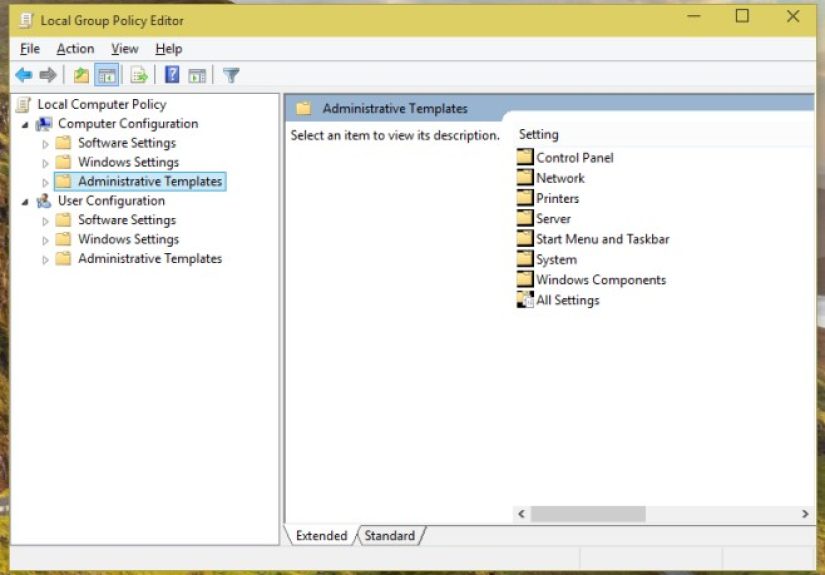
- Press Windows + R to open the Run dialog.
- Type gpedit.msc and press Enter.
- Go to Computer Configuration > Administrative Templates > Windows Components > Search.
- Find Don’t search the web or display web results in Search.
- Double-click it and set it to Enabled.
- Click Apply, then OK.
On some older Windows 10 setups, you may also see related policies such as Do not allow web search. If that option is available, many users enable it too for a stronger “no thanks, internet” setup.
What happens next?
After applying the policy, restart your PC or sign out and back in. Then open Start and search for something common, like Notepad or Control Panel. If the change worked, Windows Search should focus on local items instead of sprinkling in web results.
Why this method is popular
Group Policy is popular because it is cleaner than the Registry for many users, easier to document, and friendlier for managed PCs. It also feels slightly less like performing open-heart surgery on Windows with a butter knife.
Method 2: Disable web search with Registry Editor
Best for Windows 10 Home
If your PC runs Windows 10 Home, you probably do not have Local Group Policy Editor. That is where the Registry Editor enters the chat. This method is the one most people use when they want to disable Bing-style web results in the Start menu without upgrading Windows editions.
Important: Back up the Registry or create a restore point before editing anything. Registry changes are powerful, which is a polite way of saying, “Please do not freestyle here.”
Primary Registry method
- Press Windows + R, type regedit, and press Enter.
- Navigate to:
HKEY_CURRENT_USERSoftwarePoliciesMicrosoftWindows - If there is no Explorer key under Windows, right-click Windows, choose New > Key, and name it Explorer.
- Inside Explorer, right-click the right pane and choose New > DWORD (32-bit) Value.
- Name the new value DisableSearchBoxSuggestions.
- Double-click it and set the value to 1.
- Restart your PC, or sign out and sign back in.
This is one of the most widely recommended modern workarounds for Windows 10 when no simple built-in toggle is available.
A legacy fallback you may see in older guides
Some older tutorials mention a value called BingSearchEnabled under:
HKEY_CURRENT_USERSoftwareMicrosoftWindowsCurrentVersionSearch
That tweak appeared in many community guides for older Windows 10 builds. It may still be mentioned online, but it is not the main method most current guides lead with anymore. If you are following a newer cleanup strategy, the DisableSearchBoxSuggestions approach is the better starting point.
When the Registry method makes the most sense
This method is ideal if you use Windows 10 Home, want a direct fix, and do not mind a little advanced tinkering. It is also handy for users who are comfortable copying exact paths and not inventing new ones because “this folder name looks close enough.” That is how legends begin, and not the good kind.
Method 3: Hide the search box from the taskbar
Best if you want a cleaner desktop
This method is worth covering because a lot of people say they want to “remove search” when what they really want is to stop seeing the giant search box taking up space on the taskbar like it owns the lease.
To hide the search box:
- Right-click an empty area on the taskbar.
- Select Search.
- Choose Hidden.
You can also switch to Show search icon only if you still want quick access without the full box.
Important: Hiding the search box does not disable Windows Search. You can still open search with keyboard shortcuts like Windows + S, and Windows may still show local or web content depending on your other settings. This step is mostly visual, not functional.
Method 4: Reduce related search clutter and privacy exposure
If your real issue is not just web results but the general “why is Windows so chatty?” feeling, take a few extra minutes to review search privacy settings.
Clear local search history
In Windows 10, go to:
Start > Settings > Search > Permissions & History
From there, you can review and clear search history stored on the device.
Review cloud-related search settings
Depending on your setup, Microsoft account settings and cloud-related search features can influence suggestions and search behavior. Turning off cloud-style search preferences will not always remove web results completely, but it can reduce how much online content and stored history are woven into the experience.
If your goal is “local results only,” think of this section as helpful cleanup, not the main switch.
Why older tutorials look different
If you have opened five different guides and each one seems to describe a different planet, there is a reason. Windows 10 changed over time. Earlier versions often had settings tied closely to Cortana, including a more visible option to turn off web results. Later versions pushed users more toward policies and registry edits.
That is why one tutorial says “just flip a switch,” another tells you to disable Cortana, and a third sends you into the Registry like you are on a scavenger hunt. They may all be describing real methods, but for different Windows 10 builds and different eras of the operating system.
So no, you are not confused. Windows is just being historically complicated.
A quick reality check in 2026
Windows 10 support officially ended in October 2025. That means the OS still works, but it is no longer receiving normal free security updates for most users. Because of that, Windows 10 behavior now sits in a strange place: still widely used, still useful, but increasingly inconsistent across editions, regions, and managed environments.
That matters here because search behavior can vary by build, region, and policy state. For example, some European users have seen changes tied to Microsoft’s Digital Markets Act updates. On managed work devices, your organization may also push policies that override whatever you do locally. So if a guide does not match your screen exactly, do not panic. It is probably a version issue, not a personal failure.
Troubleshooting when web results still show up
1. Restart or sign out
Many search-related changes do not fully apply until you restart Explorer, sign out, or reboot the PC.
2. Confirm your Windows edition
If gpedit.msc does not open, you are likely on Windows 10 Home. Use the Registry method instead.
3. Check for workplace management
If this is a work or school PC, Group Policy or MDM rules may reapply settings after reboot. In that case, your machine may be following company rules, not your wishes.
4. Watch for build-specific behavior
Some older builds respond differently to Cortana, Bing, and search settings. If an old tutorial seems wildly off, it may not be wrong; it may just be from another Windows century. By Windows standards, that can be about seven months.
5. Remember that hiding is not disabling
If you only hid the taskbar search box, web results can still appear when you launch search through the keyboard or Start menu.
Which method should you choose?
- Use Group Policy if you have Windows 10 Pro, Enterprise, or Education and want the cleanest admin-style method.
- Use the Registry if you have Windows 10 Home or need a practical workaround.
- Hide the taskbar search box if your main goal is visual cleanup, not feature removal.
- Clear history and review privacy settings if you also want less online integration and fewer suggestions.
For most home users, the Registry method is the sweet spot. For office environments, Group Policy is the grown-up answer.
Final thoughts
Disabling web search in Windows 10 is one of those small tweaks that can make the whole PC feel more sane. Search becomes more focused, the interface feels less noisy, and you waste less time fighting through results you never asked for in the first place. It is not a miracle cure for every Windows annoyance, but it is one of the better quality-of-life fixes you can make in just a few minutes.
If you want the simplest takeaway, here it is: use Group Policy on Pro-class editions, use the Registry on Home, and hide the taskbar search box separately if you also want a cleaner desktop. That combo gives you the best chance of turning Windows Search back into what it should have been all along: a fast local finder, not a surprise web portal.
Real-world experiences after disabling web search in Windows 10
One of the most common experiences people report after disabling web search is not dramatic applause from the heavens. It is something much better: quiet relief. You tap the Windows key, type three letters, and the result you wanted is simply there. No “trending” nonsense. No random web suggestion that has nothing to do with your file. No moment where your computer confidently suggests the internet when all you wanted was Paint.
For office users, the difference often shows up in tiny daily moments. An accountant searching for Excel gets Excel immediately. A project manager typing “prin” gets printer settings instead of a search result that looks like it belongs in a browser tab. The workflow feels more direct. Less shiny, more useful. That is usually the whole point.
Students and home users often notice the visual calm first. Once the taskbar search box is hidden or reduced to a small icon, the desktop feels less crowded. It is a surprisingly satisfying change, like finally removing that chair in your room that only exists to hold unfolded laundry. Suddenly the space works better, even though you technically changed only one thing.
Users on older laptops sometimes say the biggest improvement is mental rather than measurable. Search feels faster because the results are more relevant. Whether the machine is technically shaving off huge chunks of time is almost beside the point. The interface stops second-guessing you. That alone makes the computer feel less sluggish and less annoying.
Privacy-focused users also tend to appreciate the change. Even if disabling web search is not a total privacy shield, it reduces the sense that every little query is trying to leave the room and report back to headquarters. When you search for “budget,” you want your spreadsheet, not a lecture from the internet. That local-first feeling matters.
There are, of course, a few mixed experiences. Some people miss the convenience of quick web lookups from the taskbar. Others discover that hiding the search box is not the same thing as disabling web results and wonder why the feature is still lurking behind a keyboard shortcut like a raccoon that found a second entrance. That is why it helps to know whether you want cosmetic cleanup, functional disablement, or both.
Another common experience is discovering how wildly different Windows 10 tutorials can be. One guide talks about Cortana. Another tells you to edit Group Policy. Another sends you into the Registry. Many users spend ten minutes thinking they are doing something wrong, when really they are just reading instructions for different Windows 10 versions. Once that clicks, the whole process becomes much less frustrating.
In the end, most people who make this change stick with it. That tells you something. It is not just a geeky tweak for power users. It is a practical cleanup step that makes everyday searching feel more like a desktop experience and less like a sales pitch with a Start button.