Table of Contents >> Show >> Hide
- Quick Refresher: What’s the Die Hard 3 Water Jug Riddle?
- The Fast, Classic Solution (No Guessing, No “Eyeballing”)
- Why This Works: The “Leftovers” Strategy
- The Math Behind the Magic: GCD, Bézout, and “Can This Even Be Done?”
- An Alternate Solution (Same Result, Different Rhythm)
- How to Solve Any Water Jug Riddle (A Repeatable Method)
- Common Mistakes (And How Not to Become a Cautionary Tale)
- Practice Problems (For Your Inner Puzzle Gremlin)
- Conclusion: The Die Hard Jug Puzzle Is “Remainders” Wearing a Trench Coat
- Experiences Related to the Die Hard Water Jug Riddle (500+ Words)
If you’ve ever watched Die Hard with a Vengeance (a.k.a. “Die Hard 3”) and thought, “Wow, I would absolutely explode in that park,” welcome to the club. The movie’s famous water jug riddle is one of those puzzles that looks impossible for 10 seconds… and then becomes so obvious you feel like the jugs are laughing at you.
This guide walks you through the exact solution (step-by-step), explains why it works, and shows you how to solve any water jug puzzle like a calm, math-powered action herono dramatic sweating required.
Quick Refresher: What’s the Die Hard 3 Water Jug Riddle?
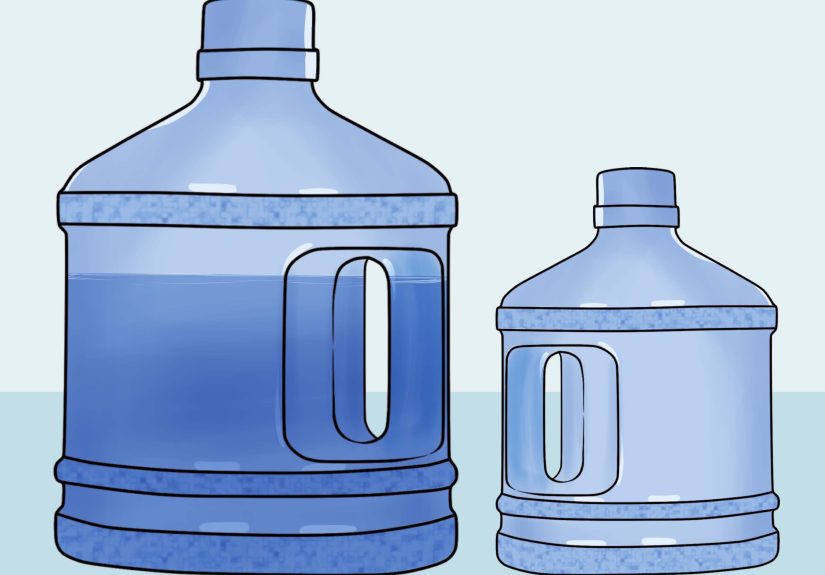
You have two empty jugs: one holds 5 gallons, the other holds 3 gallons. You have a water source, and you can:
- Fill a jug completely
- Empty a jug completely
- Pour water from one jug into the other until one is full or the other is empty
The goal: end up with exactly 4 gallons in one of the jugs (typically the 5-gallon jug).
The Fast, Classic Solution (No Guessing, No “Eyeballing”)
Here’s the cleanest path to 4 gallons. We’ll track the state as (5-gallon jug, 3-gallon jug).
Step-by-Step Instructions
- Fill the 5-gallon jug. → (5, 0)
- Pour from 5 into 3 until the 3-gallon jug is full. → (2, 3)
- Empty the 3-gallon jug. → (2, 0)
- Pour the remaining 2 gallons from the 5-gallon jug into the 3-gallon jug. → (0, 2)
- Fill the 5-gallon jug again. → (5, 2)
- Pour from 5 into 3 until the 3-gallon jug is full. (It needs 1 gallon.) → (4, 3)
Done: The 5-gallon jug now contains exactly 4 gallons. The “timer stops,” the crowd cheers, and you get to live long enough to complain about subway delays.
A Quick Visual Table (Because Brains Love Tables)
| Move | Action | 5-Gallon Jug | 3-Gallon Jug |
|---|---|---|---|
| 1 | Fill 5 | 5 | 0 |
| 2 | Pour 5 → 3 (until 3 full) | 2 | 3 |
| 3 | Empty 3 | 2 | 0 |
| 4 | Pour 5 → 3 | 0 | 2 |
| 5 | Fill 5 | 5 | 2 |
| 6 | Pour 5 → 3 (until 3 full) | 4 | 3 |
Why This Works: The “Leftovers” Strategy
The trick isn’t mystical. It’s about controlling leftovers.
When you pour from the 5-gallon jug into the 3-gallon jug, the 3-gallon jug fills up and forces a remainder. The first time you do it, you’re left with 2 gallons in the 5-gallon jug (because 5 − 3 = 2). That “2” becomes your precious ingredient.
Then you transfer that 2 gallons into the 3-gallon jug and refill the 5-gallon jug. Now the 3-gallon jug has 2 gallons, meaning it only needs 1 more gallon to become full. When you pour from the full 5-gallon jug to top it off, you remove exactly 1 gallon from the 5-gallon jugleaving 4 gallons.
In plain English: you’re using the smaller jug to “shave off” a precise amount from the bigger jug.
The Math Behind the Magic: GCD, Bézout, and “Can This Even Be Done?”
Water jug puzzles are secretly number theory puzzles wearing wet clothes.
The Key Rule: You Can Measure Targets That Match the GCD
If you have two jugs with capacities a and b, you can measure a target amount t (using fills, empties, and pours) only if:
- t ≤ max(a, b) (you can’t hold 9 gallons in a 5-gallon jug)
- gcd(a, b) divides t
For Die Hard 3, the capacities are 3 and 5. The greatest common divisor is: gcd(3, 5) = 1. And since 1 divides everything, 4 is reachable.
How Bézout’s Identity Explains the Whole Thing
Bézout’s identity says that if gcd(a, b) = 1, then you can write 1 as a linear combination of a and b, and therefore you can write lots of other numbers that way too.
In this puzzle, one useful identity is: 4 = (2 × 5) − (2 × 3).
That doesn’t mean you literally do two fills and two dumps in exactly that order andpoof4 appears. It means the operations can be arranged to mimic that arithmetic: you repeatedly create leftovers in chunks of 3 while using 5 as your “main container,” until the difference lands on your target.
An Alternate Solution (Same Result, Different Rhythm)
Some people like starting with the 3-gallon jug. Here’s a common alternate path:
- Fill the 3-gallon jug. Pour into the 5-gallon jug. → (3, 0) in terms of (5, 3) tracking becomes (3, 0)
- Fill the 3-gallon jug again. Pour into the 5-gallon jug until the 5 is full. → leaves 1 gallon in the 3
- Empty the 5-gallon jug. Pour that remaining 1 gallon into the 5-gallon jug.
- Fill the 3-gallon jug. Pour into the 5-gallon jug. → 1 + 3 = 4 gallons in the 5
Same destination, different road. Pick the one that makes your brain feel like it’s winning.
How to Solve Any Water Jug Riddle (A Repeatable Method)
1) Check If It’s Possible at All
- Let the jug sizes be a and b, target be t.
- If t > max(a, b), it’s impossible.
- If gcd(a, b) does not divide t, it’s impossible.
That quick test saves you from wasting time on puzzles designed to frustrate you. (Looking at you, trick interview question writers.)
2) Use “Remainders” on Purpose
Most practical jug solutions are built from a simple loop:
- Fill the larger jug
- Pour into the smaller jug until it fills
- Empty the smaller jug
- Repeat until the amount left in the larger jug is the target (or helps create it)
3) Track States Like a Pro (Because Memory Is a Liar)
Write down the state after each move. If you don’t, your brain will confidently insist you have 4 gallons when you actually have 4-ish gallons, which is not the same thing when the stakes are “boom.”
Common Mistakes (And How Not to Become a Cautionary Tale)
Mistake: “I’ll Just Pour Carefully”
The rules assume you can only measure by filling completely, emptying completely, or pouring until a jug is full or empty. If you start free-pouring “about a gallon,” you’ve left the puzzle and entered the land of vibes. Vibes are not measurement.
Mistake: Losing Track of Which Jug Holds What
This puzzle is easy when you track it and weirdly hard when you don’t. The jugs don’t change; your attention does.
Mistake: Thinking There’s Only One Correct Sequence
There are multiple valid solution paths. The “best” one depends on how you count moves and what operations are allowed. The important part is reaching exactly 4, not winning a gold medal in pouring.
Practice Problems (For Your Inner Puzzle Gremlin)
- 7-gallon and 3-gallon jugs: can you measure 1 gallon? (Hint: gcd(7,3)=1, so yes.)
- 6-gallon and 10-gallon jugs: can you measure 3 gallons? (Hint: gcd(6,10)=2; 3 is a no.)
- 9-gallon and 4-gallon jugs: can you measure 6 gallons? (Try the remainder loop.)
Conclusion: The Die Hard Jug Puzzle Is “Remainders” Wearing a Trench Coat
The water jug riddle from Die Hard 3 is famous because it feels like chaos… until you realize it’s structured. You’re not randomly sloshing water around. You’re manufacturing remainders2 gallons, then 1 gallon until the math forces 4 gallons to appear in the 5-gallon jug.
And once you understand the idea, you can tackle almost any water jug puzzle by checking the gcd rule and using a repeatable pour-and-remainder strategy. Which means the next time someone tries to impress you with “a classic logic riddle,” you can smile politely and keep your metaphorical bomb-defusing gloves on.
Experiences Related to the Die Hard Water Jug Riddle (500+ Words)
The funny thing about the Die Hard water jug riddle is how often people run into the same pattern in real lifesometimes without realizing it. Not “defuse-a-bomb-in-a-park” real life (thankfully), but everyday moments where you need exact amounts, limited containers, and a strategy that’s more reliable than guessing.
One common place this shows up is in escape rooms and puzzle games. Designers love container puzzles because they force teamwork: one person pours, another tracks the state, and a third person argues (with great confidence) that “we already did that step,” even when you absolutely did not. If you’ve watched a team get stuck, it’s rarely because the math is too hardit’s because nobody wrote down the amounts. The Die Hard solution is basically a reminder that the real superpower is not genius; it’s note-taking.
Another “experience-adjacent” moment happens in camping or emergency prep. People often pack water in containers that aren’t convenient sizes, then try to ration for cooking, washing, or mixing drink powders. While you’d typically use measuring cups at home, in a pinch you might have only a couple of bottles and need to divide water fairly. The jug puzzle mindsetthinking in leftovers and repeatable stepshelps you avoid “close enough” mistakes, especially when the goal is consistency (like making sure everyone gets the same amount).
In classrooms, the water jug riddle is a sneaky teaching tool because it bridges hands-on activity and abstract math. Teachers can pour water in front of students, then connect the steps to ideas like the greatest common divisor and linear combinations. The “aha” moment tends to be the same: students realize that what looked like a random sequence is actually a controlled process that generates specific remainders. The puzzle becomes a story about how math isn’t just numbers on paperit’s a way to design a process that guarantees the result.
The same kind of thinking shows up in programming interviews too, especially if you’ve ever seen the “water jug problem” framed as a state-space search. The interview version might ask you to determine if a target volume is measurable, or to find the shortest sequence of moves. If you’ve worked through the Die Hard riddle, you’ve already experienced the core idea: each situation can be represented as a state like (amount in jug A, amount in jug B), and moves are just transitions between states. Even if you never write the code, understanding the puzzle gives you an intuitive feel for why certain targets are possible and others are not.
Finally, there’s the most relatable experience of all: the group debate. The Die Hard jug riddle is famous enough that it pops up in conversations, social media threads, and “prove you’re smart” trivia nights. Someone confidently proposes a shortcut (“Just fill it to the brim!”), someone else insists it’s impossible, and then one quiet person starts calmly listing states like (5,0) → (2,3) → (2,0)… and suddenly the argument is over. In that moment, the “experience” isn’t about water. It’s about how a clear method beats confident improvisation every time.
So even if you never touch a 3-gallon jug again, the Die Hard water jug riddle leaves you with a surprisingly practical takeaway: when the problem feels chaotic, make it mechanical. Track what you have. Use repeatable moves. Trust the process. And if anyone ever hands you two jugs and a timer, you’ll be readywhether the stakes are a puzzle box, a math quiz, or bragging rights at the dinner table.