
Table of Contents >> Show >> Hide
- Why Is Your Dishwasher Not Draining Completely?
- Safety First: Do This Before You Touch Anything
- Tools and Supplies You May Need
- Step 1: Cancel the Cycle and Try a Drain Reset
- Step 2: Remove Standing Water
- Step 3: Clean the Dishwasher Filter
- Step 4: Check the Drain Basket and Sump Area
- Step 5: Run the Garbage Disposal
- Step 6: Clean the Air Gap
- Step 7: Inspect the Drain Hose Under the Sink
- Step 8: Disconnect and Clear the Drain Hose
- Step 9: Check the Spray Arms and Interior Buildup
- Step 10: Run a Test Cycle
- When to Call a Professional
- How to Prevent Dishwasher Drain Clogs
- Common Mistakes That Make Drainage Worse
- Experience-Based Tips for Unclogging a Dishwasher That Is Not Draining Completely
- Conclusion
Standing water in the dishwasher is never a fun surprise. You open the door expecting clean plates and heroic kitchen efficiency, but instead you find a sad little swamp at the bottom of the tub. The good news? A dishwasher that is not draining completely is often caused by something simple: a clogged filter, blocked drain hose, jammed garbage disposal connection, dirty air gap, or a drain setup that needs a little attention.
Before you start imagining a dramatic appliance funeral, take a breath. In many cases, you can unclog a dishwasher drain with basic tools, patience, and a willingness to meet yesterday’s spaghetti on a personal level. This guide walks you through safe, practical steps to fix a dishwasher not draining completely, plus prevention tips and real-world experience from the messy trenches of kitchen maintenance.
Why Is Your Dishwasher Not Draining Completely?
A dishwasher drains by pumping dirty water through a drain path that usually leads to the sink drain, garbage disposal, or an air gap near the faucet. When something blocks that path, water has nowhere to go. It lingers at the bottom of the tub like an unwanted guest who missed every hint to leave.
The most common causes include a dirty dishwasher filter, food debris in the sump area, a clogged drain hose, a kinked hose under the sink, a blocked air gap, a garbage disposal plug that was never removed, or a drain pump problem. Sometimes the issue is not inside the dishwasher at all. If your kitchen sink is draining slowly, the dishwasher may be innocent and the plumbing may be the actual villain.
Is a Little Water Normal?
A small amount of clean water near the sump or filter area can be normal in some models. However, standing water that covers the bottom of the tub, smells bad, contains food debris, or returns after every cycle is a sign that something needs attention. If the water looks cloudy, greasy, or has floating bits that resemble a failed soup experiment, it is time to investigate.
Safety First: Do This Before You Touch Anything
Before unclogging a dishwasher, turn off power to the appliance. You can unplug it if the plug is accessible, or shut it off at the circuit breaker. Dishwashers combine water, electricity, moving parts, sharp edges, and mystery objects. That is not a party mix you want to handle casually.
Wear rubber gloves, especially if there is standing water. Broken glass, toothpicks, twist ties, bones, and hard food particles can hide in the filter or sump area. Never stick your bare hand into the garbage disposal or deep inside the dishwasher pump area. Use tongs, a flashlight, and common sensethe underrated superhero of home repair.
Tools and Supplies You May Need
- Rubber gloves
- Towels or old rags
- A plastic cup or small bowl
- Bucket
- Soft brush or old toothbrush
- Sponge
- Flashlight
- Screwdriver
- Pliers or nut driver, depending on your hose clamp
- Wet/dry vacuum, optional but helpful
You do not need a professional plumbing truck for the first round of troubleshooting. Most basic dishwasher clogs can be checked with simple household supplies and a bit of detective work.
Step 1: Cancel the Cycle and Try a Drain Reset
Sometimes the dishwasher is not clogged; it simply did not finish its cycle. Maybe someone opened the door mid-cycle, the power flickered, or the control panel had a tiny electronic mood swing. Run the cancel or drain function according to your dishwasher manual. Many dishwashers have a dedicated “Cancel/Drain” button or require holding the start button for a few seconds.
If the dishwasher pumps the water out, congratulations: the drama may be over. If water remains, move to the next step. Do not keep running full cycles over and over. Repeated cycles can spread greasy water around the machine and may worsen odors.
Step 2: Remove Standing Water
Pull out the bottom rack. Use a cup or bowl to scoop standing water into a bucket. Then use towels, a sponge, or a wet/dry vacuum to remove the remaining water. Put towels around the base of the dishwasher to protect the floor. A dishwasher leak has no respect for hardwood, laminate, or your emotional stability.
Removing the water helps you see the drain area clearly. It also makes the filter easier to access and reduces the chance of splashing dirty water under the appliance.
Step 3: Clean the Dishwasher Filter
The filter is the first place to check when a dishwasher is not draining completely. It catches food particles, labels, seeds, bits of plastic, and other tiny troublemakers before they travel deeper into the machine. When the filter clogs, water drains slowly or not at all.
How to Clean the Filter
- Remove the bottom rack.
- Find the filter near the bottom spray arm or back corner of the tub.
- Twist and lift the filter if your model has a removable one.
- Rinse it under warm running water.
- Scrub gently with a soft brush or toothbrush.
- Check the filter housing for food debris, glass, paper labels, or grease.
- Reinstall the filter securely before running the dishwasher again.
Do not attack the filter with a wire brush or scouring pad. A damaged filter can let debris pass into the pump, which turns a simple cleaning job into a more expensive repair. Also, make sure the filter is locked back into place. A loose filter can cause poor cleaning, noise, and drainage problems.
Step 4: Check the Drain Basket and Sump Area
After cleaning the filter, inspect the drain basket or sump area at the bottom of the dishwasher. This is where food debris often gathers before water exits the appliance. Use a flashlight. Look for noodles, rice, bits of broken glass, fruit pits, bones, twist ties, toothpicks, and pieces of labels from jars or containers.
Gently remove visible debris with gloved fingers or tongs. If you see standing grease or sludge, wipe it away with a damp cloth. Avoid forcing anything into the pump opening. If something appears lodged deep inside the pump, it may be time to stop and call a technician.
Step 5: Run the Garbage Disposal
If your dishwasher drains through a garbage disposal, the disposal can block the dishwasher drain path. Run cold water and turn on the disposal for several seconds. This clears food waste and gives dishwasher water a better exit route.
If a garbage disposal was recently installed, check whether the dishwasher knockout plug was removed. This is a surprisingly common issue. New disposals often have a small plug inside the dishwasher drain inlet. If it stays in place, the dishwasher cannot drain into the disposal. The dishwasher may be perfectly healthy, but it is basically trying to drain into a locked door.
Never put your hand inside the garbage disposal. Turn off power to the disposal first and use tongs or pliers if you need to remove visible debris.
Step 6: Clean the Air Gap
Some kitchens have an air gap: a small metal or plastic cylinder mounted on the sink or countertop near the faucet. Its job is to help prevent dirty sink water from flowing back into the dishwasher. If the air gap becomes clogged, water may back up into the dishwasher or leak from the air gap cap.
How to Clean a Dishwasher Air Gap
- Remove the decorative cap from the air gap.
- Unscrew or lift off the plastic cap underneath, depending on the design.
- Remove debris inside the air gap.
- Rinse the cap and clean the opening with a small brush.
- Check the hose running from the air gap to the garbage disposal or sink drain.
- Reassemble the air gap and run a short drain cycle.
If water spits from the air gap when the dishwasher drains, the clog is often between the air gap and the disposal or sink drain. Cleaning that short hose may solve the problem.
Step 7: Inspect the Drain Hose Under the Sink
The dishwasher drain hose is usually a corrugated hose that runs from the dishwasher to the sink drain, garbage disposal, or air gap. Look under the sink. Is the hose kinked, crushed, sagging, or pressed behind stored cleaning supplies? A heavy bottle shoved against the hose can slow drainage. Congratulations, your dish soap may be sabotaging your dishwasher.
Straighten any kinks carefully. If the hose has a permanent crease, replace it. Once a hose kinks badly, it may keep collapsing in the same spot.
Check for a High Loop
If your dishwasher does not use an air gap, the drain hose should usually rise high under the countertop before dropping down to the drain connection. This is called a high loop. It helps prevent dirty water from flowing back into the dishwasher. If the hose has fallen low under the sink, secure it high inside the cabinet with a bracket, clamp, or sturdy zip tie. Follow your dishwasher manual and local plumbing requirements, because codes vary by area.
Step 8: Disconnect and Clear the Drain Hose
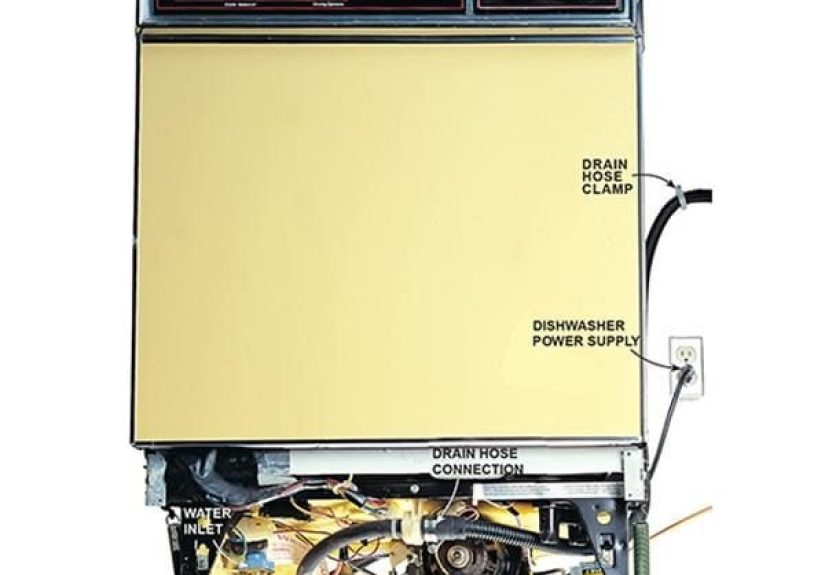
If the filter, disposal, air gap, and visible hose position all look fine, the drain hose itself may be clogged. Place a towel and bucket under the hose connection. Loosen the clamp where the hose connects to the disposal, air gap, or sink drain. Pull the hose off carefully and let any water drain into the bucket.
Inspect the hose opening for food, grease, or debris. You may be able to flush the hose with warm water. For a stubborn clog, disconnecting the other end may be necessary, but that usually requires pulling the dishwasher forward or removing the lower kick plate. If you are not comfortable doing that, call an appliance repair professional.
Avoid using harsh chemical drain cleaner inside the dishwasher. Drain cleaners can damage parts, create fumes, and may not even reach the clog if the blockage is in the hose or disposal connection.
Step 9: Check the Spray Arms and Interior Buildup
Spray arms do not usually cause standing water by themselves, but clogged spray arm holes can contribute to poor washing, leftover food, and more debris reaching the filter. Remove the spray arms if your model allows it. Rinse them and clear blocked holes with a toothpick or soft tool.
Also wipe the door gasket, corners, and lower tub edges. Food sludge loves quiet little corners. It is basically the roommate who never pays rent.
Step 10: Run a Test Cycle
After cleaning the filter, sump, disposal, air gap, and hose area, restore power and run a short rinse or drain cycle. Watch and listen. You should hear the pump activate and water should leave the tub. Check under the sink for leaks around any hose connection you touched.
If the dishwasher drains normally, run a full hot cycle with dishwasher detergent or a dishwasher cleaner. This helps flush loosened residue from the system. If standing water returns, the problem may be deeper: a failing drain pump, stuck check valve, defective drain solenoid, control issue, or household plumbing blockage.
When to Call a Professional
Some dishwasher drainage problems are reasonable DIY jobs. Others are best left to a technician or plumber. Call a professional if:
- The dishwasher still will not drain after cleaning the filter, hose, disposal, and air gap.
- You hear grinding, humming, or clicking from the drain pump.
- You smell burning or notice electrical issues.
- Water leaks from under the dishwasher.
- The drain hose is damaged or inaccessible.
- Your sink, tub, or other drains are also slow.
- The dishwasher shows repeated drain error codes.
If several drains in the home are slow, the issue may be in the household drain line, not the dishwasher. In that case, a plumber is the better call.
How to Prevent Dishwasher Drain Clogs
Once your dishwasher drains again, prevention is the real prize. A few simple habits can keep the machine from turning into a tiny indoor pond.
Scrape Plates Before Loading
You do not need to pre-rinse every dish until it looks showroom-new, but scrape large food scraps into the trash or compost. Rice, pasta, eggshells, corn kernels, and paper labels are famous for clogging filters and hoses.
Clean the Filter Regularly
For many households, cleaning the filter once a month is a smart routine. If you run the dishwasher daily or have a large family, check it more often. If you use the dishwasher less frequently, every one to two months may be enough. The filter will tell you the truth. Unfortunately, it tells you in slime.
Use the Right Detergent
Use detergent designed for automatic dishwashers. Regular dish soap creates excessive suds, which can interfere with drainage and make a foamy mess. More detergent is not always better. Too much can leave residue that contributes to buildup.
Keep the Disposal Clear
If your dishwasher drains into the garbage disposal, run the disposal with cold water before starting the dishwasher. This clears the drain path and reduces the chance of water backing up.
Inspect the Hose Area
Every so often, look under the sink. Make sure the drain hose is not kinked, sagging, or crushed. Keep bulky bottles and supplies away from the hose. Your under-sink cabinet does not need to look like a lifestyle magazine, but it should not be a hose-crushing obstacle course.
Common Mistakes That Make Drainage Worse
One common mistake is ignoring small drainage problems until the dishwasher smells like a swamp with Wi-Fi. If water remains after one cycle, check it soon. Another mistake is using chemical drain cleaner. It may damage dishwasher components and can be dangerous when mixed with food residue or detergent.
People also forget to reinstall the filter correctly. A loose or missing filter allows debris to enter the pump area. Overloading the dishwasher is another sneaky problem. When dishes block water flow, food particles do not rinse away properly and can collect near the drain.
Finally, do not assume every dishwasher problem is inside the dishwasher. A clogged sink drain, full disposal, blocked air gap, or missing high loop can all cause the appliance to drain poorly.
Experience-Based Tips for Unclogging a Dishwasher That Is Not Draining Completely
After dealing with dishwasher drainage issues in real kitchens, one lesson stands out: start with the boring checks first. The boring checks are usually the heroes. People often jump straight to “the pump is broken” or “I need a new dishwasher,” when the real problem is a filter packed with rice or a disposal that has not been run since last Tuesday’s taco night.
A practical approach is to treat the dishwasher drain path like a road map. Water starts in the tub, passes through the filter and sump, moves through the pump, exits through the drain hose, and then goes into the sink drain, disposal, or air gap. When water is standing in the tub, one of those stops is blocked, bent, loose, or failing. Work from the easiest point to the hardest point. That order saves time, money, and unnecessary appliance panic.
In many homes, the filter is the culprit. It can look clean from above while hiding a sticky layer of grease underneath. Remove it fully, rinse it, soak it briefly in warm soapy water, and scrub gently with a toothbrush. If your dishwasher has a removable fine mesh filter and a coarse filter, clean both. When you reinstall them, make sure they sit flush and lock into place. A filter that is installed crooked can cause strange noises and poor performance.
Another real-world tip: check for paper labels. Jars, bottles, and containers with labels can shed paper during a wash cycle. Those soggy labels break apart and travel toward the filter, where they become drain-blocking confetti. The dishwasher is great at cleaning plates, but it is not a document shredder with plumbing.
Under the sink, the drain hose deserves more attention than it gets. Many drainage problems appear after someone reorganizes the cabinet and accidentally pushes a cleaner bottle, trash bags, or a storage bin against the hose. If the hose is kinked, water flow slows. If the hose has fallen from its high loop, dirty water can flow backward. Secure the hose high under the counter if your setup requires a high loop, and keep storage items away from it.
Garbage disposal connections are another classic. If a new disposal was installed and the dishwasher immediately stopped draining, suspect the knockout plug. This small installation detail causes big confusion. The dishwasher may run perfectly, but the drain opening is blocked at the disposal. Removing the plug is usually a quick job for someone comfortable with basic plumbing, but if you are unsure, call a pro.
Air gaps can also fool people. If water comes out of the air gap cap, many assume the air gap itself is broken. Often, it is simply doing its job by revealing a clog between the air gap and the disposal or drain. Remove the cap, clean visible debris, and check the short hose. It may contain grease, seeds, or food particles that hardened into a stubborn plug.
One final experience-based rule: if the dishwasher makes a harsh grinding sound, smells electrical, leaks from underneath, or refuses to drain after all visible clogs are cleared, stop troubleshooting and call a technician. A drain pump repair is not the place to prove your bravery with a screwdriver and a tutorial playing on your phone. Smart DIY means knowing when the problem has moved from “messy but manageable” to “please bring a professional.”
Conclusion
Learning how to unclog a dishwasher when it is not draining completely is mostly about following the water. Start safely by disconnecting power, removing standing water, and cleaning the filter. Then check the drain basket, garbage disposal, air gap, high loop, and drain hose. Most clogs live in these areas, and many can be fixed without replacing the appliance.
Still, do not force a repair that feels unsafe or unclear. If the pump is noisy, the machine leaks, the hose is damaged, or water keeps returning after every fix, call a professional. Your dishwasher should clean plates, not test your plumbing certification.
With regular filter cleaning, smart loading habits, the right detergent, and occasional under-sink inspections, you can prevent most dishwasher drain clogs before they turn your kitchen into a low-budget water park.







 Close
Close