Table of Contents >> Show >> Hide
- Meet the Giant Maker: Thomas Dambo and His Wooden Trolls
- The Belgian Forest Giants: Fairy Tale Meets Reclaimed Wood
- How to Build a Giant (Using Everyone Else’s Trash)
- A Treasure Hunt, Not Just an Art Exhibit
- Why Giants? The Environmental Message Behind the Whimsy
- From Belgian Forests to a Global Trail of Trolls
- Bored Panda, Virality, and the Power of a Good Headline
- Planning Your Own Troll Hunt in the Belgian Wilderness
- What These Giants Teach Us (Besides How To Take Great Photos)
- My Personal Take: Walking Among Giants in a Belgian Forest
If you ever feel like your daily walk in the woods needs a little more drama, try turning a corner and locking eyes with a 30-foot-tall wooden giant. One moment you’re crunching leaves, the next you’re standing under a troll made of pallets and fallen branches, wondering if you accidentally stepped into a fairy tale. That’s exactly the kind of experience Danish recycle artist Thomas Dambo wants people to have when they go hunting for his wooden giants hidden in the wilderness of the Belgian forest.
Under the playful headline “I Hide Giants That I Make From Wood In The Wilderness Of The Belgian Forest”, Bored Panda helped turn these secretive sculptures into a viral phenomenon. But behind the click-worthy title is a surprisingly serious mission: use art, storytelling, and a bit of hide-and-seek to pull people away from screens, into nature, and into a conversation about waste, climate, and what we choose to throw away.
Meet the Giant Maker: Thomas Dambo and His Wooden Trolls
Before we lose ourselves in Belgian forests, it helps to know the mind behind the mayhem. Thomas Dambo is a Danish artist who proudly calls himself a “recycle artist and activist.” His signature move? Building enormous trolls and giants entirely from discarded materials like old pallets, scrap lumber, broken fences, and fallen trees. Over the last decade, he and his team have installed well over a hundred of these sculptures across more than 20 countries, from Denmark and Belgium to the United States and Puerto Rico.
Dambo’s philosophy is simple but powerful: we are drowning in trash, but trash is also a treasure trove of raw material. Instead of seeing a broken pallet as waste, he sees a troll’s elbow. An old fence plank becomes a giant’s smile. This creative reuse doesn’t just save wood from landfills; it transforms it into public art that people will hike, drive, and sometimes even fly to see.
What makes his giants especially memorable is their personality. They’re not just generic “big wooden people.” Each troll has a name, a facial expression, a pose, and sometimes even a backstory. Some appear to nap on hillsides. Others seem to be guarding rivers or watching over clearings. The result is something between sculpture, children’s book illustration, and environmental protest signonly a lot more charming.
The Belgian Forest Giants: Fairy Tale Meets Reclaimed Wood
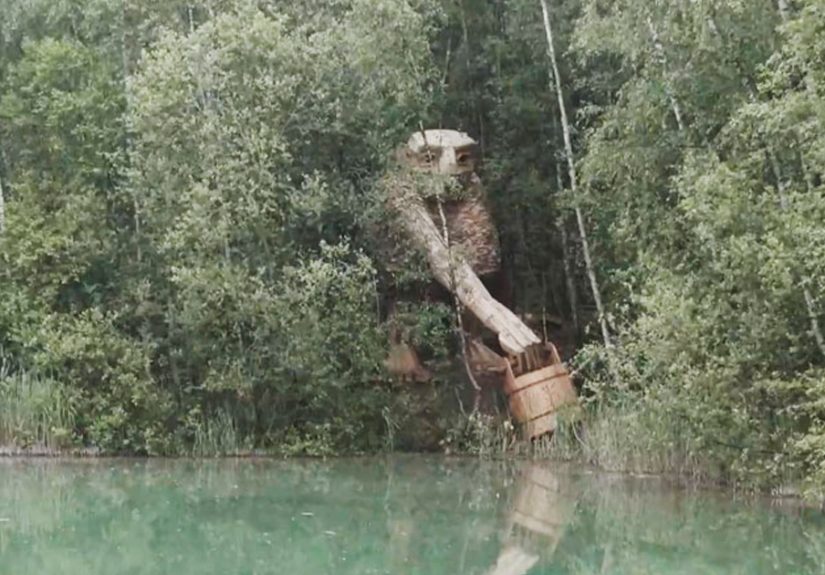
The story behind “I Hide Giants That I Make From Wood In The Wilderness Of The Belgian Forest” centers on one of Dambo’s most magical playgrounds: the wooded landscapes of Belgium. Working with reclaimed wood, old pallets, and fallen branches, he and his crew created a family of towering trolls hidden deep in the forest, especially around the nature area of De Schorre in Booman area better known to music fans as the home of the Tomorrowland festival.
Instead of placing the sculptures in a neat row next to a parking lot, Dambo scatters his giants along trails, clearings, and small hills. You don’t just “go see” the trolls. You hunt for them. Some sit perched on slopes, legs dangling like giant kids. Others lean against trees, peeking out from the greenery. A few look like they’re in the middle of a taskstacking rocks, holding branches, or playing with the landscape itself.
This choice of location is intentional. Dambo wants people to explore places they’d normally overlook. You might follow a quiet side path you’ve never noticed before, or wander farther than usual because a certain troll is rumored to be “just over the next hill.” By the time you’ve found your giant, you’ve also discovered a pond, a viewpoint, or a patch of wildflowers you might have missed otherwise.
How to Build a Giant (Using Everyone Else’s Trash)
Building a giant from recycled wood isn’t as simple as hammering a few boards together. Each sculpture starts with a rough conceptsometimes sketched, sometimes built from small modelsthen gets translated into full-size plans. Dambo’s team constructs an internal framework, often from sturdier reused timber, and then clads it with planks, shingles, and offcuts to give the giant its skin, hair, and clothing.
The wood itself comes from all kinds of sources: pallets from warehouses, leftover construction materials, old fencing, and branches collected from the forest floor. In Belgium, as in many of his projects, local volunteers help gather materials and even assist in building. That community involvement is part of the magic. It’s not just “Thomas the artist” putting something in a town; it’s neighbors, workers, families, and volunteers literally piecing the sculpture together.
Once assembled, each troll is anchored securely into the landscape. These giants are built to withstand weather, selfies, and enthusiastic children climbing on their knees. Because they’re made from wood, they will eventually age, fade, and break downa deliberate reminder that both nature and art are living, changing things.
A Treasure Hunt, Not Just an Art Exhibit
One of the most delightful aspects of Dambo’s forest giants is the way they turn art-viewing into an adventure. In several projects, including those around Copenhagen and in Belgium, he often creates treasure maps and clues that tell you where to find each troll. Instead of gallery labels, you get riddles. Instead of a straight-line “art walk,” you get a scavenger hunt.
The Bored Panda feature amplified this sense of wonder by sharing photos that look like they’ve been taken mid-fairy-tale: a giant crouched in the trees, another lounging on a hill with a serene expression, yet another peeking out from behind branches as if it’s playing hide-and-seek. Readers around the world were hooked not just by the sculptures themselves, but by the idea that you had to go off the beaten path to meet them.
For families, it’s an instant hit. Kids love following a map, spotting a giant’s hand through the trees, and shouting “There!” before racing downhill. Adults, meanwhile, get the joy of watching screen-obsessed teens suddenly care a lot about a wooden troll’s exact GPS coordinates. That, by the way, is exactly what Dambo wants: fewer hours of doomscrolling, more hours of mud on shoes and wind in hair.
Why Giants? The Environmental Message Behind the Whimsy
At first glance, these giants in the Belgian forest look like pure fantasy. But they’re also billboards for a very real message: we’re generating too much waste, and we can do better. By using discarded wood for every troll, Dambo sends a gentle but clear signalif we can build something this beautiful out of trash, what else are we throwing away without thinking?
The giants’ scale helps drive the point home. It’s one thing to talk about “tons of waste” as an abstract statistic. It’s another to stand under a towering troll made from those tons of waste and realize, oh, this actually adds up. The sculptures act like three-dimensional infographics, except instead of charts and numbers, you get big goofy smiles and oversized hands.
Over time, the trolls themselves will weather, crack, and eventually return to the earth. That’s part of the design. They’re not polished bronze statues meant to last forever. They’re temporary guests in the forestlike us. Their slow decay becomes a built-in lesson about cycles, materials, and what it means to live with the land instead of ignoring it.
From Belgian Forests to a Global Trail of Trolls
While the Bored Panda story zooms in on the Belgian forest trolls, they’re part of a much bigger family. Dambo’s “Trail of a Thousand Trolls” now includes installations across Europe, North America, and beyond. Forests in Kentucky and North Carolina feature “Forest Giants” and “baby trolls” made from regional scrap wood. In Colorado, trolls like Isak Heartstone have become minor celebrities, drawing hikers from around the world. In California and the Pacific Northwest, other trolls pop up in arboretums, parks, and coastal landscapes, each one tailored to its site.
In every location, the formula stays the same: use local discarded materials, work with local volunteers, and hide the giants just enough that you have to earn your encounter with them. This consistency gives the project a sort of global fairy-tale continuity. You could meet a troll in Belgium, another in Denmark, and a third in the United States and feel like you’re visiting distant cousins from the same gigantic family.
Social media, of course, amplifies the reach. A single photo of a troll’s huge hand holding a tree trunk can travel from a Belgian forest to a phone in Brazil in seconds. That digital visibility is a little ironic given Dambo’s mission to get people away from screensbut it’s also effective. Many visitors first discover the trolls on platforms like Instagram, TikTok, or Bored Panda, then decide to go offline and track them down in real life.
Bored Panda, Virality, and the Power of a Good Headline
Bored Panda has long specialized in feel-good, visually rich stories with a twist, and “I Hide Giants That I Make From Wood In The Wilderness Of The Belgian Forest” is a perfect example. The headline reads like an opening line from a fantasy novel, yet every photograph proves it’s very much real. That blend of whimsical storytelling and real-world documentation is exactly what makes these projects so shareable.
In an online world full of bad news and frustrating headlines, a story about a guy who uses trash to build kind-looking giants in the forest hits a different emotional note. It’s hopeful. It suggests that creativity and community can still surprise us. And because the trolls are photogenic from practically every angle, the story spreads fast.
At the same time, the article doesn’t have to lecture. The environmental message is baked into the visuals: giant sculptures, recycled materials, lush forests, kids climbing on wooden knees. Without reading a single caption, you can feel that this is about more than just “cool art.” It’s about how we inhabit the planet.
Planning Your Own Troll Hunt in the Belgian Wilderness
If this all has you itching to meet a giant in the Belgian forest, you’re not alone. While the exact sculptures and locations change over time as projects come and go, the general principles for planning a troll-hunting adventure stay the same:
- Do a little homework first. Check recent maps, local tourism sites, or community pages to see which trolls are currently installed and accessible. Trails sometimes change, and sculptures can be relocated or retired.
- Wear good shoes. These trolls are deliberately hidden in the wild. Expect actual forest conditionsmud, roots, rocks, and the occasional “I did not think this hill would be this steep.”
- Bring a sense of play. The point isn’t to tick a box and rush off. Linger. Take silly photos. Let kids invent stories about what each giant is doing there.
- Respect the landscape. Stay on marked paths where requested, don’t climb where it’s unsafe, and treat both the trolls and the forest as guests you’d like to invite you back.
- Notice the details. Look closely at the wood. You can often spot former pallet stamps, fastener holes, or pieces that used to belong to fences, barns, or crates. Every board has a past life.
By the time you head home, you’re likely to feel at least a little different about what “waste” really meansand you might find yourself eyeing the scrap pile behind your local hardware store with suspiciously artistic intentions.
What These Giants Teach Us (Besides How To Take Great Photos)
It’s easy to treat the Belgian forest giants as Instagram fuel: hike, snap, post, repeat. But the deeper lesson is about connectionconnection to place, to materials, and to one another. These sculptures sit at the intersection of art, environmentalism, and community building.
They remind us that public art doesn’t have to be a polished statue in a town square. It can be something you have to search for, something you interact with, even something that slowly decomposes back into the soil. They reframe “trash” as raw material and “recreation” as an opportunity to learn and care.
Most of all, they show that even in an age of digital overload, people will still go out of their way to find wonder in the real world. Give us a map, a rumor of a giant, and a quiet forest path, and we’ll gladly log off for a while.
My Personal Take: Walking Among Giants in a Belgian Forest
Spending time with the story behind “I Hide Giants That I Make From Wood In The Wilderness Of The Belgian Forest” feels a bit like tagging along on a very wholesome side quest. You start out curious about viral photos and end up thinking about how you live, what you buy, and how much magic can be found in a pile of scrap wood.
If I imagine myself walking through that Belgian forest, the experience unfolds almost cinematically. At first, the trail feels familiar: trees whispering overhead, birds you can hear but not see, the occasional cyclist zooming past on a nearby path. Then you notice something odd aheadan angle that doesn’t look like a tree trunk, a shape that doesn’t quite belong.
As you get closer, details start to emerge: layered planks, screwed in like giant shingles; a curve that looks suspiciously like a knee; a hand, larger than your entire torso, resting on the ground. And then suddenly, you’re therestanding beneath a troll who looks like it’s just paused mid-movement, frozen halfway through some task you’ll never fully understand.
The first reaction is usually laughter. It’s such a joyful, ridiculous, delightful thing to bump into a wooden giant in the middle of a forest. But once the surprise fades, the little thoughts sneak in. How many pallets did this take? Where did all this wood come from? How many people helped carry these boards through the trees? You start seeing the sculpture not just as a finished product, but as the sum of dozens of hands, hundreds of nails, and countless small decisions about how to use what others threw away.
There’s also something grounding about the way the trolls occupy the landscape. They’re large enough to be impressive, but not so polished that they feel alien. You can still see every screw, knot, and crack in the wood. You can trace the lines where planks meet, notice how a crooked board becomes a knuckle or a brow. That roughness makes them feel approachable, almost friendly. You could sit by one for an hour and not get bored discovering new angles and textures.
From a visitor’s standpoint, the hunt itself is half the fun. Maybe you start with a printed map or a screenshot from an article. You choose a path, second-guess yourself at every fork, and get that little spark of triumph each time you spot a troll in the distance. If you’re with kids, the energy is off the chartsthey turn into miniature detectives, scanning the horizon for giant toes and fingers.
And then there’s the way these experiences linger after you’ve left the forest. The next time you see a stack of pallets behind a grocery store, you can’t help but think, “That could be somebody’s shoulder.” When you scroll past another alarming headline about climate or waste, you remember that there are people out there turning those problems into invitationsinviting us to walk, to wonder, and to imagine new uses for what we already have.
For anyone who loves art, nature, or just a good story, the giants in the Belgian forest feel like proof that small choices can add up to something huge. Collect a board here, a volunteer hour there, a clever idea about where to hide a trolland suddenly you’ve got a project that pulls people across continents to go outside and care about a patch of woods they might never have noticed.
In a world where so much feels disposable, “I Hide Giants That I Make From Wood In The Wilderness Of The Belgian Forest” reads almost like a quiet manifesto. It suggests that we can do a lot with what we already have, that we can still surprise each other in kind ways, and that sometimes the best way to talk about big issues is to build something big, beautiful, and a little bit ridiculousand then hide it in the trees, waiting for us to come find it.