
Table of Contents >> Show >> Hide
- Why This Question Even Exists
- How Software Breaks Classic Value Screens
- So, Is Software Actually Eating Value Investing?
- What Smarter Value Investors Do Now
- Examples of the Shift
- Why the Debate Gets Overheated
- Conclusion: Software Didn’t Kill Value Investing. It Upgraded the Exam.
- Experience Section: What This Looks Like in the Real World
There was a time when value investing felt wonderfully simple. You looked for low price-to-book ratios, modest earnings multiples, sturdy balance sheets, and companies that appeared cheaper than a clearance rack toaster. Then software showed up, kicked open the door, and announced that the most important assets in the room were now invisible.
That is the heart of the modern debate. If software businesses create enormous value through code, data, distribution, switching costs, and customer relationships, what happens to a style of investing built around balance-sheet anchors? Has software actually “eaten” value investing, or has it merely exposed lazy versions of it?
The honest answer is more interesting than either extreme. Software has absolutely damaged traditional value screens, especially those leaning too hard on book value. But it has not destroyed value investing itself. Instead, it has forced value investors to grow up, wear better glasses, and admit that not every factory has walls anymore.
Why This Question Even Exists
The phrase “software is eating the world” became popular because software businesses scale in strange and powerful ways. A manufacturer usually needs more plants, more inventory, and more physical infrastructure to grow. A software company can often serve more customers with the same code base, a larger cloud bill, and a sales team powered by coffee and unreasonable optimism.
That changes how value is created. In software-heavy businesses, the real assets are often research and development, proprietary systems, user data, customer workflows, brand trust, and product ecosystems. Those assets can produce years of future cash flow, yet many of them do not appear cleanly on the balance sheet. Traditional accounting captures some of the economics, but not always in a way that helps a classic deep-value screen.
In other words, the old map still exists. The terrain just stopped cooperating.
Software Turned Intangibles Into the Main Event
When a railroad builds track, investors can point to the steel. When a software firm builds a sticky enterprise platform, the “track” is embedded in code, training, integrations, habit, and organizational workflow. The product may look light, but the economic moat can be very heavy.
This matters because traditional value metrics were developed in an era where physical capital did a lot of the talking. Book value worked better when the assets generating future returns sat visibly on the balance sheet. In a software-led economy, a company can look asset-light and expensive on paper while actually being rich in hard-to-replicate business value.
How Software Breaks Classic Value Screens
Price-to-Book Has a Blind Spot the Size of Silicon Valley
Book value is not useless, but in software it can be hilariously incomplete. If a company spends heavily to build internal tools, improve its product, deepen customer relationships, or strengthen its platform, much of that spending may flow through the income statement rather than sit on the balance sheet as a visible asset. The result is a business that may look expensive relative to book value even when its economics are excellent.
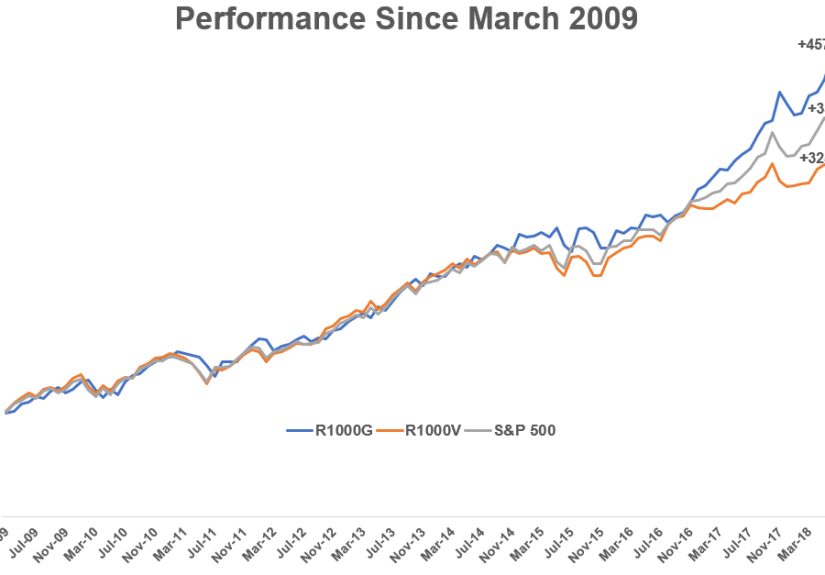
That is one reason many traditional value portfolios have looked suspiciously allergic to modern winners. If your screen says “cheap equals low price-to-book,” you may end up favoring capital-heavy firms whose assets are easy to count while missing software firms whose value is real but poorly labeled.
It is a bit like judging a modern restaurant solely by the size of its freezer. You would miss the chef, the recipes, the reservations, and the line around the block.
Earnings Can Look Worse Before They Look Better
Software companies often spend aggressively upfront on product development, implementation, and customer acquisition. Those investments may depress current earnings even when they create durable future revenue. A purely mechanical screen can confuse that with weakness rather than recognize it as economically productive spending.
That does not mean every unprofitable software company deserves a halo and a valuation worthy of a moon landing. It means the investor has to distinguish between spending that builds long-term value and spending that merely funds a very expensive PowerPoint deck.
Moats Are Different Now
The classic image of a moat involved factories, rail lines, brands, patents, or cost advantages in the physical world. Software adds new forms of defensibility: switching costs, embedded workflows, recurring revenue, data advantages, network effects, and ecosystem lock-in. These can be every bit as powerful as a smokestack, just harder to photograph.
That is why some software businesses can sustain strong returns on capital for long periods even if they never look conventionally cheap. They are not “cheap stocks” in the old cigar-butt sense. They are durable cash-flow machines disguised as code subscriptions.
So, Is Software Actually Eating Value Investing?
Yes and no. Software is eating traditional, balance-sheet-heavy, rules-based value investing. It is not eating the underlying principle that price matters relative to future cash flow.
That distinction is everything.
Value investing, at its core, is not about worshiping low multiples like they were handed down on stone tablets. It is about paying less than something is worth. If software changes what “worth” looks like, then the rational response is to update the measurement, not bury the philosophy.
Put differently: software did not break value investing. It embarrassed investors who confused a convenient proxy with the actual idea.
What Software Did Destroy
Software has likely weakened the usefulness of simple measures like price-to-book as universal shortcuts. It has also made many old industrial comparisons less informative. A company with a thin book value but deeply embedded software can be safer than a “cheap” stock with lots of physical assets and a business model heading toward a museum.
Some value investors learned this the hard way by repeatedly buying statistically cheap companies that were not misunderstood gems but rather slow-moving victims of digital disruption. Retailers were disrupted by e-commerce. Media businesses were disrupted by platforms. Legacy software was disrupted by cloud-native competitors. In those situations, “cheap” was often just the market being unpleasantly correct.
What Software Did Not Destroy
Valuation still matters. A wonderful software company can still become a terrible investment if purchased at an absurd price. Recurring revenue is great. Recurring revenue purchased at a valuation that assumes eternal perfection is less great. Even software obeys gravity eventually.
This is where modern value and quality investing begin to overlap. Investors increasingly care about free cash flow, reinvestment opportunities, return on invested capital, customer retention, pricing power, and unit economics. Those metrics are not anti-value. They are value investing translated into the language of the digital economy.
What Smarter Value Investors Do Now
They Adjust for Intangibles
Many serious investors now make some attempt to capitalize or normalize intangible investment. They do not blindly accept reported book value as the full picture. Instead, they ask whether research spending, software development, data infrastructure, or brand-building should be treated as part of the company’s productive asset base.
This does not require accounting cosplay or a spreadsheet so large it frightens wildlife. It simply means recognizing that a dollar spent on a productive software platform may have more in common with capital investment than with a one-time expense.
They Use Better Valuation Tools
Rather than lean only on price-to-book, investors often look at enterprise value to free cash flow, enterprise value to EBIT, normalized operating margins, owner earnings, or discounted cash flow assumptions. These frameworks are not perfect, but they are better suited to firms whose real worth lives in future cash generation rather than reported asset piles.
For software, the questions become sharper: How sticky is the customer base? How strong are renewal rates? Can margins expand? Does the company earn real pricing power? Is growth efficient, or is management lighting money on fire and calling it strategy?
They Separate Cheap From Broken
The digital economy has increased the number of businesses that look cheap because they are being structurally displaced. A stock can trade at six times earnings and still be expensive if those earnings are melting. Meanwhile, a software firm at a higher multiple may be cheaper in a true economic sense if its cash flows are durable, growing, and protected by switching costs.
Modern value investing is less about buying the lowest multiple and more about understanding the reason for the multiple.
Examples of the Shift
Consider the contrast between legacy businesses and software platforms. A traditional industrial company may report substantial tangible assets and appear inexpensive on book value. But if demand is flat, margins are cyclical, and reinvestment produces mediocre returns, the apparent cheapness may be an illusion.
Now consider a software leader with strong retention, embedded workflows, and recurring revenue. It may look pricey on price-to-book because book value understates the economic value of internally developed software, customer relationships, and ecosystem strength. Yet if that company can compound cash flow over many years, the “expensive” stock may actually have been the bargain all along.
This is one reason investors increasingly describe firms such as Microsoft, Adobe, or leading enterprise software providers through the language of moats, switching costs, and capital allocation instead of old-school asset ratios alone. These businesses are not automatically cheap, and they are certainly not risk-free, but they demonstrate how value can accumulate off the balance sheet.
Why the Debate Gets Overheated
Part of the argument is semantic. One camp hears “value investing” and thinks of Benjamin Graham screens: low multiples, asset discounts, statistical cheapness. Another camp hears “value investing” and thinks of buying future cash flows for less than they are worth, even if the business is asset-light and high quality.
Both camps use the same label, which is how finance conversations end up sounding like Thanksgiving dinner with more spreadsheets.
The better framing is this: software has weakened old signals, not the timeless logic behind valuation. If you insist on using yesterday’s thermometer in a different climate, do not blame the weather.
Conclusion: Software Didn’t Kill Value Investing. It Upgraded the Exam.
So, is software eating value investing? Only the lazy version.
Software has made the economy more intangible, more scalable, and more dependent on assets that accounting only partially captures. That has absolutely made traditional value screens less reliable, especially when they rely too heavily on book value and ignore the economic power of software, data, switching costs, and recurring revenue.
But the core of value investing remains alive and annoyingly rational: estimate what a business is worth, compare that to the price, and insist on a margin of safety. The tools must evolve because the businesses have evolved. That is not betrayal. That is competence.
If anything, software has made value investing harder, not obsolete. It demands deeper judgment, better accounting awareness, and a willingness to think beyond the obvious ratios. The bargain bin is still there. It just may contain fewer steel mills and more source code.
Experience Section: What This Looks Like in the Real World
In practice, the tension between software and value investing shows up in the way people talk about “cheap” stocks at almost every stage of the market cycle. During risk-off periods, many investors sprint back toward low multiples as if spreadsheets can function as emotional support animals. They screen for depressed valuations, find a stack of companies trading below historical averages, and feel an immediate sense of safety. But once you start reading the businesses rather than just the ratios, the picture changes fast.
A retailer may look optically cheap, yet its customer traffic is leaking into digital channels it does not control. A legacy IT vendor may trade at a modest multiple, but its installed base is quietly migrating to cloud-native competitors. A media company may seem statistically undervalued, while the actual economics of attention have already moved to platforms, subscriptions, and software-driven distribution. In these cases, the low multiple is not a gift. It is often a warning label written in very polite accounting language.
On the other side, many investors have experienced the opposite mistake: dismissing software businesses as permanently overvalued because the old metrics looked ugly. Price-to-book seemed ridiculous. Current earnings looked compressed. Stock-based compensation caused heartburn. Yet the business kept doing the same boringly beautiful things quarter after quarter: retaining customers, expanding accounts, raising prices carefully, and turning code into cash with the persistence of a vending machine that has discovered ambition.
That experience teaches an uncomfortable lesson. The market often pays up for software not because investors have lost their minds, but because durable software economics can be worth a premium. The trick is knowing when that premium reflects real compounding power and when it reflects fantasy dressed as innovation.
The most thoughtful investors I have seen do not argue endlessly about whether they are “value” or “growth.” They examine the durability of demand, the credibility of management, the unit economics, the competitive moat, and the price being paid for all of it. They respect accounting, but they do not become prisoners of it. They understand that in a software-led economy, some of the most important assets are hidden in plain sight: in code repositories, renewal rates, customer habits, and embedded workflows.
That is why the question “Is software eating value investing?” is so useful. It forces investors to confront whether they are buying businesses or merely collecting ratios. And once you have seen that difference clearly, it becomes very hard to unsee it. The investor’s job is not to worship old formulas. It is to follow value wherever it actually lives, even when it now arrives through the cloud.





 Close
Close