Table of Contents >> Show >> Hide
- What Is a Joe Frogger Cookie?
- The Story Behind Joe Froggers
- Why Joe Froggers Became a New England Favorite
- What Makes Joe Froggers Different From Regular Molasses Cookies?
- Joe Frogger Recipe
- Best Tips for Baking Joe Froggers Successfully
- How to Serve Joe Froggers
- How to Store Joe Froggers
- Why Joe Froggers Still Matter
- The Experience of Baking and Eating Joe Froggers
- SEO Tags
If you’ve never met a Joe Frogger, let me introduce you to one of New England’s great under-the-radar cookie legends. It’s round, dark, warmly spiced, a little rum-kissed, and far less flashy than today’s stuffed, drizzled, sprinkle-covered cookie celebrities. In other words, it has absolutely no interest in becoming an influencer. It just wants to be delicious.
A classic Joe Frogger recipe brings together molasses, brown sugar, ginger, cloves, nutmeg, allspice, hot water, and dark rum for a cookie that tastes old-fashioned in the best possible way. The result is chewy in the center, firm at the edges, deeply fragrant, and wonderfully sturdy. This is the kind of cookie that feels at home next to black coffee, strong tea, or a stormy Atlantic coastline.
But Joe Froggers are more than a good cookie. They’re tied to Marblehead, Massachusetts, to Black history in New England, to maritime food traditions, and to the kind of recipe that survives because people keep baking it long after the original measurements have vanished into the fog of time. If your cookie jar needs a little personality, a little history, and a lot of molasses, you’re in the right place.
What Is a Joe Frogger Cookie?
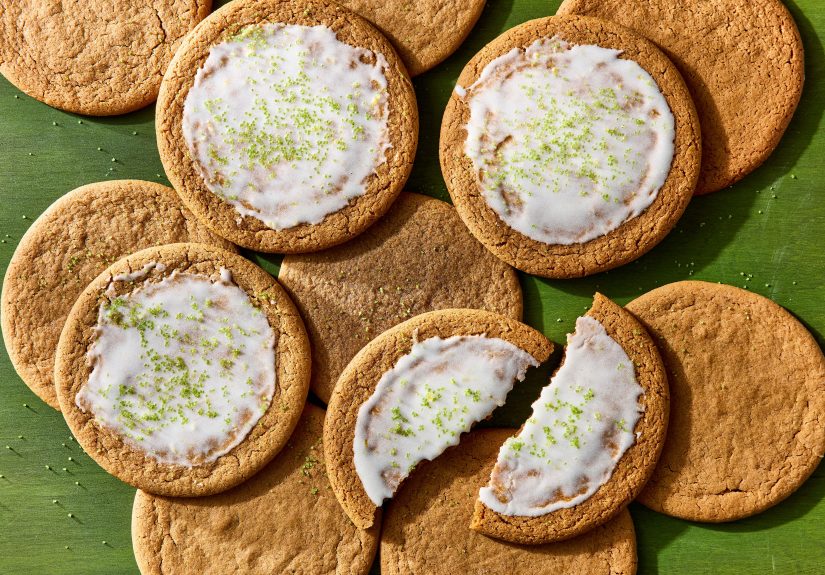
A Joe Frogger is a traditional New England spice cookie made with molasses and rum. It usually features a mix of ginger, cloves, nutmeg, and allspice, and the dough is typically rolled out, chilled, and cut into rounds rather than dropped by the spoonful. That gives it a flatter, broader shape than your average molasses cookie.
Think of it as a cousin to gingerbread and a close relative of old-fashioned molasses cookies, but with a personality all its own. Joe Froggers are usually more molasses-forward, more deeply spiced, and a little more rugged. They don’t try to be dainty. They aim for hearty, flavorful, and memorable.
Traditional versions are often quite large, sometimes much larger than modern home-baked cookies. In fact, part of the cookie’s charm is its size. A Joe Frogger should look like it means business. Not aggressive business. Cozy business. The kind of business that smells like a spice cupboard and sounds like a kettle starting to whistle.
The Story Behind Joe Froggers
Marblehead, Massachusetts, Is the Heart of the Legend
The Joe Frogger recipe is closely associated with Marblehead, a historic coastal town north of Boston. Most tellings connect the cookie to Joseph Brown and his wife, Lucretia Brown, who ran a tavern on Gingerbread Hill in the late 18th and early 19th centuries. Joseph Brown was a Revolutionary War veteran, and Lucretia is widely credited with creating the cookie that became known as the Joe Frogger.
That origin story matters because it puts a real couple at the center of a recipe that could easily be dismissed as just quaint local lore. Joseph and Lucretia Brown are part of the cultural history of Massachusetts, and the cookie has endured because their story endured too. In a world where recipes often get detached from the people who made them, Joe Froggers still carry names, place, and memory.
Why the Name “Joe Frogger” Still Gets People Talking
The name is delightfully odd, and like many old food names, it comes with competing explanations. One popular story says the cookies were named for Joseph Brown and the frog pond near the Browns’ tavern. Another says the large, wide cookies resembled lily pads. Still another theory suggests the name may be connected to a seafaring provision called a “Joe Flogger.” Translation: the history is charming, but not every detail is carved in granite.
That uncertainty is part of the appeal. Joe Froggers sit in that sweet spot where culinary history, local pride, and family storytelling overlap. The broad facts stay consistent: Marblehead, the Browns, molasses, rum, spice, and a cookie sturdy enough to travel. The rest is the kind of mystery that makes people lean in for one more story and, ideally, one more cookie.
Why Joe Froggers Became a New England Favorite
There’s a practical reason this cookie lasted: it keeps well. Joe Froggers were long associated with sailors and fishermen because they held up better than fussier baked goods. They were flavorful, portable, and less fragile than tender butter cookies or frosted treats that would have fallen apart the minute ship life got dramatic. Which, to be fair, was often.
The ingredient list also reflects its time and place. Molasses was a common sweetener in early American baking, especially in coastal New England. Rum was also deeply tied to the region’s trade and foodways. Add warming spices and a dough that doesn’t rely on eggs, and you get a cookie that tastes both practical and rich. Joe Froggers are proof that “long-lasting” does not have to mean “boring.”
Even now, their appeal is obvious. They taste nostalgic without being bland, historic without being dusty, and familiar without blending into the holiday cookie crowd. If gingerbread had a seafaring cousin who listened to sea shanties and smelled faintly of rum, it would be this cookie.
What Makes Joe Froggers Different From Regular Molasses Cookies?
At first glance, Joe Froggers can look like oversized molasses cookies. But the differences are worth knowing.
- Rum: This is the signature twist. Rum deepens the flavor and gives Joe Froggers their unmistakable edge.
- Rolled dough: Many molasses cookies are drop cookies. Joe Froggers are usually rolled and cut into rounds.
- Bigger size: Traditional versions are often larger than standard spice cookies.
- Texture: They tend to be chewy, sturdy, and pleasantly substantial rather than cakey.
- Historic flavor profile: Many classic versions focus on ginger, cloves, nutmeg, and allspice, letting molasses do the heavy lifting.
In short, a Joe Frogger recipe gives you more depth, more character, and more old-school New England flavor than a standard supermarket-style molasses cookie. It is not trying to be soft-batch and cute. It is trying to survive the voyage and still taste excellent with a cup of coffee.
Joe Frogger Recipe
Yield: About 24 to 30 cookies, depending on size
Prep time: 25 minutes, plus chilling time
Bake time: 10 to 12 minutes per batch
Ingredients
- 3 1/2 cups all-purpose flour
- 1 1/2 teaspoons salt
- 1 teaspoon baking soda
- 1 1/2 teaspoons ground ginger
- 1/2 teaspoon ground cloves
- 1/2 teaspoon ground nutmeg
- 1/4 teaspoon ground allspice
- 1/2 cup vegetable shortening
- 1 cup packed light brown sugar
- 1 cup dark molasses
- 1/3 cup hot water
- 2 tablespoons dark rum
Instructions
- Mix the dry ingredients. In a medium bowl, whisk together the flour, salt, baking soda, ginger, cloves, nutmeg, and allspice.
- Beat the base. In a large bowl, beat the shortening, brown sugar, and molasses until smooth and well combined.
- Stir the liquid. In a measuring cup, combine the hot water and dark rum.
- Build the dough. Add the dry ingredients and the rum-water mixture to the molasses mixture in alternating additions, mixing just until a soft dough forms. If it seems crumbly rather than soft, add a tablespoon of water at a time.
- Roll and chill. Divide the dough in half. Roll each half between sheets of parchment or wax paper to about 1/4-inch thick. Refrigerate for at least 2 hours.
- Heat the oven. Preheat the oven to 375°F. Line baking sheets with parchment paper.
- Cut the cookies. Use a 3-inch round cutter for standard cookies, or go bigger if you want the old-school feel.
- Bake. Place the cookies on the prepared baking sheets and bake for 10 to 12 minutes, until the edges look darker and the centers are set.
- Cool. Let the cookies sit on the baking sheet for about 5 minutes, then transfer them to a rack to cool completely.
Optional Variation
If you want a more traditional vibe, keep the cookies large and flat. If you want a slightly softer, more modern cookie, cut them a bit smaller and watch the bake time closely. Both versions are good. This is not a house divided.
Best Tips for Baking Joe Froggers Successfully
Don’t skip the chill time. This dough is soft and sticky by design. Chilling makes it easier to roll, cut, and transfer without turning your countertop into a molasses crime scene.
Use dark molasses, not blackstrap. Blackstrap molasses can be too bitter. You want deep flavor, not punishment.
Go easy on extra flour. The dough should be soft. Adding too much flour makes the cookies dry and dull, and no historic cookie deserves that fate.
Watch the edges, not the clock. Joe Froggers are done when the edges darken and the centers look set. Overbaking can turn their signature chew into something more closely related to roofing material.
Use real rum if you can. Rum extract will work in a pinch, but real dark rum gives the cookie more depth and a more authentic flavor profile.
How to Serve Joe Froggers
Joe Froggers are excellent with coffee, black tea, chai, or a cold glass of milk. They’re also terrific on a holiday cookie tray because they bring a darker, spicier note to the usual sugar-cookie parade. If you like desserts that feel festive without being frosted into oblivion, these deserve a place on the table.
For a New England-style presentation, stack them in a tin or on a simple plate with a linen napkin and let the aroma do the talking. These cookies don’t need decorative drizzle. They already have a backstory.
How to Store Joe Froggers
Store the cookies in an airtight container at room temperature for up to a week, though many bakers find they hold even longer. Their flavor often deepens after a day or two, which is one of the many reasons they’re ideal for make-ahead baking.
You can also freeze the baked cookies or the dough. If freezing dough, roll it flat first so it thaws more quickly later. Future-you will be grateful, and frankly, future-you deserves nice things.
Why Joe Froggers Still Matter
The best old recipes are never just about ingredients. They’re about the people who carried them forward, the places that gave them context, and the small acts of repetition that keep local food alive. Joe Froggers matter because they connect baking to New England history, to Black culinary history, and to a regional identity that still values recipes with roots.
They also matter because they’re genuinely good. Not “good for a historic cookie.” Just good. Deeply spiced, pleasantly chewy, and distinct enough that once you try one, you remember it. In a world packed with novelty desserts, that kind of staying power is impressive.
The Experience of Baking and Eating Joe Froggers
There’s something wonderfully different about making Joe Froggers compared with modern cookie recipes. Most contemporary cookies seem to promise drama: gooey centers, molten fillings, giant pools of chocolate, maybe a sprinkle of sea salt for good measure. Joe Froggers are not here for the drama. They are calm, serious, aromatic cookies, and the experience of making them feels more grounded from the start.
The first thing you notice is the smell. Before the cookies even hit the oven, the bowl gives off that dark, earthy molasses aroma that instantly makes the kitchen feel older somehow, in a good way. Then the ginger steps in, followed by cloves and nutmeg, and suddenly your house smells like a colonial tavern got a really good candle line. Add the rum, and the dough develops a richness that feels cozy rather than boozy. Nothing about it is flashy. Everything about it is inviting.
Rolling out the dough is part of the charm. It feels more intentional than scooping drop cookies. You’re not just tossing dough onto a tray and hoping for the best. You’re shaping something with history behind it. Cutting the rounds is especially satisfying because Joe Froggers are meant to be broad and sturdy. They look substantial before they bake, and that sense of heft becomes part of their identity. Even raw, they already seem like cookies with a story to tell.
When they come out of the oven, they don’t scream for attention the way frosted or chocolate-stuffed cookies do. They just sit there looking handsome and deeply browned, filling the kitchen with spice and molasses. That first bite is where the surprise happens. The flavor is bigger than the appearance suggests. You get warmth from the spices, a little bitterness and caramel depth from the molasses, and a mellow finish from the rum. The texture is part chewy, part tender, and wonderfully old-school. It feels like the kind of cookie that was designed to be eaten slowly.
What makes the experience especially memorable is that Joe Froggers don’t taste like every other holiday cookie. They stand apart. They’re less sugary, less buttery, and more complex. They taste like place. They taste like weather. They taste like something that belongs near the ocean in late fall, or in a snow-covered kitchen with foggy windows and a hot mug nearby. They invite you to pause for a second, which is not something many cookies ask of us.
They’re also one of those rare bakes that seem to improve the mood of the room. Put a plate of Joe Froggers on the table and people get curious. Someone always asks about the name. Someone else says they’ve never heard of them. Then the history comes up, the spices start working their magic, and suddenly this humble New England spice cookie becomes a conversation piece. That may be the best part of the whole experience. Joe Froggers are not just a recipe. They’re an introduction, a memory-maker, and a quiet reminder that some of the best cookies in America are the ones that don’t need to show off.