Table of Contents >> Show >> Hide
- What Is a Kehai Clock, Exactly?
- Why Kehai Clocks Look “Foggy” (On Purpose)
- Key Specs and Materials (The Practical Stuff)
- Who Kehai Clocks Are Perfect For (And Who They Might Drive Nuts)
- How to Style a Kehai Clock in a Real Home
- Care, Maintenance, and Hanging Tips
- Buying Tips: How to Shop Smart for Kehai Clocks
- So… Is a Kehai Clock Worth It?
- Experiences With Kehai Clocks (The “Living With It” Part ~500+ Words)
Some clocks want your attention. They tick loudly, flash numbers, and basically yell, “TIME IS HAPPENING!”
Kehai clocks do the opposite. They’re the clock equivalent of a calm friend who texts you back tomorrowand you’re
oddly grateful for it.
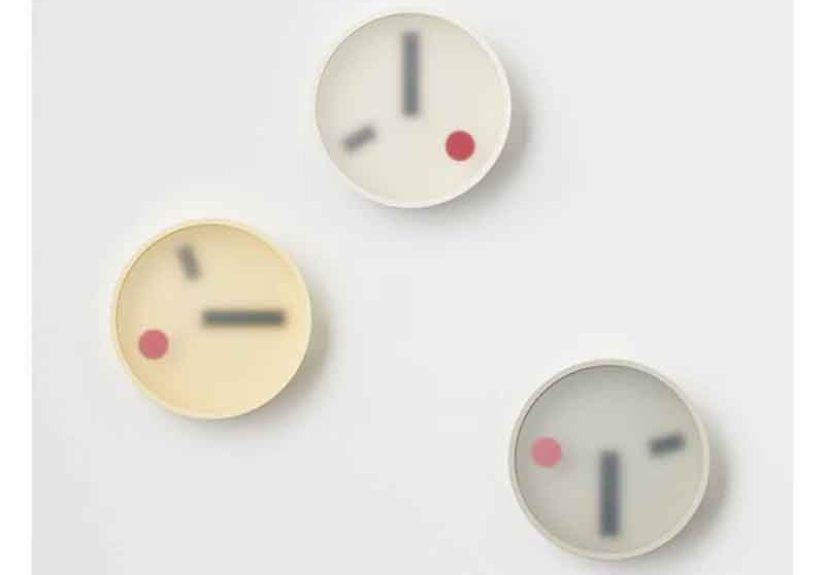
The Kehai (気配) clock is a minimalist wall clock design known for its frosted-glass face that intentionally
softens the visibility of the hour and minute hands. Instead of a loud “look at me,” it offers a subtle “time is
around here somewhere.” And thenbecause it still has to do its jobit gives you a tiny, bold red dot that sweeps
around the edge as the second hand, quietly reminding you that yes, seconds are still seconds, even when you’re
pretending deadlines aren’t real.
What Is a Kehai Clock, Exactly?
“Kehai” is a Japanese word often translated as a “hint,” “sign,” or “presence” of something nearbylike the
feeling that someone’s in the next room, or that rain is about to start, or that your cat is plotting something.
That idea is baked into the clock’s design: it doesn’t shove the exact time in your face; it lets time exist as a
gentle presence in your space.
The Kehai clock is associated with Japanese design brand Lemnos and the industrial designer Makoto Koizumi. It’s
frequently described as originally designed in 2004 and later brought back into productionan important detail
because it explains why it feels both modern and oddly timeless (pun absolutely intended).
Why Kehai Clocks Look “Foggy” (On Purpose)
1) Frosted glass that blurs the hands
The signature feature is the frosted glass face. The hour and minute hands sit behind it, so they appear muted,
like shadows. That means you can still read the time, but it takes a beat longer than on a high-contrast, number-
heavy dial. And that pause is the point: it slows down the act of checking the time.
2) The red dot second hand: tiny, bold, and oddly poetic
Rather than a traditional second hand that “ticks,” the Kehai clock often features a red dot that glides smoothly
around the perimeter. Visually, it’s a neat tension: the hour/minute hands are intentionally vague, while the
second is crisp and unmistakablelike the universe saying, “Sure, you can be chill… but also, you have 43 seconds
left before your pasta is overcooked.”
3) Silent, smooth motion
Many Kehai listings highlight a silent, fluid movementoften described as a Seiko SKP movementso you don’t get
the classic tick-tick soundtrack. This makes Kehai clocks popular for bedrooms, home offices, studios, and any room
where you want calm, not percussion.
Key Specs and Materials (The Practical Stuff)
While exact details can vary by retailer and edition, Kehai clocks are commonly described with the following
characteristics:
- Type: Analog wall clock
- Display style: Minimal, number-free or very understated markings
- Face: Frosted glass that softens the hands
- Frame: Thin aluminum frame, often described as cast and crafted for durability
- Movement: Often listed as a Seiko SKP movement (smooth, quiet)
- Power: Typically 1 AA battery
- Size: Commonly around 5 inches in diameter with a depth a bit over 2 inches (compact and
“floaty” on the wall) - Colors: Often seen in White, Gray, and a soft Yellow/Butter tone
Translation: it’s small, quiet, and refinedmore like a design object that happens to tell time than a “tool”
clock that bullies you into productivity.
Who Kehai Clocks Are Perfect For (And Who They Might Drive Nuts)
Kehai clocks are a great fit if you:
- Love minimalist interiors and want a clock that doesn’t dominate your wall.
- Work from home and want time awareness without constant time anxiety.
- Need quiet (bedroom, nursery, studio, therapy office, meditation space).
- Collect design objects and appreciate Japanese industrial design.
- Want a conversation starter that isn’t a neon sign with a questionable quote.
You may not love a Kehai clock if you:
- Need exact time at a glance (think: busy kitchen line cook energy).
- Prefer large clocks that read from across a big room.
- Get annoyed by “design ambiguity” and just want your clock to behave like a clock.
In other words: Kehai clocks are less “train station” and more “museum gallery gift shop,” in the best way.
How to Style a Kehai Clock in a Real Home
Because the Kehai clock is subtle, the wall you choose matters. Here are a few styling moves that work especially
well:
Make the wall do part of the design work
The frosted face and soft hands mean contrast is your friend. If you place a light-colored Kehai clock on a very
bright white wall, it may “disappear” beautifullybut it may also be harder to read. If you want a stronger design
statement (and easier legibility), put it on a slightly darker wall: warm gray, clay, muted green, even a matte
navy.
Use it where you check time gentlynot obsessively
A Kehai clock is fantastic in a hallway, entryway, office, reading nook, or bedroomplaces where you want time
awareness without a constant stopwatch vibe. It’s less ideal above a stovetop where you’re timing three burners,
two pans, and one existential crisis.
Pair it with other quiet shapes
Kehai clocks look best around simple forms: a slim shelf, a single framed print, a plant with good posture, and
maybe a lamp that doesn’t look like it came from an alien interrogation room. Let the clock be subtle; don’t
surround it with chaos.
Care, Maintenance, and Hanging Tips
The maintenance routine is refreshingly low-drama:
- Dust lightly with a soft cloth (frosted glass shows smudges if you go full “fingerprint museum”).
- Use a fresh AA battery if you notice time drift or the second indicator slowing.
- Avoid humid zones like directly above a shower or right next to a steamy stovetop, especially if you
want the frosted face to stay crisp-looking. - Hang securely (small clock, still deserves a proper wall anchor if needed).
Because it’s compact, it’s also easier to place than a big statement clockgreat for apartments, gallery walls,
or narrow wall segments where a larger clock would feel like it’s trying too hard.
Buying Tips: How to Shop Smart for Kehai Clocks
Look for the design cues that define a real Kehai clock
The easiest way to avoid disappointment is to focus on the defining elements: frosted glass face, minimal dial,
red-dot second hand with smooth motion, thin aluminum frame, and clear attribution to Lemnos / Makoto Koizumi in the
product description.
Expect boutique availability
Kehai clocks are often sold through design-forward retailers and curated home shops. That means stock can be
inconsistent, and “sold out” is basically part of the aesthetic. If you find one available in the color you want,
it may be worth grabbing rather than assuming it will sit around politely forever.
Price positioning: this is a design object
You’ll typically see Kehai clocks priced like premium design décor rather than mass-market wall clocks. Depending
on the retailer, color, and availability, they’re commonly listed in the mid-$100s to low-$200s range, with some
boutiques higher. The value proposition isn’t “features per dollar.” It’s “this makes my room feel calm.”
So… Is a Kehai Clock Worth It?
If you want a wall clock that reads like a gentle design poemquiet, minimalist, and slightly mysteriousKehai
clocks are an easy yes. If you want a clock that screams the time from across the house like a sports announcer,
you’re going to feel personally attacked by frosted glass.
The magic of Kehai is that it changes how you interact with time: not as a constant demand, but as a soft presence
in your space. It’s still accurate. It’s still useful. It’s just… less bossy about it.
Experiences With Kehai Clocks (The “Living With It” Part ~500+ Words)
The first thing most people notice when they live with a Kehai clock isn’t the timeit’s the mood. A normal
clock is a background object until it starts annoying you (tick tick tick… why is it so loud? why do I suddenly
hate seconds?). A Kehai clock is the reverse: it blends in visually, but it quietly changes how the room feels.
The frosted face softens the whole concept of “tracking,” so checking the time becomes less like consulting a
scoreboard and more like glancing at the sky to see if it’s late afternoon yet.
In a home office, this can be surprisingly helpful. Picture a desk setup where you’re trying to focuswriting,
designing, coding, or doing the classic “I’m totally working” move while reorganizing browser tabs. A loud,
high-contrast clock can create tiny bursts of stress: you look up, see the exact minute, and your brain immediately
starts bargaining (“Okay, I have 17 minutes, and then I’ll panic productively”). With a Kehai clock, you still get
the information, but it arrives softer. You can tell you’re around the half hour, or just past it, without being
dragged into the drama of precision.
In a bedroom, the quiet movement becomes the hero. Plenty of people don’t realize how much the ticking of an
analog clock bothers them until they try to sleep next to one. Kehai clocks are often described as silent or
smooth-sweep, which means no audible ticking to latch onto at 2:13 a.m. when your thoughts decide to hold a
surprise meeting. If you’re sensitive to sound, this alone can be the difference between “cozy” and “why am I
furious at time itself?”
Kehai clocks also create a funny social effect: guests notice them, but they don’t always immediately register
them as clocks. The frosted face reads like a design objectlike a minimalist sculpture pretending to be
functional. People will walk in, pause, and do that polite squint that says, “Is that art… or am I supposed to
know what that is?” When they realize it’s a clock, the reaction is usually a mix of delight and mild confusion,
which is basically the ideal outcome for any well-chosen home accessory.
Over time, living with a Kehai clock can subtly train you to check time differently. You stop doing rapid-fire
glances every five minutes (the clock isn’t built for that lifestyle), and you start using it more like a gentle
anchor in the room. The red dot second indicator adds a soothing motionless “countdown” and more “orbit.” If you
place it near a reading chair or a coffee station, it becomes part of the ritual: you glance up, confirm you’re
not late, and go back to your life without spiraling.
That said, there’s a learning curve. For the first few days, some people find themselves stepping closer to read
itespecially if the clock color is close to the wall color. The fix is simple: choose a wall with a touch more
contrast, hang it where light doesn’t glare on the frosted surface, and give your brain a week to adapt. Once you
do, it becomes surprisingly intuitive. You’re not fighting it; you’re collaborating with it.
The most honest “Kehai experience” summary is this: it’s a clock for people who want time to be presentbut not
aggressive. It doesn’t remove deadlines. It doesn’t make Mondays disappear. But it does make the act of noticing
time feel calmer, which is honestly the most realistic form of modern magic available without a wizard license.