
Table of Contents >> Show >> Hide
- What Is La Lampe Gras?
- Why the Reeditions Matter
- A Brief History: From Workshop Tool to Design Icon
- Design Features That Make La Lampe Gras Special
- Popular La Lampe Gras Reedition Models
- Where La Lampe Gras Reeditions Work Best
- How to Style La Lampe Gras Without Trying Too Hard
- What to Consider Before Buying
- Why La Lampe Gras Still Feels Modern
- Experience Section: Living With La Lampe Gras Reeditions
- Conclusion
Some lamps whisper. Some lamps sparkle. La Lampe Gras simply rolls up its sleeves, angles its shade, and gets to work. Designed in 1921 by French engineer Bernard-Albin Gras, this now-iconic lighting collection began life not as a decorative darling, but as a practical tool for offices, workshops, studios, and industrial environments. In other words, it was born in the land of rulers, blueprints, metal desks, and people who probably said things like, “Pass me the calipers,” without irony.
Today, La Lampe Gras reeditions are admired by architects, interior designers, collectors, and homeowners who want lighting that looks smart without shouting, “I bought this because a design blog told me to.” Reissued by DCW éditions, the collection keeps the spirit of the original: adjustable arms, clean geometry, robust materials, and a no-nonsense attitude that somehow feels elegant enough for a Paris apartment and useful enough for a Brooklyn workbench.
This article explores the history, design logic, popular reedition models, styling ideas, buying considerations, and real-world experience of living with La Lampe Gras lighting. Consider it a friendly field guide to one of the most influential task lamps of the 20th centuryminus the museum guard telling you not to touch anything.
What Is La Lampe Gras?
La Lampe Gras is a family of articulated lamps originally designed by Bernard-Albin Gras for professional use. The goal was simple: create a lamp that could direct light precisely where needed, withstand daily use, and avoid unnecessary decoration. The result was a mechanical object with quiet confidence. It did not rely on fancy flourishes, curvy drama, or decorative fuss. Its beauty came from purpose.
The original Gras lamps were celebrated for their ergonomic design and mechanical simplicity. One of the most repeated facts about the design is that the basic structure used no screws or welded joints, a remarkable feature for a lamp intended to move, pivot, and survive real work. That engineering clarity is part of why the lamp still feels modern more than a century later.
In 1927, the Ravel company acquired the patent and began producing the lamps on a wider scale. Over time, La Lampe Gras moved beyond workshops and technical offices into architectural studios, homes, galleries, and design-minded interiors. It became associated with the rise of modernist living: practical, rational, flexible, and stylish without pretending to be a chandelier wearing perfume.
Why the Reeditions Matter
Reeditions can be tricky. Done poorly, they feel like design karaoke: technically recognizable, emotionally flat. Done well, they preserve the character of the original while adapting it for contemporary homes, electrical standards, and everyday expectations. The La Lampe Gras reeditions by DCW éditions fall into the second category.
The value of the reedition is not merely nostalgia. It allows today’s buyers to enjoy the proportions, adjustability, and industrial elegance of the original design without hunting down fragile vintage models or worrying about old wiring. For people who love historic design but also enjoy, say, not accidentally turning their reading nook into an electrical mystery, reeditions are the sensible path.
DCW éditions has expanded the collection into table lamps, wall lamps, floor lamps, ceiling lamps, bathroom-rated models, outdoor versions, and various shade finishes. The result is a broad lighting family that can handle task lighting, accent lighting, bedside reading, kitchen work surfaces, hallway illumination, and dramatic “yes, I have taste” moments.
A Brief History: From Workshop Tool to Design Icon
Bernard-Albin Gras was not designing for lifestyle photoshoots. He was designing for work. The lamp’s early audience included industrial workers, draftsmen, engineers, and office professionals who needed light to land exactly where the task required. Before adjustable task lighting became common, that was a big deal. The ability to reposition the arm and shade made the lamp more useful than fixed lighting that illuminated everything except the thing you were actually trying to see.
The design quickly attracted the attention of modern architects and artists. Le Corbusier, one of the defining figures of modern architecture, was famously impressed by the lamp’s modernity and functionality. He used Gras lamps in his own office and architectural projects, helping lift the design from industrial utility into architectural culture. Other influential names connected to the lamp’s rise include Robert Mallet-Stevens, Eileen Gray, Sonia Delaunay, and Georges Braque.
That crossover is essential to understanding La Lampe Gras. It was not born as luxury, but it became desirable because it solved a problem beautifully. This is the secret sauce of enduring design: when usefulness and form shake hands and agree not to embarrass each other.
Design Features That Make La Lampe Gras Special
1. Mechanical Simplicity
The lamp’s structure looks honest. Arms, brackets, stems, and shades are visible and purposeful. There is no decorative disguise. You can see how it works, which makes it visually satisfying. It is a lamp for people who appreciate hinges, joints, balance, and the tiny thrill of moving a shade exactly two inches to the left.
2. Excellent Adjustability
Most La Lampe Gras models are designed around directional control. Depending on the version, you may get a pivoting shade, articulated arm, wall-mounted reach, ceiling extension, or floor-lamp scale. This makes the collection especially strong for reading corners, desks, kitchen counters, bedside setups, and studio spaces.
3. Industrial Elegance
Industrial lighting can sometimes look like it escaped from a warehouse and is now confused in your living room. La Lampe Gras avoids that problem. Its proportions are refined, its silhouette is graphic, and its finishes make it adaptable. Matte black feels architectural. White looks crisp and gallery-like. Copper or brass accents add warmth. Blue, red, or yellow shades bring a playful modernist wink.
4. A Strong Visual Line
One of the reasons designers love La Lampe Gras reeditions is that the lamp draws a line in space. A wall-mounted model can stretch over a bed like a precise little crane. A floor lamp can arc beside a sofa without becoming bulky. A table lamp can sit on a desk and immediately make the area feel more intentional, as if your unpaid bills are now part of a curated workspace.
Popular La Lampe Gras Reedition Models
La Lampe Gras No. 205 Table Lamp
The No. 205 is one of the most recognizable table versions. It typically features a stable base, articulated arm, and directional shade. It works beautifully on desks, side tables, and bedside surfaces. For home offices, it offers the kind of direct task lighting that makes a laptop, notebook, or sketchpad feel properly supported. It is compact enough for daily use but visually distinctive enough to become a design feature.
La Lampe Gras No. 304 Wall Lamp
The No. 304 is a compact wall-mounted spotlight often used in hallways, kitchens, bathrooms, and above artwork. It is discreet but full of character. In a kitchen, it can highlight open shelving or a small work zone. In a hallway, it adds architectural rhythm. Above a painting, it says, “Yes, this wall has a plan.”
La Lampe Gras No. 104 Wall Lamp
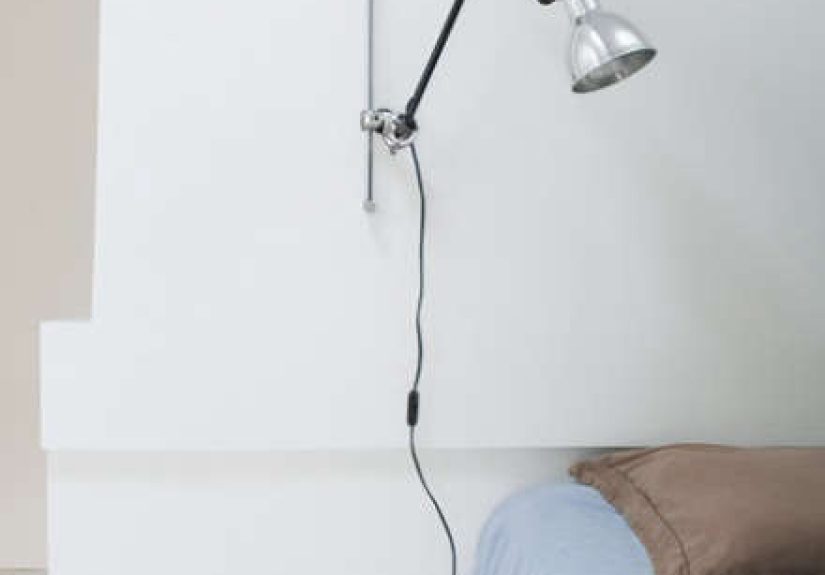
The No. 104 is especially useful beside beds because it provides focused light without taking up nightstand space. A wall-mounted reading lamp is one of those small design decisions that can make a bedroom feel calmer and more organized. Your book gets light. Your bedside table gets breathing room. Your water glass finally stops competing with a lamp base the size of a small moon.
La Lampe Gras No. 411 Floor Lamp
The No. 411 floor lamp brings the Gras language into the living room at a larger scale. It is ideal next to a sofa or lounge chair, especially for reading. Its adjustable posture makes it far more useful than a decorative floor lamp that simply glows in the corner and hopes for compliments.
La Lampe Gras No. 312 Ceiling Lamp
The No. 312 ceiling lamp is a more unusual member of the family. With its graphic ceiling-mounted arm and adjustable height, it can structure a space above a kitchen worktop, dining corner, or studio table. It brings task lighting down from the ceiling without the softness of a typical pendant. It is practical, sculptural, and a little bit dramaticin a good way, not in a “someone moved my cheese board” way.
Where La Lampe Gras Reeditions Work Best
Home Offices and Creative Studios
This is the lamp’s natural habitat. A La Lampe Gras table or wall lamp works beautifully in a workspace because it was designed around focused activity. Writers, designers, students, architects, crafters, and remote workers can all benefit from directional lighting that reduces visual strain and creates a clear work zone.
Bedrooms
Wall-mounted Gras lamps are excellent for bedrooms, especially when space is limited. Install one on each side of the bed for a symmetrical hotel-like look, or use a single lamp for a more casual, personal arrangement. A black or white shade keeps things minimal; brass, copper, or colored finishes make the lamp feel more decorative.
Kitchens
In kitchens, La Lampe Gras reeditions work well as accent or task lights over counters, open shelves, breakfast nooks, and prep areas. A wall lamp can direct light onto a cutting board or coffee station, while a ceiling-mounted model can help define a compact work zone. The industrial roots of the design feel especially appropriate in a kitchen, where function is not optional.
Living Rooms
A Gras floor lamp beside a sofa creates an inviting reading corner. A wall-mounted model can highlight a bookshelf, artwork, or textured wall. The lamp’s graphic shape pairs well with modern, Scandinavian, industrial, farmhouse, and eclectic interiors. It is rare to find a light that can sit comfortably near a leather chair, a linen sofa, a vintage rug, and a suspiciously expensive ceramic bowl.
Bathrooms and Outdoor Areas
Some reeditions are designed specifically for bathrooms or outdoor use, with appropriate protection ratings and materials. These versions are useful for covered terraces, balconies, small patios, powder rooms, and bathroom mirrors. Always check the specific model rating before installing a fixture near moisture. A beautiful lamp is wonderful; a beautiful lamp in the wrong location is a future phone call to an electrician.
How to Style La Lampe Gras Without Trying Too Hard
The best way to style La Lampe Gras is to let it do what it does best: provide directional light and strong lines. Avoid crowding it with too many competing objects. On a desk, pair it with a wood surface, a simple chair, and a few practical accessories. On a wall, give the arm room to extend. In a living room, let the floor lamp frame a chair or sofa instead of hiding it behind furniture.
For a classic look, choose matte black. It is timeless, architectural, and hard to mess up. For a softer interior, white or pale finishes can feel lighter. If your room already has warm metals, a copper or brass shade can connect the lighting to cabinet hardware, picture frames, or furniture legs. For a bolder look, colored shades bring a pop of personality without turning the room into a carnival ride.
What to Consider Before Buying
Measure the Reach
Because many models are adjustable, dimensions matter. Check arm length, projection from the wall, shade size, and minimum and maximum height. A lamp that looks perfect online may feel too large beside a tiny bed or too short beside a deep sofa.
Choose the Right Mounting Type
Table lamps are flexible and easy to move. Wall lamps save surface space but require installation. Ceiling lamps create a strong architectural statement but need careful placement. Floor lamps are great for reading corners and living rooms. Choose based on how you actually live, not how you imagine your life will look after buying one lamp and suddenly becoming a person who alphabetizes art books.
Check Bulb Compatibility
Different models may use different bulb bases and wattage limits. Many buyers choose LED bulbs for efficiency and lower heat. Pay attention to brightness and color temperature. For reading, a warm white bulb with enough lumens is usually comfortable. For task work, slightly brighter light may be better. For mood lighting, avoid bulbs so bright they make your living room feel like a dentist’s office.
Think About Finish and Contrast
A black lamp against a white wall creates a crisp graphic effect. A white lamp on a light wall feels quieter. Metallic shades add warmth and reflectiveness. Colored shades work best when they connect to another accent in the room, such as artwork, pillows, books, or ceramics.
Why La Lampe Gras Still Feels Modern
The reason La Lampe Gras reeditions continue to matter is not simply that they are old. Plenty of old things are not timeless; some are just old and smell faintly of attic. La Lampe Gras endures because it anticipated the way modern people use rooms. We work at home. We read in bed. We cook in open kitchens. We want flexible spaces. We need lighting that can move with us.
The lamp also fits today’s preference for objects with history. In a world full of disposable products, a design with a century of relevance feels grounding. It offers authenticity without being precious. You do not need to live in a glass house or own a drafting table to appreciate it. You simply need a place where good light matters.
Experience Section: Living With La Lampe Gras Reeditions
Living with a La Lampe Gras reedition is different from living with an ordinary lamp. At first, you notice the shape. The arm has that crisp, architectural presence, and the shade looks purposeful rather than decorative. Then you start using it, and the real charm appears. The lamp moves where your eyes need it. It makes a desk feel sharper, a reading chair more inviting, and a bedside wall more organized. It is not just sitting there looking expensive and hoping nobody asks it to contribute.
One of the best experiences is using a Gras table lamp on a work desk. Many desk lamps either flood the entire surface with harsh light or create a tiny spotlight that makes everything outside the beam feel like a cave. La Lampe Gras offers a more controlled experience. You can angle the shade toward a notebook, keyboard, sketch, or book without lighting up the whole room. That focused pool of light creates a psychological boundary: this is the work area; everything else can wait, including laundry, emails, and the mysterious cable drawer.
In a bedroom, a wall-mounted La Lampe Gras can be surprisingly transformative. By removing the lamp from the nightstand, it frees up space for actual bedside essentials. The adjustable arm makes late-night reading easier, especially if one person wants to sleep and the other wants to read “just one more chapter,” a phrase that has never once been true. A warm LED bulb and a darker shade can create a cozy, controlled glow that feels intimate without becoming gloomy.
In kitchens, the experience is practical and visual at the same time. A compact wall model above a shelf or prep area gives the kitchen a more layered lighting plan. Instead of relying only on overhead fixtures, you get directional light exactly where daily rituals happen: making coffee, chopping herbs, plating snacks, or pretending a bowl of cereal counts as dinner because it is served in a handmade ceramic bowl. The industrial heritage of the lamp makes it feel natural in a working kitchen, especially with stone, tile, stainless steel, or wood.
The floor lamp versions create one of the most satisfying reading setups. Place a Gras floor lamp beside a lounge chair, angle the shade toward the page, and suddenly the chair becomes a destination. It invites use. This is an important point: good lighting changes behavior. A poorly lit corner becomes dead space. A well-lit corner becomes where you read, think, sip coffee, or scroll your phone while pretending to read. The lamp does not judge.
There are also small realities to consider. The look is industrial and precise, so it may feel too mechanical in highly ornate rooms unless balanced with warm textures. Wall-mounted and ceiling-mounted versions require thoughtful installation. Adjustable arms need space to move. Dark finishes can show dust, because dust is apparently committed to ruining all beautiful things. But these are minor trade-offs compared with the long-term usefulness and character of the design.
The biggest takeaway from using La Lampe Gras reeditions is that they reward intentional placement. They are not generic filler lamps. They work best when they are assigned a job: reading beside the bed, lighting a desk, highlighting a shelf, brightening a kitchen task zone, or anchoring a living room corner. Give the lamp a purpose, and it gives the room clarity. That is the quiet genius of Bernard-Albin Gras’s design. It does not decorate first and function second. It does both at once, with the calm confidence of an object that has already survived a century of changing taste.
Conclusion
La Lampe Gras reeditions prove that practical design can age beautifully. What began as an industrial and office lamp in 1921 has become one of the most respected names in modern lighting. Its appeal comes from a rare balance: mechanical honesty, visual elegance, adjustability, and historical credibility. Whether used as a desk lamp, wall light, bedside fixture, floor lamp, or ceiling-mounted task light, La Lampe Gras brings purpose and personality into a room.
For homeowners and designers, the collection offers more than a stylish object. It offers a way to shape how a space works. Good lighting is not just about brightness; it is about direction, atmosphere, comfort, and daily ritual. La Lampe Gras understands that better than most. It may have been born in the workshop, but it has earned its place in the home.
Note: This publication-ready article is synthesized from real manufacturer, retailer, and design-history information; source links and citation artifacts are intentionally not embedded in the body copy.




 Close
Close