Table of Contents >> Show >> Hide
- What Is the M88 Hercules?
- Why Abrams Tanks Need the M88 Hercules
- How the M88 Helps Keep Abrams Tanks Away From Russian Capture
- The Battlefield Problem: Tanks Are Vulnerable When They Stop
- What Makes the M88A2 Hercules Useful?
- Why Eight M88 Vehicles Matter Alongside Abrams Tanks
- The Russia Factor: Why Recovery Is Now a Strategic Issue
- M88 Hercules vs. Ordinary Recovery Trucks
- Does the M88 Make Abrams Tanks Safe?
- The Maintenance Reality Behind Abrams Operations
- What the M88 Says About Modern Tank Warfare
- The Future: Heavier Tanks, Harder Recovery
- Real-World Experience: What the M88 Hercules Teaches About Protecting Abrams Tanks
- Conclusion
When people talk about Abrams tanks in Ukraine, the spotlight usually lands on the big headline items: armor, firepower, turbine engines, and the dramatic image of a heavy American main battle tank rolling across muddy ground. But every tank story has a less glamorous character hiding behind the curtain, wearing work gloves and carrying a tow cable. That character is the M88 Hercules armored recovery vehicle.
The M88 Hercules does not exist to win tank beauty contests. It is not meant to charge into a duel like a movie hero with a steel jaw and a soundtrack. Its job is more practical, more stressful, and often more important than people realize: rescue damaged tanks, recover stuck vehicles, assist repairs, move disabled armor out of danger, and help prevent valuable military equipment from being abandoned where Russian forces can capture, inspect, or parade it for propaganda.
In simple terms, if an Abrams tank is the star quarterback, the M88 Hercules is the offensive line, the team medic, the tow truck, and the very tired mechanic who still shows up at 2 a.m. because something expensive is stuck in the mud. Without recovery vehicles, heavy armor becomes a fragile investment. With them, tanks have a better chance of surviving the bad days that every battlefield eventually delivers.
What Is the M88 Hercules?
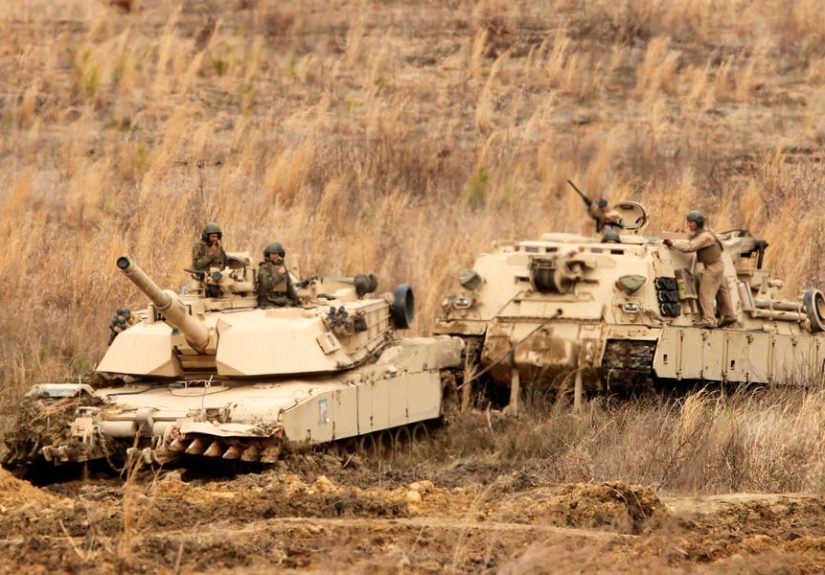
The M88 Hercules, officially known in its M88A2 version as the Heavy Equipment Recovery Combat Utility Lift and Evacuation System, is a tracked armored recovery vehicle designed to support tanks and other heavy combat vehicles. It is built to operate near the same rough terrain as the armored units it supports, which matters because tanks rarely break down politely on paved roads next to a service station.
The M88 family has been around for decades, but the M88A2 Hercules is the heavy-duty version most closely associated with supporting the Abrams. It was created because modern main battle tanks became heavier, more complex, and more demanding to recover. A disabled tank is not just a broken vehicle. It is a logistical puzzle, a security risk, and sometimes a race against enemy observation.
The Hercules is equipped with recovery tools that make it far more than a simple tow vehicle. It has a powerful main winch, a boom for lifting heavy components, auxiliary recovery equipment, and armored protection for its crew. It can help move a tank that is stuck, damaged, overturned, or unable to continue under its own power. It can also assist with heavy maintenance tasks such as removing powerpacks or supporting field-level repair work.
Why Abrams Tanks Need the M88 Hercules
The Abrams is one of the most capable main battle tanks ever fielded, but capable does not mean magical. The Abrams is heavy, complex, and maintenance-intensive. It needs fuel, spare parts, trained crews, skilled mechanics, and a recovery system strong enough to handle its size. A tank can be stopped by mechanical failure, damaged tracks, difficult terrain, mines, artillery effects, drones, or plain bad luck. War has a talent for turning even the best engineering into a very expensive traffic cone.
This is where the M88 Hercules becomes essential. A disabled Abrams that cannot be moved quickly becomes a problem on several levels. First, it blocks movement for friendly forces. Second, it may contain sensitive technology or equipment. Third, it can become a propaganda prize if Russian forces capture it. Fourth, it reduces the number of tanks available for future operations. The M88 helps reduce those risks by giving crews a way to recover, evacuate, and repair heavy armor instead of leaving it behind.
Protection Does Not Always Mean Armor
When people hear the word “protect,” they often imagine thicker armor or better weapons. In the case of the M88 Hercules, protection is more about preservation. It protects Abrams tanks by helping keep them in Ukrainian hands, returning damaged vehicles to repair channels, and reducing the chance that a temporary problem becomes a permanent loss.
That distinction matters. A recovery vehicle does not make a tank invincible. It does not erase the threat from drones, artillery, mines, or anti-armor weapons. Instead, it gives commanders more options after something goes wrong. On a modern battlefield, options are survival currency.
How the M88 Helps Keep Abrams Tanks Away From Russian Capture
One of the major concerns with sending advanced Western equipment into a high-intensity war is the possibility that damaged vehicles may be captured. Russia has strong incentives to recover abandoned Western equipment. Captured vehicles can be studied for intelligence, displayed for political messaging, or used to claim symbolic victories.
The Abrams is not just a tank; it is a package of engineering, electronics, armor concepts, fire-control systems, communications gear, and training value. Even when export versions are modified to protect the most sensitive technologies, a captured Abrams still has informational value. That makes recovery an urgent mission, not an afterthought.
The M88 Hercules helps by giving friendly forces a realistic way to move an immobilized Abrams before the enemy can reach it. A tank stuck in a field is a liability. A tank pulled back to a maintenance area is a recoverable asset. That difference can affect not only battlefield readiness but also the larger information war.
The Battlefield Problem: Tanks Are Vulnerable When They Stop
Modern warfare has made movement, concealment, and rapid recovery more important than ever. In Ukraine, both sides have learned that drones can find vehicles, monitor movement, and help direct strikes. This does not mean tanks are obsolete, despite the internet’s favorite hobby of declaring things dead every 15 minutes. It does mean tanks must operate as part of a broader system that includes infantry, engineers, air defense, electronic warfare, artillery, logistics, and recovery vehicles.
A tank that is moving with support is difficult to deal with. A tank that is stuck, alone, or waiting too long for recovery is much more vulnerable. The M88 Hercules helps shorten the window of exposure. It gives crews a way to respond when mud, damage, mechanical issues, or battlefield obstacles turn a powerful tank into a stationary target.
That is especially important for Abrams tanks because they are heavy machines. Their weight brings advantages in protection and stability, but it also creates recovery challenges. Pulling, lifting, or moving a vehicle in the Abrams class is not a job for a regular truck. It requires specialized armored recovery equipment and trained crews who understand the risks of handling extremely heavy vehicles under pressure.
What Makes the M88A2 Hercules Useful?
The M88A2 Hercules is designed around three big battlefield support roles: recovery, evacuation, and repair assistance. Those may sound boring compared with tank-on-tank combat, but boring is beautiful when the alternative is losing a multimillion-dollar vehicle because nobody brought the right tool.
1. Heavy Recovery Power
The M88A2 has the pulling and lifting equipment needed to recover heavy armored vehicles. Its main winch and boom allow it to help move disabled tanks, support repairs, or assist with overturned vehicles. This recovery capability is the core reason the Hercules accompanies Abrams units.
2. Armored Protection for the Recovery Crew
Recovery missions can happen close enough to danger that the crew needs protection. The M88A2 is armored and tracked, allowing it to work in areas where unarmored recovery trucks would be at serious risk. It is not a front-line tank, but it is built to survive the harsh environment surrounding armored operations.
3. Field Repair Support
Not every disabled tank needs to be hauled far away. Sometimes the fastest path back to readiness is a repair near the operating area. The M88 can help with heavy components and maintenance tasks that would be impossible for a crew to manage by hand. In armored warfare, a tank returned to service is almost as valuable as a new tank arriving.
4. Crew Recovery and Evacuation
The Hercules also helps protect people. It has room to assist crew members from recovered vehicles, which matters when a tank is damaged or immobilized. The vehicle’s purpose is not only to save equipment but also to help reduce the risk to trained personnel. Experienced tank crews are difficult to replace, and their survival matters as much as the machine.
Why Eight M88 Vehicles Matter Alongside Abrams Tanks
When the United States announced Abrams tanks for Ukraine, the package also included M88 recovery vehicles. That pairing was not accidental. Sending tanks without recovery vehicles would be like giving someone a race car and forgetting the pit crew, the spare tires, and the person who knows why the engine is making that expensive clunking noise.
For Ukraine, the Abrams is valuable but demanding. It requires training, sustainment, spare parts, fuel planning, and maintenance discipline. The M88 supports that ecosystem by helping keep tanks recoverable. Even a small number of recovery vehicles can have an outsized effect because they serve multiple tanks across a unit, moving where the need is greatest.
In a war shaped by attrition, the ability to repair and reuse equipment is vital. Every Abrams recovered instead of abandoned preserves combat power. Every damaged tank moved out of danger gives mechanics a chance to return it to service. Every recovery mission that prevents capture denies Russia a propaganda moment and a potential intelligence opportunity.
The Russia Factor: Why Recovery Is Now a Strategic Issue
Russia’s war against Ukraine has shown that heavy armor still matters, but it also faces a crowded threat environment. Mines, loitering drones, anti-tank weapons, artillery, and surveillance systems all make armored operations more complicated. Tanks can still provide protected firepower, shock effect, and mobility, but they cannot be treated as lone steel superheroes.
That makes the M88 Hercules part of a bigger lesson: modern armor survives as a team sport. Abrams tanks need scouts, infantry, engineers, air defense, counter-drone protection, logistics, and recovery. The Hercules sits in the logistics-and-survivability lane. It does not make headlines often, but it helps decide whether a tank unit can keep fighting after its first rough week.
Against Russia, this matters because the battlefield is watched constantly. A disabled vehicle may be spotted quickly. Recovery must be organized, protected, and realistic. The M88 gives armored units a tool designed specifically for that ugly middle ground between combat and maintenance, where the difference between a saved tank and a lost tank may come down to whether the right recovery vehicle is available.
M88 Hercules vs. Ordinary Recovery Trucks
A natural question is: why not use a regular heavy tow truck? The answer is simple: because a normal tow truck is not designed for a battlefield full of mud, shell fragments, mines, drones, rough ground, and vehicles weighing dozens of tons. Civilian recovery trucks are impressive on highways. They are not built to crawl into a combat zone and pull out an armored vehicle while crews are trying to avoid enemy attention.
The M88 Hercules is tracked, armored, and designed for military recovery. It can move across terrain where wheeled vehicles may struggle. It carries equipment meant for tanks, not buses or delivery trucks. It also protects its own crew better than a commercial vehicle could. This combination of mobility, armor, and specialized recovery power is why armored units rely on vehicles like the M88.
Does the M88 Make Abrams Tanks Safe?
No. And that honest answer is important.
The M88 Hercules does not create a magic safety bubble around Abrams tanks. It cannot stop every drone, defeat every mine, or guarantee that every damaged tank will be recovered. War is messy, and anyone promising perfect protection is probably selling either a fantasy or a very suspicious brochure.
What the M88 does is improve the odds. It gives crews a better chance to recover tanks that would otherwise be lost. It supports repair and evacuation. It helps preserve combat power over time. It reduces the likelihood that damaged Abrams tanks remain exposed. In military terms, that is a serious contribution.
The M88 is best understood as a force multiplier. It does not replace firepower, armor, or tactics. It makes those things more sustainable. A tank force without recovery vehicles may look strong on paper, but it becomes brittle in real operations. A tank force with recovery, maintenance, and logistics has a better chance of surviving the long game.
The Maintenance Reality Behind Abrams Operations
The Abrams has a reputation for performance, but performance comes with maintenance demands. Its turbine engine, advanced systems, heavy armor, and complex components require skilled support. This is not unusual for modern military equipment. High capability usually brings high responsibility. The same rule applies to fighter jets, naval vessels, and your friend’s “simple” gaming PC that somehow needs three cooling fans and emotional support.
For Ukraine, the maintenance challenge is especially important because the Abrams entered a war already filled with varied Western and Soviet-designed systems. Each platform has its own parts pipeline, training requirements, and repair culture. The M88 Hercules helps by giving Ukrainian forces a dedicated tool for the heavy recovery side of the Abrams equation.
In a long conflict, the winner is not always the side with the flashiest vehicle. It is often the side that can keep vehicles running, recover them when they fail, repair them quickly, and return crews to the fight. The M88 supports that cycle.
What the M88 Says About Modern Tank Warfare
The presence of the M88 Hercules alongside Abrams tanks tells us something important about modern warfare: tanks are systems, not solo machines. A tank’s real power depends on everything around it. Fuel trucks, mechanics, recovery crews, spare parts, intelligence, air defense, engineers, and communications all shape whether a tank remains useful.
This is why professional militaries obsess over logistics. Social media loves dramatic footage, but armies live and die by maintenance schedules, supply chains, and recovery plans. The M88 Hercules is one of those systems that turns armored warfare from a one-time punch into a sustained capability.
For Ukraine, the M88’s role is even more significant because Russia would benefit from every Abrams it can claim destroyed, abandoned, or captured. The Hercules helps blunt that narrative by making it more likely that damaged tanks can be removed, repaired, or at least denied to the enemy. That is not glamorous, but it is powerful.
The Future: Heavier Tanks, Harder Recovery
Modern armored vehicles have grown heavier as protection, electronics, and survivability upgrades have increased. That trend creates a recovery challenge. The heavier the tank, the harder it is to move when something goes wrong. This is one reason the U.S. Army has studied modernization efforts for the M88 family and explored improved recovery capability for future armored formations.
The lesson is clear: as tanks evolve, recovery vehicles must evolve too. If an army upgrades its tanks but neglects recovery, it creates a gap between what can fight and what can be rescued. That gap becomes painfully obvious the first time a heavy vehicle gets stuck in mud, breaks a track, or needs major field maintenance under pressure.
Ukraine’s experience reinforces the point. Heavy armor remains useful, but only when supported by a complete ecosystem. The M88 Hercules is one of the key pieces of that ecosystem.
Real-World Experience: What the M88 Hercules Teaches About Protecting Abrams Tanks
The best way to understand the M88 Hercules is to imagine the less cinematic side of armored warfare. Forget the dramatic tank charge for a moment. Picture a heavy vehicle stuck in deep mud after rain turns a field into chocolate pudding from a very angry bakery. The tank is not destroyed, but it cannot move. Its crew is under stress. Commanders need the route cleared. Mechanics need access. The enemy may be watching. That is the kind of moment where the M88 earns its keep.
In real armored operations, recovery is not a side quest. It is part of the mission. A tank unit that cannot recover its vehicles slowly bleeds strength. One disabled vehicle becomes two problems: the lost vehicle itself and the resources needed to protect or retrieve it. If that vehicle must be abandoned, the cost rises again. The enemy may study it, film it, or use it for messaging. The M88 reduces that risk by giving the unit a practical way to act instead of simply hoping the problem goes away.
For Abrams tanks in Ukraine, this experience matters because the battlefield is unforgiving. Terrain can be brutal. Drones have made concealment harder. Artillery and mines can disrupt movement. Mechanical strain increases when heavy vehicles operate in rough conditions for long periods. Even without direct combat damage, a tank may need recovery because tracks, suspension, or powertrain components are under extreme stress. The M88 is designed for that world.
There is also a human side to the recovery mission. Tank crews are highly trained, and maintenance crews are the quiet professionals who keep armored units alive. When an Abrams is disabled, the recovery team is not just saving steel. It may be helping protect soldiers, preserve experience, and maintain morale. Crews fight better when they know there is a plan for the bad day. The M88 is part of that plan.
Another practical lesson is that recovery vehicles encourage smarter use of armor. Commanders know that if a tank gets into trouble, there is a better chance of bringing it back. That does not mean taking reckless risks; it means operations can be planned with a fuller understanding of sustainment. The M88 helps turn Abrams tanks from one-time assets into reusable combat power.
Finally, the M88 Hercules shows why “support vehicles” deserve more respect. The internet may cheer for tanks, aircraft, and missiles, but wars are often shaped by the machines that repair, tow, refuel, bridge, dig, and recover. The M88 is not the loudest vehicle in the armored formation, but it may be one of the most important. If an Abrams gets damaged and returns to service later, the recovery system has done its job. If a stuck tank is moved before Russia can capture it, the M88 has protected more than a vehicle; it has protected information, morale, and combat power.
Conclusion
The M88 Hercules is not famous in the same way the Abrams is famous, but it deserves a much bigger spotlight. It protects Abrams tanks from Russia not by acting like another tank, but by doing the hard recovery work that keeps heavy armor from becoming stranded, captured, or permanently lost. It moves damaged vehicles, supports repairs, protects crews, and helps preserve combat power in a war where every recovered asset matters.
For Ukraine, the M88 is more than a battlefield tow truck. It is a critical part of making Abrams tanks usable in a difficult, drone-heavy, mud-filled, maintenance-intensive war. The Abrams may be the headline, but the Hercules is the reason that headline has a second chapter after something goes wrong.
In the end, the lesson is simple: tanks do not fight alone. They need a team. And somewhere near the back of that team, covered in dust, carrying cables, and getting absolutely no glamour points, the M88 Hercules is doing one of the most important jobs on the battlefield.