Table of Contents >> Show >> Hide
- What Is a “Million Dollar” Pound Cake?
- Million Dollar Pound Cake Ingredients
- Step-by-Step Million Dollar Pound Cake Recipe
- Optional “Million Dollar” Glaze (Highly Encouraged)
- Pro Tips That Make the Recipe “No-Fail”
- Flavor Variations (So You Can Pretend It’s a New Cake)
- Serving Ideas That Feel Fancy (But Aren’t Hard)
- Storage and Freezing
- Troubleshooting (Because Ovens Have Moods)
- of “Experience” With Million Dollar Pound Cake
- Final Thoughts
If you’ve ever tasted a truly great pound cake, you know the vibe: it’s not “dessert.” It’s a decision. A buttery, vanilla-scented, golden-crusted decision that makes you reconsider your stance on second slices. “Million Dollar Pound Cake” is the classic Southern-style version that tastes unapologetically richwithout requiring a million dollars, a culinary degree, or a dramatic monologue while creaming butter.
This guide gives you an old-school, ultra-reliable Million Dollar Pound Cake recipe (with modern tips so it bakes evenly, releases cleanly, and doesn’t turn into a Bundt-shaped heartbreak). You’ll also get flavor variations, troubleshooting, and serving ideasplus a 500-word “experience” section at the end, because pound cake deserves storytelling.
What Is a “Million Dollar” Pound Cake?
Traditional pound cake began as a simple ratio cakeroughly equal weights of butter, sugar, flour, and eggs. Million Dollar Pound Cake is the glow-up: still dense and fine-crumbed, but typically made with lots of butter, plenty of eggs, and extra flavor (often vanilla plus a whisper of almond), with milk to smooth out the batter. The name isn’t tied to a single verified origin story; it’s basically shorthand for “tastes expensive.”
Million Dollar Pound Cake Ingredients
The magic is not exotic ingredientsit’s simple ingredients treated well. Let everything come to room temperature so the batter emulsifies smoothly and bakes into a tight, velvety crumb.
What you’ll need
- Butter (the star): 1 pound (4 sticks), softened
- Granulated sugar: 3 cups
- Eggs: 6 large, room temperature
- All-purpose flour: 4 cups (spooned and leveled)
- Milk: 3/4 cup, room temperature (whole milk is ideal)
- Vanilla extract: 2 teaspoons
- Almond extract: 1 teaspoon (optional but very “million dollar”)
- Salt: 1/2 teaspoon (especially important if using unsalted butter)
Pan: 10-inch tube pan or a 12-cup Bundt pan. The shape gives you more crustwhich is basically pound cake’s love language.
Step-by-Step Million Dollar Pound Cake Recipe
Quick recipe snapshot
- Prep time: 20 minutes
- Bake time: 1 hour 35 minutes to 1 hour 50 minutes
- Cooling time: at least 60 minutes (don’t rush the drama)
- Yield: 12–16 slices
1) Prep the pan like you mean it
Thoroughly grease every curve and crevice, then dust with flour and tap out the excess. This is not the time for “a light mist” and a prayer. If using a detailed Bundt pan, take an extra minute here your future self will thank you.
2) Heat the oven low and slow
Preheat to 300°F. Pound cake is dense; lower heat helps it bake evenly without an over-browned crust and an underdone center. Position a rack in the middle of the oven.
3) Cream butter + sugar until it looks different
In a stand mixer (or with a hand mixer), beat the softened butter on medium-high until smooth. Gradually add sugar and continue beating until the mixture becomes paler and fluffy. This step builds structure and helps the cake riseso don’t treat it like a speed-run.
4) Add eggs one at a time
Add eggs one at a time, beating well after each. Scrape down the bowl as needed. If the batter looks like it might “break” (separate), keep mixing gently and make sure your ingredients are truly room temp.
5) Add flavor
Beat in vanilla, almond extract (if using), and salt. That tiny almond note is the difference between “nice cake” and “who brought this?” cake.
6) Alternate flour and milk (don’t overmix)
With the mixer on low, add flour in 3 additions, alternating with the milk in 2 additions. Mix only until you no longer see dry streaks of flour. Overmixing develops gluten and can make your pound cake toughlike a gym bro in a tuxedo.
7) Bake
Spoon batter into the prepared pan and smooth the top. Bake at 300°F for 1 hour 35 minutes to 1 hour 50 minutes, depending on your pan and oven.
8) Know when it’s done
Signs of doneness:
- The cake is deeply golden and smells buttery-sweet.
- A long skewer or thin knife comes out clean or with a few moist crumbs.
- If using a thermometer, aim for an internal temp around 200–210°F in the center.
9) Cool strategically for a clean release
Cool the cake in the pan on a rack for 10–20 minutes. Then invert onto a rack and lift off the pan. Let cool completely before slicing. (Cutting early can compress the crumb and turn “velvety” into “gummy.”)
Optional “Million Dollar” Glaze (Highly Encouraged)
This cake doesn’t need frosting, but a simple glaze makes it look like you planned ahead.
Vanilla glaze
- 1 1/2 cups powdered sugar
- 2–3 tablespoons milk (or cream)
- 1/2 teaspoon vanilla extract
- Pinch of salt
Whisk until smooth, then drizzle over a fully cooled cake. Add more milk for thinner glaze, more sugar for thicker.
Pro Tips That Make the Recipe “No-Fail”
Room temperature isn’t a suggestion
Butter, eggs, and milk at similar temperatures blend into a stable emulsion. Cold ingredients can cause curdling, which often bakes up as a heavier, uneven texture. If you’re short on time, set eggs in warm water for 5–10 minutes, and cut butter into pieces to soften faster.
Use the right pan prep for Bundt success
Many bakers prefer shortening + flour for Bundt pans because it coats evenly and releases reliably. Grease right before adding batter so it doesn’t slide down and pool.
Don’t “whip” after the flour goes in
Once flour is added, mix gently and briefly. Pound cake should be fine-crumbed and tender, not chewy.
Low heat = even bake
Dense cakes do best when baked a bit lower and longer. If your cake is browning too quickly, tent loosely with foil during the last third of baking.
Flavor Variations (So You Can Pretend It’s a New Cake)
Lemon Million Dollar Pound Cake
- Add 1–2 tablespoons lemon zest to the sugar (rub together first for extra aroma).
- Swap 1 tablespoon of milk with lemon juice.
- Glaze with lemon juice + powdered sugar.
Cream cheese twist
For a slightly tangy, ultra-moist variation, replace 1 stick of butter with 8 oz cream cheese (both softened). Keep everything else similar, and bake at 325°F if your oven runs cool.
Buttermilk version
Swap the milk for buttermilk for a faint tang and tenderness. It’s subtlebut it makes the cake taste “baked by someone’s favorite aunt.”
Vanilla-almond-coconut “bakery” vibe
Add 1/2 teaspoon coconut extract (go easy). Suddenly your cake tastes like it owns a monogrammed apron.
Serving Ideas That Feel Fancy (But Aren’t Hard)
- Classic: Slice thick, serve plain, accept compliments.
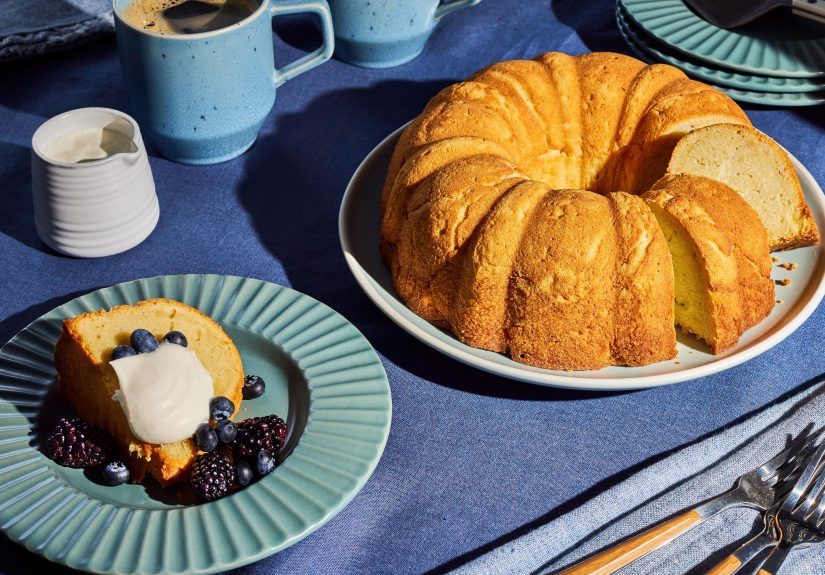
- Brunch mode: Top with berries and a spoon of whipped cream or yogurt.
- Diner-dessert: Warm a slice and add ice cream; drizzle with caramel.
- “I host now”: Serve with macerated strawberries (berries + sugar + a pinch of salt).
Storage and Freezing
Pound cake keeps well because it’s rich. Store tightly wrapped at room temperature for a few days, refrigerate for longer storage, and bring slices to room temp before serving for the best texture.
Freezing tips
Cool completely, wrap tightly in plastic wrap, then add a second protective layer (foil or a freezer bag). Freeze whole or in slices. Thaw at room temperature while still wrapped to prevent condensation from sogging the crust.
Troubleshooting (Because Ovens Have Moods)
My cake sank in the middle
- Underbaked center: bake until the tester is truly clean or the center hits ~200–210°F.
- Too much air or overmixing: cream well, but don’t whip after flour.
- Oven door opened too early: wait until the cake is set before frequent peeking.
My cake is dry
- Overbaked: start checking 10–15 minutes early next time.
- Flour packed into the measuring cup: spoon and level.
- Sliced while hot: let it cool fully so moisture redistributes.
My cake stuck to the pan
- Pan wasn’t fully greased/floured (Bundt details matter).
- Cake cooled too long in the pan10–20 minutes is the sweet spot.
- If it breaks: glaze it, call it “rustic,” or turn it into a trifle. Delicious problems are still problems, but they’re solvable.
of “Experience” With Million Dollar Pound Cake
There are two kinds of kitchens: the ones where pound cake is “a recipe,” and the ones where pound cake is basically a family member. In the second kind, someone owns a Bundt pan that’s seen things. The pan has a preferred cabinet. It has a tiny scratch that everyone swears gives the cake character. And it comes out only for important eventsholidays, reunions, potlucks, and those random Sundays when the group chat says, “I’m coming over,” which is code for “We expect snacks and emotional support.”
Making a Million Dollar Pound Cake feels like stepping into a comforting rhythm. You start by laying out ingredients like you’re preparing a tiny orchestra: butter, sugar, eggs, flour, milk, extracts. Everything warms up on the counter, and the kitchen itself seems to settle into the plan. The creaming step is where the mood shiftssuddenly it smells like sweet butter and possibility. You watch the mixture go from “grainy and yellow” to “fluffy and pale,” and you realize this is not just mixingthis is building the cake’s backbone. It’s the part where patience pays you back.
Then comes the egg moment. One by one, the batter becomes silkier, glossier, more confident. It’s oddly satisfying, like the cake is upgrading its membership tier in real time. And when you add vanilla and a little almond extract, the aroma changes instantlywarm, bakery-like, and just mysterious enough that people will ask, “What did you put in this?” (You can answer honestly, or you can wink and say, “A small amount of magic and excellent decisions.”)
Baking pound cake is also an exercise in trust. It goes into the oven looking like a thick, simple batter, and it comes out like a golden sculpture. The crack on top isn’t a flawit’s a signature. It’s the cake’s way of saying, “I’m done. I did my part.” The hardest part is the cooling time, because the smell is unfair. It drifts through the house like a polite but persistent invitation. People wander into the kitchen “for water,” then pause near the counter like they’re trying to remember something extremely important. That something is usually: Where is the knife?
And once you slice itoh, the slice. A good Million Dollar Pound Cake cuts clean, with a tight crumb that still looks tender, and a buttery edge that makes the crust lovers very, very vocal. It’s the kind of cake that doesn’t need much dressing up, but it accepts toppings gracefully: berries for the fresh crowd, ice cream for the fun crowd, coffee for everyone pretending this is breakfast. It shows up at gatherings and quietly becomes the center of gravity. People take “a sliver” that somehow becomes a full slice, and then they start negotiating leftovers like it’s a high-stakes business deal.
That’s the real “million dollar” part: the way one simple cake can turn a regular day into an occasion, and a table into a place where everyone lingers a little longer. It’s not flashy. It’s not fussy. It’s just reliably excellentlike the friend who always brings the good snacks and never lets you leave hungry.
Final Thoughts
Million Dollar Pound Cake is proof that “basic ingredients” can still feel luxurious when technique does the heavy lifting. Bake it once, and you’ll understand why it’s a forever recipe: it’s versatile, crowd-pleasing, and somehow tastes even better the next day. Just remember: grease the pan like a professional, cream like you’re building a tiny cloud, and bake low and slow.