
Table of Contents >> Show >> Hide
- Why Keep Metal File Cabinets in the First Place?
- Makeover Game Plan: Matchy-Matchy or Coordinated Chaos?
- Supplies Checklist for a Metal File Cabinet Makeover
- Step-by-Step: How to Paint Mismatched Metal File Cabinets So They Look Like a Set
- 1) Empty Everything (Yes, Even the Mystery Drawer)
- 2) Remove Hardware and Protect the “No-Paint” Zones
- 3) Clean Like You Mean It (Paint Hates Grease)
- 4) Handle Rust and Flaking Paint
- 5) Scuff Sand the Whole Surface (Yes, Even If It Looks Smooth)
- 6) Prime: The Unsexy Step That Makes Everything Work
- 7) Paint Like a Pro: Thin Coats, Patience, and a Little Ego Control
- 8) Reassemble and Upgrade: Hardware Is the Glow-Up Multiplier
- Design Ideas That Make Mismatched Cabinets Look Intentional
- Common Mistakes (and How to Avoid Them)
- Two Realistic Makeover Scenarios (With Specific Examples)
- Maintenance: Keep Your New Finish Looking Fresh
- Experiences and Lessons From Mismatched Metal File Cabinet Makeovers (Extra )
- Conclusion
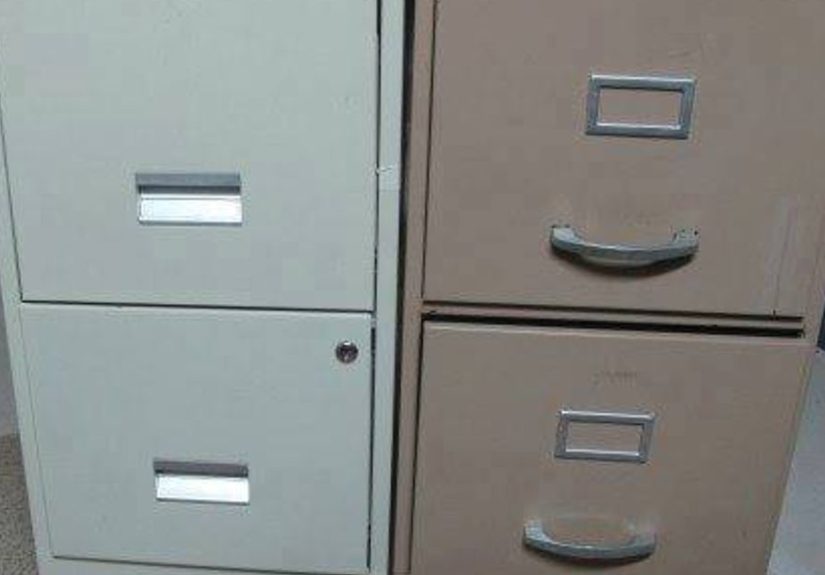
You know the look: one metal file cabinet is beige (but like… “sad oatmeal” beige), the other is gray (but the
kind of gray that screams “I came free with a broken printer”). Together, they don’t match, don’t coordinate, and
somehow make your whole office feel like it’s lit by a single flickering fluorescent bulbeven if you own lamps.
The good news? A mismatched metal file cabinet makeover is one of the highest-return DIY projects you can do in a
weekend. Metal cabinets are tough, functional, and usually built better than most new “assembly required” options.
With smart prep and the right paint approach, you can turn those clunky storage beasts into a pair of intentional,
stylish pieces that look like they were always meant to live together.
Why Keep Metal File Cabinets in the First Place?
Before we talk paint, let’s talk value. Metal file cabinets are basically the cockroaches of office furniture (said
with love): they survive moves, floods, decades of paper cuts, and the emotional trauma of tax season. The drawers
glide. The frames don’t wobble. And unlike many particleboard cabinets, they won’t sag under the weight of files,
tools, craft supplies, or that “important documents” pile you swear you’ll organize soon.
So if you’ve got mismatched cabinets that still function well, a makeover is often smarter (and cheaper) than
replacing them. Plus, painting and updating hardware can make metal cabinets look surprisingly high-endespecially
when you choose a finish that fits your space.
Makeover Game Plan: Matchy-Matchy or Coordinated Chaos?
“Mismatched” doesn’t have to mean “identical.” You’ve got two great style directions:
- Unify them: Paint both cabinets the same color and add matching hardware. Clean, modern, easy.
-
Coordinate them: Choose two colors that share an undertone (like navy + charcoal, or sage + warm
white), and repeat one detail (same pulls, same top finish, same label style) so they look intentionally paired.
Either way, the secret sauce is consistency: repeat at least one element across both cabinets so your eyes read them
as a set. Color is the obvious choice, but hardware, sheen (matte vs. satin), and styling details count too.
Supplies Checklist for a Metal File Cabinet Makeover
You don’t need a fully stocked workshop. You just need the right prep tools so the finish lasts (and doesn’t peel
the first time you slam a drawer because your Wi-Fi is down).
- Drop cloths or cardboard (spray paint loves floors)
- Degreasing cleaner + rags (or soap and water for a first pass)
- Fine/medium sandpaper or sanding sponge (and/or a scuff pad)
- Wire brush (for rust spots)
- Painter’s tape
- Primer suited for metal (rust-inhibiting and/or bonding primer, depending on condition)
- Paint: spray enamel, direct-to-metal paint, or a durable cabinet/furniture paint system
- Disposable gloves + a mask/respirator for spray paint (seriously)
- Optional upgrades: new drawer pulls, label holders, casters, wood top, contact paper for drawer interiors
Step-by-Step: How to Paint Mismatched Metal File Cabinets So They Look Like a Set
1) Empty Everything (Yes, Even the Mystery Drawer)
Remove files, office supplies, and anything that could rattle around. Open every drawer and check for loose parts.
If you can remove the drawers easily, do itpainting is simpler when you can reach all surfaces. If you can’t
remove them, you can still paint successfully, but you’ll need to tape and protect the drawer slides.
2) Remove Hardware and Protect the “No-Paint” Zones
Unscrew handles, label frames, and any removable bits. Put screws in a baggie and label it (future-you will thank
you). Tape off:
- Drawer slides and ball bearings
- Locks and keyholes (unless you’re removing them)
- Rubber feet or glides
- Any manufacturer label you want to keep (or paint over ityour call)
Pro tip: If you paint the slides, you risk sticky drawers forever. And “forever” is a long time to fight a drawer
just to find a stapler.
3) Clean Like You Mean It (Paint Hates Grease)
Metal cabinets collect fingerprints, dust, and invisible grime that wreck paint adhesion. Start with a wash (soap
and water works), then follow with a degreasing cleaner and let it dry completely. Pay attention to drawer fronts,
handles, and edgesthose are the high-touch zones.
4) Handle Rust and Flaking Paint
If there’s rust, remove what you can with sandpaper and a wire brush. You don’t need to sand the entire cabinet to
bare metaljust knock down rust, loose paint, and rough areas so everything is stable and smooth-ish.
For stubborn rust spots, a rust-inhibiting primer or rust-treatment product can help stop it from spreading under
your new finish. The goal is to keep old problems from becoming “surprise texture” later.
5) Scuff Sand the Whole Surface (Yes, Even If It Looks Smooth)
Most filing cabinets have slick, glossy factory paint. New paint doesn’t love glossy surfaces unless you give it
something to grab. Lightly sand or scuff the entire exteriordrawer fronts, sides, and topuntil it looks dull.
Wipe away dust afterward.
This is the step that separates “wow, this looks factory” from “why is my paint peeling like a sunburn?”
6) Prime: The Unsexy Step That Makes Everything Work
Primer is your insurance policy. Choose based on your cabinet’s reality:
- Rust present? Use a rust-inhibiting primer (or spot-prime rust areas first).
- Slick surface? Use a bonding primer designed for hard-to-paint surfaces like metal.
- Mostly clean, light scuff? A quality metal primer may be enough.
Apply thin, even coats. Let the primer dry fully, and lightly sand any roughness if needed so your topcoat looks
smooth.
7) Paint Like a Pro: Thin Coats, Patience, and a Little Ego Control
You’ve got three popular paint approaches for a metal file cabinet makeover:
Option A: Spray Paint (Fastest, Smoothest Look)
Spray paint is great for metal because it can look factory-smooth without brush marks. The keys:
- Shake the can thoroughly.
- Hold the can the recommended distance away (usually around 8–10 inches).
- Use a steady, side-to-side motion with slight overlap.
- Apply multiple light coats rather than one heavy coat.
Light coats reduce drips and runs. And yes, you’ll feel tempted to “just cover it in one go.” That’s how paint ends
up looking like candle wax.
Option B: Roller + Brush (Great Control, Less Overspray)
If you don’t have a good spray area, a small foam roller can lay down a surprisingly smooth finish. Use a brush
only for corners and edges. Choose a durable paint appropriate for metal or furniture, and keep coats thin.
Option C: Direct-to-Metal (DTM) Paint Systems (Durable, Industrial Strength)
Some paints are formulated to go directly on metal (often with specific prep). They’re designed for durability and
can be a smart choice if the cabinet will get heavy use. Follow the product directions closely for prep and cure
times.
Important: “Dry to the touch” is not the same as “cured.” Give your cabinets time before heavy use.
Rushing cure time is the #1 way to get fingerprints, sticking drawers, and regrets.
8) Reassemble and Upgrade: Hardware Is the Glow-Up Multiplier
Once paint is fully dry and cured enough to handle, reinstall drawers and hardware. This is where mismatched
cabinets become a matched set:
- Install matching pulls (matte black, brushed brass, or polished nickel are popular choices).
- Add matching label holdersor swap them for modern label clips.
- Use consistent labeling (printed labels, matching fonts, or neat handwritten tags).
Design Ideas That Make Mismatched Cabinets Look Intentional
Go Monochrome (The “Calm and Competent” Look)
Paint both cabinets the same shadesoft black, warm white, deep navy, or muted green. Choose a satin finish for a
wipeable surface that doesn’t scream “high-gloss gym locker.”
Try a Two-Tone Set (Coordinated, Not Identical)
Paint one cabinet a deep color and the other a lighter companion shade. Repeat hardware and labels so the pairing
feels deliberate. Example combos:
- Charcoal + warm white
- Navy + light gray
- Sage + cream
- Black + natural wood top
Add a Wood Top (Instant “Custom Built-In” Energy)
If the cabinets sit side-by-side, add a single wood top across both to visually unify them. A stained board or
butcher-block-style top can make them look like a cohesive credenza. Seal the wood so coffee rings don’t become a
permanent design feature.
Dress Up the Drawer Fronts
Want the “wait, that’s a file cabinet?” reaction? Consider:
- Fluted or ribbed panels on drawer fronts (thin trim strips can create the look)
- Cane webbing inserts for a textured, airy vibe
- Wallpaper or contact paper on the front panels (sealed for durability)
- Bold stencils or simple geometric color-blocking
Line the Drawer Interiors (A Tiny Detail That Feels Fancy)
Add peel-and-stick liner or trimmed paper inside drawers. It won’t change function, but it makes every drawer open
feel like a small reward. And if you’re storing craft supplies, it’s easier to wipe clean.
Common Mistakes (and How to Avoid Them)
Skipping Prep
Painting over greasy, glossy metal is like trying to stick a Post-it to a wet watermelon. Clean and scuff sand.
Always.
Painting the Drawer Slides
Overspray happens fast. Tape off slides and mechanisms. If paint builds up in the wrong place, drawers will grind,
stick, or scrape.
Using One Thick Coat
Thick paint equals drips, orange peel texture, and slow curing. Thin coats win the long game.
Not Respecting Cure Time
If you reassemble too soon, you can dent the finish, glue drawers shut, or leave prints that fossilize forever.
Give paint the time it needs, especially in humid weather.
Two Realistic Makeover Scenarios (With Specific Examples)
Scenario 1: The Home Office “Modern Set”
You have two different brands of metal cabinets: one is taller, one is shorter, and neither matches your desk.
Solution:
- Paint both cabinets matte black or deep charcoal.
- Add matching matte black bar pulls.
- Place them side-by-side and top them with one stained wood board.
- Style the top with a lamp, a tray, and one plant (one plant, not a jungleunless that’s your thing).
Result: they read like a custom storage credenza instead of “two cabinets who met in a parking lot.”
Scenario 2: The Craft Room “Happy and Practical” Pair
One cabinet is dented, one has rust freckles, and your craft room needs joy. Solution:
- Prime rust areas, then paint both cabinets a soft, cheerful color (or two coordinating pastels).
- Use consistent label holders and clean, uniform labels for supplies.
- Line drawers with wipeable shelf liner.
- Add small casters to roll them around when you need floor space.
Result: a bright, organized storage system that feels like part of the roomnot an intruder from the back office.
Maintenance: Keep Your New Finish Looking Fresh
- Wait until fully cured before heavy use and cleaning.
- Use a soft cloth and mild cleaner for routine wipe-downs.
- Add felt pads or bumpers where drawers might bang the frame.
- Touch up chips quickly so metal doesn’t rust underneath.
Experiences and Lessons From Mismatched Metal File Cabinet Makeovers (Extra )
If you ask a group of DIYers about painting metal file cabinets, you’ll hear the same story told 20 different ways:
“I thought it would take two hours… and then I met the cabinet’s grease layer.” That’s experience talkingnot
pessimism. Metal cabinets live hard lives. They get dragged across floors, stored in garages, handled with
snack-dust hands, and occasionally used as an impromptu step stool (don’t do that, but we all know it happens).
One of the most common “aha” moments people report is how much the cleaning step matters. The cabinet may look clean
until you wipe it with a degreaser and realize the rag is now an abstract painting. That’s why many successful
makeovers include a two-stage clean: a basic wash, then a degreasing wipe-down. People who skip the second step often
notice paint scratching or peeling around drawer pulls firstbecause those areas are touched constantly.
Another frequent experience: underestimating how sneaky overspray can be. When spray painting, it’s easy to focus on
the big flat faces and forget the cloud of paint drifting into drawer tracks. DIYers who’ve been through it once
tend to tape off mechanisms like their happiness depends on itbecause it kind of does. The best “learned it the
hard way” tip is to open the drawer cavity, look at every moving part, and imagine paint landing there. If you
wouldn’t butter that part of the mechanism, don’t paint it.
Color choice comes with its own set of lived experiences. Dark colors (black, charcoal, navy) look sleek and modern,
but they show dust and fingerprints more than people expectespecially in glossy finishes. Lighter colors hide dust
better but can show scuffs near the bottom drawers where shoes, vacuum heads, and rolling chairs like to bump.
That’s why many makeover veterans recommend satin: it’s durable, wipeable, and forgiving without being shiny.
Hardware swaps are another “wow” moment. People are often shocked by how much a $10–$25 set of pulls changes the
entire vibe. Even if the paint job is simple, new hardware makes the project feel finished. And if you’re trying to
unify mismatched cabinets, matching pulls and labels can visually “tie the room together” faster than almost
anything else.
Finally, the most repeated experience of all: patience pays. Folks who let primer dry fully, apply thin coats, and
respect cure time almost always end up with a finish that holds up to real life. The ones who rush often describe
sticky drawers, fingerprints, and the dreaded “the paint is dry but somehow still soft?” feeling. The practical
takeaway is simple: schedule the project so you can leave the cabinets alone overnight (or longer) before you load
them up again. Your future selfcalmly opening smooth drawers with zero stickingwill feel like you hired a
professional.
Conclusion
A mismatched metal file cabinet makeover is one of those rare DIY wins where effort actually showsbig time. With
proper cleaning, light sanding, the right primer, and thin, patient coats of paint, you can transform clunky office
storage into a matched (or beautifully coordinated) set that looks intentional and modern. Add upgraded hardware and
consistent labeling, and suddenly your “random cabinets” become a polished storage system you’re not embarrassed to
show on a video call. That’s not just a makeover. That’s a glow-up with drawers.






 Close
Close