
Table of Contents >> Show >> Hide
- Why the File Cabinet Deserves a Rebrand
- What Makes a File Cabinet Feel Modern Instead of Miserable?
- Six Ways to Make a File Cabinet Look Like It Belongs in Your Home
- How to Organize a File Cabinet So It Stays Useful
- Common Mistakes That Make File Cabinets Feel Boring Again
- How the File Cabinet Became a Design Hero
- Experiences That Prove the File Cabinet Glow-Up Is Real
- Conclusion
Once upon a time, the file cabinet was the office equivalent of plain oatmeal. Useful? Sure. Exciting? Only if you find beige deeply emotional. For years, file cabinets were treated like background furniture: shoved under a desk, buried in a corner, or forced to live out their days holding tax papers, spare batteries, and that mysterious envelope labeled “important” from 2018.
But the modern file cabinet has had a glow-up, and honestly, it was overdue. Today’s homes ask a lot from every piece of furniture. A dining room might moonlight as a workspace. A guest bedroom might also be a Zoom command center. A hallway nook might be doing the work of an entire executive suite. In spaces like these, bulky, boring storage just does not cut it anymore. People want furniture that works hard, looks good, and does not scream “corporate leftovers from a sad fluorescent building.”
That is exactly why the file cabinet is being reimagined. It is no longer just a metal box for paperwork. It can be a design moment, a space saver, a clutter controller, and even a personality piece. With the right finish, size, layout, and styling, this humble storage staple can become one of the smartest and most attractive items in your office or home workspace.
Why the File Cabinet Deserves a Rebrand
Let’s start with the obvious truth: paper is not gone. Even in a digital world, most households still have documents that matter. Birth certificates, passports, warranties, tax records, school forms, medical paperwork, contracts, receipts, insurance documents, and business files all need a home. Piling them in drawers, kitchen baskets, or random tote bags is not a system. That is just delayed panic wearing a different outfit.
A file cabinet solves that problem, but the new generation of homeowners and remote workers wants more than function. They want storage that blends into the room instead of dragging the whole design down. That shift has changed how people shop for office furniture. Instead of asking, “Will this hold folders?” they are also asking, “Will this look good next to my desk lamp, my rug, and the framed print I bought to convince myself I have taste?”
That question matters because today’s workspace is often visible. It lives in the bedroom, living room, entryway, or open-plan kitchen. In other words, the file cabinet is no longer hiding. It has to earn its square footage visually as well as practically.
What Makes a File Cabinet Feel Modern Instead of Miserable?
1. Better materials and finishes
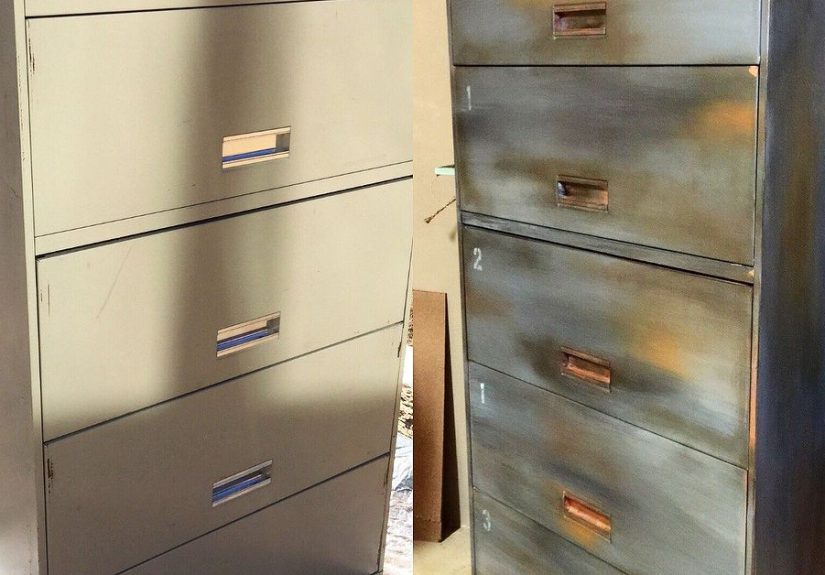
The old-school metal cabinet still has its place, especially in utility rooms and work-heavy offices, but it is no longer the only option. Modern file cabinets now show up in warm wood tones, matte black finishes, soft neutrals, painted colors, woven textures, cane fronts, and mixed-material designs that feel more like real furniture and less like something rescued from a records department.
This is where the magic starts. A wood file cabinet can read like a side table. A compact black cabinet can disappear into a minimalist room. A colorful cabinet in olive green, navy, or terracotta can become an accent piece instead of an eyesore. Same storage purpose, wildly better attitude.
2. Smarter size and mobility
A modern file cabinet also respects the reality of smaller spaces. Not everyone needs a towering four-drawer beast that looks like it could hold the secrets of the federal government. Many people do better with a two-drawer lateral cabinet, a narrow rolling pedestal, or an under-desk unit that tucks away neatly when not in use.
Casters are especially helpful in flexible workspaces. A rolling file cabinet can move from desk companion to printer stand to side table in about thirty seconds, which is ideal if your office shares square footage with literally the rest of your life.
3. Security without drama
Style is nice, but function still matters. A good file cabinet protects sensitive documents, keeps paperwork sorted, and makes everyday retrieval easier. Many newer models include locks, anti-tip features, better drawer glides, and layouts that fit both letter and legal files. In plain English: your paperwork stays safer, and you do not have to wrestle a drawer like you are opening a haunted attic.
Six Ways to Make a File Cabinet Look Like It Belongs in Your Home
Use it as the anchor under your desk
One of the easiest upgrades is placing matching file cabinets beneath a desktop surface. This works beautifully in shared offices, narrow wall-to-wall setups, and custom DIY workstations. Instead of treating storage like an afterthought, the cabinet becomes part of the architecture. It supports the desk, hides the paperwork, and keeps the top surface clean.
Choose a finish that matches the room, not the office store
If your room leans warm and organic, go for oak, walnut, or light wood tones. If you like modern contrast, try black or charcoal. If your home is playful, bold color can turn a file cabinet into a statement. The trick is to treat it like furniture, not equipment. When the finish works with the room, the file cabinet stops feeling like an interruption.
Style the top, but do not create a junk shrine
A file cabinet top can absolutely be styled. Add a lamp, a tray, a small plant, or a stack of books. Maybe a framed photo if you are feeling sentimental. But do not let it become the drop zone for receipts, pens, unopened mail, random cables, and your emotional support sticky notes. The cabinet should feel purposeful, not like a horizontal cry for help.
Hide it in plain sight
In a closet office, guest room, or hallway workspace, a small file cabinet can tuck under a floating desk or countertop and nearly disappear. This is one of the smartest tricks for multipurpose rooms. The cabinet gives you real storage without requiring a separate office footprint, which is a small-space miracle on par with finding a matching pair of socks.
Repurpose it beyond paperwork
Here is where things get fun. A file cabinet can organize craft supplies, wrapping paper, school materials, home manuals, pet documents, office gear, cables, art supplies, or household records. Some people even repurpose older cabinets for garage tools, hobby materials, or family command centers. The cabinet may have “file” in the name, but it does not have to spend its entire career babysitting folders.
Make it part of a bigger storage story
The best workspaces mix closed storage with open display. Pair your file cabinet with shelves, baskets, pinboards, or wall organizers. Closed drawers handle the ugly but necessary stuff. Open storage gives the room shape and personality. That balance is the secret. Too much open storage looks messy. Too much closed storage can feel heavy. Together, they make a workspace feel intentional.
How to Organize a File Cabinet So It Stays Useful
Owning a file cabinet is not the same thing as having a filing system. A drawer stuffed with mystery paper is just clutter wearing rails. To make the cabinet truly helpful, create broad, obvious categories that are easy to maintain.
Create clear zones
Start with big buckets: household, financial, medical, school, property, warranties, work, and archive. Then break those into labeled folders only as needed. If every folder title sounds like a legal thriller, you have gone too far.
Separate active from archival
Documents you use often should be easiest to reach. Current bills, active projects, and frequently referenced forms belong in top drawers or front sections. Older records and long-term paperwork can live deeper in the cabinet. This makes daily access smoother and keeps your system from turning into an archaeological dig.
Label like you mean it
Pretty labels are great, but readable labels are better. Use simple names that future you will understand instantly. “Taxes 2025” beats “Important Financial Misc.” every single time. The goal is retrieval, not mystery.
Purge regularly
Even a beautiful cabinet can become overcrowded. Build in a quick review every few months. Shred what no longer matters, archive what must stay, and relocate items that wandered in from other parts of the house. A file cabinet should reduce stress, not quietly breed paper monsters.
Common Mistakes That Make File Cabinets Feel Boring Again
The biggest mistake is buying for storage capacity alone. More drawers are not always better. If the cabinet is too bulky, too tall, too industrial, or too visually heavy for the room, it will dominate the space in the worst way. Scale matters.
The second mistake is ignoring workflow. If your cabinet sits across the room from where you actually handle paperwork, clutter will pile up somewhere else. Good storage should live where the action happens. If you sort mail near the kitchen, maybe your family paperwork belongs nearby. If you work from a bedroom corner, the cabinet should support that exact routine.
The third mistake is thinking style is optional. It is not. A file cabinet that matches your room is more likely to stay in use because it feels integrated rather than tolerated. When storage looks intentional, you maintain it differently. You respect it. You use it. You stop resenting it. That is growth.
How the File Cabinet Became a Design Hero
The most interesting thing about the modern file cabinet is not that it changed dramatically. It is that people finally started seeing its potential. A cabinet can ground a workspace, calm paper clutter, support a desk, protect private documents, and add texture or color to a room. That is a lot of value from a piece of furniture that used to be dismissed as boring.
In other words, the file cabinet did not become cool because it stopped being practical. It became cool because practicality itself got smarter. People want homes that work. They want furniture that earns its place. They want beauty without chaos, and order without corporate vibes. The file cabinet, against all odds, fits that brief beautifully.
So no, it is not your boring file cabinet anymore. It is your secret weapon. It is the grown-up answer to paper clutter. It is the stylish sidekick that makes the whole room function better. And if that sounds a little dramatic, well, clearly you have never experienced the joy of finding the exact document you need in under ten seconds.
Experiences That Prove the File Cabinet Glow-Up Is Real
One of the most relatable experiences with a file cabinet makeover begins with frustration. It usually starts with a pile. Not one elegant pile, either. We are talking about a messy stack of unopened mail, school forms, receipts, printouts, charging cables, sticky notes, and a folder someone swore they would file “later.” That pile tends to live on the corner of a desk, a dining table, or a kitchen counter until it reaches the visual volume of a small mountain range. Then one day, out of pure annoyance, the homeowner decides to get serious about storage.
At first, there is resistance. People often assume a file cabinet will make the room feel stiff or old-fashioned. They picture cold metal, dented corners, and that sad office-supply-store energy. But once they bring in a cabinet that actually matches the room, everything changes. A warm wood finish, a compact black frame, or a painted cabinet in a bold color suddenly feels less like “office furniture” and more like a smart piece of home design. That moment is usually surprising. The room does not feel more corporate. It feels more complete.
Another common experience is the under-desk transformation. Someone adds a rolling file cabinet beneath a work surface, expecting only a little extra storage, and then realizes how much calmer the room feels when visual clutter disappears. The printer paper gets a drawer. The warranties get a folder. The mystery cords get contained. Even the top of the desk looks more expensive somehow, simply because it is no longer drowning in loose paper and random objects. It is amazing how quickly “I just needed somewhere to put forms” turns into “Why does my whole office feel twenty times better?”
Families tend to have their own version of this revelation. A cabinet becomes the household command center: medical papers in one drawer, school information in another, tax records in the back, and a front section for the documents nobody wants to lose during a busy week. Suddenly, permission slips are not vanishing into backpacks. Pet records are not hiding in kitchen drawers. Appliance manuals are not floating around in three different rooms like lost ships at sea. There is a deep satisfaction in knowing where things live, especially when life gets chaotic.
Small-space dwellers often have the strongest reaction because every square foot matters. In a studio, apartment, or shared home, a file cabinet has to justify itself. When it doubles as a printer stand, end table, or base for a DIY desk, people stop seeing it as an extra piece and start seeing it as a solution. That is usually the moment the relationship changes. The cabinet is no longer tolerated. It becomes useful enough, attractive enough, and efficient enough to feel essential.
There is also the emotional side of the experience, and it is more important than people expect. Organized storage creates a sense of control. It reduces the low-grade stress that comes from always wondering where something is. A good file cabinet does not just store paper. It removes friction from everyday life. It shortens searches, quiets surfaces, and makes the room feel more intentional. That may sound overly poetic for a cabinet with drawers, but anyone who has ever found a needed document instantly instead of after forty-five minutes of muttering can tell you the feeling is very real.
In the end, the best experiences with file cabinets are not dramatic. They are daily. They show up in the small wins: the clean desktop, the labeled folder, the fast retrieval, the calmer room, the better-looking workspace. Those moments add up. And that is exactly why the so-called boring file cabinet is not boring anymore. It has become the quiet overachiever of modern home organization.
Conclusion
The modern file cabinet has officially left its drab reputation behind. Today, it is part storage solution, part design tool, and part sanity saver for anyone trying to manage paperwork without sacrificing style. Whether you choose a rolling cabinet under your desk, a statement piece in a bold finish, or a compact drawer unit hidden inside a small workspace, the right cabinet can transform how your room looks and how your day flows. Not bad for a furniture category once known mainly for being beige and forgettable.





 Close
Close