Table of Contents >> Show >> Hide
- Why this Secret Santa story hit such a nerve
- The real problem with office Secret Santa: it mixes fun with pressure
- Why random name draws do not magically fix anything
- How office Secret Santa turns from fun to feud
- How to run a workplace gift exchange without causing a holiday mutiny
- What the viral Secret Santa debate says about workplace culture
- The bottom line on office Secret Santa drama
- Related workplace experiences that make this story feel painfully familiar
Office Secret Santa is supposed to be the easiest layup in workplace culture: draw a name, buy a small gift, smile politely at the scented candle you absolutely did not ask for, and move on with your life. Instead, every December, it somehow becomes a tiny corporate reality show. Someone hates surprises. Someone ignores the budget. Someone brings a gift that should never be opened under fluorescent lighting. And someone else says, with the confidence of a person who has never organized anything, “Just put someone’s name in at random.”
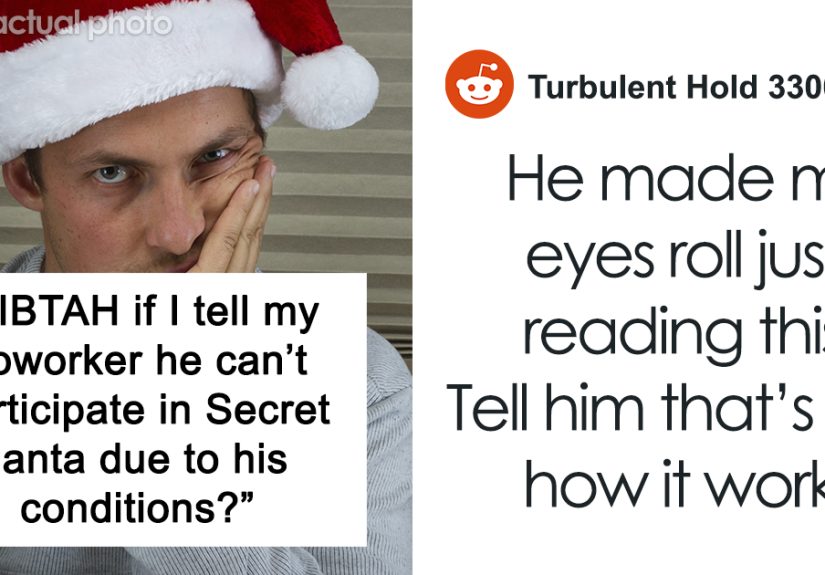
That last line sits at the center of a viral office Secret Santa drama that struck a nerve online. In the story, one employee wanted to participate by giving a gift but did not want to receive one. The organizer refused to bend the rules, another coworker pushed for an exception, and a simple holiday tradition turned into a full-blown debate about fairness, flexibility, and whether “fun” at work is ever truly simple. Spoiler: it is not.
This office Secret Santa drama is funny on the surface, but it also reveals something real about workplace gift exchange culture. A holiday swap is never just about mugs, candy, and suspiciously generic gift cards. It is about expectations. It is about social pressure. It is about whether participation is truly optional or merely “optional” in the way office karaoke is optional when your manager is already holding the mic.
Why this Secret Santa story hit such a nerve
The appeal of the story is obvious. Almost everyone who has worked in an office has seen a festive activity mutate into low-stakes chaos. In this case, the conflict sounded small: one person wanted to give without receiving, while others insisted that Secret Santa only works if everyone both gives and gets. Yet the disagreement quickly raised bigger questions. Are rules more important than generosity? Should organizers make exceptions? Is it generous to insist on giving when the system no longer makes sense for everyone involved?
What makes the situation relatable is that both sides sound reasonable for about five seconds. The coworker who did not want a gift may have been trying to avoid clutter, skip awkwardness, or simply keep things minimalist. The organizer may have been trying to protect the balance of the exchange so nobody felt shortchanged. The problem was not that one person was obviously evil and the other was obviously a holiday saint. The problem was that office traditions collapse when nobody agrees on what the tradition is actually for.
Is Secret Santa about equal exchange? Is it about team bonding? Is it about surprise? Is it about gratitude? If your answer is “all of the above,” congratulations, you have identified the exact reason office gift exchange drama happens every year.
The real problem with office Secret Santa: it mixes fun with pressure
Secret Santa sounds casual, but workplace rituals rarely stay casual for long. The minute coworkers are involved, every small decision gains emotional static. Opting out can make someone feel stingy. Participating can feel expensive. Receiving a gift can feel awkward. Giving the wrong gift can feel socially fatal for at least three business days.
That is why office Secret Santa drama often has less to do with gifts and more to do with consent. People do not all enter the exchange with the same comfort level, budget, sense of humor, holiday traditions, or tolerance for forced merriment. One employee thinks it is charming. Another sees it as another errand during the busiest month of the year. A third would rather eat a stapler than unwrap a “funny” gift in front of the whole team.
In many workplaces, the pressure is subtle rather than explicit. No one says, “You must join.” Instead, the invitation arrives in a cheerful message full of exclamation points and snowflake emojis, and everyone understands the social math. Declining may be allowed, but it still risks looking unfriendly, joyless, or not “team-oriented.” That is exactly why office gift exchange rules matter. Without them, the event becomes less about celebration and more about who can best navigate group expectations.
Why random name draws do not magically fix anything
“Just put someone’s name in at random” sounds practical, but it treats Secret Santa like a spreadsheet problem. It is not. The draw is the easy part. The hard part is the human part: making sure the exchange feels fair, inclusive, and low-pressure.
A random draw does not solve mismatched expectations. It does not protect employees from gifts that are too personal, too expensive, too lazy, or too weird. It does not help the coworker who is financially stretched. It does not account for people who do not celebrate Christmas. And it definitely does not rescue the poor soul opening red lingerie, novelty underwear, or an office-inappropriate gag gift in front of colleagues and management.
In other words, randomness is not neutrality. It is just randomness. If the rules are fuzzy and the culture is awkward, pulling names from a hat only distributes the awkwardness more efficiently.
How office Secret Santa turns from fun to feud
1. The rules are unwritten
Every workplace has invisible rules, and holiday traditions are full of them. People assume everyone knows the spending cap, the tone, the level of effort, and what counts as “appropriate.” Then someone buys a $7 pack of pens, someone else buys a $60 Bluetooth speaker, and suddenly the office has accidentally invented an economic philosophy seminar.
2. Participation is technically optional but emotionally loaded
If employees feel judged for opting out, the event is not truly optional. It is just compulsory with better branding. That is when resentment starts sneaking in through the tinsel.
3. The gifts are too personal
Secret Santa at work should not feel like speed-dating with wrapping paper. Funny gifts can be great, but they should not embarrass the recipient, create sexual undertones, or put someone on display in front of the team. A “joke” gift is only funny when the person opening it is laughing too.
4. Coworkers confuse generosity with control
One of the stranger features of workplace gift exchange culture is how quickly kindness can become bossiness. “I just want to do something nice” sounds lovely until it becomes “therefore everyone must accept my version of nice.” That is exactly the trap in the viral story. A gift exchange works only when generosity and consent travel together.
How to run a workplace gift exchange without causing a holiday mutiny
If a company or team insists on doing Secret Santa, there are smart ways to reduce drama. None of them are glamorous, but neither is mediating a dispute over novelty socks at 3:45 p.m. on a Wednesday.
Make participation genuinely optional
Not fake-optional. Not “optional, but everyone good-natured joins.” Genuinely optional. Nobody should have to justify a no. Some employees are watching their budgets. Some do not celebrate the holiday. Some dislike gift exchanges. Some simply do not want more clutter. All of those are valid reasons.
Set a clear spending limit
A realistic budget helps avoid embarrassment and keeps the event from turning into a silent competition. A good limit should feel easy, not painful. If coworkers need to think hard about whether they can afford it, the amount is too high.
Keep gifts professional
The safest office Secret Santa gifts are useful, neutral, and thoughtful: coffee shop cards, desk items, snacks, books, tea, candles, plants, or a donation in someone’s name if that fits the rules. The worst gifts are overly intimate, politically charged, insulting, or designed to get a reaction rather than bring delight.
Use inclusive language
If a team includes people from different backgrounds, calling the event a “holiday gift exchange” or “end-of-year swap” can make the tradition feel broader and more welcoming. That does not ruin the fun. It simply acknowledges that not every employee experiences December the same way.
Offer alternatives
This is where the viral office drama actually offers a useful lesson. If someone wants to participate differently, there may be a workaround that keeps the event intact without forcing everyone into the same box. A charity donation, a shared team treat, a gratitude exchange, or a voluntary add-on can preserve the spirit of the tradition without turning it into courtroom cross-examination.
What the viral Secret Santa debate says about workplace culture
At its core, this is not really a story about one stubborn organizer and one unconventional coworker. It is a story about how workplace culture often confuses tradition with togetherness. A ritual does not build team morale simply because it appears on the calendar every December. It works only if employees feel respected inside it.
That is the hidden lesson leaders often miss. A healthy workplace culture is not created by mandatory fun, increasingly elaborate holiday activities, or the annual expectation that every employee suddenly transforms into a cheerful elf with a shopping budget. Culture is built when people feel seen, included, and free to participate without pressure.
Ironically, the best holiday traditions are often the least complicated. A short team lunch. Handwritten thank-you notes. A low-key cookie swap. A charity drive. Letting people leave early. Covering coffee for the team. Small rituals work when they reduce stress rather than add another performance to the schedule.
So yes, office Secret Santa can still be delightful. It can create laughs, spark connection, and give people a reason to be a little more thoughtful than usual. But only when the event is built around boundaries as much as generosity. Holiday cheer is nice. Holiday clarity is nicer.
The bottom line on office Secret Santa drama
The phrase “just put someone’s name in at random” perfectly captures why office holiday traditions go sideways. It assumes people are interchangeable, that preferences are minor, and that the mechanics matter more than the experience. But the entire problem with office Secret Santa is that people are not random. They bring different beliefs, stress levels, budgets, personalities, and comfort zones to the table.
That does not mean the tradition is doomed. It means the tradition needs better design. When the rules are clear, participation is voluntary, gifts stay professional, and alternatives are allowed, Secret Santa can be the harmless little morale boost it always claims to be. When those basics are ignored, it becomes what it so often is: a tiny, sparkly conflict generator wearing a Santa hat.
And really, if your workplace holiday activity requires a debate worthy of a city council meeting, it may be time to step away from the gift bag and consider a tray of donuts instead.
Related workplace experiences that make this story feel painfully familiar
If the viral Secret Santa conflict felt familiar, that is because most offices have their own version of it. Maybe not the exact same argument, but the same energy: a cheerful tradition that picks a fight with reality. In one workplace, the budget cap is set at $15, and then half the team quietly ignores it. One person buys a simple notebook and candy cane, while another arrives with an expensive gourmet basket that makes everyone else feel like they brought a paper clip and a prayer. No one says anything directly, of course. They just make eye contact in the break room and carry the emotional damage into January.
In another office, a manager insists the exchange is completely voluntary, but then asks out loud why three people have not signed up yet. Suddenly “optional” feels a lot like a trap. One employee joins because she does not want to seem rude. Another participates because everyone on his team is doing it. A third skips it and spends the next week hearing jokes about being a Grinch. That is how a lighthearted holiday game turns into a referendum on personality.
Then there is the classic mismatch between humor and professionalism. Every office has at least one person who hears “fun gift” and translates it as “social experiment.” That is how somebody ends up opening a deeply weird mug, a joke book that is not funny, or something so personal it should have been stopped at the door by security. The giver usually says, “Relax, it’s just a joke,” which is a phrase that has almost never improved a workplace situation.
Remote teams are not immune either. Virtual Secret Santa can create its own flavor of chaos. Gifts arrive late, addresses get mixed up, and one coworker forgets to mail anything until the reveal day itself. Another person sends a gift card so generic it looks auto-generated by a robot with no human attachments. Meanwhile, someone else goes full overachiever and mails a beautifully wrapped, highly personalized package that makes the rest of the team question their life choices.
And then there are the quieter experiences, the ones that rarely make a group chat but matter just as much. The employee who is trying to save money but feels embarrassed opting out. The coworker who does not celebrate Christmas and smiles through the event anyway. The minimalist who genuinely does not want more stuff. The new hire who has no idea whether this exchange is meant to be heartfelt, funny, or aggressively mediocre. These are small discomforts, but they add up.
That is why this office Secret Santa drama resonates beyond one viral post. It captures the strange little tension of modern work life: the pressure to be warm, social, grateful, and game for fun, even when the format does not fit everyone equally well. Most employees are not against kindness. They are against being cornered by compulsory cheer. When workplaces remember that difference, holiday traditions go a lot better. When they forget it, well, somebody ends up saying, “Just put someone’s name in at random,” and the whole thing catches fire.